What Van Is the Peugeot Boxer? A Complete Buyer's Guide
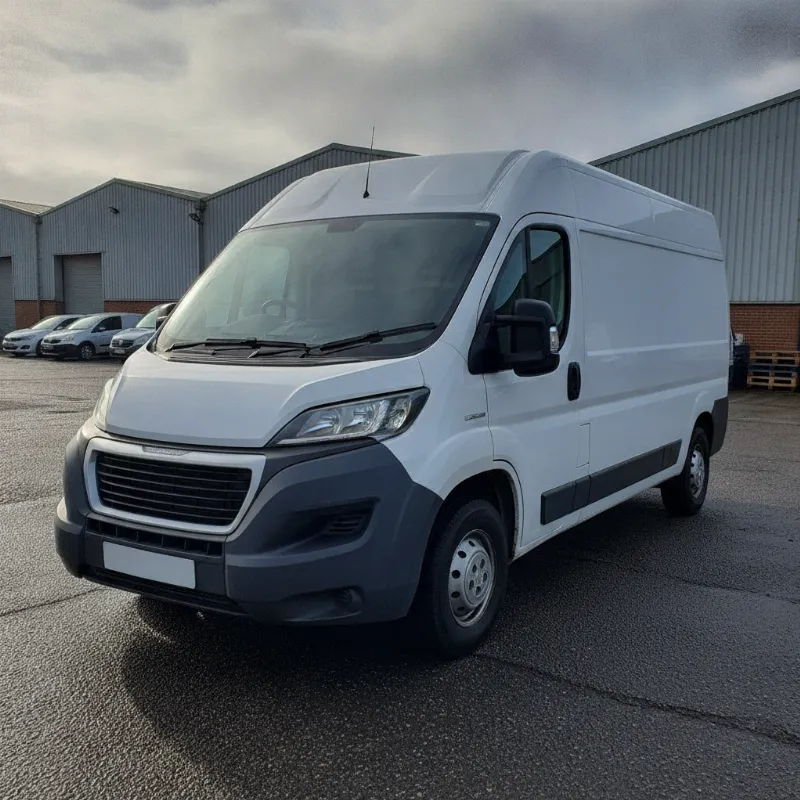
What is the Peugeot Boxer? A Quick Overview
The Peugeot Boxer is a large panel van built to shift serious volumes of cargo, tools and equipment across the UK's roads. Sitting at the top of Peugeot's commercial vehicle range, it competes head-on with rivals like the Ford Transit, Mercedes-Benz Sprinter and Volkswagen Crafter, offering British businesses a practical, no-nonsense workhorse with a reputation for value.
Produced in partnership with Fiat and Citroën as part of the long-running Sevel Sud joint venture, the Boxer shares much of its underlying engineering with the Citroën Relay and Fiat Ducato. That platform-sharing means parts availability tends to be strong, independent garages are familiar with the mechanicals, and running costs stay competitive. For tradespeople, couriers, converters and fleet operators, the Boxer has become one of those quiet, dependable choices that just gets on with the job.
Peugeot Boxer Body Styles, Sizes and Variants Explained
One of the Boxer's biggest strengths is the sheer variety of shapes and specifications it comes in. Whether you need a modest urban delivery van or a high-roof, long-wheelbase load lugger, there's a configuration to match. Understanding those variants is the first step in choosing the right Boxer for your business.
Panel Van, Crew Van and Chassis Cab Options
The standard panel van is the most common Boxer on UK roads, offered in a range of lengths (traditionally L1 through L4) and roof heights (H1 to H3) to suit different trades. If you regularly carry a small team as well as tools, the crew van adds a second row of seats behind the driver, typically taking capacity from three up to six or seven people while still leaving a useful load area behind a bulkhead.
For conversion specialists, the chassis cab and dropside variants strip the Boxer back to a bare platform, ready to be built into a tipper, Luton box van, camper, refrigerated body or specialist workshop vehicle. Peugeot also offers factory-built minibus, tipper and Luton derivatives, which can save businesses the hassle of sourcing a separate converter.
Peugeot Boxer Dimensions and Load Capacity
Load volumes across the Boxer range typically stretch from around 8 cubic metres in the smallest L1H1 up to roughly 17 cubic metres in the largest L4H3 configuration — enough to swallow pallets, long lengths of timber, appliances or a substantial removals load. Payloads generally sit between around 1,000kg and 1,900kg depending on the gross vehicle weight rating chosen, with 3.3, 3.5 and 4.0 tonne options historically available.
Rear door openings are wide and tall, side loading doors are standard on most trims, and low load heights make daily loading easier on backs and shoulders. If you're regularly on and off the van, those practical details matter far more than headline power figures.
Engines, Performance and the Famous 2.2 HDi
Peugeot has kept the Boxer's engine line-up relatively simple over the years, focusing on rugged diesel units tuned for torque rather than outright pace. The long-serving 2.2 HDi four-cylinder diesel has powered most modern Boxers, evolving through multiple emissions standards and power outputs, while a larger 3.0-litre HDi was offered for heavier or higher-mileage duties on older generations. More recent models use the BlueHDi 2.2 with AdBlue to meet current emissions rules.
Power outputs typically range from around 110bhp on entry-level engines through to 165bhp on higher-tune variants, with torque figures well suited to fully loaded motorway cruising and urban stop-start work. A six-speed manual gearbox is the standard offering, with an automated option available on later models for drivers who prefer two-pedal driving in traffic.
Older Models: 2005 Peugeot Boxer Specifications and 2007 Boxer FT 330 2.2 HDi
Second-generation Boxers built up to 2006 — including the 2005 model year — are now firmly in the older-used category, but they can still be a bargain buy for occasional use or light trade work. Those vans typically ran the 2.0 HDi, 2.2 HDi and 2.8 HDi diesels, with modest power outputs by today's standards but proven mechanicals. Expect basic cabin trim, manual windows on entry variants and none of the modern driver aids you'd find today.
The third-generation Boxer launched in 2006, so a 2007 FT 330 2.2 HDi represents an early example of the current-shape van. The "330" designation refers to a 3.3-tonne GVW, while "FT" (Furgone) denotes the panel van body. With around 100bhp and 250Nm of torque, these earlier 2.2 HDi units feel adequate rather than brisk, but they're straightforward to maintain and parts are still readily available. A well-cared-for example with documented service history can still be a sensible budget purchase.
Common Peugeot Boxer Problems to Watch For
No large van is completely bulletproof, and the Boxer has a few well-known weak spots buyers should factor into their inspection checklist. On higher-mileage examples, keep an eye on the turbocharger and EGR valve — carbon build-up and turbo failures aren't unheard of, particularly on vans used mostly for short urban journeys. Diesel particulate filter (DPF) issues are also common on any modern diesel that hasn't seen enough motorway running to regenerate properly.
Elsewhere, look for corrosion around the wheel arches, sills and rear door hinges, especially on vans that have lived a hard life outdoors. Check for uneven front tyre wear (a sign of tired suspension bushes or tracking issues), test every electrical accessory including the central locking and window motors, and make sure the clutch bites cleanly without shudder. A comprehensive service history is worth its weight in gold on any used Boxer.
Known 2007 Peugeot Boxer Problems and Reviews
Early third-generation Boxers from 2007 attracted a mixed bag of owner reviews. On the positive side, drivers praised the comfortable cab, car-like driving position, generous load space and strong fuel economy from the 2.2 HDi. On the downside, some early examples suffered from injector faults, occasional gearbox linkage wear and, on higher-mileage vans, flywheel and clutch problems.
Rust on the rear crossmember and underbody has been reported on well-used 2007 vans, and infotainment or wiring quirks can crop up simply due to age. None of these issues are deal-breakers on a well-maintained example, but they're all worth checking during a pre-purchase inspection or independent HPI and mechanical check.
Should You Buy New, Used or Lease a Peugeot Boxer?
Choosing between new, used and leased comes down to how you use the van and how you like to manage cash flow. Buying new gets you the latest safety kit, the current BlueHDi engines with the best emissions compliance for low-emission zones, a full manufacturer warranty and the peace of mind of a fresh vehicle. It's the natural choice for high-mileage operators who want predictable running costs.
Used Boxers offer excellent value, particularly at three to five years old where the steepest depreciation has already been absorbed by the first owner. Leasing or contract hire, meanwhile, spreads the cost into fixed monthly payments, often bundles servicing and maintenance in, and hands the residual-value risk back to the finance provider. For VAT-registered businesses, the tax treatment of lease payments can also be attractive — worth a conversation with your accountant before committing either way.
Which Peugeot Boxer Is Right for Your Business?
The best Boxer for you depends on three simple questions: how much you need to carry, how often you drive it, and what your budget looks like. Multi-drop couriers and parcel operators typically favour the L3H2 panel van as the sweet spot of load space and manoeuvrability. Builders, plumbers and electricians often lean towards the L2H2 or crew van for a balance of tools, materials and people. Removals, furniture delivery and specialist converters usually want the biggest L4H3 or a Luton conversion for maximum cubic capacity.
Whichever version fits your working week, the Peugeot Boxer remains a genuinely capable large van with sensible running costs, plenty of variants to choose from and a proven mechanical package. Take your time comparing spec sheets, get any used example inspected properly, and you'll end up with a van that quietly earns its keep for years to come.
FAQs
What kind of van is the Peugeot Boxer?
The Peugeot Boxer is a large panel van in the same class as the Ford Transit, Mercedes Sprinter and Volkswagen Crafter. It's offered as a panel van, crew van, chassis cab, dropside, tipper, Luton and minibus, with multiple lengths (L1–L4) and roof heights (H1–H3), diesel engines from around 110–165bhp and gross vehicle weights typically between 3.0 and 4.0 tonnes.
Is the Peugeot Boxer a reliable van?
Yes, the Boxer has a generally solid reliability reputation, helped by the fact its platform is shared with the Citroën Relay and Fiat Ducato, so parts and expertise are widely available. Common issues to watch for include DPF and EGR problems on short-journey vans, turbo wear at high mileage and some underbody corrosion on older examples, but a full service history and a pre-purchase inspection go a long way.
What engine does the Peugeot Boxer use?
Most modern Peugeot Boxers use the 2.2 HDi (later BlueHDi 2.2) four-cylinder diesel, offered in several power outputs from around 110bhp up to 165bhp. Older generations also offered 2.0 HDi, 2.8 HDi and 3.0 HDi engines. A six-speed manual gearbox is standard, with an automated option on more recent models.
How much can a Peugeot Boxer carry?
Load volume typically ranges from around 8 cubic metres in the smallest L1H1 panel van up to about 17 cubic metres in the largest L4H3. Payloads generally sit between roughly 1,000kg and 1,900kg depending on the chosen gross vehicle weight and body configuration, making the Boxer suitable for everything from parcel delivery to heavy trade and removals work.
Is it better to buy or lease a Peugeot Boxer?
It depends on your business. Buying (new or used) makes sense if you keep vans for a long time or cover very high mileage and want to own the asset outright. Leasing or contract hire offers fixed monthly payments, often includes maintenance, avoids depreciation risk and can have tax advantages for VAT-registered businesses — speak to your accountant to see which option best suits your cash flow and usage.