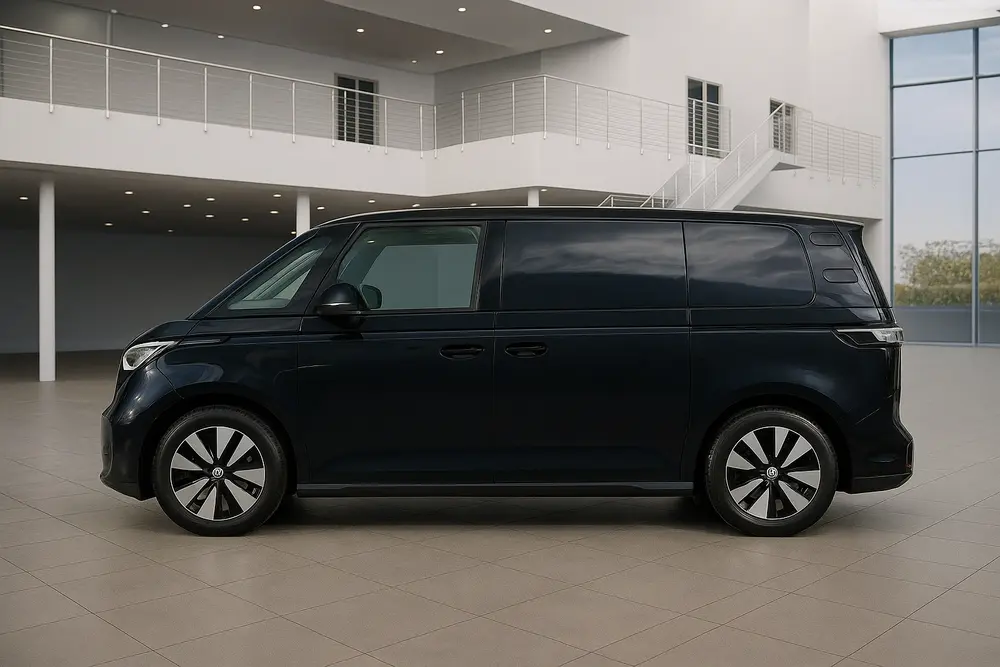
Electric vans
Peugeot e-Boxer Electric Van
Peugeot e-Boxer Electric Van

Why Swiss Vans
Build your lease
A zero-emissions electric van built for efficiency, sustainability and business use
The Peugeot e-Boxer is making waves in the commercial vehicle sector, offering a cutting-edge electric solution for businesses looking to reduce their carbon footprint. This new addition to the Peugeot van lineup combines the familiar practicality of the Boxer with an innovative electric powertrain, addressing the growing demand for eco-friendly transport options. The e-Boxer's introduction has an impact on the market, providing a compelling alternative for companies aiming to meet sustainability goals while maintaining operational efficiency. Source
To understand the Peugeot e-Boxer fully, it's essential to examine its key features and benefits. This article will delve into the vehicle's electric powertrain and performance capabilities, explore its cargo capacity and practicality for various business needs, and highlight the advanced technology and connectivity features it offers. Additionally, we'll look at the cost of ownership and sustainability advantages, giving readers a comprehensive overview of what the new Peugeot e-Boxer brings to the table in terms of dimensions, specifications, and overall value for businesses considering an electric van purchase in 2024 and beyond. See Peugeot Van Lease
Overview of the Peugeot e-Boxer
The Peugeot e-Boxer represents the latest addition to the French manufacturer's electric van lineup, offering a zero-emission alternative to the traditional diesel-powered Boxer. This large electric van has an impact on the commercial vehicle market, providing businesses with a sustainable transport solution without compromising on practicality or performance. See Peugeot Expert Lease
Why the Peugeot e-Boxer Electric Van is ideal for modern fleets
The e-Boxer has a 90kW electric motor, equivalent to 120 horsepower, which delivers a robust 350Nm of torque. This powertrain has the capability to propel the van to a top speed of 75mph, making it suitable for both urban deliveries and motorway journeys. The van has two battery options: a 75kWh pack for most models and a smaller 37kWh version for the L2 variant. Range is a crucial factor for electric vehicles, and the e-Boxer with the larger battery pack can travel up to 154 miles on a single charge under WLTP combined test conditions. However, it's important to note that real-world range may vary depending on factors such as load, driving style, and weather conditions. The L2 model with the smaller battery has a more limited range of 73 miles. See Peugeot Boxer Low Loader Charging times are competitive, with a standard 7.4kW wallbox able to fully charge the 75kWh battery in 12 hours. For faster charging on the go, a 50kW DC public chargepoint can replenish the battery to 80% capacity in approximately one hour. See Peugeot Partner Crew Van
Available Configurations Peugeot e-Boxer Electric Van
Peugeot offers the e-Boxer in various configurations to suit different business needs. The van is available in three lengths: L2, L3, and L4, all with an H2 roof height. These options provide load lengths of 3120mm, 3705mm, and 4070mm respectively, with corresponding load volumes of 11.5, 13, and 17 cubic metres. See Peugeot Partner For Sale Payload capacity varies across the range. The L2 version, benefiting from its lighter battery pack, can carry up to 1070kg. The L3 model has a reduced payload of 690kg, which is significantly less than its diesel counterpart. However, an alternative version of the L3 and the L4 model both offer an improved payload capacity of 1100kg. The e-Boxer is offered in a single trim level, Professional Pro, which sits in the middle of the diesel Boxer range. This specification includes air conditioning, cruise control, rear parking sensors, and a 5-inch touchscreen with DAB radio and satellite navigation as standard equipment. See Peugeot Vans For Sale
Target Market Peugeot e-Boxer Electric Van
The Peugeot e-Boxer is designed to appeal to businesses looking to reduce their carbon footprint without sacrificing the versatility and practicality of a large van. It's particularly well-suited for companies operating in urban areas with low emission zones, as its electric powertrain allows unrestricted access to these areas. See Peugeot Expert For Sale The van's range makes it ideal for businesses that typically cover less than 30 miles per day, which Peugeot estimates applies to two-thirds of van drivers. For these users, the e-Boxer could potentially require charging only once a week, depending on their specific usage patterns. See Peugeot Partner Lease The e-Boxer's various configurations cater to a wide range of industries, from delivery services to construction. The availability of chassis cab and double cab chassis versions also allows for specialised conversions, further expanding its potential customer base. See Peugeot Boxer For Sale While the e-Boxer offers many advantages, it's worth noting that it faces competition from other electric vans in its class, such as the Citroen e-Relay, Vauxhall Movano-e, and the Fiat E-Ducato. Each of these alternatives has its own strengths, and businesses will need to carefully consider their specific requirements when choosing between them. See Peugeot Partner Professional
Electric Powertrain and Performance
The Peugeot e-Boxer's electric powertrain offers a compelling alternative to traditional diesel engines, providing businesses with a zero-emission solution without compromising on performance. This large electric van combines power, efficiency, and practicality to meet the demands of various commercial applications. See Peugeot Boxer Lease
Motor and Battery Options
At the heart of the e-Boxer lies a 90kW electric motor, equivalent to 120 horsepower, which delivers a robust 350Nm of torque. This powertrain has the capability to propel the van to a top speed of 75mph, making it suitable for both urban deliveries and motorway journeys. However, it's worth noting that the 3,500kg gross vehicle weight (GVW) models are limited to 68mph, while the 4,000kg GVW variants are restricted to 56mph. See Peugeot Electric Vans The e-Boxer offers two battery options to suit different operational needs:
- A 75kWh battery pack for most models
- A smaller 37kWh version for the L2 variant
These batteries are strategically mounted under the floor, ensuring they have no impact on the van's load space. This design choice maintains the e-Boxer's practicality, offering the same load volume as its diesel counterpart. See Peugeot Vans
Range and Charging Times
Range is a crucial factor for electric vehicles, and the e-Boxer with the larger 75kWh battery pack can travel up to 154 miles on a single charge under WLTP combined test conditions. This figure represents an improvement over the earlier 70kWh battery version, which promised 139 miles. The L2 model with the smaller 37kWh battery has a more limited range of 73 miles. It's important to note that real-world range may vary depending on factors such as load, driving style, and weather conditions. Businesses operating primarily in urban areas with daily routes under 30 miles will find the e-Boxer particularly well-suited to their needs. Charging times for the e-Boxer are competitive:
- Using a standard 7.4kW wallbox, the 75kWh battery can be fully charged in 12 hours
- A 50kW DC public chargepoint can replenish the battery to 80% capacity in approximately one hour
For faster charging at workplaces, the e-Boxer is compatible with 22kW wallbox chargers where a three-phase power supply is available.
Driving Modes
The e-Boxer offers a straightforward driving experience, focusing on efficiency and practicality. Unlike some electric vans, it doesn't feature multiple driving modes or a dedicated 'B' mode for increased regenerative braking. This means drivers will need to rely more on conventional brakes compared to some rival models. The single-speed transmission provides a smooth and jolt-free ride, with clean acceleration. However, the initial get-up-and-go might feel limited, especially when the van is loaded to full capacity. This characteristic makes the e-Boxer more suited to steady driving rather than rapid acceleration. While the e-Boxer may lack the 'oomph' of some competitors with more powerful motors, its performance is reasonable and well-suited to its intended purpose as a workhorse for businesses transitioning to electric fleets. The van's electric powertrain offers the unique pleasure of silent, emission-free driving, which is particularly beneficial in urban environments and low emission zones.
Cargo Capacity and Practicality
The Peugeot e-Boxer has been designed to maintain the practicality and versatility of its diesel counterpart, ensuring that businesses can transition to electric power without compromising on cargo capacity. The strategic placement of the battery pack in the vehicle's underbody has a significant impact on preserving the van's load space, making it an attractive option for various industries.
Load Volume Peugeot e-Boxer Electric Van
The e-Boxer offers impressive load volumes across its range, catering to different business needs. Available in three lengths—L2, L3, and L4—the van provides a variety of options for cargo space. The load volume ranges from 11.5m³ in the smallest L2 variant to an expansive 17m³ in the largest L4 model. This flexibility allows businesses to choose the most suitable size for their specific requirements. All versions of the e-Boxer come with the standard H2 roof height, providing an internal loadspace height of 1,932mm. This generous headroom enhances the van's practicality, allowing for the transport of taller items or the installation of racking systems. The maximum loadspace length varies depending on the model:
- L2: 3,210mm
- L3: 3,705mm
- L4: 4,070mm
These dimensions ensure that the e-Boxer can accommodate a wide range of cargo types and sizes, from parcels and pallets to bulky equipment.
Payload Capacity
The payload capacity of the e-Boxer varies across the range, influenced by factors such as battery size and gross vehicle weight (GVW). The van is available in two GVW options: 3.5 tonnes and 4 tonnes. For the 3.5-tonne variants:
- L2 model (37kWh battery): Up to 1,070kg payload
- L3 model (75kWh battery): 740kg payload
The L4 versions, built on a 4-tonne chassis and equipped with the 75kWh battery, offer even higher payload capacities, reaching up to 1,500kg. This makes the larger models particularly suitable for businesses that require substantial carrying capacity. It's worth noting that the payload figures for the electric versions are slightly lower than their diesel counterparts due to the weight of the battery pack. However, the e-Boxer still offers competitive payload capacities within the electric van segment.
Versatility for Different Industries
The Peugeot e-Boxer's design and configuration options make it a versatile choice for various industries. The availability of panel vans, glazed vans, and chassis cabs allows for customisation to suit specific business needs. One notable feature is the dropside version of the e-Boxer, which has an impact on its practicality for certain trades. The dropside configuration consists of a large, open load space with hinged sides and tailboards that can be lowered below floor level. This design facilitates easy loading and unloading of goods, making it particularly useful for industries such as construction, landscaping, and logistics. The e-Boxer Dropside offers a payload capacity of up to 1,150kg, which is impressive for a battery-powered vehicle. This capacity makes it an attractive option for tradespeople who require substantial carrying capability without compromising on eco-friendliness. Furthermore, Peugeot offers a range of conversions through its bodywork partners, allowing businesses to transform and fit out their vehicles to meet specific requirements. This flexibility ensures that the e-Boxer can be adapted to serve a wide array of industries, from delivery services to specialised trades. The e-Boxer's cargo area also features practical dimensions that enhance its usability. With a width of 2.05m (excluding mirrors) and 1.42m between wheel arches, the van provides ample space for loading wide items or accommodating standard pallets. This thoughtful design has an impact on the van's efficiency in various logistics and transportation scenarios.
Technology and Connectivity Features
The Peugeot e-Boxer offers a range of technology and connectivity features designed to enhance the driving experience and improve safety. While the van's interior may show its age, dating back to 2006, it still provides practical solutions for modern drivers.
Infotainment System Peugeot e-Boxer Electric Van
The e-Boxer comes equipped with a touchscreen infotainment system in the centre of the dashboard. Although small and somewhat fiddly to use, it includes satellite navigation as standard. The system also supports the Mirror Screen function, allowing drivers to access their favourite smartphone-compatible apps directly on the van's display. A unique feature of the e-Boxer is the digital display incorporated into the rear-view mirror. This display provides essential information related to the electric powertrain, including:
- Battery charge level in percentage
- Range in kilometres
- Voltage in volts
- Amperage
- Current driving mode (Drive, Neutral, or Reverse)
While this solution is innovative, it has drawn some criticism for being positioned slightly out of the driver's eye-line. Additionally, the mirror itself serves limited purpose in a van with a solid bulkhead.
Driver Assistance Systems
The e-Boxer offers several driver assistance systems, although many are available as options rather than standard features. Some key systems include:
- Involuntary Line Crossing Alert (ILCA): This system uses a camera to detect continuous or discontinuous lines on the road. If the driver unintentionally crosses these lines at speeds above 60 km/h, it triggers a visual alert.
- Blind Spot Monitoring: This feature warns the driver of vehicles in the van's blind spots through warning lights in the side mirrors. It's supplemented by Trailer Merge Assist, which takes into account the size of a trailer (between 3 and 9 metres) when providing alerts.
- Rear Traffic Alert: This new feature detects vehicles within a 50-metre range coming from the left or right when reverse gear is engaged, providing audible alerts in the cabin.
- Speed Limit Recognition: The multifunction camera recognises speed limit signs and displays this information in the instrument panel.
- Active Safety Brake: This automatic emergency braking system intervenes if the driver doesn't react quickly enough to a potential collision, helping to avoid or reduce the severity of an impact.
- Hill Descent Control: This function allows for safe and controlled descents on steep slopes, maintaining a very low speed of 3 km/h.
It's worth noting that while these systems are available, the e-Boxer's standard safety kit is limited. Basic features like airbags and traction control are included, but many modern safety items such as autonomous emergency braking, lane departure warning, and additional airbags are only available as options.
Smartphone Integration
The e-Boxer supports smartphone integration through both Android Auto and Apple CarPlay. This allows drivers to access their phone's apps directly on the van's touchscreen, enhancing connectivity and convenience. The system also supports Bluetooth connectivity, enabling drivers to make calls and listen to music stored on their smartphones through the van's audio system. For electric vehicle-specific features, the e-ROUTES app serves as an electric co-pilot. Available through Free2Move Charge, this app guides drivers to destinations, recommends the best charging stations, and provides real-time battery level updates. The Peugeot Connect telematics unit, standard or optional depending on the version, offers additional connectivity features for fleet management. It allows managers to monitor fuel consumption data, receive maintenance alerts, track vehicles, and access geolocation information for chargeable zones in real-time. While the e-Boxer's technology and connectivity features may not be cutting-edge, they provide a functional suite of tools to support drivers and businesses in their daily operations. The combination of electric powertrain information, driver assistance systems, and smartphone integration offers a balance of practicality and modern convenience in this electric commercial vehicle.
Cost of Ownership and Sustainability
Purchase Price vs Diesel Models
The Peugeot e-Boxer, like many electric vehicles, comes with a higher initial purchase price compared to its diesel counterpart. This upfront cost can be a significant consideration for businesses looking to transition to electric fleets. However, it's crucial to look beyond the initial investment and consider the long-term financial benefits. To make the e-Boxer more accessible, Peugeot offers various financing options. Van Sales UK, for instance, provides finance packages that can make the acquisition more affordable and cost-effective for businesses. Additionally, the e-Boxer qualifies for government grants designed to encourage the uptake of sustainable vehicles, which can help offset the higher purchase price.
Running Costs and Maintenance
While the e-Boxer may require a larger initial investment, it offers significantly lower running costs compared to diesel vans. The absence of fuel costs has a substantial impact on the overall expenditure. Businesses can further reduce operational expenses by charging their e-Boxers overnight, taking advantage of cheaper electricity rates. Maintenance costs for the e-Boxer are also considerably lower. Electric vans have fewer moving parts than their petrol or diesel counterparts, resulting in reduced wear and tear. This translates to lower servicing and maintenance expenses over the vehicle's lifetime. Some specific maintenance benefits include:
- No oil changes or oil philtre replacements required
- No emission checks necessary
- Reduced wear on brakes due to regenerative braking systems
For added peace of mind, Peugeot provides warranty coverage for up to five years on all their electric vans, with an eight-year battery warranty. This comprehensive coverage further contributes to lower ownership costs and reduced financial risk for businesses. Another significant cost-saving aspect is the e-Boxer's exemption from Low Emission Zone (LEZ) charges. As a zero-emission vehicle, it can freely operate in areas where diesel vans might incur additional fees, resulting in long-term savings for businesses operating in urban environments.
Environmental Benefits Peugeot e-Boxer Electric Van
The Peugeot e-Boxer offers substantial environmental benefits, aligning with the growing focus on sustainability in the commercial sector. As a fully electric vehicle, it produces zero CO2 emissions while driving, contributing to improved air quality and reduced carbon footprint. The e-Boxer's environmental credentials extend beyond just emissions. The electric powertrain results in:
- Zero noise pollution, enhancing the quality of life in urban areas
- No vibrations, providing a more comfortable driving experience
- No gear changing, reducing driver fatigue
- No fuel consumption, conserving non-renewable resources
- No unpleasant exhaust smells, creating a cleaner environment
These features not only benefit the environment but also enhance the overall driving experience and working conditions for van operators. The e-Boxer's range capabilities further support its sustainability credentials. With options for either a 37 kWh or 75 kWh battery, the van can travel up to 73 or 154 miles respectively on a single charge. This range is competitive within the electric van market and sufficient for many daily business operations, particularly in urban and suburban settings. Charging infrastructure continues to improve, making the transition to electric vans more practical. The e-Boxer can be fully charged in approximately 12 hours using a standard 7.4kW Wallbox charger, allowing for convenient overnight charging. For businesses requiring faster charging options, the van can reach 80% charge in just one hour using rapid charging stations. By choosing the Peugeot e-Boxer, businesses not only reduce their environmental impact but also position themselves as forward-thinking and environmentally responsible organisations. This can have positive effects on brand image and customer perception, potentially leading to new business opportunities in an increasingly eco-conscious market.
Conclusion
The Peugeot e-Boxer has an impact on the commercial vehicle market by offering a compelling electric alternative for businesses aiming to reduce their carbon footprint. Its combination of practicality, impressive cargo capacity, and zero-emission driving makes it a strong contender in the electric van segment. The e-Boxer's range options and charging capabilities cater to various operational needs, while its advanced features and connectivity options enhance the driving experience and improve fleet management. To sum up, the e-Boxer presents a viable solution for companies looking to transition to greener fleets without sacrificing functionality. While the initial cost may be higher than diesel counterparts, the long-term benefits in terms of lower running costs, reduced maintenance, and environmental advantages make it an attractive option to consider. As the push for sustainability in commercial transport continues, the Peugeot e-Boxer stands out as a practical and forward-thinking choice for businesses ready to embrace the electric revolution.
FAQs Peugeot e-Boxer Electric Van
What distance can the Peugeot e-Boxer cover on a single charge? The Peugeot e-Boxer can travel up to 154 miles on a single charge. This electric van offers unrestricted access to low emission zones and allows for savings on fuel and maintenance costs. It is also eligible for the Plug-in Van Grant. How does the Peugeot Boxer van perform? The Peugeot Boxer provides a satisfactory driving experience with its light, well-placed controls and excellent visibility from one of the highest driving positions available in the current van market. What is the fuel efficiency of the Peugeot Boxer van? The Peugeot Boxer's fuel efficiency is moderate. The 118bhp engine model achieves around 26.3–36.0 miles per gallon, while the 138bhp version ranges from 25.6–40.1 miles per gallon. Emissions are comparable to those of the Ford Transit, varying from 215g/km to 289g/km depending on the engine and body configuration selected. Is Apple CarPlay supported in the Peugeot Boxer? Yes, the Peugeot Boxer is equipped with a 5-inch capacitive colour touchscreen that includes integrated satellite-navigation and supports both Android Auto and Apple CarPlay.
What our customers say about Swiss Vans
Based on 1,476 reviews