What Van Is the Citroen Relay? A Buyer's Guide to Sizes, Specs and Trims
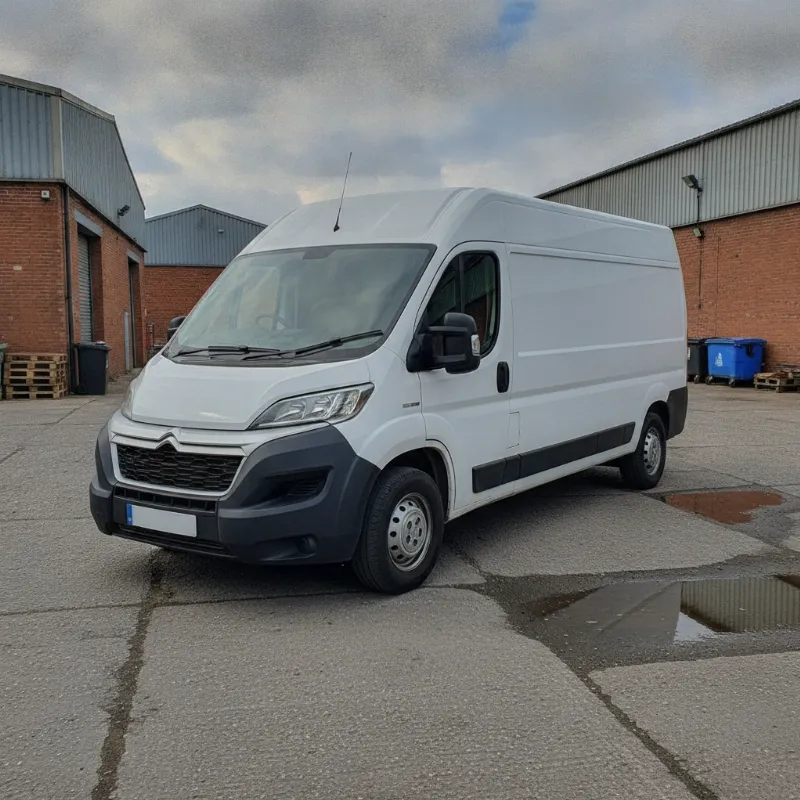
What Is the Citroen Relay? A Quick Introduction
The Citroen Relay is a large panel van that sits at the top of Citroen's light commercial vehicle range, above the smaller Berlingo and mid-sized Dispatch. It's a full-size workhorse designed to compete directly with the Ford Transit, Mercedes-Benz Sprinter and Volkswagen Crafter, and it shares much of its underlying platform with the Peugeot Boxer and Fiat Ducato. For UK operators, the Relay has been a familiar sight on motorways and building sites for well over two decades, valued for its generous load volume, competitive pricing and low running costs.
In short, the Relay is a big, boxy, front-wheel-drive panel van built to carry serious weight and cubic metres of cargo. Whether you're kitting one out as a mobile workshop, running a parcel round, or converting one into a motorhome, the Relay's flexibility is a big part of its appeal.
Citroen Relay Van at a Glance: Body Styles, Sizes and Payloads
One of the reasons the Relay remains popular with UK businesses is the sheer breadth of body configurations on offer. Buyers can choose from panel vans, crew vans, chassis cabs, dropside tippers and Luton-style box conversions, all built on a common ladder of wheelbase and roof height options. Panel van variants are typically offered in four lengths (L1 to L4) and three roof heights (H1 to H3), giving load volumes that range from around 8 cubic metres at the smaller end up to a cavernous 17 cubic metres on the largest L4H3.
Payloads vary depending on gross vehicle weight, with common ratings of 3.0, 3.3 and 3.5 tonnes, and heavy-duty variants pushing higher for operators with an appropriate licence. Most Relays you'll find on UK forecourts are 3.5-tonne panel vans, which can be driven on a standard category B licence.
Citroen Relay L2 H2 Dimensions Explained
The L2 H2 is arguably the sweet spot in the Relay range for many businesses. "L2" refers to the medium wheelbase, giving an overall length of around 5.4 metres, while "H2" indicates the medium roof height, taking overall height to roughly 2.5 metres. Load length inside sits at about 3.1 metres, load width is around 1.87 metres (with roughly 1.42 metres between the wheel arches), and interior load height is close to 1.93 metres. That's enough headroom for most adults to stand upright inside, which is a big productivity win for couriers and trades doing repeated in-and-out work.
Load volume for the L2 H2 is typically around 11.5 cubic metres, with payloads commonly quoted between 1,300 and 1,500 kg depending on trim and GVW. It's compact enough for urban work and multi-storey car parks (just check the height clearance), yet big enough to shift a decent pallet load.
Citroen Relay L3H2 and Long Wheel Base Options
Step up to the L3H2 and you're looking at a long-wheelbase Relay measuring around 5.99 metres overall, with a load length stretching to roughly 3.7 metres and cargo volume of about 13 cubic metres. This is the version that tends to win over builders, kitchen fitters and delivery firms who regularly move longer materials or handle three Euro pallets. The H2 roof keeps overall height manageable while still allowing a walk-in load area.
For operators who need even more space, the L4H2 and L4H3 stretch to around 6.36 metres in length, offering load volumes of up to 15 or 17 cubic metres. These extra-long variants are popular with removals firms, motorhome converters and parcel operators running high-cube routes, though drivers should be aware of the extra care needed for reversing, parking and low bridges.
2004 Citroen Relay LWB Dimensions
Plenty of older Relays are still working hard on UK roads, and the 2004 model year long-wheelbase van is a common find on the used market. At that time the Relay was in its first-generation "X250"-predecessor form (the Type 244), and the LWB panel van measured approximately 5.36 metres in overall length, with a wheelbase of around 3.7 metres. Interior load length was roughly 3.2 metres, load width around 1.87 metres, and load height around 1.66 metres in the standard roof or nearer 2.05 metres with the high roof.
Load volume on a 2004 LWB high-roof came in at around 12 cubic metres, with payloads typically between 1,200 kg and 1,600 kg depending on GVW. If you're viewing a 2004-era Relay, it's worth measuring the specific van in front of you, as body conversions, bulkheads and internal racking can eat into the usable space quoted in the original brochure.
Citroen Panel Van Relay 1500 TD HDi MWB Key Specs and Features
The Relay 1500 TD HDi MWB is a designation that crops up on older listings and refers to the medium-wheelbase panel van with the earlier-generation 2.0-litre or 2.2-litre HDi turbodiesel engine, rated at a 1,500 kg payload class. Power outputs typically sat around 84 to 101 bhp, paired with a five-speed manual gearbox driving the front wheels. Fuel economy was reasonable for its era, with owners commonly reporting mid-30s mpg on a mixed run.
Standard features on these MWB HDi vans tended to include a full steel bulkhead, twin sliding side doors on higher trims, rear barn doors opening to around 180 degrees, ply-lined load areas on many examples, and a three-seat cab layout with a fold-down middle seat that doubles as a mobile desk. Cab equipment was fairly basic on entry trims — think manual windows and a simple radio — but higher specs added air conditioning, electric windows, remote central locking and passenger airbags.
Engines, Gearboxes and the Citroen Relay Battery: What to Know
Modern Citroen Relays are powered by the 2.2-litre BlueHDi turbodiesel, offered in outputs ranging from around 120 bhp to 165 bhp, paired with either a six-speed manual or an eight-speed automatic gearbox. All diesels are Euro 6 compliant, which matters for anyone operating in Clean Air Zones or London's ULEZ. Torque figures are healthy — up to 370 Nm on the top output — giving the Relay strong pulling power when loaded.
Citroen also offers the ë-Relay, a fully electric version aimed at urban delivery operators. It uses a 37 kWh or 70 kWh battery pack (depending on model year and specification), delivering a real-world range of roughly 70 to 150 miles depending on load, terrain and weather. Crucially for van operators, the load volume and payload are barely affected because the battery is packaged under the floor.
On the more mundane side, the standard 12-volt starter battery in a diesel Relay is typically a heavy-duty unit rated around 80–95 Ah. It sits under the driver's seat on most modern models rather than under the bonnet, which can catch first-time owners out when it's time to jump-start or replace. If your Relay is used for stop-start multi-drop work, or is fitted with a lot of aftermarket electrics like beacons, inverters and refrigeration, keeping an eye on battery health and considering an auxiliary leisure battery is well worth doing.
Which Citroen Relay Is Right for Your Business?
With so many variants on the price list, choosing the right Relay comes down to how you actually use the van day-to-day. Think about typical load size, weekly mileage, whether you drive into low-emission zones, and how often you'll be reversing into tight yards or urban side streets. Here's how the range tends to break down by job type.
Best for Couriers and Multi-Drop
For parcel couriers, same-day delivery drivers and multi-drop operators, the L2 H2 or L3H2 tends to be the sweet spot. The medium roof means drivers can stand upright to sort parcels, the medium-to-long wheelbase gives enough cube for a full day's route, and the turning circle is still manageable in residential streets. An automatic gearbox is worth serious consideration for stop-start urban work — it reduces driver fatigue and can improve fuel economy in traffic. Operators running fixed urban routes should also cost out the ë-Relay, where predictable daily mileage plays to the electric van's strengths and depot charging keeps running costs low.
Best for Trades, Builders and Bulky Loads
Builders, kitchen and bathroom fitters, plumbers and shopfitters generally get on best with the L3H2 or L4H2 panel van. The longer load bay swallows 8x4 sheet materials, long lengths of timber, ladders and stacked toolboxes without a fight, and the higher payload variants (3,300 kg and 3,500 kg GVW) leave enough weight in reserve for heavy loads like tiles, plaster or paving. If you're regularly hauling aggregate or landscaping materials, a Relay chassis cab with a dropside or tipper body may make more sense than a panel van, giving you easier loading and much simpler cleaning at the end of a muddy day.
Buying a Citroen Relay Van: New, Used, Lease or Finance
Once you've narrowed down the right size and spec, the next question is how to acquire it. Buying new gives you the full manufacturer warranty, the latest safety and driver-assistance kit, and the choice of any factory option or conversion — but list prices for a large panel van are significant, and the biggest chunk of depreciation happens in the first two or three years. For many businesses that's a price worth paying for reliability and image; for others, it's money left on the table.
The used market for Relays is broad and generally good value. A three to five-year-old ex-fleet Relay with a full service history and reasonable mileage can offer most of the practical benefits of a new van at a fraction of the price. Just check the load area carefully for signs of hard use, look at the condition of the sliding door tracks and rear door hinges, and make sure any electric van has a recent battery state-of-health report.
Contract hire and leasing are popular with businesses that want fixed monthly costs, predictable budgeting and the ability to hand the van back at the end of the term. Finance options such as hire purchase and lease purchase let you spread the cost while ultimately owning the vehicle, which suits operators who plan to keep vans well beyond the typical lease cycle. Each route has different implications for VAT, tax treatment and cash flow, so it's worth a conversation with your accountant alongside the dealer to make sure you pick the funding structure that fits your business best.
FAQs
What kind of van is the Citroen Relay and which version is right for me?
The Citroen Relay is a large panel van in the same class as the Ford Transit and Mercedes Sprinter, offered in four lengths (L1 to L4), three roof heights (H1 to H3) and body styles ranging from panel van to dropside, tipper and Luton. The right version depends on your workload: L2 H2 suits urban couriers and general trades, L3H2 is the sweet spot for builders and multi-drop operators needing more cube, while L4 variants and chassis-cab conversions are best for removals, high-volume parcel work and heavy materials.
Is the Citroen Relay a 3.5-tonne van?
Most Relay panel vans sold in the UK are rated at 3.5 tonnes gross vehicle weight, which means they can be driven on a standard category B car licence. Lower GVW options at 3.0 and 3.3 tonnes are available, and heavier-duty versions above 3.5 tonnes exist for operators who hold the correct licence and want extra payload.
How reliable is the Citroen Relay?
The Relay has a generally solid reputation for reliability, helped by the fact that its 2.2-litre BlueHDi diesel engine and underlying platform are shared with the Peugeot Boxer and Fiat Ducato, so parts and independent servicing are widely available and affordable. Like any hard-worked commercial vehicle, longevity depends on regular servicing, timely cambelt changes on older engines and keeping on top of wear items such as clutches, brakes and suspension bushes.
Does the Citroen Relay come as an electric van?
Yes. The ë-Relay is the fully electric version, offered with a choice of battery sizes giving a real-world range of roughly 70 to 150 miles depending on specification, load and driving conditions. Because the battery sits under the floor, load volume and payload are very close to the equivalent diesel model, which makes it a practical option for urban fleets and Clean Air Zone operators.
What's the difference between a Citroen Relay L2 H2 and L3H2?
The main difference is length. An L2 H2 is around 5.4 metres long with roughly 3.1 metres of internal load length and about 11.5 cubic metres of load volume, while an L3H2 stretches to around 5.99 metres overall with about 3.7 metres of load length and roughly 13 cubic metres of volume. Both share the same medium roof height, so headroom inside is similar — the L3 simply gives you more floor space for longer items or an extra pallet.