How to Jump Start a Citroen Relay Van: Step-by-Step Guide
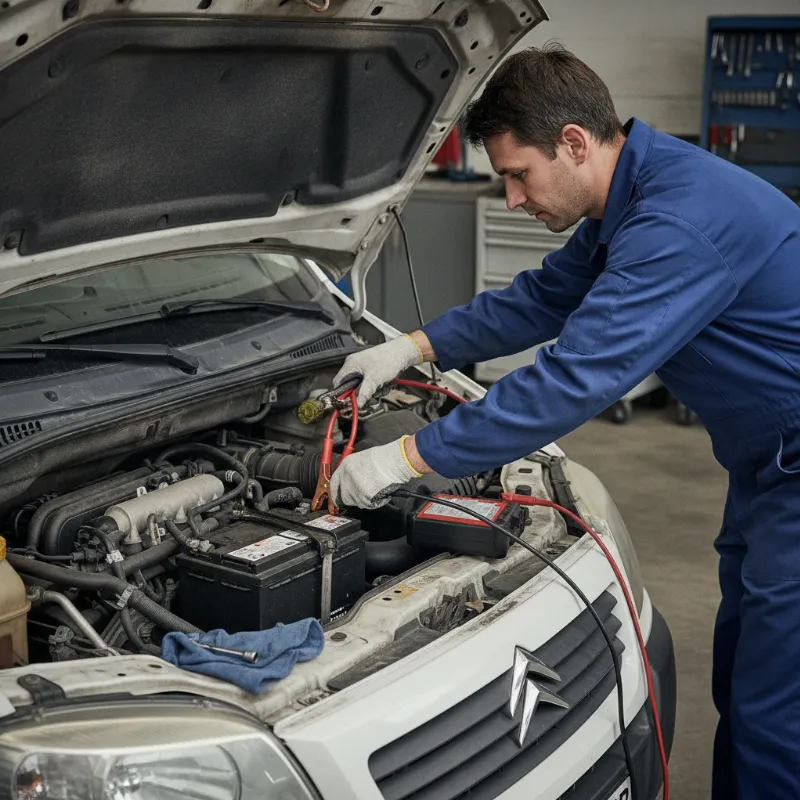
Before you jump start your Citroen Relay: safety checks
Before you touch a single jump lead, take a moment to run through some basic safety checks. The Citroen Relay is a large panel van with a sizeable diesel engine, and its battery holds enough charge to cause serious injury if handled carelessly. Park the donor vehicle close enough for the leads to reach comfortably, but make sure the two vans are not touching at any point — metal-to-metal contact can create an unintended electrical path.
Switch off both engines, remove the keys, and turn off all electrical loads including headlights, the radio, heated seats, air conditioning and any dash cams or phone chargers plugged into the 12V socket. Apply the handbrake on both vehicles and put them in neutral (or park, if the donor is an automatic). Take off any dangling jewellery, loose scarves or ties, and pop on a pair of gloves and safety glasses if you have them — battery acid and sparks are not something you want near your skin or eyes.
Give the Relay's battery a quick visual inspection too. If you see cracks in the casing, bulging sides, white or greenish crusty deposits around the terminals, or you can smell a rotten-egg odour, do not attempt to jump start the van. A damaged battery can vent hydrogen gas and, in the worst case, explode when a current is applied. In that situation, call for roadside assistance instead.
What you'll need to jump start a Citroen Relay van
Jump starting a Relay is straightforward, but only if you have the right kit to hand. A commercial van has heavier starting demands than a family hatchback, so cheap, thin-gauge jump leads simply won't cut it. Here's what to gather before you begin.
Jump leads or a portable jump starter
You have two realistic options. The first is a set of heavy-duty jump leads, ideally rated at 600 amps or more with thick copper cores and well-insulated clamps. Anything lighter may not deliver enough current to crank a 2.0 or 2.2 litre HDi diesel, and you risk melting the leads themselves. You'll also need a second vehicle with a healthy 12V battery — ideally another van or a large diesel car — parked close enough for the leads to connect without straining.
The second, and increasingly popular, option is a portable lithium jump starter. These compact battery packs are more than powerful enough for the Relay provided you buy one rated for diesel engines of 2.5 litres or above, and they remove the need for a donor vehicle entirely. Keep one charged in the cab and you'll never be stranded — just remember to top it up every few months.
Locating the Citroen Relay battery
On most Citroen Relay models from the third generation onwards (2006 onwards), the main battery sits under the driver's seat rather than in the engine bay. To access it, slide the seat fully forward, lift the seat base, and remove the plastic cover. However, you don't usually need to reach the battery itself to jump start the van — Citroen has fitted remote jump-start terminals in the engine bay for exactly this reason.
Open the bonnet and look for a red plastic cover marked with a "+" symbol; this is the positive remote terminal. The earth (negative) point is a bare metal bolt or bracket on the engine block or chassis, often marked with a "-" symbol or an earth icon. Using these remote points is far safer and more convenient than trying to route leads under the seat. If you have an older Relay with the battery in the engine bay, connect directly to the battery terminals in the same order as described below.
Step-by-step: how to jump start a Citroen Relay
With both vans safely parked, engines off and your leads or jump pack ready, you can begin the jump start itself. Take your time — rushing this stage is how batteries get damaged and electronics get fried. Modern Relays contain a lot of sensitive control modules, and a slip of the clamp can cost hundreds of pounds in repairs.
Connecting the jump leads in the correct order
The order in which you connect the leads matters enormously. Follow this sequence exactly:
First, attach the red (positive) clamp to the positive remote terminal on the Relay — the one under the red plastic cover marked "+". Second, attach the other end of the red lead to the positive terminal of the donor vehicle's battery. Third, clip the black (negative) lead to the negative terminal of the donor battery. Finally, attach the other end of the black lead to the earth point on the Relay — a bare, unpainted piece of metal on the engine block or a dedicated earth bolt, well away from the battery itself. This final connection may produce a small spark, which is why you want it away from any hydrogen gas the battery may have vented.
Double-check that no leads are dangling near moving parts such as the auxiliary belt, cooling fan or pulleys. Once you're happy everything is secure, you're ready to start.
Starting the engine and disconnecting safely
Start the donor vehicle first and let it idle for three to five minutes. This gives the flat Relay battery time to take on some surface charge and reduces the load on the donor's alternator when you try to crank. Now turn the key in the Relay. If it fires up straight away, great — leave it running at a fast idle (around 1,500 rpm) for a few minutes before disconnecting anything.
If it doesn't start, wait another minute or two and try again. Don't crank continuously for more than about ten seconds at a time, as this can overheat the starter motor. Once the Relay is running, disconnect the leads in the exact reverse order: black clamp off the Relay's earth point, black off the donor battery, red off the donor battery, and finally red off the Relay's positive terminal. Refit the red plastic cover, close the bonnet and take the van for a drive of at least 30 minutes to give the alternator time to properly recharge the battery.
What to do if your Citroen Relay still won't start
If the Relay refuses to crank, or turns over very slowly even after several minutes of connection, the problem may go beyond a simply flat battery. Start by checking that all four clamps are making solid contact — corrosion or paint under a clamp can drastically reduce current flow. Wiggle each connection and try again.
If the engine cranks strongly but doesn't fire, the issue is likely fuel, glow plugs or a sensor fault rather than the battery. On a cold morning, faulty glow plugs are a common culprit on high-mileage Relays. If the engine barely cranks at all despite good connections, the battery itself may be beyond saving — batteries typically last four to six years, and a deeply discharged battery often won't hold a charge afterwards. In either case, it's time to call a mobile mechanic or breakdown service. Trying to bump-start a modern common-rail diesel van is not advisable and can damage the catalytic converter or DPF.
It's also worth checking the smaller auxiliary battery, if your Relay is fitted with one, as newer models with stop-start systems have two batteries and both need to be healthy for the van to start reliably.
Preventing a flat Citroen Relay battery in future
Prevention is always cheaper than a callout. If your Relay sits for long periods — a common issue for tradespeople with a second van, or for motorhome conversions — invest in a smart trickle charger or solar maintainer. Plug it in whenever the van is parked up for more than a week and the battery will stay healthy for years longer.
Get into the habit of switching off all interior lights, the radio and any aftermarket accessories before you turn off the ignition, and check periodically that the load compartment light isn't being held on by a stuck door switch. Have the battery and charging system tested at every service; most garages will do this free of charge, and it flags a failing battery before it leaves you stranded. Finally, if your Relay is used mostly for short urban trips, take it for a longer motorway run every couple of weeks to let the alternator fully replenish the battery — repeated short journeys are one of the biggest causes of premature battery failure in commercial vans.
Frequently asked questions
Below are answers to some of the most common questions Citroen Relay owners ask when dealing with a flat battery or considering the jump start process.
FAQs
How do you safely jump start a Citroen Relay van?
Park a donor vehicle close by without the two vans touching, switch off both engines and all electrical loads, then connect heavy-duty jump leads in this order: red clamp to the Relay's positive remote terminal (under the red plastic cover in the engine bay), red to the donor battery positive, black to the donor battery negative, and black to a bare metal earth point on the Relay's engine. Start the donor and let it run for a few minutes, then start the Relay. Disconnect the leads in the exact reverse order and drive the van for at least 30 minutes to recharge the battery.
Where is the battery on a Citroen Relay van?
On third-generation Relay models (2006 onwards), the main battery is located under the driver's seat. You lift the seat base to access it, but for jump starting you should use the remote positive terminal in the engine bay, marked with a red plastic cover and a '+' symbol, along with an earth point on the engine block. Older Relays have the battery in the engine bay itself.
Can you jump start a Citroen Relay with a car?
Yes, but the donor car needs a healthy 12V battery and ideally a reasonably large engine — a small city car may struggle to provide enough current for a 2.0 or 2.2 HDi diesel. Heavy-duty jump leads rated at 600 amps or more are essential. A large diesel car or another van makes the best donor. Alternatively, a good quality portable lithium jump starter rated for diesel engines removes the need for a second vehicle.
How long should I run my Citroen Relay after jump starting it?
After a successful jump start, drive the van for at least 30 minutes, ideally including some steady motorway or A-road driving. Idling alone doesn't produce enough alternator output to fully recharge a deeply flat battery. If the van has been jump started because the battery is old or has been fully discharged more than once, expect it may not hold charge overnight and plan to have it tested or replaced.
Will jump starting damage my Citroen Relay's electronics?
Provided you connect the leads in the correct order, use good quality heavy-duty leads or a proper jump pack, and don't allow the clamps to touch each other or slip off during cranking, jump starting is safe for the Relay's electronics. Problems usually occur when polarity is reversed, when cheap thin leads overheat, or when the final earth connection is made too close to the battery and ignites vented hydrogen gas. Follow the sequence carefully and you'll be fine.