How Much Does a Citroen Relay Van Weigh? Kerb Weight, Payload & GVW Explained
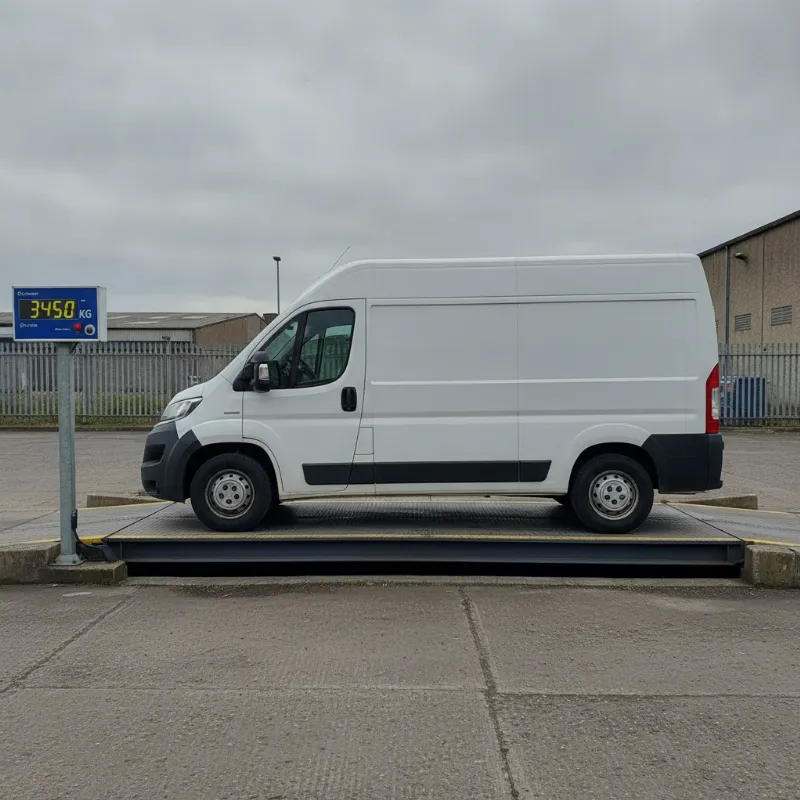
How much does a Citroen Relay van weigh?
The short answer is that a Citroen Relay van weighs anywhere from around 1,900kg to over 2,200kg unladen, depending on the wheelbase, roof height, engine and specification you choose. Most standard panel van variants fall between 1,935kg and 2,150kg kerb weight, with a gross vehicle weight (GVW) of 3,300kg or 3,500kg. Heavier chassis cab, Luton and specialist conversions can push the fully loaded weight up to 4,000kg or beyond on higher-GVW models.
Because the Relay is sold in so many shapes and sizes — from the compact L1H1 city van right up to the enormous L4H2 maxi — quoting a single figure isn't really useful. What matters is the specific combination of length, height and body type on the V5C for the van in front of you.
Kerb weight vs gross vehicle weight (GVW) explained
Kerb weight is the weight of the van itself with all fluids topped up, a full tank of fuel and no driver, passengers or cargo on board. It's the number manufacturers quote when they talk about how much the van "weighs" in isolation. Gross vehicle weight, sometimes called maximum authorised mass (MAM), is the absolute maximum the van is legally allowed to weigh once you've added everything — driver, passengers, tools, racking and load.
For the Citroen Relay, GVW is typically 3,300kg or 3,500kg on van variants, with heavier 4.0-tonne chassis cab options available for conversions. The gap between kerb weight and GVW is your available payload, and staying under GVW isn't optional — it's a legal requirement checked by DVSA at the roadside.
Payload: how much you can actually carry
Payload is what most operators really care about. On a typical 3.5-tonne Relay panel van with a kerb weight of around 2,000kg, you're looking at roughly 1,500kg of usable payload once fuel and driver are accounted for. Smaller L1H1 models can offer payloads closer to 1,600kg because they weigh less, while taller and longer L4H2 vans sacrifice some payload to body weight.
Remember that ply lining, roof racks, tow bars, bulkheads and fitted shelving all eat into that payload figure. If you're regularly running near the limit, weigh your van fully kitted out before you start loading customer goods.
Citroen Relay weight by wheelbase and roof height
Citroen designates each Relay body style with an L (length) and H (height) code. L1 is the shortest wheelbase, L4 the longest, while H1 is the standard roof and H2 the high roof. Each combination has its own kerb weight, load volume and payload rating.
L1H1 and L2H1 short and medium wheelbase weights
The L1H1 is the compact end of the Relay range, with a kerb weight of around 1,935kg to 1,985kg depending on engine and trim. It's the lightest panel van in the family and, at 3,000kg or 3,300kg GVW, still offers a healthy payload north of a tonne despite its smaller footprint.
The L2H1 steps up to a medium wheelbase with the standard roof height. Expect a kerb weight of roughly 1,975kg to 2,050kg, with GVW options of 3,300kg or 3,500kg. It's a popular choice for couriers and tradespeople who want extra load length without moving up to a high roof.
Citroen Relay L2H2 dimensions and weight
The L2H2 combines the medium wheelbase with the high roof, giving standing headroom inside without the overall length of an L3 or L4. Overall length is around 5,413mm, width including mirrors around 2,524mm and height around 2,524mm. Kerb weight typically sits around 2,040kg to 2,100kg, with a 3,500kg GVW leaving comfortably over 1,400kg of payload.
It's a strong all-rounder and one of the most common Relay specs on the used market, particularly with mobile workshop and welfare unit conversions.
Citroen Relay long wheel base (L3H2 and L4H2) weights
Move up to the L3H2 and you're looking at a kerb weight of around 2,090kg to 2,150kg, still on the 3,500kg GVW chassis. The L4H2 — the longest and tallest panel van in the range — weighs roughly 2,150kg to 2,220kg empty and is often specified with a higher 4.0-tonne GVW option to preserve payload despite the larger body.
These long-wheelbase Relays are the workhorses of parcel delivery fleets and removals firms, offering up to 17 cubic metres of load space. The trade-off is that a driver of a 4.0-tonne LWB Relay needs to check their licence entitlement carefully.
Citroen Relay weight by variant
Weight varies not just with body dimensions but with how the van is finished. A panel van, a chassis cab and a Luton box all use the same underlying platform but weigh very different amounts once built.
Panel van weights across the range
Across the panel van line-up, kerb weights range from around 1,935kg for the smallest L1H1 up to around 2,220kg for a fully specified L4H2. Diesel engines add a little weight over petrol alternatives where offered, and the newer e-Relay electric variant is significantly heavier again due to the battery pack, tipping the scales at over 2,500kg unladen.
Chassis cab, dropside and Luton conversion weights
Chassis cab versions leave the factory much lighter than a panel van — often around 1,850kg to 1,950kg — because the load area body hasn't been built yet. Once a coachbuilder fits a dropside body you're typically adding 250kg to 350kg, while a Luton box with a tail lift can add 500kg to 700kg. That's why Luton Relays are almost always specified on the 4.0-tonne GVW chassis to keep payload usable.
2004 Citroen Relay LWB dimensions and weight
Older Relays from the previous generation, such as a 2004 LWB model, tend to be slightly lighter than the current van because their body construction is a little simpler. A 2004 Relay LWB panel van, commonly the 2.0 HDi or 2.2 HDi 1800 or 1800TD variant, has a kerb weight in the region of 1,850kg to 1,950kg with a GVW of 3,300kg or 3,500kg.
Overall length is around 5,591mm, width around 2,050mm and height around 2,522mm on the high roof. Payload on a well-specified example can be 1,400kg to 1,500kg, which is why these older Relays still turn up in service with builders and market traders two decades on.
Citroen Panel Van Relay 1500 TD HDi MWB key weight and load specs
The Relay 1500 TD HDi MWB is a popular medium-wheelbase specification. As the "1500" designation suggests, it's rated for a 1,500kg payload class. Kerb weight sits around 1,950kg to 2,000kg with a 3,500kg GVW, giving a real-world payload of approximately 1,500kg once fluids and driver allowance are taken into account.
Load length is around 3,120mm, load width around 1,870mm (with roughly 1,422mm between the wheel arches) and load height around 1,662mm on the standard roof. Side loading door aperture and rear barn doors that open to 270 degrees make it a genuinely useful working van for tradespeople who need to shift long lengths of timber, ladders or racked stock.
Why van weight matters: driving licence, tax and running costs
Van weight isn't just a spec-sheet curiosity. It affects who's allowed to drive the vehicle, how it's taxed, what speed limits apply to it and how much it costs to run day to day.
3.5t licence limits and what happens above them
A standard UK category B car licence lets you drive vehicles up to 3,500kg GVW. Most Relay panel vans sit exactly at or below this limit, which is why they're specified at 3,500kg rather than higher. If you go for a 4.0-tonne LWB Luton or a heavier conversion, you'll need category C1 entitlement, which drivers who passed their test after 1 January 1997 don't automatically hold.
Get caught driving over your GVW or without the right licence and you're looking at fines, points and potentially an invalid insurance policy. Always weigh a loaded van at a public weighbridge if you're in any doubt.
Weight, fuel economy and the Citroen Relay battery
Heavier vans burn more fuel, wear tyres faster and put more strain on brakes and suspension. A fully loaded 3.5-tonne Relay will typically return several mpg less than the same van running empty. On the electric e-Relay, the battery pack itself adds several hundred kilograms, which is why the government allows category B licence holders to drive electric vans up to 4,250kg GVW — the extra allowance offsets the battery weight so payload isn't compromised.
Servicing costs, tyres and Clean Air Zone charges also scale with weight and emissions, so the right van for the job is often the lightest one that can still carry your typical load comfortably.
Finding a Citroen Relay van for sale at the right weight for your job
When you're shopping for a used Relay, don't just look at the length and roof height on the advert. Check the V5C for the recorded kerb weight and GVW, factor in any racking, ply lining or tow bar that's already fitted, and work out the real payload you'll have left once your typical crew and kit are on board.
If you're regularly close to 3.5 tonnes fully loaded, it's worth considering a 4.0-tonne variant and the C1 licence that goes with it — the extra headroom on payload usually pays for itself in fewer trips and less wear. Whatever your job, there's a Relay weight and body combination that fits, from the nimble L1H1 city van to the maxi L4H2 workhorse.
FAQs
How much does a Citroen Relay van weigh?
A Citroen Relay panel van weighs between roughly 1,935kg and 2,220kg kerb weight (unladen) depending on wheelbase, roof height, engine and trim. Gross vehicle weight is typically 3,300kg or 3,500kg on standard panel vans, with 4,000kg options available on longer wheelbase and chassis cab variants for heavier conversions like Lutons.
What is the payload of a 3.5 tonne Citroen Relay?
A 3.5-tonne Citroen Relay panel van offers a payload of roughly 1,300kg to 1,600kg depending on the specification. Smaller L1H1 models tend to have the highest payload because they're lighter, while long-wheelbase, high-roof L4H2 vans lose some payload to the extra body weight. Any racking, ply lining, tow bar or roof rack fitted will reduce that figure further.
Can I drive a Citroen Relay on a standard car licence?
Yes, as long as the Relay has a gross vehicle weight of 3,500kg or less, you can drive it on a standard UK category B car licence. Heavier 4.0-tonne Relay chassis cab and Luton variants require category C1 entitlement, which drivers who passed their test after 1 January 1997 don't automatically have. Electric e-Relay vans are allowed up to 4,250kg GVW on a category B licence to offset the battery weight.
How heavy is a Citroen Relay Luton van?
A Citroen Relay Luton with a tail lift typically has a kerb weight of around 2,500kg to 2,700kg once the box body and tail lift are fitted. That's why most Relay Lutons are built on the 4.0-tonne GVW chassis rather than the standard 3.5-tonne — it preserves around 1,300kg to 1,500kg of usable payload while keeping the van legal to drive fully loaded.
How much does a 2004 Citroen Relay LWB weigh?
A 2004 Citroen Relay LWB panel van, such as the 2.0 or 2.2 HDi 1800/1800TD variant, has a kerb weight of approximately 1,850kg to 1,950kg with a gross vehicle weight of 3,300kg or 3,500kg. That gives a payload of around 1,400kg to 1,500kg, and overall dimensions of roughly 5,591mm long, 2,050mm wide and 2,522mm tall on the high roof.