How Much Does a Citroen Berlingo Weigh? Kerb Weight & Payload Guide
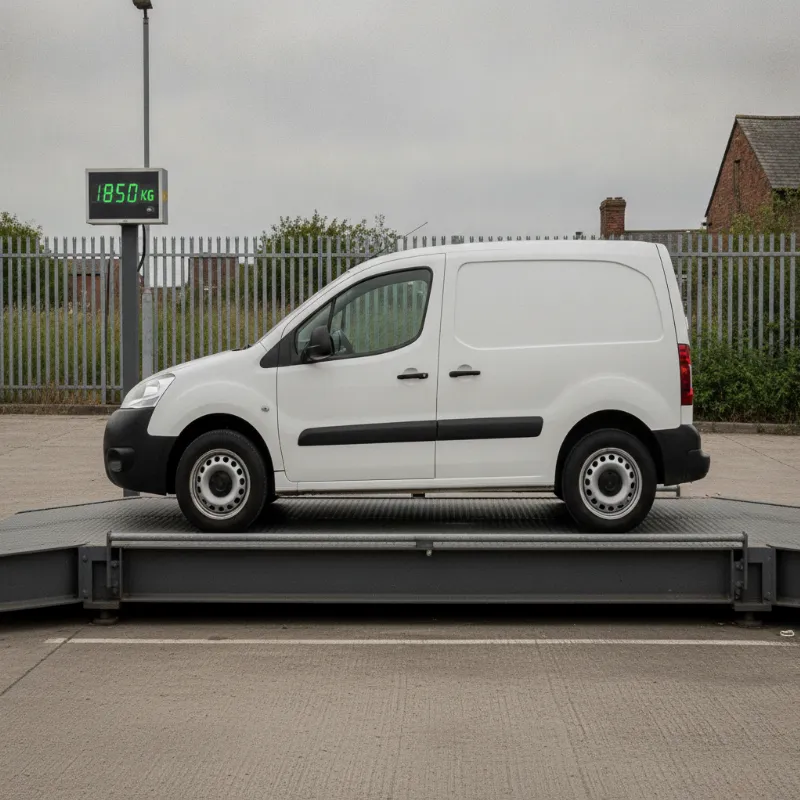
How Much Does a Citroen Berlingo Weigh?
The Citroen Berlingo typically weighs between 1,150kg and 1,550kg unladen (kerb weight), depending on the generation, engine and body configuration. Diesel and petrol models usually sit in the 1,200kg to 1,450kg range, while the fully electric ë-Berlingo is heavier at around 1,650kg to 1,750kg due to its battery pack. The gross vehicle weight (GVW) of most modern Berlingo vans falls between 1,900kg and 2,400kg, giving a useful payload of roughly 550kg to 1,000kg.
These figures make the Berlingo one of the lightest compact vans on the UK market, which is one of the main reasons it remains popular with couriers, tradespeople and small businesses that want a nimble, economical workhorse.
Citroen Berlingo Kerb Weight by Model and Generation
Kerb weight varies noticeably between generations because Citroen has changed body sizes, engine options and equipment levels over the years. Here's how the numbers break down across the Berlingo's three main generations, plus the electric variant.
First Generation (1996–2008) Kerb Weight
The original Citroen Berlingo, launched in 1996, was the lightest of the lot. Kerb weights typically ranged from around 1,075kg for the earliest 1.4-litre petrol versions up to about 1,200kg for the 1.9D and 2.0 HDi diesel panel vans. With a GVW usually pegged at 1,850kg, first-generation Berlingos offered payloads in the region of 625kg to 800kg, making them a firm favourite among small-scale delivery drivers and fleet operators of the era.
Second Generation (2008–2018) Kerb Weight
The second-generation Berlingo grew in size and gained more equipment, pushing kerb weights up to roughly 1,220kg to 1,400kg depending on engine, trim and whether the buyer opted for the standard L1 or extended L2 body. GVW figures rose to between 1,930kg and 2,180kg, and payloads improved on many variants to around 750kg to 850kg. Diesel HDi engines were by far the most common choice for UK van buyers during this period.
Third Generation (2018–Present) Kerb Weight
The current-generation Berlingo, based on Stellantis's EMP2 platform and shared with the Peugeot Partner, Vauxhall Combo and Toyota Proace City, weighs between roughly 1,340kg and 1,550kg unladen. GVW sits between 2,180kg and 2,410kg depending on specification, and payload can reach up to 1,000kg on higher-rated versions with the L2 body and BlueHDi 100 engine. This makes the modern Berlingo one of the most capable small vans in its class despite its compact footprint.
Citroen Berlingo Electric Van Weight
The all-electric ë-Berlingo is significantly heavier than its diesel siblings thanks to its 50kWh battery. Kerb weight is typically around 1,700kg to 1,750kg, and GVW is rated at approximately 2,400kg. Despite the extra mass of the battery, Citroen has engineered the ë-Berlingo to retain a competitive payload of around 800kg, meaning businesses moving to electric don't have to sacrifice much in terms of carrying capacity.
Gross Vehicle Weight (GVW) and Payload Explained
Gross Vehicle Weight — sometimes called the maximum authorised mass (MAM) — is the total weight the van is legally allowed to weigh when fully loaded, including the vehicle itself, driver, passengers, fuel and cargo. For the Citroen Berlingo, GVW ratings generally sit between 1,850kg on older models and 2,410kg on the latest high-payload variants.
Payload is simply the difference between kerb weight and GVW: it's how much you can actually load into the van. So a third-generation Berlingo with a kerb weight of 1,400kg and a GVW of 2,400kg has a payload of 1,000kg. Exceeding either figure is illegal, damages the vehicle and invalidates insurance, so it's worth knowing the plated weights of any van you buy or hire.
Kerb Weight vs Payload vs GVW: What's the Difference?
These three terms often get muddled, but they refer to distinct measurements. Kerb weight is the weight of the van itself with a full tank of fuel and standard equipment, but no driver, passengers or load. Payload is the maximum weight of cargo (plus driver and passengers, on strict readings) that the van can legally carry. GVW is kerb weight plus payload — the maximum permitted total weight of the van when loaded.
You'll find all three figures on the VIN plate, usually located inside the driver's door shut or under the bonnet. The plate lists the GVW first, followed by the gross train weight (GVW plus any towed trailer), then individual axle weights. Checking this plate before loading is the simplest way to stay legal and safe.
Why Berlingo Weight Matters for Drivers and Businesses
Weight isn't just a technical specification — it has real-world implications for who can drive the van, how much it costs to run and how useful it will be for your business.
Driving Licence and Weight Limits
A standard UK Category B car licence permits you to drive vehicles up to 3,500kg GVW. Every Citroen Berlingo variant falls comfortably below this limit, so any qualified driver in your business can get behind the wheel without needing a Category C1 or C licence. This makes the Berlingo particularly attractive to companies with rotating drivers or multi-drop delivery operations.
Fuel Economy and Load Capacity
Lighter vans generally use less fuel, and the Berlingo's relatively low kerb weight is one reason it consistently returns strong mpg figures — often 50mpg or more from the BlueHDi diesel engines when driven sensibly. However, load weight has a direct impact on economy: a fully laden Berlingo will use noticeably more fuel than an empty one, so balancing payload against running costs is an important consideration for high-mileage operators. For electric versions, extra weight reduces range, so understanding how much you typically carry helps you choose the right van for your duty cycle.
Looking for a Citroen Berlingo? View Our Latest Stock
Whether you need a light, economical diesel Berlingo for urban deliveries, a high-payload L2 model for tradework, or an all-electric ë-Berlingo for zero-emission zones, we regularly have a range of used and nearly new examples available. Every van comes with clearly listed kerb weight, GVW and payload figures so you can be sure it's the right fit for your workload and licence. Get in touch with our team for advice on choosing the right specification, or browse our current Citroen Berlingo stock online today.
FAQs
How much does a Citroen Berlingo van weigh?
A Citroen Berlingo van typically weighs between 1,150kg and 1,550kg unladen (kerb weight), with a gross vehicle weight of 1,850kg to 2,410kg depending on generation and specification. The electric ë-Berlingo is heavier at around 1,700kg to 1,750kg due to its battery pack. Payload capacity ranges from roughly 550kg on older models up to 1,000kg on the latest high-specification variants.
Can I drive a Citroen Berlingo on a standard car licence?
Yes. Every Citroen Berlingo variant, including the electric ë-Berlingo, has a gross vehicle weight well under 3,500kg, so it can be driven on a standard UK Category B car licence. You don't need a C1 or HGV entitlement to drive one for work or personal use.
What is the maximum payload of a Citroen Berlingo?
The maximum payload of a modern Citroen Berlingo is around 1,000kg, achieved by the third-generation L2 model with the BlueHDi 100 diesel engine. Most other variants offer between 650kg and 850kg of payload. The electric ë-Berlingo carries up to approximately 800kg despite its heavier battery pack.
Where can I find the exact weight of my Citroen Berlingo?
The exact kerb weight, gross vehicle weight and axle weights of your specific Citroen Berlingo are listed on the VIN plate, which is usually found inside the driver's door shut or under the bonnet. The V5C logbook and the original owner's handbook also contain the plated weight information for your vehicle.