Vauxhall Combo Not Starting When Hot: Causes & Fixes
Why a Vauxhall Combo Might Not Start When Hot
Few things are more frustrating than finishing a delivery, jumping back into your Vauxhall Combo, and turning the key only to be met with silence — or worse, a starter that cranks endlessly without firing. Hot-start failure is a well-known quirk on the Combo, particularly on higher-mileage 1.3 CDTi, 1.6 CDTi and older 1.7 DTi diesel variants, and it's usually a sign that one specific component is struggling to cope with elevated under-bonnet temperatures.
The good news is that "won't start when hot" is a fairly predictable fault pattern. Unlike random no-starts, heat-related issues narrow the field of suspects considerably, because they're triggered by temperature rather than moisture, wear or fuel quality. Below we walk through the most common causes, how to diagnose them yourself, and what to do if the problem keeps coming back.
Common Causes of Hot-Start Failure on the Vauxhall Combo Van
There are four main culprits behind a Combo that refuses to fire up when warm. Any one of them can bring you to a standstill, and it's not uncommon for two to be at play at once — for example, a marginal battery masking a failing sensor. Working through them methodically will save both time and unnecessary parts spending.
Failing Crankshaft Position Sensor
This is by far the most frequent cause of hot-start problems on the Vauxhall Combo. The crankshaft position sensor (CKP) sits close to the engine block and is exposed to significant heat. As the sensor ages, its internal windings become sensitive to temperature — it works perfectly when cold, but once the engine reaches operating temperature and you switch off, residual heat causes it to send an erratic or absent signal to the ECU. Without a valid crank signal, the ECU won't fire the injectors, and the engine will crank without starting.
The classic symptom is: van drives fine, you stop for 10–30 minutes, and it refuses to start until it has cooled down for an hour or two. Sometimes a fault code such as P0335 or P0336 will be logged, but often no code appears because the sensor is intermittent rather than fully failed.
Fuel Pressure and Injector Issues
On common-rail diesel Combos, hot-start problems can also stem from fuel system pressure loss. When the engine is hot, tiny leaks at injector seals, back-leak pipes or the high-pressure pump can allow fuel to drain back into the tank. On restart, the system has to prime itself before it can build enough rail pressure to fire — hence extended cranking or a complete no-start.
Worn injectors are another possibility. As they heat-soak, their spray pattern degrades and they may dribble rather than atomise. A workshop can measure back-leak from each injector to identify a bad one, and this is a job worth having done properly rather than guessing.
Starter Motor Heat Soak
Because the starter motor sits close to the exhaust manifold on the Combo, it absorbs a lot of heat once the engine has been running. As the internal solenoid contacts and windings warm up, their resistance rises and the starter may struggle to crank at proper speed — or click without cranking at all. If you can hear a click but no crank, or the crank sounds slow and laboured when hot, heat soak on the starter is a strong suspect.
Battery and Earth Connection Problems
A tired battery may deliver enough current to start a cold engine (where cranking resistance is lower) but not quite enough for a hot one, where oil is thinner but electrical loads and the starter's hot resistance are higher. Similarly, corroded or loose earth straps — particularly the engine-to-chassis earth — can cause voltage drops that show up only under load. Always check battery condition and terminals before spending money on sensors or injectors.
Diagnosing the Problem Step by Step
Start with the basics. Get the battery load-tested at any parts shop — it takes two minutes and is usually free. Inspect the terminals for corrosion and check the earth strap running from the engine block to the chassis and the negative battery post. Clean and tighten anything that looks suspect.
Next, when the fault occurs, note exactly what happens. Does the starter crank at normal speed but the engine refuses to fire? That points to a sensor or fuel issue. Does it crank slowly, or just click? That points to the starter or battery. Does it eventually start after 15–30 seconds of cranking? That's typical of fuel drain-back.
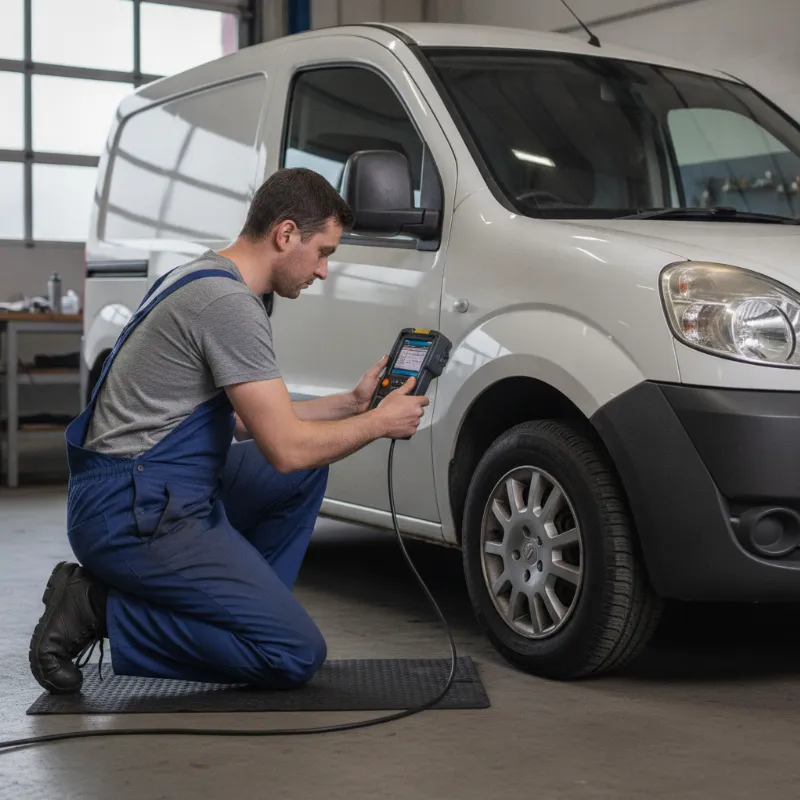
Plug in an OBD2 reader — even a cheap one — and check for stored and pending codes. Look for codes relating to the crankshaft sensor, camshaft sensor, rail pressure or injectors. Finally, if you can, get a mechanic to monitor live data during a hot-start attempt: seeing whether the RPM signal appears while cranking will confirm or rule out the crank sensor in seconds.
Quick Roadside Fixes to Try When Your Combo Won't Start Hot
If you're stuck on a job and need to get moving, there are a few things worth trying. First, turn the ignition to position II (dash lights on but not cranking) and wait 5–10 seconds before cranking — this lets the fuel pump prime and can overcome minor pressure loss. Repeat this two or three times.
Second, open the bonnet and let heat escape for 10–15 minutes. This alone often resolves a crank sensor or starter heat-soak issue enough to get you home. Third, check that the battery terminals are tight — a wobble can be enough to break contact under load.
Finally, if you suspect the crank sensor, some drivers carry a spare (they're inexpensive) and swap it out at the roadside — it's a 15-minute job on most Combo variants with basic hand tools. These are workarounds, not fixes: if the fault recurs, get it properly diagnosed before it leaves you stranded somewhere less convenient.
When to Call a Mechanic vs Replace the Van
A single crank sensor replacement, a new battery or a starter motor refurb is well within economic sense for almost any Combo — you're looking at a few hours' labour and modest parts costs. Even injector work, while pricier, is usually worth it on an otherwise sound van.
The picture changes if hot-start failure is one of a growing list of problems. If your Combo is also burning oil, showing EGR or DPF faults, has a slipping clutch or is approaching MOT with corrosion issues, then throwing money at the starting fault may just delay the inevitable. Get an honest assessment of the whole vehicle before committing to a big repair, and weigh it against the trade-in or scrap value plus what a newer van would cost you monthly.
Thinking of Upgrading? A Look at the Newer Vauxhall Combo Cargo and Combo Life
If your current Combo is nearing the end of its useful life, the current-generation Combo Cargo is a very different van to the one you're used to. Built on the same platform as the Peugeot Partner and Citroën Berlingo, it offers a much more modern cabin, better payload options, and considerably improved refinement. Diesel versions remain available for high-mileage operators, but the real story is on the electric side.
Vauxhall Combo Life Electric
The Combo Life Electric — the passenger-carrying sibling of the Combo Cargo Electric — offers around 174 miles of WLTP range from a 50kWh battery, with 100kW rapid charging bringing the pack from 0–80% in around half an hour. For tradespeople who double up their van as family transport, or for businesses running predictable urban routes, it removes the whole category of "won't start when hot" problems entirely — no diesel fuel system, no crank sensor, no starter motor.
Vauxhall Combo Life Electric Leasing
Leasing is often the most straightforward route into an electric Combo, particularly for businesses wanting to reclaim VAT and take advantage of Benefit-in-Kind rates on electric vehicles. Contract hire deals typically bundle warranty cover across the full agreement, meaning that if anything did go wrong, you're not the one footing the bill. Terms, mileage allowances and initial rentals vary widely between funders, so it's worth getting two or three quotes before committing.
FAQs: Vauxhall Combo Hot Start Problems
Below are answers to the most common questions we hear from Combo owners dealing with hot-start faults.
FAQs
Why does my Vauxhall Combo fail to start when the engine is hot, and how do I fix it?
The most common cause is a failing crankshaft position sensor, which becomes heat-sensitive as it ages and stops sending a valid signal to the ECU once under-bonnet temperatures rise. Other frequent culprits are fuel pressure loss through worn injector seals, starter motor heat soak, and marginal battery or earth connections. The fix depends on which is at fault: crank sensors are inexpensive and take around 15 minutes to swap; injector or fuel system work needs a diesel specialist; and battery/earth issues are usually a quick clean-up. Start by load-testing the battery, checking earth straps, and reading fault codes with an OBD2 scanner before spending money on parts.
How much does it cost to replace a crankshaft position sensor on a Vauxhall Combo?
The sensor itself is typically £20–£50 for a decent aftermarket part or genuine Vauxhall item. Labour is usually under an hour at an independent garage, so all-in you're generally looking at £70–£150 depending on where you go. It's one of the cheapest common fixes on the Combo.
Can I still drive my Combo if it only fails to start when hot?
Technically yes — the van drives normally once running — but you're gambling every time you switch it off. If the fault is a crank sensor, it can also progress to a full failure that leaves you stranded even when cold. It's best to diagnose and fix it promptly rather than plan your day around not stopping the engine.
Will a diagnostic scan always show what's wrong?
Not always. Intermittent heat-related faults, particularly on the crank sensor, often don't log a stored code because the ECU treats them as transient. A live-data scan performed during a failed hot-start attempt is far more revealing than reading codes after the fact. If your local garage can hook up a scanner while the fault is active, you'll get a much faster diagnosis.
Is it worth repairing an older Combo with hot-start problems?
Usually yes, if the rest of the van is sound. Most hot-start fixes are relatively cheap in the context of what a replacement van costs. But if the Combo is also showing corrosion, DPF issues, high mileage-related wear or upcoming MOT concerns, it may be more economical to move on to a newer van — potentially an electric Combo — rather than chase repairs.