Where is the EGR Valve on a Vauxhall Combo? Location Guide by Engine
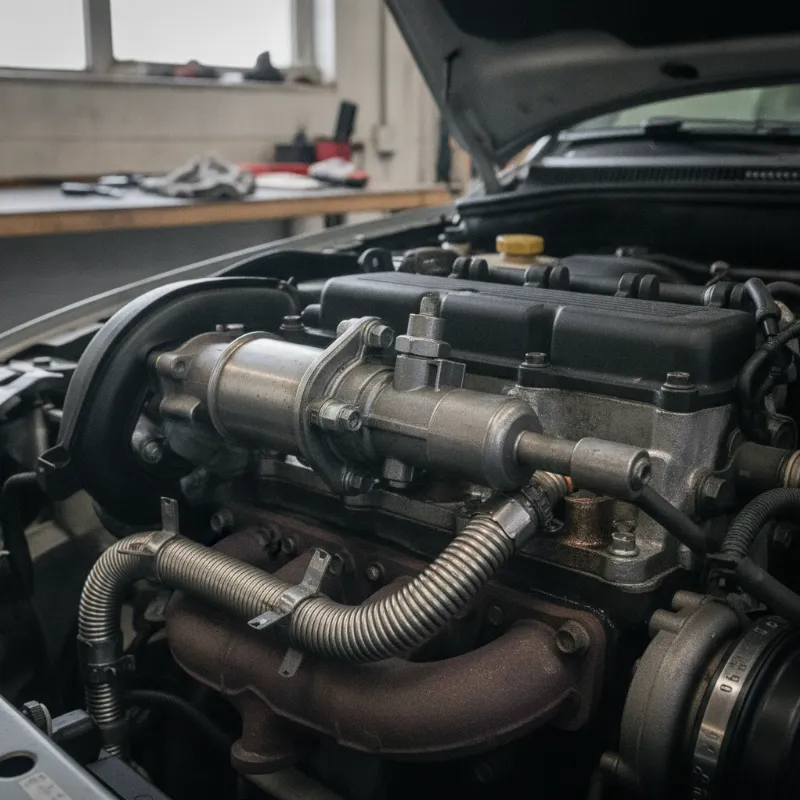
Where is the EGR valve on a Vauxhall Combo?
On most Vauxhall Combo vans, the EGR (Exhaust Gas Recirculation) valve sits on the engine block between the exhaust manifold and the intake manifold — its job is to route a portion of exhaust gases back into the intake to reduce nitrogen oxide emissions. The exact position varies by engine and generation, but on every Combo you'll find it bolted to the intake side of the engine, connected by a short metal pipe running from the exhaust manifold.
Because the Combo has been sold in the UK across multiple generations — the Combo C (2001–2011), Combo D (2012–2018) and the current Combo Cargo (2018 onwards) — the engine bay layout differs significantly depending on year and model. Below is a breakdown by the most common engines fitted to UK vans.
EGR valve location on 1.3 CDTi and 1.7 DI diesel engines
On the popular 1.3 CDTi (fitted to Combo C and D models), the EGR valve is mounted on the front-facing side of the engine, roughly in the centre, where the intake manifold meets the cylinder head. Look for a small round or oval metal unit with a plastic electrical connector on top and a heat-shielded pipe running down to the exhaust manifold. You'll usually need to remove the plastic engine cover to see it clearly.
On the older 1.7 DI and 1.7 CDTi engines fitted to earlier Combo C vans, the EGR valve is positioned slightly higher up and towards the bulkhead side of the engine. It's a larger unit than the one on the 1.3, and the connecting pipework is thicker. Access can be tight — you may need to remove the air intake pipe to get a spanner on the mounting bolts.
EGR valve location on 1.6 CDTi and later Combo Cargo models
The 1.6 CDTi engine, common in Combo D vans from around 2012 onwards, has the EGR valve mounted on the left-hand side of the engine (as you look at it from the front of the van), integrated closely with the EGR cooler. It's often partially hidden behind heat shielding and the intake ducting, so expect to remove a few bracket bolts to reach it.
On the current Combo Cargo, which shares its platform with the Peugeot Partner and Citroën Berlingo, the 1.5 BlueHDi and 1.6 turbo diesel engines place the EGR valve towards the front of the engine, close to the turbocharger outlet. These modern units are electronically controlled and sit alongside a more complex EGR cooler assembly. Because these engines run tighter emissions systems, the EGR valve is more integrated and often requires diagnostic tools to reset after removal.
What does the EGR valve do on a Vauxhall Combo?
The EGR valve reduces harmful nitrogen oxide (NOx) emissions by recirculating a measured amount of exhaust gas back into the engine's intake. By diluting the incoming air with inert exhaust gas, combustion temperatures drop, which in turn reduces NOx formation — a key requirement for meeting Euro emissions standards.
The valve opens and closes according to signals from the engine management system, based on load, temperature and throttle position. On a Vauxhall Combo diesel, the EGR is particularly active during low-load cruising, when emissions control is prioritised over outright power. When working correctly, you shouldn't notice it at all — but when it fails, the effects are usually obvious.
Signs your Vauxhall Combo EGR valve is failing
A sticking, clogged or failed EGR valve is one of the most common issues on higher-mileage diesel Combos, mainly because soot builds up over time and prevents the valve from seating properly. Watch out for these symptoms:
Rough idling is often the first sign, especially when the engine is warm. You may also notice hesitation or lumpy acceleration under light throttle, poor fuel economy, and in more severe cases visible black smoke from the exhaust. The engine management light (EML) coming on is a strong indicator, and a diagnostic scan will typically throw a fault code relating to EGR flow, position sensor or manifold pressure.
Some drivers also report a whistling or hissing noise from the engine bay, which can point to a stuck-open valve or a leaking gasket. If your Combo goes into limp mode — reduced power and revs capped at around 3,000 rpm — the EGR is one of the first components worth checking.
How to access and clean the EGR valve yourself
Cleaning the EGR valve is a reasonable DIY job on most Combo engines and can save the cost of replacement if the valve itself isn't mechanically damaged. Set aside a couple of hours and work on a cold engine.
Tools you'll need
Before you start, gather a socket set (typically 8mm, 10mm and 13mm sockets cover most fixings), a set of Torx bits, a flat-blade screwdriver, EGR-specific cleaner or carburettor cleaner, a wire brush or old toothbrush, a lint-free cloth, replacement gaskets, and a torque wrench for refitting. Nitrile gloves and safety glasses are essential — the soot deposits are messy and irritating.
Step-by-step access guide
Start by disconnecting the negative terminal on the battery and removing the plastic engine cover if fitted. Locate the EGR valve using the guidance above for your specific engine. Unplug the electrical connector on top of the valve, taking care not to break the plastic clip.
Next, undo the bolts securing the EGR pipe (or pipes) to the valve body, and then the bolts holding the valve to the intake manifold. On some engines you may need to remove the intake pipe or a section of heat shielding first. Once free, take the valve to a workbench and spray the internal passages with EGR cleaner, working the soot loose with a brush. Do not submerge the valve — the electronic actuator on top must stay dry.
Wipe the mating surfaces clean, fit a new gasket, and refit in reverse order using the correct torque settings. Reconnect the battery, start the engine and let it idle for a few minutes. On newer Combo Cargo models, you may need a diagnostic tool to clear codes or perform an EGR relearn procedure.
When to replace vs clean the EGR valve
Cleaning is worth trying first if the valve is simply carboned up and the actuator still moves freely. Many Combos will run happily for another 30,000–50,000 miles after a thorough clean, provided the underlying causes (short journeys, poor-quality fuel, blocked DPF) are addressed too.
Replacement is the better option if the electronic actuator has failed, if the valve body is cracked or warped, or if the position sensor is throwing persistent fault codes even after cleaning. On the newer 1.5 and 1.6 BlueHDi engines, replacement is often preferred because the valve is integrated with the cooler and the cost saving of cleaning is smaller. A genuine Vauxhall or quality OEM-equivalent unit is worth the extra outlay over cheap aftermarket parts, which often fail again within a year.
Thinking of upgrading? Browse our Vauxhall Combo stock
If your current Combo is running up recurring EGR issues alongside other age-related problems, it may be more cost-effective to move into a newer van rather than keep patching the old one. Newer Combo Cargo models offer improved emissions systems, better fuel economy and modern driver aids, all backed by more predictable running costs.
We regularly have a range of used and nearly-new Vauxhall Combo vans in stock, from workhorse panel vans to crew cab variants. Our team can talk you through the differences between engine options, payload ratings and trim levels so you find the right van for your business — and we're happy to answer any technical questions about the vans on the forecourt before you commit.
FAQs
Where is the EGR valve located on a Vauxhall Combo van?
The EGR valve on a Vauxhall Combo is mounted on the engine between the exhaust and intake manifolds. On the 1.3 CDTi it sits on the front of the engine near the intake manifold, on the 1.7 DI/CDTi it's higher up towards the bulkhead, on the 1.6 CDTi it's on the left-hand side integrated with the EGR cooler, and on newer Combo Cargo 1.5/1.6 BlueHDi engines it's near the turbocharger outlet. You'll usually need to remove the plastic engine cover and sometimes the intake pipework to see it clearly.
How much does it cost to replace the EGR valve on a Vauxhall Combo?
Expect to pay between £150 and £400 for the part depending on engine and whether you choose genuine Vauxhall, OEM-equivalent or aftermarket. Labour at an independent garage is typically 1–2 hours, so total costs usually fall between £250 and £600. Newer Combo Cargo models with integrated EGR coolers can be at the higher end of that range.
Can I drive my Vauxhall Combo with a faulty EGR valve?
You can usually drive short distances, but it's not recommended for long. A faulty EGR valve will fail an MOT emissions test, can cause the van to go into limp mode, and if left unchecked can damage the DPF and turbocharger due to increased soot and heat. Get it diagnosed and cleaned or replaced as soon as symptoms appear.
Is it better to clean or replace the EGR valve on a Combo?
If the valve is only carboned up and the electronic actuator still works, cleaning is the cheaper option and often restores normal running. If the actuator, position sensor or valve body itself has failed, replacement is the sensible route. Cleaning is generally worth trying first on older 1.3 and 1.7 engines, while replacement is often preferred on newer 1.5/1.6 BlueHDi units.
Will removing or blanking the EGR valve pass an MOT?
No. Blanking or removing the EGR valve on a road-going Vauxhall Combo is illegal in the UK and will fail the MOT emissions and visual checks introduced in 2018. It also invalidates insurance. Always repair or replace the valve rather than blanking it off.