Fiat Scudo Won't Start When Hot? Causes, Fixes & What to Check
Why a Fiat Scudo Won't Start When Hot: The Short Answer
If your Fiat Scudo cranks happily from cold but refuses to fire once it's up to temperature — or worse, cranks slowly and then goes silent after a motorway run — you're dealing with one of the most common intermittent faults on this van. In the vast majority of cases, the culprit is a heat-affected crankshaft position sensor, a fuel delivery problem caused by vapour lock or leaking injectors, a starter motor suffering from heat soak, or a tired battery combined with corroded earth straps.
The frustrating part is that these faults usually clear themselves once the engine cools down, meaning the van starts perfectly the next morning and often throws no fault codes at all. That intermittent behaviour is actually a useful diagnostic clue in itself — it points strongly at a component whose electrical resistance or physical properties change with heat.
Common Causes of Hot-Start Failure on a Fiat Scudo
The Fiat Scudo — whether you've got the earlier 2.0 JTD or the later 2.0 MultiJet shared with the Peugeot Expert and Citroën Dispatch — has a handful of well-documented weak points that produce hot-start problems. Here are the four you should investigate first, roughly in order of likelihood.
Faulty Crankshaft Position Sensor
The crankshaft position sensor (often called the CKP or crank sensor) tells the engine ECU exactly where the pistons are so it can time fuel injection and ignition. On the Scudo, this sensor is mounted low on the bellhousing where it's exposed to significant engine heat. As the sensor ages, its internal windings can develop a fault that only shows up when hot — the sensor works fine at ambient temperature, but once heat-soaked it stops producing a usable signal and the engine simply won't fire.
Classic symptoms are: the van starts perfectly from cold, drives normally, but if you stop for fuel or a quick delivery it cranks over indefinitely without catching. Leave it for 20–30 minutes and it fires straight up. A fault code isn't always stored because the ECU sees the sensor as absent rather than faulty. Replacement sensors are inexpensive and the job typically takes under an hour.
Fuel System Vapour Lock and Injector Issues
Diesel Scudos can suffer from fuel starvation when hot, particularly if the fuel filter housing, priming bulb or return lines are perishing. Air gets drawn into the low-pressure fuel circuit as things expand and contract, and when you try to restart hot, the system can't build pressure quickly enough. Leaking injector return pipes (the little plastic "leak-off" pipes on top of the injectors) are a very common Scudo fault and let air into the system as soon as the engine stops.
On higher-mileage MultiJet engines, worn injectors themselves can dump excess fuel back to the tank, dropping rail pressure so low that the engine can't fire until the pump has cranked for a long time. A leak-off test carried out by a diesel specialist will quickly identify a failing injector.
Starter Motor Heat Soak
The starter motor sits close to the exhaust manifold and turbo, and after a long run it can reach temperatures that cause the internal solenoid contacts and windings to expand and lose continuity. You'll typically hear a single click, a lazy half-turn, or nothing at all — yet the battery reads a healthy voltage and the van starts fine once cooled.
A heat shield can help as a temporary measure, but if the starter is on its way out it's better to replace it. Genuine and quality aftermarket starters are readily available and it's a straightforward job on most Scudo variants.
Weak Battery or Poor Earth Connections
Batteries lose their ability to deliver high cranking current as they age, and this is exaggerated when the underbonnet temperature is high. A battery that measures 12.5V at rest can still collapse under load. Just as important are the earth straps — the Scudo has an engine-to-body earth that corrodes and works loose, causing all sorts of intermittent electrical gremlins including hot-start failure.
Before spending money on sensors or starters, clean and tighten every earth point you can find, and have the battery load-tested. It's the cheapest fix you'll ever do if it turns out to be the problem.
How to Diagnose the Problem Step by Step
Working through the fault methodically will save you throwing parts at it. Start with the basics: with the engine cold, check battery voltage (should be 12.6V or above), inspect all earth straps for corrosion, and look for damp or oily patches around the injectors and fuel filter housing.
Next, replicate the fault. Take the van for a good run until it's fully up to temperature, then stop and try to restart immediately. If it won't fire, note exactly what happens — does it crank normally but not catch (points to fuel or sensor), does it crank slowly (battery, earths or starter), or does it just click (starter solenoid or battery)?
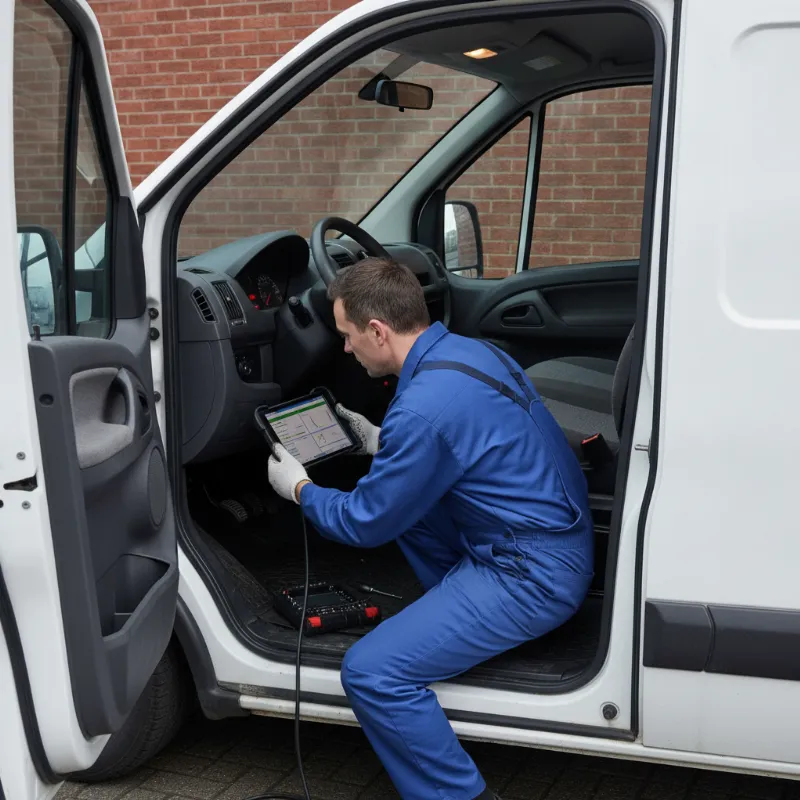
Plug in a diagnostic scanner while the fault is present if you can. Even without stored fault codes, a live-data readout of crank sensor RPM during cranking is enormously revealing — if the ECU is seeing zero RPM while the engine is clearly turning over, the crank sensor is your answer. Check fuel rail pressure in the same way; a healthy MultiJet should build 250 bar or more within a couple of seconds of cranking.
Finally, if you can borrow a known-good starter or crank sensor, swapping parts is often the quickest route to a diagnosis on an intermittent fault like this.
Fiat Scudo Camper Conversions: Extra Things to Check
Scudos are increasingly popular as small camper conversions, and a converted van adds a few extra suspects to the list. The leisure battery setup, if wired incorrectly, can leak current back through the split-charge relay and flatten the starter battery — leading to hot-start failure that looks electrical but is really just a discharged main battery.
Insulation and boarding-out can also trap heat in the engine bay far more than a factory panel van, particularly if a bulkhead has been removed or modified. This makes heat-soak faults on the starter and crank sensor more likely. If your Scudo camper only misbehaves after long summer drives, it's worth checking that engine bay ventilation hasn't been compromised by the conversion.
Aftermarket alarms, trackers and inverters wired into the starter feed or ignition circuit are another common source of intermittent no-start problems on converted vans. Disconnect anything non-standard and see if the fault clears.
Repair Costs and When to Move On to a Newer Van
The good news is that most Scudo hot-start faults are cheap to fix. A crank sensor is a modest part cost plus an hour or so of labour. A new battery, earth strap refurbishment and injector leak-off pipes together shouldn't break the bank either. Even a replacement starter motor is a sensible repair on an otherwise sound van.
Where it starts to get uneconomical is when a hot-start problem turns out to be worn injectors or a tired high-pressure fuel pump. A full set of injectors plus fitting and coding can easily run into four figures, and if the van is already showing its age elsewhere — rust around the sills and rear arches, a slipping clutch, or a tired gearbox — that's often the point where owners decide to move on.
As a rough rule of thumb, if the estimated repair bill is more than around a third of what the van is worth, and there are other jobs looming, it's worth pricing up a newer replacement before committing to the work.
Buying a Reliable Used Fiat Scudo: What to Look For
If you're shopping for a used Scudo — either as a work van or a camper base — there are a few things you can do to reduce the chance of inheriting a hot-start problem. Always insist on seeing the van started from cold and again after a proper test drive of at least 20 minutes. A seller who won't let you do a hot restart is telling you something.
Check the service history for evidence of injector work, crank sensor replacement or starter renewal — these aren't red flags in themselves, they're actually reassuring, but repeated attempts at the same fault suggest an unresolved issue. Look under the bonnet for clean, tight earth straps and for any sign of diesel weeping around the injectors or fuel filter.
Later MultiJet Scudos (2007 onwards) are generally more refined and slightly more reliable than the earlier 2.0 JTD, and the shared Peugeot/Citroën platform means parts availability is excellent for years to come. Buy on condition and history rather than mileage alone — a well-maintained 150,000-mile Scudo is often a better bet than a neglected 80,000-mile example.
Frequently Asked Questions
FAQs
Why does my Fiat Scudo refuse to start when the engine is hot, and how do I fix it?
The most common causes are a heat-affected crankshaft position sensor, fuel system issues such as vapour lock or leaking injector return pipes, starter motor heat soak, or a weak battery combined with poor earth connections. Diagnose by replicating the fault and checking whether the engine cranks normally but won't fire (usually fuel or sensor related) or cranks slowly (battery, earths or starter). A diagnostic scan showing zero RPM during cranking points firmly at the crank sensor. Most fixes are affordable, though worn injectors can be expensive.
Can I still drive my Scudo if it only fails to start when hot?
Technically yes, but it's risky. The fault will often get worse over time, and you may end up stranded after a fuel stop or delivery. If it's a crank sensor about to fail completely, the van can also cut out while driving. It's much better to diagnose and fix the issue before it leaves you at the roadside.
How much does it cost to replace a crankshaft sensor on a Fiat Scudo?
The part itself is inexpensive, typically a modest cost for a quality aftermarket sensor or a bit more for a genuine Fiat item. Labour is usually under an hour at an independent garage as the sensor is reasonably accessible. It's one of the cheapest and most satisfying fixes if it turns out to be the cause of your hot-start problem.
Will a diagnostic scanner always pick up the fault?
Not always. Intermittent hot-start faults often don't store a permanent code because the ECU sees the component as absent rather than faulty. That's why live data is more useful than fault codes for this issue — watching crank sensor RPM, fuel rail pressure and battery voltage during a failed hot-start attempt will usually reveal the cause even when no codes are logged.
Is the Fiat Scudo a reliable van overall?
The Scudo has a reasonable reputation, particularly the later MultiJet models shared with the Peugeot Expert and Citroën Dispatch. Weak points include injectors on high-mileage examples, corrosion around the sills and rear arches, and the intermittent electrical faults discussed above. Bought carefully with a good service history, it's a practical and cost-effective medium van.