Nissan Primastar Not Starting When Cold: Causes and Fixes
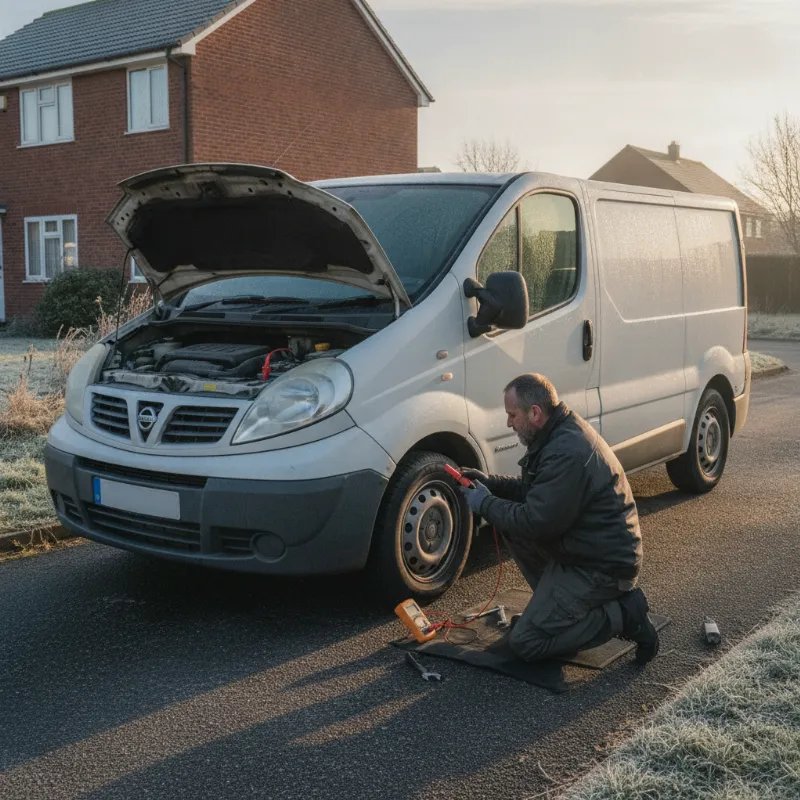
Why won't my Nissan Primastar start when it's cold?
Cold mornings are the acid test for any working van, and the Nissan Primastar is no exception. If yours cranks reluctantly, coughs and dies, or simply clicks and refuses to fire when the temperature drops, it's almost always down to one of a small handful of causes. The good news is that most of them are well understood, relatively affordable to put right, and often preventable with a bit of seasonal maintenance.
In simple terms, a cold engine needs three things to start: a strong electrical supply to crank it over, a healthy fuel supply at the right pressure, and — on a diesel Primastar — enough heat in the combustion chamber to ignite that fuel. When the mercury drops, the margins on all three shrink. A battery that copes fine in July can struggle in January, diesel thickens as it cools, and worn glow plugs simply can't get the cylinders warm enough. Understanding which of these is failing is the key to a quick fix rather than an expensive guess.
Common cold-start problems on the Nissan Primastar
Before you start throwing parts at the van, it helps to know what typically goes wrong on a Primastar in cold weather. The following issues account for the vast majority of no-start and hard-start complaints we hear about, and they tend to follow a predictable pattern based on age, mileage and how the van has been used.
Weak or failing battery in cold weather
A tired battery is the single most common reason a Primastar won't start on a frosty morning. Cold weather can reduce the available cranking power of a lead-acid battery by 30–40%, and a battery that's already three or four years old often can't cope. Symptoms include slow, laboured cranking, dashboard lights that dim when you turn the key, or a rapid clicking from under the bonnet. Short journeys, lots of stop-start work and heavy use of heaters, wipers and lights all take their toll faster in winter. A quick voltage check with a multimeter (12.6V or above with the engine off is healthy) will usually tell you if the battery is on its way out.
Glow plug faults on diesel Primastar models
Every diesel Primastar relies on glow plugs to pre-heat the combustion chambers before start-up. When one or more plugs fail, the engine will crank but may refuse to catch, run very rough for the first minute, or blow white smoke from the exhaust. A glow plug warning light that stays on, flashes, or comes on unexpectedly after the engine has started is a strong clue. Glow plugs are a wear item and typically need replacing somewhere between 60,000 and 100,000 miles — sooner if the van does mostly short runs.
Fuel system issues: waxing, filters and injectors
Diesel fuel contains paraffin waxes that can start to crystallise below about -7°C, clogging filters and starving the engine. UK forecourt diesel is treated for winter, but older fuel sitting in a half-full tank, a blocked or overdue fuel filter, or a slightly failing lift pump can all tip a Primastar over the edge on a hard frost. Worn or leaking injectors can also cause hot-start-fine, cold-start-poor behaviour because fuel pressure bleeds off overnight. If the engine cranks strongly but simply won't catch, fuel delivery is the next thing to check.
Starter motor and alternator wear
High-mileage Primastars often develop starter motor issues, and cold weather brings them to the surface. A starter with worn brushes or a tired solenoid may work fine when warm but struggle to spin a cold, thick-oiled engine fast enough to fire. Similarly, an alternator that isn't putting out a full charge will leave the battery half-empty overnight, mimicking a battery fault. Both are worth checking together, especially if the van has done more than 100,000 miles.
Crankshaft sensor and ECU faults
A less common but well-documented Primastar issue is the crankshaft position sensor. When it fails or becomes intermittent, the ECU can't tell where the engine is in its rotation and won't fire the injectors. Classic symptoms are a van that cranks endlessly without catching, sometimes starting after a rest, and often getting worse in the cold as the sensor's tolerances tighten. An engine management light or a fault code pointing at the crank sensor is a giveaway. ECU and wiring faults, though rarer, can produce similar behaviour and usually need a diagnostic scan to pin down.
Nissan Primastar 1.9 dCi 100PS SE 2700 SWB Panel Van: known cold-start quirks
The 1.9 dCi 100PS SE 2700 SWB is one of the most common Primastars still working the UK roads, and it has a few well-known cold-weather traits worth knowing about. The 1.9-litre Renault-sourced dCi engine is generally robust, but glow plug wear and fuel injector seal deterioration are the two issues that most commonly cause cold-start grief on this variant. Owners often report that the van fires up perfectly all summer, then starts needing two or three attempts once temperatures dip below about 3°C.
On higher-mileage examples, the fuel pressure regulator and low-pressure lift pump are also worth a look — they can hold enough pressure to start a warm engine but not a cold one. Battery drain from the aftermarket radios, alarms and tracking devices commonly fitted to working vans of this age is another silent killer. If your SWB Panel Van has become a reluctant starter over the winter, a combined check of glow plugs, battery health and fuel filter age will usually catch the problem before it strands you.
Step-by-step: how to diagnose a Primastar that won't start cold
You don't need a full workshop to get a good idea of what's wrong. Working through a simple checklist will either fix the problem or give your mechanic a huge head start.
Listen and look: what the dashboard is telling you
Turn the key to the ignition position (not start) and watch the dashboard. All the usual warning lights should illuminate brightly. If they're dim or flicker, suspect the battery or its connections. Watch specifically for the coil-shaped glow plug light — it should come on for a few seconds and then go out. If it flashes or stays on, there's a glow plug or pre-heat circuit fault stored. Now try to start it: a fast, healthy crank that won't catch points at fuel or glow plugs; a slow, groaning crank or rapid clicking points at battery, starter or connections.
Quick checks you can do on the driveway
Start with the battery terminals — they should be clean, tight and free of white or green corrosion. A quick clean with a wire brush and a smear of petroleum jelly can transform cold-cranking performance. Check the battery voltage with a multimeter; anything below 12.4V after a night off the van suggests it's not holding charge. Cycle the ignition two or three times before cranking to give the glow plugs longer to heat the cylinders. If you've had a warning light for a while, plug in an OBD reader — even a cheap one will often reveal a stored glow plug, crank sensor or fuel pressure code.
When to hand it over to a mechanic
If the basics check out and the van still won't start reliably, it's time for professional help. Diagnosing individual glow plugs, testing injector back-leak, and confirming crankshaft sensor faults all need specialist tools and, in the case of injectors, a fair bit of experience. A good independent Renault or Nissan specialist will usually pinpoint the fault in an hour or two, which is money well spent compared to guessing your way through replacement parts.
Preventing cold-start problems this winter
A little preparation goes a long way. Have the battery load-tested every autumn — most motor factors will do it free — and replace it if it's marginal rather than waiting to be caught out. Change the fuel filter at the recommended interval, and keep the tank at least a quarter full to reduce condensation and cold soak. If the van does mostly short journeys, an occasional longer run helps keep the battery topped up and the DPF happy.
Consider replacing glow plugs as a set once the van passes 80,000 miles, even if only one has failed — they tend to go in quick succession, and swapping them together saves labour later. A winter-grade diesel additive is cheap insurance in a cold snap, and parking the van under cover, or at least out of the wind, can make a real difference to how easily it fires on a frosty morning.
When is it time to replace your Primastar?
Occasional cold-start hiccups are normal on any older van and rarely a reason to move it on. But if you're stacking up repeated repairs — new battery, glow plugs, injectors, starter — and the van is still letting you down on cold mornings, the sums start to shift. A working vehicle that won't start is losing you money every time it strands you, and the cost of a modern replacement with a warranty may work out cheaper than another year of patching.
If your Primastar is also showing its age elsewhere — tired clutch, rusting sills, an increasingly frequent engine management light — it may be time to think about a newer van. A modern Euro 6 diesel or even an electric equivalent will start reliably, cost less to run on the daily commute and, for many trades, offer better access to low-emission zones. It's worth getting a valuation on your current van and seeing what the numbers look like before you throw good money after bad.
Frequently asked questions
A few of the questions we hear most often from Primastar owners heading into winter.
FAQs
Why won't my Nissan Primastar start when it's cold, and how do I fix it?
The most common causes are a weak battery, worn glow plugs, a clogged fuel filter or waxing diesel, a tired starter motor, or a failing crankshaft position sensor. Start by checking battery voltage and terminals, watch the dashboard for a glow plug warning light, and cycle the ignition a couple of times before cranking to give the glow plugs more time to heat. If the basics look good but the van still cranks without firing, get a diagnostic scan done — it will usually point straight at the faulty glow plug, sensor or fuel component and save you replacing parts unnecessarily.
How to enter the radio code on a Nissan Primastar after a flat battery
After a flat or disconnected battery, the factory radio will display CODE. Turn the ignition on, then use the preset buttons 1 to 4 to enter each digit of your four-digit code — pressing button 1 cycles the first digit, button 2 the second, and so on. Once all four digits are correct, press and hold button 5 (or the tuning button, depending on model year) until the radio confirms and returns to normal operation. Your code is usually on a card in the service book or the original handover pack; if you don't have it, a Nissan dealer can retrieve it from the radio's serial number.
Is the Nissan Primastar reliable in cold weather overall?
Broadly, yes. The 1.9 and 2.0 dCi engines used in the Primastar are well proven and, when maintained, start reliably down to well below freezing. Cold-weather problems almost always come down to age-related wear on the battery, glow plugs and fuel system rather than any fundamental design weakness. A Primastar that's had regular servicing, a good battery and fresh glow plugs will generally shrug off a British winter without complaint. It's the neglected examples — old battery, overdue filter, original glow plugs at 120,000 miles — that give the model its reputation for cold-morning grumbles.
How long should glow plugs last on a Nissan Primastar?
Typically 60,000 to 100,000 miles, though it varies with driving style and how often the van is used for short trips. If one plug has failed, it's usually worth replacing all four at the same time because the others are likely close behind, and the labour to access them is the same. Signs they're due include harder cold starting, white smoke on start-up, a rough idle for the first minute, or a glow plug warning light on the dash.
Can I jump-start a Nissan Primastar safely?
Yes, but follow the correct procedure to protect the electronics. Connect the red lead to the positive terminal on the flat battery first, then to the positive on the donor vehicle. Connect the black lead to the negative on the donor, then to a solid earth point on the Primastar's engine block — not directly to the flat battery's negative terminal. Let the donor vehicle run for a few minutes before attempting to start the Primastar, and once it fires, keep it running for at least 20–30 minutes to put some charge back into the battery. If it goes flat again overnight, the battery or charging system needs proper attention rather than another jump.