How Many People Can You Fit Into a Nissan Primastar?
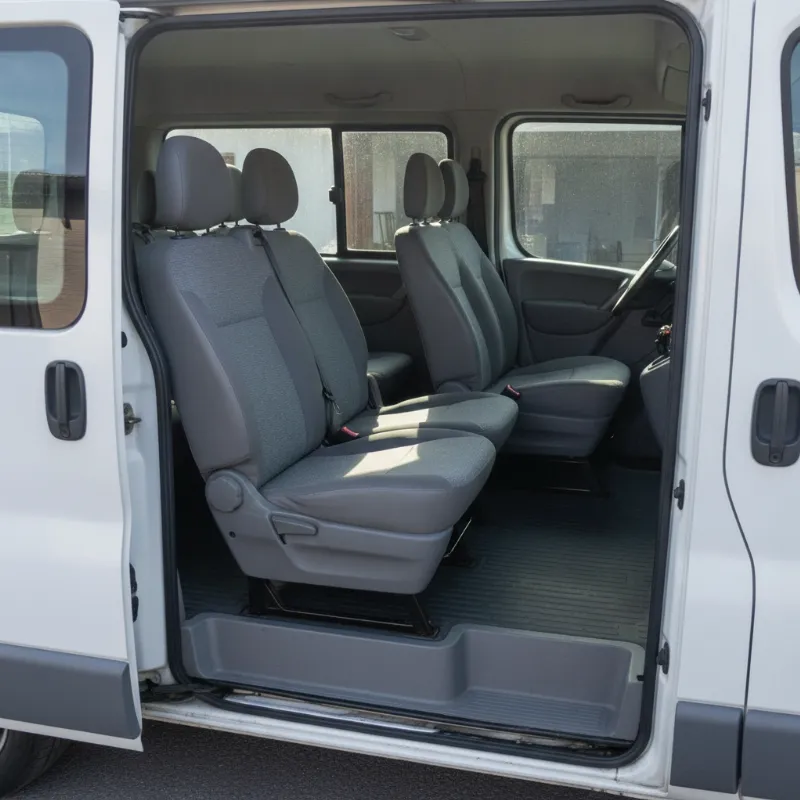
How Many People Can You Fit Into a Nissan Primastar?
The Nissan Primastar is one of those genuinely versatile mid-sized vans that can be configured to carry anywhere from two people up to nine, depending on the body style and trim you choose. In its most common form — the standard panel van — you'll find three seats up front, but crew van and combi variants open the door to six-seat and nine-seat layouts respectively. This guide walks through exactly how many people can legally and comfortably travel in each Primastar configuration, so you can pick the right van for your team, your family or your business.
Standard Panel Van Seating: The Nissan Primastar 1.9 dCi 100ps SE 2700 SWB Panel Van
The classic Primastar panel van — such as the popular 1.9 dCi 100ps SE 2700 SWB — is built primarily for cargo, but it still offers a practical three-seat cab. It's the workhorse of the range and the layout most tradespeople will recognise straight away.
Cab Layout and Passenger Capacity
Up front you'll find a single driver's seat and a twin passenger bench, giving a total of three seats. The middle position is a little tighter than the outer seats, with a slightly higher cushion to clear the transmission tunnel, but it works well for shorter journeys or for a third crew member being dropped at a job. The outer passenger seat is fully adult-sized and comfortable enough for a full day on the road. Behind the cab there's a solid bulkhead separating the crew from the load area — no seating in the back.
Legal Seating vs Physical Space
It's worth being clear that "how many people fit" and "how many people can legally travel" are two different questions. The Primastar panel van is homologated for three occupants including the driver, and each of those three seats has its own three-point seatbelt. You cannot legally carry passengers in the load area, even for a short distance, as there are no seats, no belts and no side windows. If you regularly need to move more than three people, you'll want to step up to a crew van or combi.
Nissan Primastar Crew Van: Six-Seat Configuration
The Primastar crew van (sometimes called the double cab-in-van) is the natural choice for teams that need to travel together with their tools and materials. It adds a second row of seating behind the front cab, typically a three-person bench, bringing total capacity to six people including the driver. Each rear seat has a three-point belt and a proper headrest, and a second bulkhead sits behind row two to keep the load area separated from the passenger compartment. You lose a chunk of load length compared with the panel van, but you gain the ability to move a full site crew in one vehicle — no more juggling two cars to get everyone to the job.
Combi and Minibus Variants: Seating Up to Nine
If passengers are the priority rather than cargo, the Primastar Combi is the model to look at. In its most common layout it seats nine people including the driver, arranged as three in the front, three in the middle row and three in the rear. That nine-seat count is significant because it keeps the vehicle within the standard car driving licence category for most UK drivers, making it a popular choice for taxi operators, community transport, sports clubs and larger families. The Combi still offers a decent luggage area behind the rearmost row, and the sliding side door makes access easy even in tight car parks.
Seating Across Primastar Trims (Including Tekna)
Seating capacity in the Primastar is dictated primarily by body style rather than trim level — an SE panel van and a Tekna panel van both seat three, for example. What the trim does change is the quality and specification of those seats. Entry-level trims come with hard-wearing cloth and manual adjustment, while higher grades such as Tekna add features like driver's armrests, upgraded upholstery, lumbar adjustment and additional storage in the cab. If you're spending long hours behind the wheel, the trim step-up is where you really feel the difference.
Nissan Primastar Review: Comfort for Driver and Passengers
On the road, the Primastar has always punched above its weight for cab comfort. The driving position is upright and van-like but the seat itself is well cushioned, visibility through the deep windscreen is excellent, and cabin noise is kept in check by the bulkhead behind you. Passengers in the outer seats have plenty of room, and in crew van and combi models the rear rows benefit from good headroom thanks to the tall body. It's a van that shrugs off motorway miles as easily as it handles urban delivery work.
Load Space vs Seating: Making the Right Choice
Choosing between panel van, crew van and combi really comes down to how you balance seats against cargo. The panel van gives you the maximum load length and volume with three seats — ideal for a sole trader or two-person team who mostly carry tools and stock. The crew van trades roughly a third of the load length for three extra seats, which is the sweet spot for small crews. The Combi maximises seating at nine but leaves only a modest boot area behind the rear bench. Think honestly about how often you'll actually use the extra seats: if the answer is "most days", size up; if it's "twice a year", stick with the panel van and hire a minibus when you need one.
Frequently Asked Questions About the Nissan Primastar
How Many Seats Are in a Nissan Primastar as Standard?
A standard Nissan Primastar panel van comes with three seats — one driver's seat and a twin passenger bench. Crew vans add a second row for a total of six, and Combi variants seat up to nine.
Can You Add Extra Seats to a Panel Van?
It is technically possible to convert a panel van by fitting an approved second-row seat and belt system, but any conversion must meet type-approval and seatbelt anchorage regulations, and the vehicle's V5C should be updated to reflect the new seat count. In most cases it's simpler and safer to buy a factory-built crew van or combi from the outset.
Where Can I Find a Nissan Primastar for Sale?
Used Nissan Primastars come up regularly through franchised Nissan dealers, independent van specialists and online marketplaces. Whichever route you choose, check the V5C for the exact seat count, look for a full service history, and inspect the seatbelts and mountings — particularly on ex-fleet crew vans that may have carried multiple passengers daily.
FAQs
How many people can you legally fit into a Nissan Primastar?
It depends on the body style. A standard Primastar panel van seats three people including the driver. The crew van seats six, and the Combi minibus variant seats up to nine including the driver — all with individual three-point seatbelts.
How many seats are in a Nissan Primastar as standard?
As standard, a Nissan Primastar panel van has three seats: a single driver's seat and a twin passenger bench up front. Higher-capacity variants (crew van and combi) are separate body styles rather than optional extras.
Can I drive a nine-seat Nissan Primastar Combi on a normal car licence?
Yes. A Primastar Combi with nine seats including the driver falls within the standard UK category B car licence, provided it's not being used for hire or reward outside of permitted schemes. Always double-check the V5C and your licence entitlements before driving.
Is it legal to carry passengers in the back of a Primastar panel van?
No. The load area of a panel van has no seats, no seatbelts and no proper anchorage points, so carrying passengers back there is illegal and unsafe. If you need to move more than three people, choose a crew van or combi.
What's the difference between a Primastar crew van and a Combi?
A crew van has two rows of seating (six seats total) plus a bulkhead and a dedicated load area behind — it's designed to carry a work crew and their kit. A Combi is a passenger-focused minibus with up to nine seats and windows all round, with only a small luggage area behind the rear row.