How to Drain the Radiator on a Citroen Berlingo: Step-by-Step Guide
Why You Might Need to Drain Your Citroen Berlingo Radiator
The cooling system on your Citroen Berlingo works hard every time you turn the key, keeping engine temperatures in check whether you're running deliveries around town or heading further afield. Over time, coolant loses its protective qualities — the corrosion inhibitors break down, the mixture becomes contaminated with rust or scale, and it can no longer transfer heat as efficiently as it should. Draining and replacing the coolant is a routine maintenance job that helps prevent overheating, internal corrosion and expensive repairs to the water pump, radiator or head gasket.
You might also need to drain the radiator if you're carrying out other work on the van — replacing a hose, thermostat, water pump or the radiator itself. Citroen generally recommends a coolant change at set service intervals, but if the fluid looks murky, discoloured or has debris floating in it, it's time to swap it out regardless of mileage. Catching this early on a Berlingo is far cheaper than dealing with a cooked engine on the hard shoulder.
Tools and Materials You'll Need
Before you get started, gather everything together so you're not scrambling around with coolant dripping onto your driveway. You'll need a drain pan or clean container with at least a 7-litre capacity, a set of screwdrivers (usually a flat blade for the drain plug), pliers, and a socket set in case you need to remove the undertray. Have plenty of rags or old towels on hand, along with a funnel for refilling.
For materials, you'll need fresh coolant that meets Citroen's specification — most Berlingos use an OAT (Organic Acid Technology) coolant, typically the pink or orange type. Check your owner's handbook or the sticker under the bonnet to confirm the correct grade, as mixing incompatible coolants can cause gelling and blockages. Buy enough concentrate and demineralised water (or a ready-mixed product) to refill the system, plus a sealable container for the old fluid. Safety gloves and eye protection are essential.
Safety First: Before You Start
Coolant is toxic. It has a sweet smell and taste that attracts pets and wildlife, so any spills need to be cleaned up thoroughly and old fluid must never be poured down a drain or onto the ground. Wear nitrile gloves and safety glasses throughout the job to protect your skin and eyes from splashes.
Just as importantly, never open a hot cooling system. The coolant in a running Berlingo is under pressure and well above boiling point — releasing the cap while hot can send scalding fluid straight into your face. Park on level ground, engage the handbrake, and give the engine several hours to cool down before you touch anything. If you're working in a garage, make sure it's well ventilated.
Step-by-Step: How to Drain the Radiator on a Citroen Berlingo
With your tools laid out and the van safely parked, you're ready to work through the drain process. Take your time — rushing this job is how coolant ends up all over the driveway and air gets trapped in the system.
Step 1: Let the Engine Cool Completely
Ideally, leave the Berlingo overnight or for at least three to four hours after the last drive. Touch the top hose to check — if it's still warm, wait longer. You want the entire system depressurised so that when you crack open the expansion tank cap, you get no hiss and no spray. If you're impatient here, you'll regret it very quickly.
Step 2: Locate the Radiator Drain Plug
Open the bonnet and look at the bottom corner of the radiator, typically on the driver's side (though it can vary by model year and engine variant). On many Berlingos you'll need to remove the plastic undertray first to get proper access — usually held on by a mix of Torx screws and plastic clips. The drain plug itself is a small plastic tap or wing-nut style fitting. If your Berlingo doesn't have a drain plug — some later models don't — you'll need to disconnect the bottom radiator hose instead, so have your drain pan ready to catch a sudden rush of fluid.
Step 3: Position a Drain Pan and Open the Plug
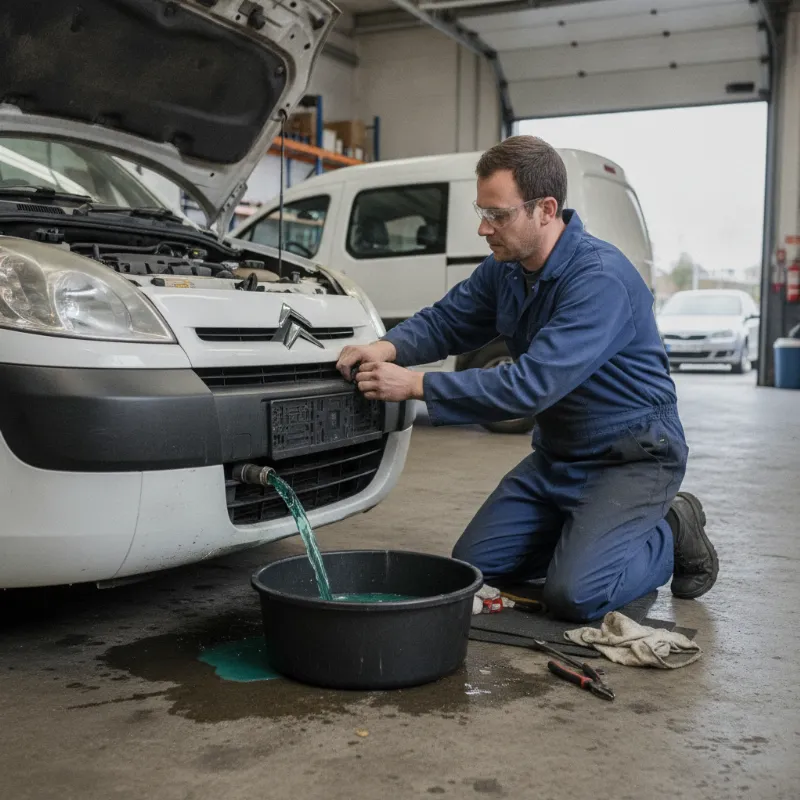
Slide your drain pan directly beneath the plug, giving yourself a bit of overhang because coolant tends to run along the underside of the radiator before dripping. Slowly turn the drain plug anti-clockwise — usually just a quarter or half turn is enough to start the flow. Don't remove it completely unless you have to, as small plastic plugs are easy to lose. Let the coolant drain fully; this can take 10 to 15 minutes.
Step 4: Open the Expansion Tank Cap to Aid Drainage
Once the flow slows to a trickle, unscrew the expansion tank cap on top of the reservoir. This breaks the vacuum in the system and allows the remaining fluid to drain out properly. You'll usually hear a gentle glug as air enters and the last of the coolant runs into your pan. If very little comes out, the drain point may be partially blocked with sediment — poke gently with a small wire, but be careful not to damage the plastic thread.
Step 5: Dispose of Old Coolant Safely
Transfer the used coolant into a sealable container — an empty coolant bottle is ideal — and label it clearly. Most UK household waste recycling centres accept antifreeze at their hazardous waste section free of charge, and many local garages will take it off your hands too. Never tip it into a drain, gutter or soakaway. Wipe down any splashes on the driveway with an absorbent granule or cat litter, then bag and bin the waste.
Refilling and Bleeding the Cooling System
Close the radiator drain plug (or reconnect the bottom hose) and double-check it's sealed properly. Mix your new coolant to the correct ratio — usually 50/50 with demineralised water unless you've bought a ready-mixed product — and slowly pour it into the expansion tank using a funnel. Fill to the MAX mark and leave the cap off for now.
Air pockets are the enemy of any cooling system, and the Berlingo is no exception. Start the engine with the heater set to maximum hot and the fan on low. As the engine warms up, you'll see the level in the expansion tank drop as trapped air escapes and coolant is drawn into the system. Keep topping up to the MAX line. Let the engine run until the thermostat opens and the cooling fan cycles at least once — this confirms coolant is circulating through the whole loop. Refit the cap, take the van for a short drive, then check the level again once cool and top up if needed over the following few days.
Common Issues and Troubleshooting Tips
The most common headache after a coolant change is an airlock, which usually shows up as poor heater performance, temperature gauge fluctuations or an overheating engine. If this happens, park on a slight incline nose-up, run the engine with the cap off and gently squeeze the top radiator hose to help work air out of the system.
If you notice the coolant level dropping repeatedly after refilling, you likely have a leak — check hose clips, the radiator drain plug and the base of the expansion tank first. A sweet smell from the vents, mayonnaise-like residue under the oil filler cap, or white smoke from the exhaust point to something more serious like a head gasket issue and warrant immediate attention. A stuck drain plug that won't budge is best left alone rather than snapped off — apply penetrating oil, wait, and try again gently.
When to Let a Mechanic Handle It
Draining and refilling a radiator is well within the reach of a competent DIYer, but it isn't for everyone. If you don't have somewhere safe and level to work, if you're not confident identifying the drain point on your specific Berlingo model, or if you suspect the cooling system already has an underlying fault, book it in with a garage. The same applies if you keep getting persistent airlocks after refilling, or if the temperature gauge won't settle — a professional can pressure-test the system and use a vacuum-fill tool to guarantee a proper refill.
Given how expensive engine damage can be, spending a modest amount on professional servicing is money well spent when you're unsure. Keep receipts too — a documented service history helps protect the resale value of your van.
Looking for a Citroen Berlingo Van?
If maintenance jobs on your current van are starting to add up, it might be time to consider an upgrade. The Citroen Berlingo remains one of the most popular small vans on UK roads thanks to its car-like handling, generous load area and impressive fuel economy — perfect for tradespeople, couriers and small businesses. Whether you're after a nearly-new example with warranty still remaining or a well-kept used model with plenty of life left in it, there's a Berlingo out there to suit almost every budget.
Take your time comparing specifications, mileage and service history, and always ask to see documentation of previous coolant changes and major maintenance — a well-looked-after Berlingo will reward you with years of reliable service. Get in touch with our team to find out what's currently in stock and to arrange a viewing or test drive.
FAQs
How do you safely drain the radiator on a Citroen Berlingo?
Park on level ground and let the engine cool for at least three to four hours. Place a drain pan under the radiator's drain plug (bottom corner, usually driver's side), then slowly open the plug anti-clockwise. Once flow slows, remove the expansion tank cap to break the vacuum and let the rest drain out. Collect all the old coolant in a sealed container for proper disposal, then close the plug and refill with the correct Citroen-specification coolant, bleeding any air out by running the engine with the heater on full.
How much coolant does a Citroen Berlingo take?
Capacity varies by engine and model year, but most Berlingos hold between roughly 5 and 7 litres of coolant in total. Always check your owner's handbook for the exact figure for your specific van, and buy a little extra to allow for topping up as air is bled from the system over the following days.
What type of coolant does a Citroen Berlingo use?
Most modern Berlingos use an OAT (Organic Acid Technology) coolant, typically pink or orange in colour, meeting Citroen's own specification. Older models may use a different type, so always check the sticker under the bonnet or your handbook. Never mix different coolant types, as this can cause gelling and block the cooling system.
Does the Citroen Berlingo have a radiator drain plug?
Many Berlingos do have a small plastic drain plug at the bottom of the radiator, though its position can vary by model year and engine. Some later models don't include one — in that case, you drain the system by carefully disconnecting the bottom radiator hose while a drain pan is in position to catch the fluid.
How often should I change the coolant in my Citroen Berlingo?
As a general guide, coolant should be changed every four to five years or in line with your service schedule, whichever comes first. However, if the fluid looks discoloured, cloudy or contains debris, replace it sooner. Regular changes help protect the water pump, radiator and engine internals from corrosion.