Where Is the Fuse Box on a Citroen Berlingo? Location Guide by Generation
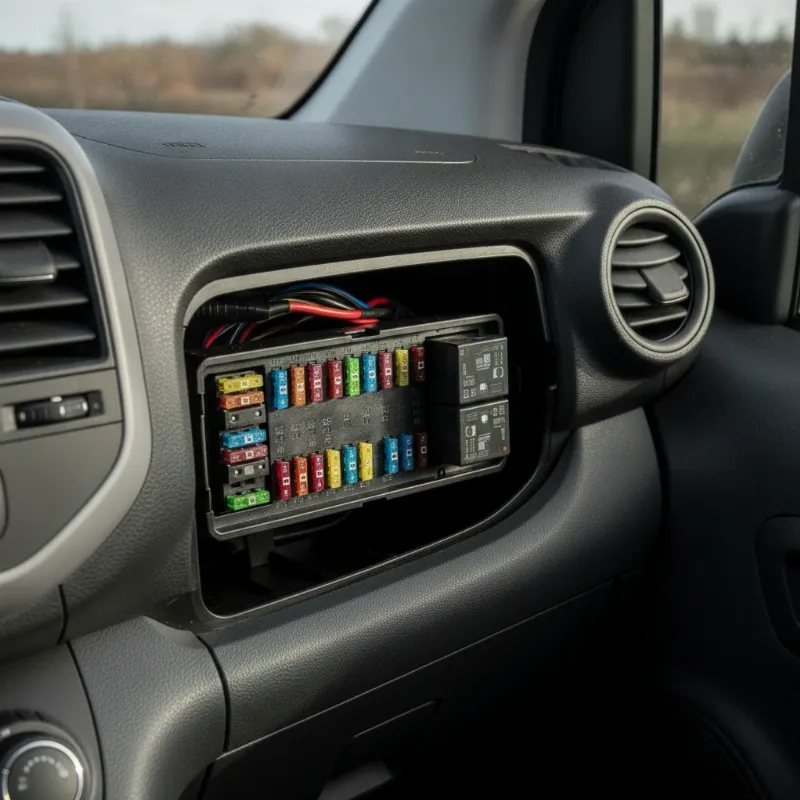
Where is the fuse box on a Citroen Berlingo?
The Citroen Berlingo actually has two fuse boxes: one inside the cabin, tucked behind a panel on the dashboard, and a second one located under the bonnet in the engine bay. Between them they protect the electrical circuits for everything from the headlights and wipers to the fuel pump, ECU and interior sockets. Which fuse box you need to open depends on what has stopped working — as a general rule, cabin-related electrics (lights, radio, cigarette lighter, central locking) live on the interior box, while engine-management and high-current items (starter, cooling fan, ABS) sit in the engine bay unit.
Berlingo layouts have changed across the generations (Mk1 1996–2008, Mk2 2008–2018 and Mk3 2018 onwards, which shares its platform with the Peugeot Partner and Vauxhall Combo), so the exact position of the panels varies slightly. The principle, however, is the same across all three.
Main interior fuse box location (dashboard)
On most Berlingos the interior fuse box is located at the end of the dashboard on the driver's side, behind a removable plastic cover. To find it, open the driver's door and look at the side of the dash that faces the door frame — you'll see a rectangular panel roughly the size of a paperback book. On right-hand-drive UK vans this is on the right-hand end of the dashboard; on left-hand-drive it will be on the left. On the Mk3 (K9) Berlingo the cover is often marked with a small fuse symbol, and on some trims it can also be accessed from inside the glovebox area.
Pull the cover off gently with your fingertips or a flat trim tool — it clips into place and does not need to be unscrewed. Inside you'll find rows of coloured mini blade fuses, and usually a small plastic fuse puller clipped to the inside of the cover.
Engine bay fuse box location
Open the bonnet and look towards the rear of the engine bay, close to the bulkhead. The engine bay fuse and relay box is housed in a black plastic case with a clip-on lid, typically on the left-hand side (as you face the engine) next to the battery on Mk2 and Mk3 models. On the older Mk1 Berlingo it can sit closer to the centre of the bay. The lid usually has a fuse diagram printed on the inside and is released by squeezing the plastic tabs on each side.
This box holds the higher-amperage fuses and the main relays, so it's the one to check for issues with starting, cooling fans, glow plugs (on HDi/BlueHDi diesels) or the engine management system.
How to access the Berlingo fuse box safely
Before you start poking around, take a few sensible precautions. Turn the ignition off, remove the key (or key fob from the cabin on keyless models) and let the engine cool if you're working under the bonnet. For any work on the engine bay box, it's good practice to disconnect the negative terminal on the battery, especially if you'll be handling the larger maxi fuses or relays.
Use clean, dry hands and never force a cover off — if it feels stuck, check for a hidden clip rather than levering it hard, as the plastic tabs can snap. Keep the fuse puller and any spares to hand before you open the box, so you're not fishing around in the dark with the panel off.
Reading the Citroen Berlingo fuse box diagram
Both fuse boxes are laid out in a grid, and each position corresponds to a specific circuit. The diagram is normally printed on the inside of the cover, but the print can be tiny and faded on older vans. If you can't make it out, the definitive reference is the owner's handbook, which lists every fuse by number, amperage (shown by colour — for example red 10A, blue 15A, yellow 20A, clear 25A, green 30A) and the circuit it protects.
If your handbook is missing, Citroen's Service Box online portal and the main dealer network can provide the correct diagram for your VIN. This matters because Berlingo trim levels and engine variants (petrol, HDi diesel, and the newer e-Berlingo electric) don't all share the same fuse map — a fuse position that controls the reversing camera on one van might be spare on another.
How to check and replace a blown fuse
Start by identifying which circuit has failed and cross-referencing it to the diagram. Pull the suspect fuse out with the plastic puller and hold it up to the light: if the thin metal strip inside is broken or the plastic looks scorched, it has blown. A cheap circuit tester or multimeter will confirm continuity if you're not sure.
Always replace a blown fuse with one of exactly the same amperage — the colour must match. Fitting a higher-rated fuse to "stop it blowing again" is dangerous and can cause wiring to overheat or even start a fire. Push the new fuse firmly into the slot, refit the cover, and test the circuit. If the replacement blows straight away, there is an underlying fault in the wiring or the component itself and you'll need to investigate further rather than keep swapping fuses.
Common Citroen Berlingo fuse problems and what they affect
Some fuse-related issues crop up more often than others on the Berlingo. Cigarette lighter and 12V socket fuses are among the most commonly blown, usually after plugging in a faulty charger or inverter — this can also knock out the dash clock and radio memory on some models. Interior light and central locking gremlins are often traced to the BSI (built-in systems interface) fuses on the dashboard box.
On diesel Berlingos, a blown glow plug or fuel pump fuse will cause hard starting, especially in cold weather. Cooling fan fuses failing can lead to overheating in traffic, and ABS or airbag warning lights on the dash sometimes point to a fuse rather than the sensor itself. Rear wiper, tail lift and reversing camera circuits are worth checking on van conversions with added electrics, as accessory installations can overload the original circuits.
When to see a mechanic instead
Replacing a single blown fuse is a straightforward DIY job, but there are times when it's better to hand the van over to a professional. If a fuse blows repeatedly, if you can smell burning plastic, if multiple unrelated circuits fail at once, or if warning lights on the dash return after a fuse swap, there is likely a short circuit, a failing component or an ECU issue behind it. Modern Berlingos in particular rely heavily on the BSI module, and misdiagnosing an electrical fault can lead to expensive knock-on damage.
A Citroen specialist or auto electrician with the right diagnostic equipment can read fault codes, load-test the circuit and pinpoint the root cause quickly — usually saving money in the long run compared to trial-and-error parts swapping.
Looking for a Citroen Berlingo van?
The Citroen Berlingo remains one of the most popular small vans on UK roads thanks to its low running costs, easy-to-live-with cabin and genuinely useful load area. Whether you're after a well-kept used Mk2 for a first work van, a newer Mk3 with the latest safety kit, or the all-electric e-Berlingo for city work, there's a version to suit most trades. If you're in the market, take the time to check the service history, look for signs of previous electrical modifications, and give both fuse boxes a quick inspection during the test drive — a tidy, corrosion-free fuse panel is a good sign of an owner who has looked after the van.
FAQs
Where is the fuse box located on a Citroen Berlingo, and how do I access it?
There are two fuse boxes on a Citroen Berlingo. The main interior fuse box is on the end of the dashboard on the driver's side, hidden behind a clip-off plastic cover that you can pull away by hand once the door is open. The second is under the bonnet, in a black plastic box near the battery towards the rear of the engine bay, with a lid released by squeezing the side tabs. Both have a fuse diagram printed inside the cover.
Why does the same fuse keep blowing on my Berlingo?
A fuse that blows repeatedly is a symptom, not the cause. It usually means there's a short circuit in the wiring, a faulty component drawing too much current, or moisture getting into a connector. Never fit a higher-rated fuse to stop it blowing — get the circuit checked by an auto electrician or Citroen specialist who can trace the fault safely.
What size fuses does a Citroen Berlingo use?
The Berlingo uses standard mini blade fuses in the cabin box and a mix of mini blade and larger maxi fuses in the engine bay. Ratings range from 5A (tan) up to 30A (green) for most cabin circuits, with higher-amperage maxi fuses protecting items like the cooling fan and glow plugs. Always match the colour and amperage exactly when replacing one.
Is there a fuse diagram in the Citroen Berlingo owner's manual?
Yes. The owner's handbook contains a full fuse layout for both boxes, listing each fuse by number, amperage and the circuit it protects. If your handbook is missing, Citroen main dealers can provide the correct diagram based on your VIN, since layouts vary between trim levels, engine types and model years.
Can a blown fuse stop a Citroen Berlingo from starting?
It can. Fuses protecting the fuel pump, glow plugs, ECU or starter relay can all prevent the van from starting if they blow. Check the engine bay fuse box first, and if the fuse is fine but the van still won't start, the problem lies elsewhere — typically with the battery, starter motor or immobiliser system.