What Is the Weight of a Mercedes Sprinter Van? Kerb Weight, GVW & Payload Guide
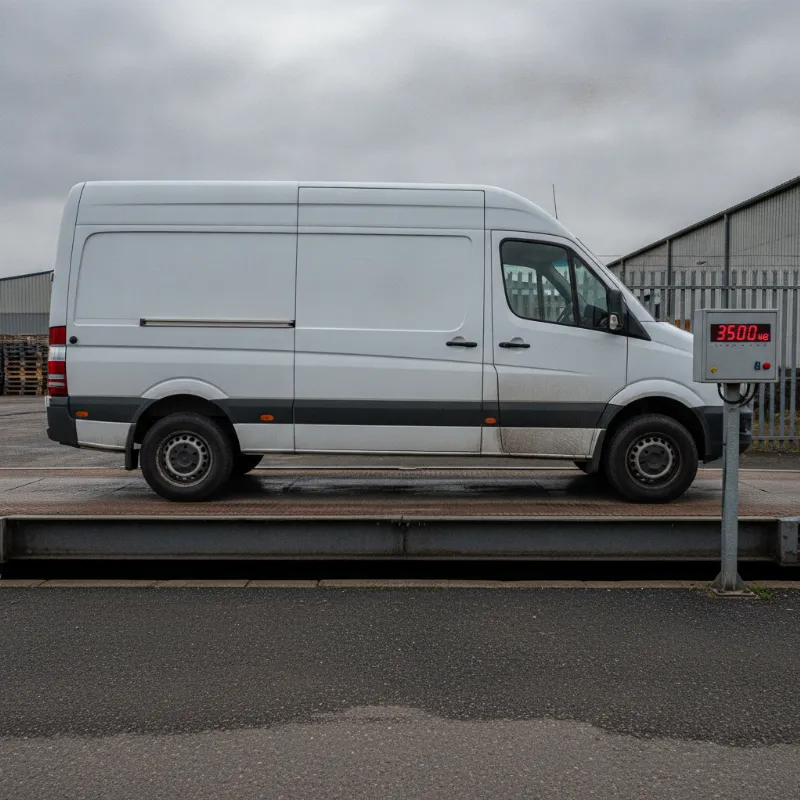
Mercedes Sprinter Weight Explained: Kerb Weight vs Gross Vehicle Weight
Before quoting figures, it helps to understand the two headline numbers used to describe how much a Mercedes Sprinter weighs. Kerb weight (sometimes called unladen or "in service" weight) is what the van weighs empty but ready to drive — with all fluids topped up, a full tank of fuel and the driver's allowance factored in, but no cargo, passengers or fitted-out racking. Gross Vehicle Weight (GVW), also known as Maximum Authorised Mass (MAM), is the absolute upper limit the van is legally permitted to weigh once fully loaded. The gap between the two is your payload — the amount of goods, people and equipment you can legally carry.
The Sprinter is offered in a wide spread of GVW ratings, typically 3.0, 3.5, 4.25 and 5.0 tonnes, and this is really where the Sprinter earns its reputation. Two vans that look identical from the outside can have very different weight ratings depending on how Mercedes-Benz has plated them, so it's important to check the VIN plate inside the driver's door before making assumptions about capacity, licence class or towing limits.
Mercedes Sprinter Weight by Model Variant
Mercedes builds the current Sprinter in four body lengths — L1, L2, L3 and L4 — and three roof heights, with front-wheel drive, rear-wheel drive and 4x4 options on top. Every combination shifts the kerb weight, which is why buyers often ask for weight breakdowns variant by variant. The figures below are typical for the popular 3.5 tonne panel van; higher-rated 4.25t and 5.0t chassis will carry noticeably more.
Sprinter L1 (SWB) Weight
The short-wheelbase L1 is the lightest of the Sprinter panel vans and, in standard-roof front-wheel-drive form, has a kerb weight of roughly 1,990–2,100kg depending on engine and specification. Plated at 3,500kg GVW, that leaves around 1,400–1,500kg of payload — impressive for a compact-format van and one of the reasons the L1 is popular with couriers and mobile trades who need to squeeze into tight urban delivery slots.
Sprinter L2 (MWB) Weight
Step up to the medium-wheelbase L2 and the kerb weight climbs to around 2,100–2,250kg in standard-roof form, with the high-roof variant adding roughly another 50–75kg. On the 3.5 tonne chassis you can still expect a payload in the region of 1,250–1,400kg, and buyers who need more can specify the 4.25t or 5.0t plated versions, which lift usable payload well beyond 2 tonnes.
Sprinter L3 & L4 (LWB & XLWB) Weight
The long-wheelbase L3 and extra-long L4 are the workhorses of the range. Kerb weights typically sit between 2,250kg and 2,500kg depending on drivetrain, with rear-wheel-drive high-roof versions at the heavier end. On a 3.5 tonne GVW that leaves 1,000–1,250kg of payload, but most operators who buy L3s and L4s take advantage of the 4.25t or 5.0t chassis to unlock the full load volume without running out of payload first.
Mercedes Sprinter Panel Van Weight
Taking the panel van range as a whole, a standard 3.5 tonne Mercedes Sprinter will weigh somewhere between roughly 2.0 and 2.5 tonnes empty, with a gross vehicle weight of 3,500kg. The heaviest 5.0 tonne rear-wheel-drive L4 high-roof panel vans can tip the scales at nearly 2.7 tonnes unladen, but they compensate with a payload that comfortably exceeds 2,200kg. It's worth remembering that any factory options — air conditioning, parking sensors, tow bar, upgraded infotainment, twin passenger seats — add real-world kilograms, and aftermarket ply lining or racking can easily eat another 100–200kg from your usable payload.
10 Seat Mercedes Sprinter Minibus Weight
A standard 10-seat Sprinter minibus, based on the L2 or L3 body, has a kerb weight of around 2,400–2,600kg once the additional seating, seat belts, glazing and interior trim are fitted. Most 10-seaters are plated at 3,500kg GVW, giving between 900kg and 1,100kg of payload — plenty for ten adult passengers plus modest luggage. Because they seat no more than eight passengers plus driver in some configurations, or up to nine passengers plus driver in the full 10-seat layout, they remain drivable on a standard category B car licence, which is a big part of their appeal to schools, care providers and community groups.
10 Seat Luxury Mercedes Sprinter Minibus Weight
Luxury 10-seat conversions — the sort with captain's chairs, leather trim, mood lighting, rear entertainment, air conditioning and a full carpeted interior — carry noticeably more weight than a straightforward minibus. Kerb weights of 2,700–2,900kg are common, and on a 3.5 tonne chassis this can leave payload as low as 600–800kg. For that reason many luxury conversions are built on the 4.25t plated chassis, which restores a healthy passenger-and-luggage allowance without pushing the vehicle into HGV licence territory.
Payload and Towing Capacity of the Mercedes Sprinter
Payload varies dramatically across the range but, as a rule of thumb, a 3.5 tonne Sprinter panel van will carry between 1,000kg and 1,500kg, a 4.25 tonne between 1,800kg and 2,100kg, and a 5.0 tonne chassis close to 2,500kg. Towing is another Sprinter strong suit: rear-wheel-drive models can typically tow up to 3,500kg braked, while front-wheel-drive versions are usually limited to around 2,000kg. Always check the individual vehicle's plate, because gross train weight (the combined limit of van plus trailer) is the figure the DVSA cares about at the roadside.
How Sprinter Weight Affects Driving Licence Requirements
In the UK, a standard category B car licence covers vehicles up to 3,500kg MAM, which includes almost all 3.5 tonne Sprinters — panel vans and 10-seat minibuses alike. Step up to a 4.25 tonne or 5.0 tonne plated Sprinter and you'll generally need category C1 on your licence, which drivers who passed their test before 1 January 1997 usually hold automatically, while newer drivers need to sit an additional test. Minibuses with more than nine passenger seats fall under category D1 rules, so the 10-seat (nine passenger) format is deliberately chosen to remain accessible to category B drivers. If you're unsure, check your DVLA licence categories before you commit to a specific chassis rating.
How Sprinter Weight Compares to Other Large Vans
Compared with its main rivals, the Sprinter sits at the heavier, more heavy-duty end of the large panel van class. A comparable Ford Transit L3 H2 typically weighs 2,050–2,300kg kerb, a Volkswagen Crafter is within a few kilos of the Sprinter (they share underpinnings with the MAN TGE), and a Renault Master or Vauxhall Movano tends to be 100–200kg lighter empty. Where the Sprinter pulls ahead is in the availability of 4.25t and 5.0t plated chassis with genuine HGV-derived running gear, meaning it can carry heavier payloads day in, day out without stressing the driveline.
Buying or Leasing a Mercedes Sprinter Van
Once you know which weight rating suits your workload, the next step is finding the right vehicle. Browse our current stock of Mercedes Sprinter vans for sale to compare kerb weights, GVW plates and payload figures across L1, L2, L3 and L4 body styles, in both panel van and minibus configurations. Every vehicle listing shows the plated weights so you can match a van to your licence and to the loads you actually carry, and our team is on hand to talk through outright purchase, hire purchase or contract hire options if you'd rather spread the cost.
FAQs
How much does a Mercedes Sprinter van weigh?
A Mercedes Sprinter panel van typically weighs between 2,000kg and 2,500kg unladen (kerb weight), with a Gross Vehicle Weight of 3,500kg on the standard 3.5t chassis. Heavier 4.25t and 5.0t plated versions carry the same body but allow payloads of up to around 2,500kg. Exact figures vary by body length (L1–L4), roof height, drivetrain and specification, and are shown on the VIN plate inside the driver's door.
Can I drive a 3.5 tonne Mercedes Sprinter on a standard car licence?
Yes. A standard UK category B car licence covers vehicles up to 3,500kg Maximum Authorised Mass, which includes every 3.5t Sprinter panel van and the common 10-seat (nine passenger) Sprinter minibus. To drive a 4.25t or 5.0t plated Sprinter you'll usually need category C1 on your licence.
What is the payload of a Mercedes Sprinter?
Payload depends on the chassis rating and body variant. A 3.5t Sprinter panel van typically offers 1,000–1,500kg of payload, a 4.25t chassis around 1,800–2,100kg, and the 5.0t version close to 2,500kg. Minibus conversions and luxury interiors reduce payload because the extra seating, glazing and trim add weight to the base vehicle.
How much can a Mercedes Sprinter tow?
Rear-wheel-drive Sprinters are generally rated to tow up to 3,500kg on a braked trailer, while front-wheel-drive versions are usually limited to around 2,000kg. Always check the van's plate for the specific towing limit and the gross train weight, which is the combined maximum for van and trailer together.
Does the Sprinter minibus weigh more than the panel van?
Yes. A 10-seat Sprinter minibus typically weighs 300–500kg more than an equivalent panel van because of the added seats, seat belt frames, side windows and interior trim. Luxury conversions with leather seating, air conditioning and entertainment systems can add even more, which is why many are built on the 4.25t plated chassis to preserve usable payload.