Why Does My LDV Van Lose Power? Common Causes and Fixes
Common Reasons an LDV Van Loses Power
A sudden or gradual loss of power in your LDV van is rarely random — it's usually the vehicle telling you that something in the air, fuel, or exhaust system isn't working as it should. LDV vans, particularly the V80, Maxus and older Convoy models, share a lot of mechanical DNA with other light commercial diesels, which means the causes of power loss tend to fall into a handful of predictable categories. Identifying which one is affecting your van is the first step toward a fix that lasts.
Before diving into specifics, it's worth remembering that power loss can be either progressive (worsening over weeks or months) or sudden (appearing from one journey to the next). Progressive issues usually point to wear-and-tear components like filters, injectors or the DPF, while sudden losses more often relate to a sensor failure, a split hose, or the ECU pulling the van into limp mode to protect itself.
Turbocharger Faults and Boost Leaks
The turbocharger is one of the most common culprits behind power loss in an LDV van. If the turbo itself is failing, you may notice a whining or whistling noise, blue or black smoke from the exhaust, and a marked drop in acceleration — particularly when you try to pull away up a hill or overtake. Even if the turbo is mechanically sound, a boost leak in the intercooler pipes, silicone hoses or clamps can allow pressurised air to escape before it reaches the engine, leaving you with a flat, laggy drive.
Inspect the intercooler pipework for oily residue, cracks or loose clamps. A split hose is often a cheap fix, but a failed turbo cartridge or actuator can be a much bigger job and should be diagnosed properly before spending money on parts.
Clogged DPF or EGR Valve
Diesel Particulate Filters (DPFs) and Exhaust Gas Recirculation (EGR) valves are two of the most frequent offenders on modern LDV diesels. Vans used mainly for short urban journeys often struggle to reach the temperatures needed for a passive DPF regeneration, and soot slowly builds up until the ECU restricts power to protect the engine. Similarly, the EGR valve can gum up with carbon deposits, sticking open or closed and disrupting the delicate air/fuel balance.
A good long motorway run at higher revs can sometimes trigger a regeneration and clear light DPF blockages, but heavily clogged filters usually need a forced regen with diagnostic equipment or, in worst cases, removal and cleaning.
Fuel System Issues (Injectors, Filter, Pump)
If the DPF and turbo check out, the next place to look is the fuel system. A blocked fuel filter is a cheap, common cause of power loss and should be replaced at every service interval. Beyond that, worn or leaking injectors can cause misfires, rough idling and a noticeable drop in power under load, while a failing high-pressure fuel pump may leave the van struggling to maintain rail pressure — especially when hot.
Contaminated diesel, water in the fuel, or a partially blocked tank breather can produce very similar symptoms, so it's worth ruling those out before condemning expensive components.
Limp Mode and ECU Sensor Faults
Limp mode is the ECU's safety net. When a critical sensor reports a value outside its expected range — think MAF sensor, MAP sensor, boost pressure sensor or crank position sensor — the engine management system caps power and RPM to prevent damage. You'll typically feel the van refuse to rev past around 2,500–3,000 rpm, and the engine warning light will usually be illuminated on the dash.
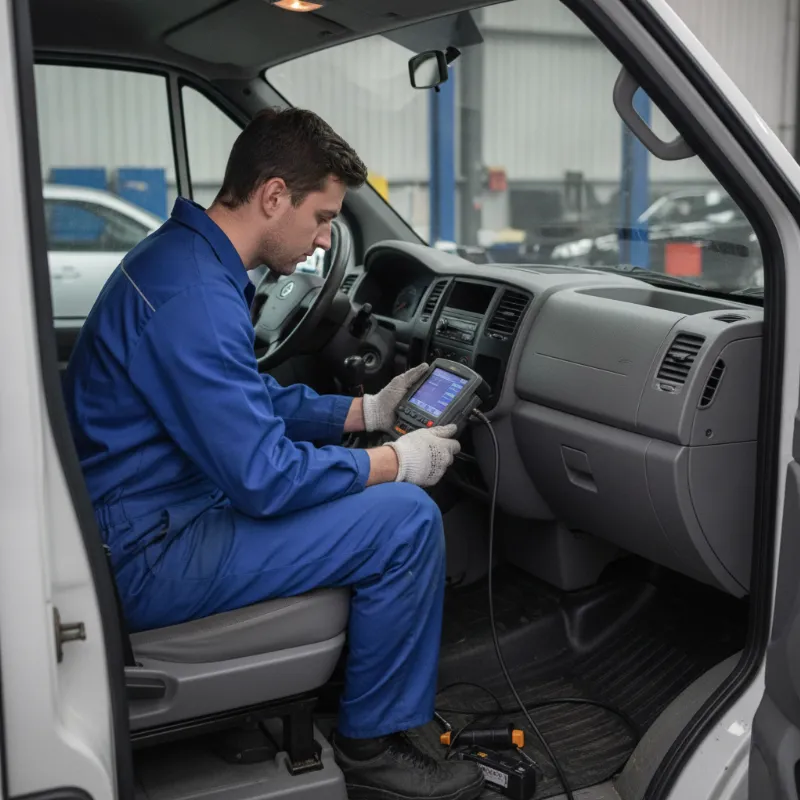
An OBD scan will almost always reveal a stored fault code pointing you toward the offending sensor. Clearing the code without fixing the underlying issue will only give you a short reprieve before it returns.
Symptoms to Watch For Before a Power Loss
Power loss rarely arrives without warning. Drivers often report a cluster of subtle symptoms in the days or weeks beforehand: hesitant acceleration, a slight stumble when pulling away, poorer fuel economy, black smoke from the exhaust, or an intermittent engine warning light that comes and goes. You might also notice the van feels sluggish only when cold, or only when fully loaded.
Unusual noises are another important clue. A whistling turbo, a ticking injector, or a hissing sound from under the bonnet on acceleration all point toward specific systems. Catching these early signs and acting on them can turn a £100 hose replacement into a job that saves you a £2,000 turbo rebuild later on.
How to Diagnose the Problem Yourself
You don't need a workshop to do some sensible initial diagnosis. Start by plugging in an OBD-II scanner — even a basic Bluetooth unit paired with a free app will read stored fault codes on most LDV vans. Write down every code, including pending ones, and research what they mean before touching anything.
Next, do a visual inspection with the engine cold. Check intercooler hoses for splits or oil, look at the air filter (a surprisingly common cause of poor running), and inspect the fuel filter for water contamination via the drain plug. Listen for hissing on a gentle rev, and check the exhaust for excessive smoke on start-up. If your scanner supports live data, watch the MAF, boost and rail pressure readings during a test drive — sudden dropouts or values that don't match the throttle input are big clues.
When to Take Your LDV to a Specialist
Some jobs are best left to a specialist. If your diagnostics point toward injector coding, high-pressure fuel pump work, turbo replacement or a forced DPF regeneration, you'll need proper diagnostic software and, in many cases, specialist tooling. LDV parts availability can also be patchy through general factors, so a workshop familiar with the marque will save you time chasing components.
You should also seek professional help immediately if the van is producing excessive white smoke (potential head gasket or injector seal failure), if there's a strong smell of fuel, or if the engine is knocking under load. Continuing to drive in these conditions risks catastrophic and expensive engine damage.
Preventative Maintenance Tips for LDV Vans
The best fix for power loss is preventing it in the first place. Stick to the recommended service intervals for oil and filter changes — diesel engines are hard on oil, and clean oil protects the turbo bearings that so often fail on high-mileage vans. Change the fuel filter regularly and use a reputable diesel with an occasional injector cleaner additive.
If your LDV spends most of its life on short urban runs, plan a longer motorway drive at least once a fortnight to give the DPF a chance to regenerate properly. Keep an eye on the EGR system, inspect intercooler hoses during services, and address warning lights promptly rather than clearing them and hoping for the best. A well-maintained LDV can comfortably rack up high mileages without dramatic power loss.
Is It Worth Repairing or Upgrading Your LDV?
Whether to repair or replace comes down to the van's overall condition, mileage and the cost of the specific fault. A £300 fuel filter, EGR clean and boost hose replacement on an otherwise sound van is almost always worthwhile. A £2,500 turbo and DPF combined bill on a high-mileage van with tired suspension and worn interior is a harder decision.
If repair costs approach the market value of your van, it may be time to consider upgrading to a newer LDV or a comparable light commercial. Modern vans offer better fuel economy, cleaner emissions, and far more sophisticated diagnostics — all of which reduce the chance of unexpected downtime for a working vehicle. Whatever route you choose, addressing power loss early and thoroughly is the key to keeping your LDV reliable and your business moving.
FAQs
Why does my LDV van lose power and how do I fix it?
The most common causes are a clogged DPF or EGR valve, a turbo fault or boost leak, a blocked fuel filter or failing injectors, and sensor faults that trigger limp mode. The fix depends on the cause: start with an OBD scan to read fault codes, then check the air filter, fuel filter and intercooler hoses. Simple issues like a split boost hose or dirty filter are cheap DIY jobs, while turbo, injector or DPF work usually needs a specialist.
What does it mean when my LDV goes into limp mode?
Limp mode is a protective state the ECU enters when it detects a fault that could damage the engine. It caps engine speed and power — usually around 2,500–3,000 rpm — so you can drive gently to a garage. It's almost always triggered by a stored fault code, so plug in a diagnostic scanner to find the underlying issue before clearing it.
Can a blocked DPF cause my LDV van to lose power?
Yes. A blocked Diesel Particulate Filter is one of the most frequent causes of gradual power loss on LDV diesels, especially those used for short urban trips. When soot builds up beyond a certain level, the ECU restricts power to prevent further damage. A long motorway run may trigger a passive regeneration, but heavily blocked DPFs need a forced regen or professional cleaning.
How much does it cost to fix an LDV van that's losing power?
Costs vary widely. A new fuel filter or air filter is typically £30–£80 fitted. Boost hoses and EGR cleaning fall between £100 and £300. Forced DPF regeneration is usually £150–£250, while turbo replacement, injector work or DPF replacement can run into four figures. Getting a proper diagnosis first is essential to avoid throwing money at the wrong component.
Is it safe to keep driving my LDV if it's lost power?
For short distances at low speed to get home or to a garage, usually yes — especially if the van is in limp mode, which is designed for exactly that. However, if you notice excessive smoke, knocking noises, a strong smell of fuel or rising engine temperature, stop driving immediately and arrange recovery. Continuing under those conditions risks serious engine damage.