Who Makes LDV Vans? The Full Story Behind the Brand
Who Makes LDV Vans? The Short Answer
LDV vans are made by SAIC Motor, one of the largest vehicle manufacturers in the world and a state-owned enterprise based in Shanghai, China. The LDV name itself is a British badge with decades of history in the light commercial vehicle sector, but every LDV van sold today rolls off SAIC production lines in China before being shipped to markets like the UK, Australia and New Zealand. So while the badge is unmistakably British in heritage, the engineering, assembly and financial muscle behind the brand is firmly Chinese.
If you have ever wondered why an LDV van sitting on a UK forecourt feels like a modern, well-equipped vehicle at a sharp price, the answer lies in SAIC's scale. The group produces millions of vehicles a year and shares platforms, powertrains and components across brands including MG and Maxus. In many overseas markets, LDV vans are actually sold under the Maxus name — it is essentially the same vehicle wearing a different badge.
The History of LDV: From Leyland DAF to SAIC Motor
To understand how a British van brand ended up in Chinese hands, you have to go back several decades. LDV has been through boom years, bankruptcies, and a full-blown international rescue — and the story is worth telling because it explains the vans you see on the road today.
The Leyland DAF Vans Origins
The LDV name is short for Leyland DAF Vans, a business formed in 1993 following a management buyout of the light commercial vehicle arm of DAF NV. DAF had itself absorbed the Leyland van operation in the late 1980s, which traced its roots even further back to the British Motor Corporation and the historic Washwood Heath plant in Birmingham. That factory would become the beating heart of LDV production for the next two decades, turning out panel vans, minibuses and specialist conversions for fleets, tradespeople and public sector operators up and down the country.
The Classic LDV Convoy and Pilot Era
Through the 1990s and early 2000s, two models defined the brand: the LDV Pilot, a compact panel van based on older Sherpa underpinnings, and the larger LDV Convoy, which became a mainstay of minibus, ambulance and courier fleets. They were never the most refined vans on the market, but they were affordable, easy to work on and hugely popular with small businesses. The Maxus, launched in 2005, was meant to be the modern successor — a joint project developed with Daewoo. Sadly, the timing was disastrous. The 2008 financial crisis hit sales hard, and by 2009 the company had gone into administration and Washwood Heath had closed its doors.
SAIC Motor and the Chinese Takeover
After a brief period in limbo, the intellectual property, tooling and rights to the LDV and Maxus names were acquired by SAIC Motor in 2010. SAIC moved production to a purpose-built facility in China and set about modernising the range. The Maxus V80 was the first fruit of that work, and it laid the foundation for the current line-up. In 2016, LDV was relaunched in the UK through a dedicated importer network, giving British buyers access to a familiar badge on a completely new generation of vans.
Where Are LDV Vans Built Today?
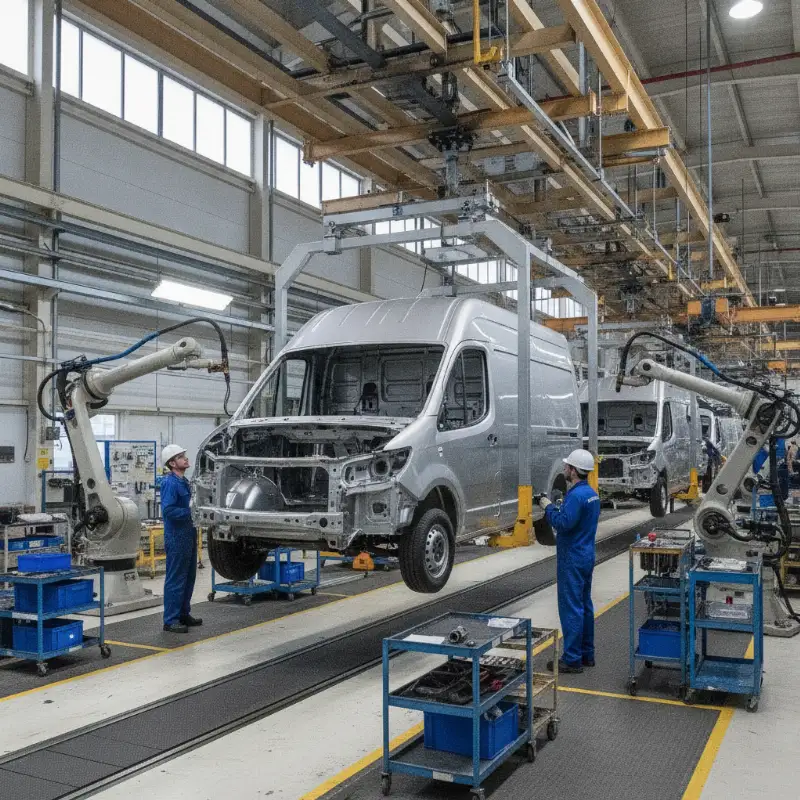
Every current LDV van is built by SAIC Maxus at its manufacturing sites in China, with the main plant located in Wuxi, Jiangsu Province. There is also significant production capacity in Nanjing, particularly for newer electric models. These are large, modern facilities using the same production standards SAIC applies to its passenger car brands, and they supply LDV and Maxus badged vehicles to dozens of export markets around the world.
Once built, LDV vans destined for the UK are shipped over and prepared by the official importer before being distributed to franchised dealers. Type approval, homologation and warranty support are all handled through the UK network, so from a buyer's point of view the ownership experience is much the same as with any other imported van brand.
The Modern LDV Range Explained
The current LDV line-up is broader than many buyers realise. The V80 remains a value-focused large panel van aimed squarely at tradespeople who want maximum load space for the money. Above it sits the Deliver 9, a much more modern large van with a car-like cab, Euro 6 diesel engine and a full range of body styles including chassis cab and minibus. There is also the smaller Deliver 3 for urban work, giving LDV a genuine three-tier commercial vehicle range.
LDV Electric Vans and the Amazon Fleet Connection
Where LDV has really made its mark in the UK is with electric vans. The eDeliver 3, eDeliver 9 and the newer eDeliver 7 have become genuinely competitive options for fleet operators looking to decarbonise. Amazon is one of the highest-profile users, running LDV electric vans as part of its last-mile delivery fleet across the UK and Europe. That kind of large-scale operational deployment tells you a lot: big logistics companies do not commit to a van unless the total cost of ownership, uptime and payload stack up.
Are LDV Vans Any Good in 2024?
The honest answer is that LDV has come a long way. The vans are not trying to out-refine a Ford Transit Custom or a Mercedes Sprinter — they compete on price, payload and, increasingly, on electric range. Build quality on the latest Deliver 9 and eDeliver models is a clear step up from the older V80, with better cab ergonomics, more modern infotainment and improved safety kit. Warranty cover is competitive too, typically five years on the vehicle and longer on the high-voltage battery for electric models.
Reliability feedback from operators has been broadly positive, particularly on the electric vans where the mechanical simplicity of an EV drivetrain plays to LDV's strengths. Parts availability and dealer coverage have improved significantly since the relaunch, though the network is still smaller than the mainstream European brands, so it is worth checking where your nearest service point is before you buy.
Finding LDV Vans for Sale in the UK
LDV vans are sold through a growing network of franchised dealers across the UK, and there is also a healthy used market thanks to fleet returns and part-exchanges. If you are shopping new, it is worth getting quotes on both the diesel and electric versions — the running cost gap can be significant if you cover high mileage or qualify for a plug-in van grant. For used buyers, the newer Deliver-generation vans represent the best of what LDV can do, and prices remain keen compared with equivalent European rivals. Whether you need a compact city van, a large panel van for a trade fit-out or an electric workhorse for urban deliveries, there is now a credible LDV option to consider.
FAQs
Who manufactures LDV vans and where are they built?
LDV vans are manufactured by SAIC Motor, a major Chinese vehicle maker based in Shanghai. They are built at SAIC Maxus factories in China, primarily in Wuxi and Nanjing, before being exported to the UK and other markets.
Is LDV a British or Chinese brand?
LDV started as a British brand — the name stands for Leyland DAF Vans and originated from a 1993 management buyout of DAF's light commercial vehicle business. However, since 2010 the brand has been owned and manufactured by Chinese group SAIC Motor, so today it is a Chinese-owned brand with British heritage.
Are LDV and Maxus the same thing?
Yes, essentially. Both badges belong to SAIC and the vans are largely identical. In the UK, Ireland and some other markets the vehicles are sold as LDV, while in Australia, New Zealand and much of the rest of the world they wear the Maxus badge.
Does Amazon really use LDV electric vans?
Yes. Amazon operates LDV eDeliver electric vans as part of its last-mile delivery fleet in the UK and Europe. It is one of the largest and most visible commercial deployments of the brand's electric models.
Are LDV vans reliable?
Modern LDV vans, particularly the Deliver 9 and the eDeliver electric range, have earned a solid reputation for reliability among fleet operators. Build quality has improved significantly over the older V80, and warranty cover is competitive, though dealer coverage is still smaller than the mainstream European brands.