Volkswagen Transporter 4Motion 130PS T30 Review: All-Wheel Drive Van Tested
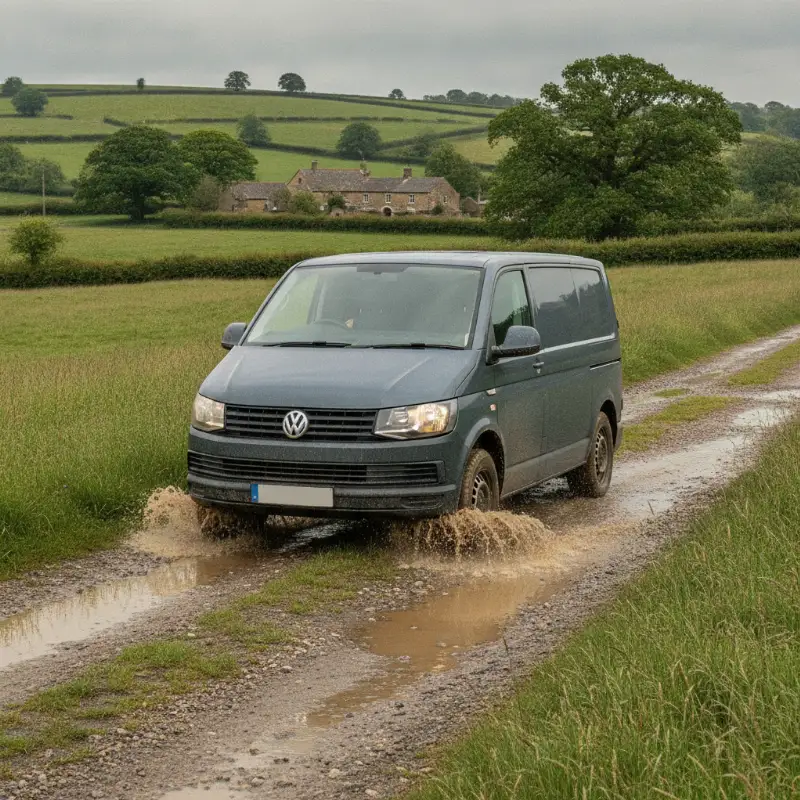
Volkswagen Transporter 4MOTION 130PS T30 at a Glance
The Volkswagen Transporter 4MOTION 130PS T30 is one of the more specialist versions of VW's evergreen medium van, pairing the sensible middle-power 2.0 TDI engine with permanent four-wheel drive and the higher 3.0-tonne T30 gross vehicle weight rating. On paper, that combination reads like the ideal all-weather workhorse: enough grunt for a full load, enough traction for a muddy site or a snowbound rural round, and enough payload to justify the extra fuel bill.
In the metal, it looks near-identical to a standard rear-wheel-drive Transporter T30 — no aggressive plastic cladding, no jacked-up ride height, just a discreet 4MOTION badge on the tailgate. That understated approach is very much the point. Buyers who choose this variant tend to be utility firms, rural tradespeople, forestry contractors, mountain rescue teams and outdoor businesses who need a working van that can quietly go further than a two-wheel-drive rival, without shouting about it.
Prices land above the equivalent front-wheel-drive T28 or rear-drive T32, but well below the flagship 4MOTION BiTDI variants. That mid-range position is what makes the 130PS 4MOTION such an interesting proposition — and why it's worth looking at closely before you commit.
Engine, Performance and 4MOTION All-Wheel Drive
Under the bonnet sits Volkswagen's familiar 2.0-litre TDI turbodiesel tuned to 130PS (128bhp) with 340Nm of torque. It's the middle rung of the Transporter engine ladder, sitting above the 102PS entry unit and below the 150PS and 199PS BiTDI outputs. Drive is fed through either a six-speed manual or the optional seven-speed DSG dual-clutch automatic, and from there to VW's 4MOTION system, which uses a Haldex-type clutch to send torque to the rear axle when the fronts start to slip.
How the 130PS 2.0 TDI Drives Day-to-Day
For most of the time, 130PS feels perfectly adequate. Peak torque arrives from around 1,500rpm and holds through to about 3,000rpm, which is exactly the band you spend most of your driving life in. Unladen, the Transporter feels brisk enough to keep up with modern traffic, overtake confidently on A-roads and cruise at motorway speeds without needing to be flogged. Refinement is a Transporter strong point — the engine is well isolated, wind noise is low, and long stints behind the wheel are genuinely relaxing by van standards.
Load it up towards its payload ceiling and you'll notice the 130PS working a little harder, particularly on longer hills or when hauling a trailer. It never feels underpowered, but if you routinely run at maximum weight, the 150PS variant is worth a look. The DSG gearbox suits the engine especially well, smoothing out low-speed manoeuvring in yards and car parks, though the manual is perfectly pleasant and slightly more economical.
When 4MOTION Actually Earns Its Keep
This is the honest bit. For 90% of drivers, 90% of the time, 4MOTION is invisible — the front wheels handle everything and you'd never know the rear axle was there. Where it earns back its purchase premium is in the awkward 10%: wet grass at a show ground, an icy hill on a January morning, a rutted farm track, a slippery slipway, a building site turned to mud by weeks of rain. In those moments the system reacts quickly, apportioning torque to whichever axle has grip, and the Transporter simply carries on where a two-wheel-drive van would be scrabbling.
It isn't a Land Rover — there's no low-range gearbox, no locking differentials, and ground clearance is only very modestly raised over a standard van. But as an all-weather safety net for people whose work doesn't stop when the weather turns, it's genuinely useful, and it works without the driver needing to press any buttons.
Payload, Load Space and Practicality
The T30 designation refers to the 3.0-tonne gross vehicle weight. In 4MOTION 130PS form, kerb weight is a little higher than a rear-drive equivalent thanks to the additional driveline hardware, which nibbles into payload. Depending on specification and body style, you're typically looking at somewhere around 1,000 to 1,150kg of usable payload — enough for most trade uses, but worth checking carefully on the V5 of any specific van you're considering, especially if you plan to fit racking, a ply lining and heavy tools.
Load volume is unchanged from any other Transporter of the same wheelbase and roof height. The short-wheelbase panel van offers 5.8 cubic metres, while the long-wheelbase version stretches that to 6.7 cubic metres, with load lengths comfortably swallowing 8x4 sheet material on the floor. Twin sliding side doors are widely fitted, load-through bulkhead options exist on some trims, and the low load lip continues to be one of the Transporter's best practical touches — your back will thank you after a day of repeated loading.
Towing is a genuine 4MOTION strong suit. Braked towing capacity climbs to 2,500kg on most variants, and the added rear-axle traction makes hitching up trailers on wet or loose surfaces far less stressful than in a front-wheel-drive rival.
Cab, Comfort and Tech
The Transporter cab remains one of the most car-like in the sector. The driving position is upright but not truck-like, the seats are supportive over long distances, and material quality is a clear step above most budget rivals. Standard specification depends on trim — Startline, Trendline and Highline are the main tiers — but even entry cars get a decent infotainment system with Bluetooth, DAB radio and USB, while higher trims add sat nav, App-Connect smartphone mirroring, cruise control, parking sensors and climate control.
Safety kit is strong, with autonomous emergency braking, driver alert, hill hold and multiple airbags on the standard list. Optional extras worth considering on a 4MOTION include heated seats, a heated windscreen and LED headlights — small comforts that make a big difference to drivers who are out in poor weather at antisocial hours, which is exactly the buyer this van is aimed at.
Running Costs, MPG and Reliability
Officially, a 130PS 4MOTION Transporter returns somewhere in the region of 36-40mpg on the WLTP combined cycle depending on wheelbase, roof height and gearbox. In real-world mixed driving, most owners report figures in the low-to-mid 30s, dropping into the high 20s if you tow heavily or spend most of your week hauling a full payload. That's a modest penalty over an equivalent two-wheel-drive van — a few mpg at most — and one that's easy to justify if you actually use the all-wheel-drive capability.
Servicing costs are broadly in line with the wider Transporter range, with variable service intervals available for lower-mileage users and fixed intervals for high-mileage fleets. The 4MOTION system itself is generally robust, though the Haldex coupling has its own oil that needs periodic changing — check this has been done on any used example. Beyond that, the T6/T6.1 Transporter has an excellent reputation for long-term reliability, with well-cared-for examples routinely covering 200,000 miles without major driveline drama. Residual values are strong, particularly on tidy 4MOTION vans, which are relatively rare on the used market.
How It Compares to Other T30 Transporter Variants
The T30 badge covers a broad family, and understanding where the 4MOTION 130PS sits in the range helps make sense of the price gap up and down the ladder.
vs the 2.0 TDI 140PS LWB T30
The 140PS long-wheelbase T30 is the popular fleet choice: slightly more power, a longer load bay and rear-wheel drive rather than four-wheel drive. On the motorway, the 140PS feels marginally punchier when loaded, and the LWB body adds useful cargo length for trades carrying long materials. What it can't do is match the 4MOTION's foul-weather composure. If your work is urban and road-based, the 140PS LWB is the smarter buy; if you regularly leave tarmac or work in exposed rural areas, the 4MOTION justifies its premium.
vs the T30 Kombi and 180PS BiTDI Highline
The T30 Kombi swaps a chunk of load space for a second row of seats, turning the van into a six- or seven-seat crew carrier. It's the pick for teams travelling to site with kit in the back. The 180PS BiTDI Highline, meanwhile, is aimed at drivers who want near-car performance and a fully loaded cabin — leather-look upholstery, big infotainment, adaptive cruise, the lot. Compared to the 130PS 4MOTION, the BiTDI is faster and better equipped, but it's also considerably more expensive to buy and thirstier to run. Unless you need the extra performance, the 130PS 4MOTION is the more sensible working-van choice.
vs the T30 TDI 174 Sportline
The Sportline is the show-off of the range: body-coloured bumpers, bigger alloys, sports seats, unique badging and a lowered ride height. It's aimed squarely at surf-and-turf lifestyle buyers and image-conscious tradespeople. The 4MOTION 130PS is its opposite — quiet, workmanlike, and set up to go further rather than look sharper. If your van spends its life on smooth roads and in customer car parks, the Sportline has appeal; if it earns its keep on farmyards, forestry tracks or exposed coastal roads, the 4MOTION is the grown-up choice.
Verdict: Who Should Buy the Transporter 4MOTION 130PS T30?
The Volkswagen Transporter 4MOTION 130PS T30 is a genuinely good van — but it's a good van for a specific type of buyer. If you spend your working week on urban delivery rounds or motorway miles, you'll rarely feel the benefit of four-wheel drive and you'd be better served by a lighter, cheaper rear-wheel-drive T30. If, on the other hand, your work regularly takes you off tarmac, onto muddy sites, into rural yards or across snowbound routes in winter, this is one of the most quietly capable working vans on sale.
The 130PS engine is the sweet spot for most operators — strong enough for real-world loads, refined enough for long days behind the wheel, and economical enough not to make you wince every time you pass a fuel station. Add the confidence of 4MOTION, the practicality of a proper T30 body and Volkswagen's well-earned reputation for durability, and you have a van that will simply keep going long after the weather has stopped everyone else. Browse our VW Transporter 4MOTION range for sale. For the right buyer, it's very hard to beat.
FAQs
Is the Volkswagen Transporter 4MOTION 130PS T30 a good van?
Yes — for the right buyer it's an excellent van. The 130PS 2.0 TDI engine is refined and strong enough for most working loads, the T30 payload rating (around 1,000-1,150kg depending on spec) covers the vast majority of trade uses, and the 4MOTION all-wheel-drive system adds real confidence in poor weather and on loose surfaces. If your work regularly takes you off tarmac or into exposed rural areas, it's one of the most capable medium vans on sale. For pure urban or motorway use, a cheaper rear-wheel-drive T30 makes more sense.
What's the real-world fuel economy of the Transporter 4MOTION 130PS?
Officially it returns around 36-40mpg WLTP combined depending on wheelbase, roof height and gearbox. In everyday mixed driving, most owners see low-to-mid 30s mpg, dropping into the high 20s when towing or running near maximum payload. That's only a few mpg behind an equivalent rear-wheel-drive Transporter — a fair trade-off for the extra traction.
How much can the Transporter 4MOTION 130PS T30 tow?
Braked towing capacity is up to 2,500kg on most 4MOTION 130PS variants, though it's worth confirming the exact figure on the V5 of any specific van, as it can vary slightly with body style and gearbox. The all-wheel-drive system is a real benefit when hitching or launching trailers on wet grass, gravel or slippery slipways.
Is 4MOTION worth the extra money over a rear-wheel-drive Transporter T30?
It depends entirely on how you use the van. For urban delivery work or motorway-heavy fleets, 4MOTION rarely justifies its cost — a two-wheel-drive T30 will do the same job for less money. For rural tradespeople, utility firms, forestry contractors, farmers, event crews and anyone regularly working off-road or in bad weather, the extra traction pays for itself the first time you drive out of a muddy field that would have stranded a standard van.
Should I choose the 130PS or 150PS engine in a 4MOTION Transporter?
For most operators the 130PS is the sweet spot — it has enough torque (340Nm) to handle full loads and towing without feeling strained, and it's a touch more economical. Choose the 150PS if you routinely run at maximum payload, tow heavy trailers, or cover a lot of hilly or motorway miles where the extra power reduces effort. Both use the same 2.0 TDI engine, so reliability and servicing are essentially identical.
Convinced by the 4Motion's all-wheel-drive case? See current VW Transporter 4Motion stock at Swiss Vans.
View VW Transporter 4Motion vans for sale →