How Much Does a Mercedes Vito Weigh? Kerb Weight, GVW & Payload Explained
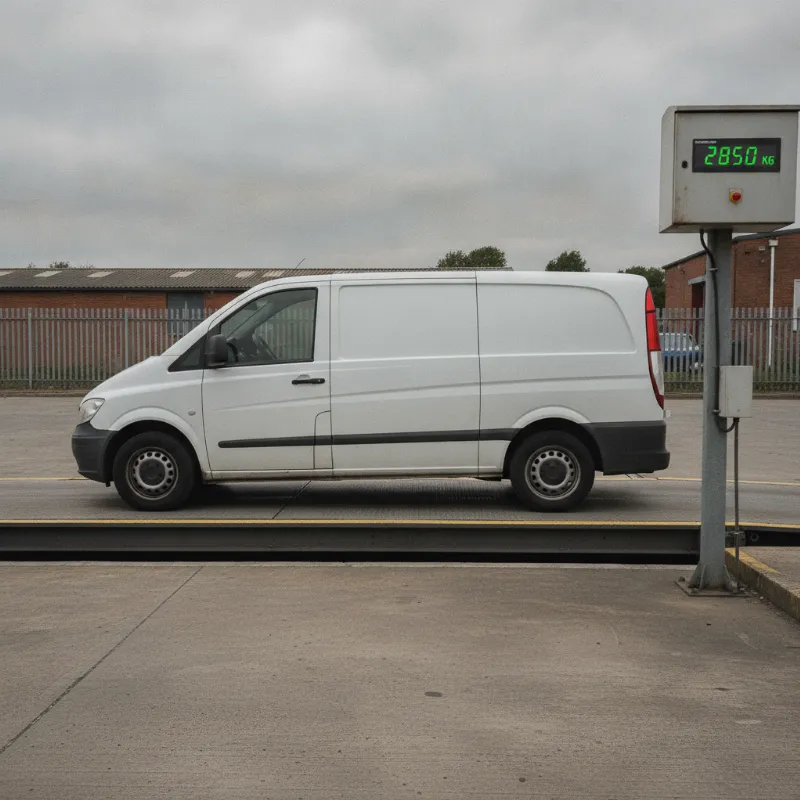
How much does a Mercedes Vito weigh?
A Mercedes Vito typically weighs between 1,900kg and 2,250kg unladen (kerb weight), with a gross vehicle weight (GVW) of around 2,800kg to 3,200kg depending on the model, body length and specification. The exact figure varies significantly between the Compact Panel Van at the lighter end and the Extra-Long Tourer or Crew Cab Sport at the heavier end, so it's always worth checking the V5C document or manufacturer's plate on any specific van you're looking at.
The Vito is one of the most popular mid-size vans on the UK market, and its weight has a direct impact on the payload you can carry, whether you need a standard car licence to drive it, and how it handles when loaded. Below we break down every figure you need — from kerb weight and GVW to payload — so you know exactly what you're buying before you commit.
Kerb weight vs gross vehicle weight (GVW) explained
Before diving into specific numbers, it helps to understand the two key weight figures used across the Vito range. These terms appear on the manufacturer's plate (usually fitted inside the driver's door frame) and dictate everything from your driving licence category to how much cargo you can legally carry.
Kerb weight of the Mercedes Vito
Kerb weight is the weight of the van itself with all fluids topped up (fuel, oil, coolant, screenwash) and a driver of standard weight, but with no passengers or cargo. For the current Mercedes Vito, kerb weight generally sits in the following ranges: a Compact Panel Van comes in at around 1,900–2,000kg, a Long Panel Van at roughly 2,000–2,100kg, and the Extra-Long body at approximately 2,100–2,200kg. Automatic 9G-TRONIC gearboxes, 4MATIC all-wheel drive and higher trim levels can all add 50–150kg to these figures.
Gross vehicle weight and payload
Gross vehicle weight (GVW), sometimes called maximum authorised mass (MAM), is the total the vehicle is legally permitted to weigh when fully loaded — that's the van, driver, passengers, fuel and cargo combined. Most Vito panel vans have a GVW of 2,800kg, 3,050kg or 3,200kg depending on the variant. Payload is simply GVW minus kerb weight, and for the Vito it typically ranges from around 700kg on lighter Tourer variants up to just over 1,200kg on the heavier-rated panel vans.
Vito weight by body length: Compact, Long and Extra-Long
The Vito is offered in three body lengths, and each adds weight as it grows. The Compact (4,895mm long) is the lightest at approximately 1,900–2,000kg kerb, making it the nimblest option for urban work and delivering the best payload-to-weight ratio for city couriers. The Long body (5,140mm) adds around 50–100kg to the kerb weight but offers a noticeably larger load area, making it the most popular choice for tradespeople.
The Extra-Long Vito (5,370mm) is the heaviest of the standard panel vans, typically weighing 2,100–2,200kg unladen. Despite the extra weight, it usually comes with a higher GVW rating too, so payload capacity remains competitive — often over 1,000kg. If maximum load volume is your priority, the Extra-Long is the pick; if you want lower running costs and easier parking, the Compact is hard to beat.
Vito Panel Van vs Crew Van vs Tourer weight differences
Body style makes a bigger difference to weight than most buyers realise. The standard Panel Van is the lightest configuration because it has no rear windows, no second row of seats and a minimal rear interior — kerb weights start from around 1,900kg. The Crew Van (or Dualiner/Mixto) adds a second row of seats, side windows and additional trim, pushing kerb weight up by roughly 100–150kg. Expect a Long Crew Van to weigh in around 2,150–2,250kg.
The Vito Tourer, designed for passenger transport with up to nine seats, is the heaviest variant. Full seating, additional glazing, climate control and passenger-focused trim can push kerb weight to 2,250kg or more. Because Tourers prioritise people over cargo, payload figures are lower — usually 700–900kg — but that's still ample once you account for a full complement of passengers and their luggage.
Mercedes Vito Crew Cab Sport weight and payload
The Vito Crew Cab Sport has become one of the most sought-after variants on the used market, combining five-seat practicality with the styling and equipment of the Sport trim. Kerb weight for a Crew Cab Sport typically lands between 2,100kg and 2,250kg, depending on engine choice and options such as 4MATIC all-wheel drive, alloy wheels, leather seats and larger infotainment systems.
Most Crew Cab Sports are rated at a GVW of 3,050kg or 3,200kg, giving a usable payload of roughly 800–1,000kg once passengers are accounted for. That's more than enough for tools, materials or leisure equipment, which is why the Crew Cab Sport works equally well as a family vehicle and a working van. If you're comparing specific examples, take a look at our used Mercedes Vito vans for sale where every listing shows the exact weight and payload figures.
What affects the weight of your Mercedes Vito?
Two vans that look identical on the forecourt can have surprisingly different weights on the weighbridge. Here's what tips the scales one way or the other.
Engine, drivetrain and transmission
The Vito is offered with a range of 1.7-litre and 2.0-litre diesel engines, and outputs from around 100bhp up to 237bhp on the top eVito and Vito 119. Higher-output engines tend to be marginally heavier due to larger cooling systems and beefier ancillaries. The 9G-TRONIC automatic gearbox adds around 20–30kg over the manual, and the 4MATIC four-wheel-drive system adds a further 60–80kg. The all-electric eVito is heaviest of all, with the battery pack pushing kerb weight above 2,200kg.
Optional extras and load-area conversions
Air conditioning, larger alloy wheels, sat-nav upgrades, parking sensors, heated seats and towbars all add small but cumulative amounts of weight. More significantly, aftermarket load-area conversions — ply lining, racking, roof racks, refrigeration units or specialist workshop fit-outs — can easily add 100–200kg. Always factor these into your payload calculations, because they reduce the amount of cargo you can legally carry even if the GVW hasn't changed.
Why Vito weight matters for licences, towing and payload
Weight isn't just a technical specification — it has real legal and practical implications. Any Vito with a GVW at or below 3,500kg can be driven on a standard UK category B car licence, which covers the entire mainstream Vito range. Overload the van beyond its plated GVW, however, and you're committing an offence that can result in fines, penalty points and invalidated insurance.
Towing is another consideration. The Vito's towing capacity depends on the model and drivetrain, with most variants rated to tow between 2,000kg and 2,500kg braked. Combined vehicle-and-trailer weight (the "train weight") also has a legal ceiling on the manufacturer's plate. And when it comes to payload, remember that anything permanently fitted to the van — bulkheads, racking, tow bars — reduces the weight of cargo you can carry from the manufacturer's headline figure.
Find your ideal Mercedes Vito at Zest Vans
Whether you need the maximum payload of a Long Panel Van, the family-friendly practicality of a Crew Cab Sport or the passenger space of a Tourer, there's a Vito to suit. The best way to be sure you're getting the right weight, payload and specification for your needs is to see the vans in person and check the plated figures on each one.
At Zest Vans we hand-pick every van in our stock and provide full weight, payload and specification details on every listing. Browse our current used Mercedes Vito vans for sale to compare Compact, Long and Extra-Long variants side by side, and get in touch with our team if you'd like help matching a specific Vito to your workload or lifestyle.
FAQs
How much does a Mercedes Vito weigh?
A Mercedes Vito typically weighs between 1,900kg and 2,250kg kerb weight, with a gross vehicle weight (GVW) of 2,800kg to 3,200kg depending on body length, trim and drivetrain. Compact Panel Vans are the lightest at around 1,900–2,000kg, while Extra-Long Tourers and Crew Cab Sports sit at the heavier end of the range.
What is the payload of a Mercedes Vito?
Payload on a Mercedes Vito generally ranges from around 700kg on Tourer variants up to just over 1,200kg on higher-GVW panel vans. Most Crew Cab Sports offer around 800–1,000kg of usable payload once passengers are accounted for. Always check the manufacturer's plate on the specific van, as options and conversions reduce the available payload.
Can I drive a Mercedes Vito on a standard UK car licence?
Yes. Every mainstream Mercedes Vito has a GVW of 3,500kg or less, so it can be driven on a standard UK category B car licence. You only need a higher licence category if the van is uprated or towing a trailer that pushes the combined weight above the limits attached to your licence.
How much can a Mercedes Vito tow?
Most Mercedes Vito models are rated to tow between 2,000kg and 2,500kg braked, depending on engine, drivetrain and specification. The 4MATIC all-wheel-drive versions and higher-output engines generally sit at the top of that range. Check the specific van's V5C and manufacturer's plate for the exact towing capacity and train weight.
Is the Mercedes Vito Crew Cab Sport heavier than a standard Panel Van?
Yes. The Crew Cab Sport adds a second row of seats, side windows, upgraded trim and often larger alloy wheels, which pushes kerb weight up by around 150–250kg compared to an equivalent Panel Van. Kerb weight is typically 2,100–2,250kg, though GVW is usually uprated too so payload remains practical for most users.