What Weight Can a Citroen Dispatch Tow? UK Towing Capacity Guide
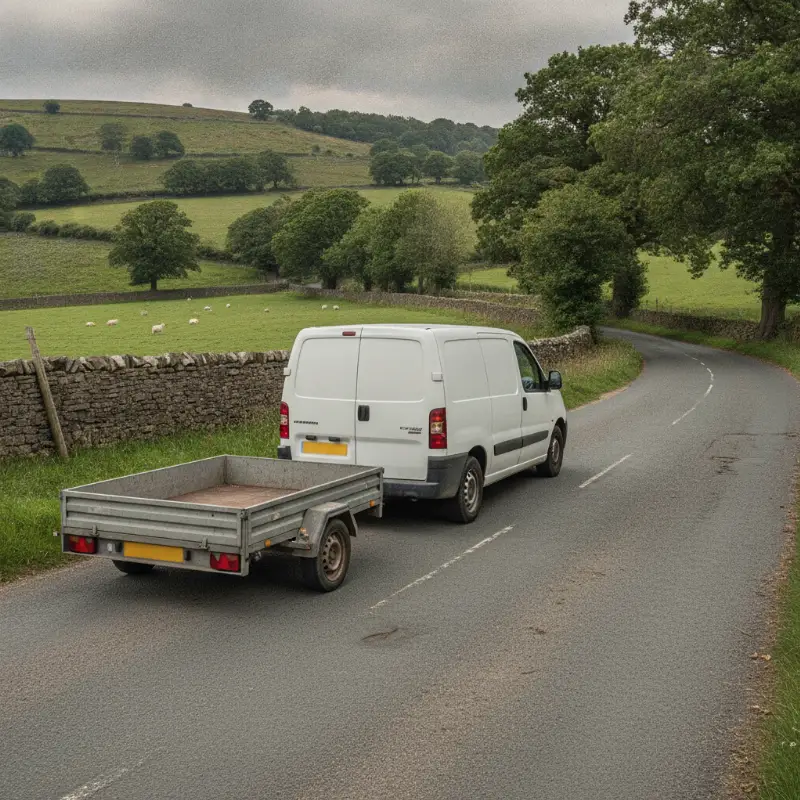
Citroen Dispatch Towing Capacity Explained
The Citroen Dispatch is one of the most versatile medium panel vans on UK roads, and towing ability is a key reason many tradespeople and fleet buyers choose it See our wider look at what a 3.5-tonne van can tow.. Depending on the engine, gearbox and gross vehicle weight rating, the current diesel Dispatch is rated to tow up to 2,500kg on a braked trailer, while the unbraked limit sits at 750kg — the standard figure for almost every light commercial vehicle sold in the UK.
Those headline numbers are only part of the story. Your real-world towing capacity depends on which body length you have (XS, M or XL), the engine and transmission combination, and the plated Gross Train Weight (GTW) shown on the VIN plate inside the driver's door. Always check that plate before hitching up, because it is the legally binding figure — not the brochure.
Braked vs Unbraked Towing Weights
An unbraked trailer relies entirely on the van's brakes to stop the combined load. For the Citroen Dispatch, as with virtually all vans, the unbraked limit is capped at 750kg gross trailer weight. That is enough for a small single-axle box trailer, a lightweight plant trailer or a modest garden waste tipper, but it fills up quickly once you add tools or materials.
A braked trailer has its own overrun brake system that activates as the trailer pushes against the coupling under deceleration. This dramatically increases what the van can safely stop, which is why the braked figure on the Dispatch can reach 2,500kg on most diesel derivatives. If you regularly tow anything heavier than an empty trailer, a braked unit is essential.
Towing Weights by Engine and Model Year
Since the current-generation Dispatch launched in 2016, Citroen has offered the van with a range of BlueHDi diesel engines — typically 1.5-litre four-cylinder units in the lower power outputs and 2.0-litre four-cylinder units in the higher outputs. The 1.5 BlueHDi 100 and 120 models generally tow up to 1,800kg to 2,000kg braked, while the 2.0 BlueHDi 145 and 180 versions, particularly with the EAT8 automatic gearbox, push the braked figure up to the full 2,500kg.
Older facelift years and specific van weight variants can differ, so if you are buying used it is worth cross-referencing the V5C, the VIN plate and Citroen's original data sheet for that model year to confirm the exact braked and unbraked capacities for your specific vehicle.
How Much Can a New Citroen Dispatch Tow?
Order a brand-new Citroen Dispatch today with the 2.0 BlueHDi diesel engine and, on most trims and body lengths, you will get a braked towing capacity of 2,500kg. That is enough to pull a twin-axle plant trailer with a mini digger, a car transporter carrying most small hatchbacks, or a mid-size touring caravan. Lower-powered 1.5 BlueHDi variants sit closer to 1,800–2,000kg braked, which still covers the vast majority of trade towing jobs.
The nose weight limit — the downward force the trailer coupling applies to the towball — is typically around 80kg to 100kg on the Dispatch, and you must stay within it as well as within the overall Gross Train Weight. Exceeding nose weight, even with a legal trailer load, can compromise handling and put you outside the manufacturer's limits.
Towing Capacity of the Citroen e-Dispatch (Electric)
The all-electric e-Dispatch is a different proposition when it comes to towing. Citroen rates it at up to 1,000kg braked, with the 750kg unbraked figure unchanged. That lower ceiling reflects the additional mass of the battery pack, which pushes the van's kerb weight up and eats into the available Gross Train Weight.
Practically, 1,000kg braked is fine for a small single-axle trailer, a light box trailer or a compact camping trailer, but it rules out heavier plant and larger caravans. It is also worth remembering that towing significantly reduces the driving range of any electric van, often by 30–50% depending on load, speed and terrain, so plan charging stops carefully on longer trips.
Used Citroen Dispatch Towing Limits (Older Models)
If you are looking at an older Dispatch, capacities vary more than you might expect. The second-generation Dispatch (2007–2016), which shared its platform with the Peugeot Expert and Fiat Scudo, was typically rated at 1,800kg to 2,000kg braked with the 2.0 HDi engine, and 1,200kg to 1,500kg braked with the smaller 1.6 HDi. The unbraked figure has always been 750kg.
The first-generation Dispatch (1994–2006) is a lighter, older van with more modest limits — usually around 1,300kg to 1,500kg braked depending on the engine. If you have your eye on a used example specifically for towing, prioritise the higher-powered engine and confirm the plated Gross Train Weight before committing.
What Can You Realistically Tow With a Citroen Dispatch?
Trailers, Plant and Small Machinery
For most trades, the Dispatch's towing capacity is genuinely useful. A 2,500kg braked rating covers a typical twin-axle Ifor Williams-style plant trailer with a 1-tonne mini excavator, a small dumper, or a ride-on mower on a light trailer. Landscapers commonly tow tipping trailers full of soil or aggregate, and builders regularly pull trailers loaded with scaffold or tools between sites.
Remember that the 2,500kg figure is the total gross weight of the loaded trailer — trailer plus contents — not just the payload. A trailer that weighs 500kg empty leaves you 2,000kg of usable capacity before you hit the limit.
Caravans and Citroen Dispatch Camper Van Setups
The Dispatch is popular as a base for compact camper conversions, and it is also perfectly capable of towing a small to mid-size caravan. With a 2,500kg braked capacity on the diesel models, you can comfortably tow most two- to four-berth touring caravans, provided the loaded caravan weight stays below both the braked figure and, ideally, around 85% of the van's kerb weight for safe, stable handling.
If your Dispatch has already been converted to a camper, its kerb weight will be higher than a standard panel van, which reduces the margin available for towing. Have the converted van weighed before you tow anything substantial.
Legal and Licence Considerations for Towing in the UK
UK towing rules changed in December 2021. Anyone who passed their car test from 1 January 1997 onwards can now tow trailers up to 3,500kg Maximum Authorised Mass behind a category B vehicle, without needing to take the old B+E test. That means, licence-wise, any standard UK driver can legally tow the Dispatch's full 2,500kg braked capacity.
You must still make sure your combined vehicle-and-trailer weight does not exceed the van's Gross Train Weight, that the trailer is correctly loaded with roughly 60% of the weight over the front axle, that lights and number plates work, and that your insurance covers towing. Speed limits on single carriageways drop to 50mph and on dual carriageways and motorways to 60mph when towing, and you are not permitted to use the outside lane of a three-lane motorway.
Tips to Tow Safely With Your Van
Before every tow, walk around the trailer and check tyre pressures, wheel nuts, lights, the coupling, the breakaway cable and the load restraints. Distribute the weight so heavier items sit low and just ahead of the trailer axle to keep nose weight in the correct range. Snaking almost always comes from a poorly loaded trailer, not the tow vehicle.
On the road, leave much larger gaps than you would when driving solo, brake earlier, and take corners wider to account for the trailer's tracking. If you tow infrequently, spend ten minutes practising reversing in a quiet car park before you need to do it on a busy site. Finally, keep an eye on your fuel or charge level — towing at motorway speeds can easily double your consumption, and running a heavily loaded Dispatch out of fuel on a slip road is not a mistake you want to make twice.
FAQs
What is the maximum towing weight of a Citroen Dispatch?
The current diesel Citroen Dispatch can tow up to 2,500kg on a braked trailer and 750kg unbraked, depending on the engine, gearbox and body length. The 2.0 BlueHDi models generally achieve the full 2,500kg figure, while the smaller 1.5 BlueHDi engines typically top out at 1,800kg to 2,000kg braked. Always check the VIN plate for the exact Gross Train Weight of your specific vehicle.
Can the electric Citroen e-Dispatch tow?
Yes, but with reduced capacity. The e-Dispatch is rated at up to 1,000kg braked and 750kg unbraked. That is enough for a small trailer or a light camping trailer, but not for heavier plant or larger caravans. Bear in mind that towing significantly reduces the driving range of any EV, often by 30–50%.
Do I need a special licence to tow with a Citroen Dispatch in the UK?
No. Since December 2021, any driver with a standard category B car licence can tow trailers up to 3,500kg MAM behind a category B vehicle, which covers the Dispatch's full braked towing capacity. You do not need to take the old B+E test, though additional training is recommended if you have not towed before.
How much can an older used Citroen Dispatch tow?
Second-generation Dispatch models (2007–2016) with the 2.0 HDi engine are typically rated at 1,800kg to 2,000kg braked, while 1.6 HDi versions sit at 1,200kg to 1,500kg braked. First-generation models (1994–2006) usually manage around 1,300kg to 1,500kg braked. The unbraked limit has always been 750kg. Check the V5C and VIN plate to confirm the figures for your exact vehicle.
Can a Citroen Dispatch tow a caravan?
Yes. With a 2,500kg braked capacity on higher-powered diesel models, the Dispatch can tow most two- to four-berth touring caravans comfortably. For safe, stable handling, keep the loaded caravan weight below around 85% of the van's kerb weight, and make sure the nose weight stays within the manufacturer's limit — typically 80kg to 100kg.