Volkswagen ID. Buzz Towbars: Capacity, Options & Fitting Guide
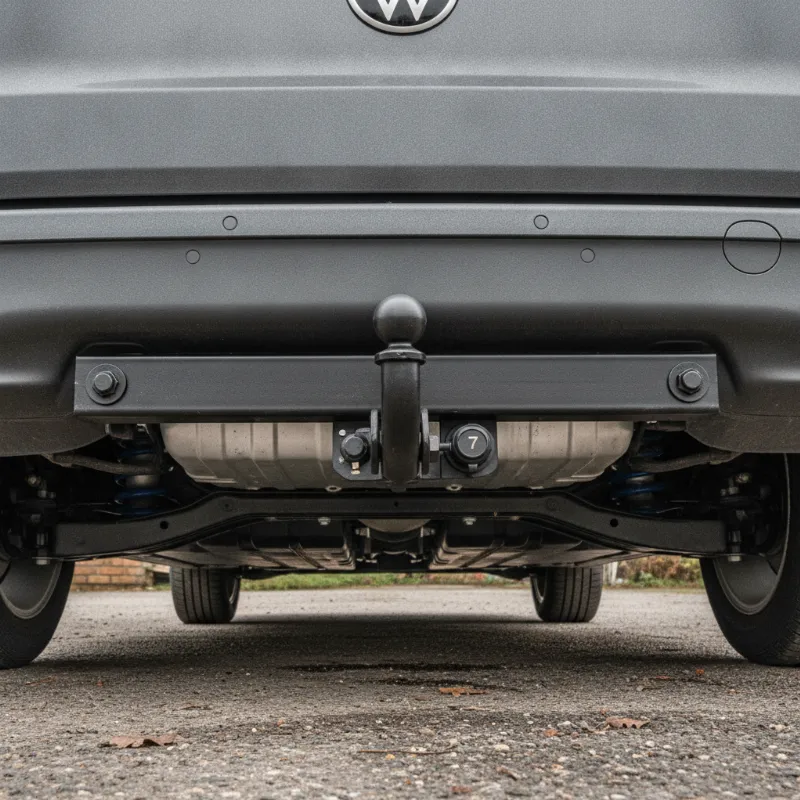
Can You Fit a Towbar to a Volkswagen ID. Buzz?
Yes, the Volkswagen ID. Buzz is fully towbar-compatible and, unlike some earlier electric vehicles, it was engineered from the outset with towing in mind. Volkswagen offers a factory-fit towbar option on both the passenger ID. Buzz and the ID. Buzz Cargo, and a wide range of approved aftermarket brackets are also available for retrofit. The chassis includes reinforced mounting points behind the rear bumper, so fitting is a relatively straightforward job for a qualified technician.
If you are ordering a new ID. Buzz, specifying the towbar at build stage is usually the cleanest solution because the vehicle's software is pre-configured to recognise a trailer, activate trailer stability assist, and disable the rear parking sensors when a trailer is connected. That said, retrofitting is entirely possible and, when done by a VW-approved installer, the vehicle's onboard systems can be coded to behave exactly the same way.
Volkswagen ID. Buzz Towing Capacity Explained
Towing capacity on the ID. Buzz is genuinely useful for a full-electric vehicle, comfortably exceeding what many EV rivals can manage. The exact figures depend on which version you have — the short-wheelbase five-seat model, the long-wheelbase seven-seater, or the Cargo panel van — and on the drivetrain, with GTX all-wheel-drive variants generally rated higher than single-motor rear-wheel-drive versions.
Braked and Unbraked Trailer Weights
Most ID. Buzz models are rated to tow up to 1,000kg unbraked. For braked trailers, the standard short-wheelbase versions are typically rated at 1,000kg, while the long-wheelbase and GTX models step up to around 1,800kg. That is enough for a small caravan, a twin-axle box trailer, a car transporter with a light vehicle on board, or a mid-sized boat and trailer combination. Always check the VIN plate and the vehicle handbook for the exact figure that applies to your specific ID. Buzz, as ratings can vary by model year and market specification.
Noseweight Limits
Noseweight — the downward force the trailer coupling exerts on the towball — is typically capped at 75kg to 100kg depending on the variant. Exceeding this figure can upset handling, compromise the rear suspension and, on an EV, place unwanted load over the battery pack area. A simple noseweight gauge from any caravan or trailer shop lets you check the loaded figure before you set off, and it is worth doing every time you load up differently.
Types of Towbar Available for the ID. Buzz
There are several styles of towbar available for the ID. Buzz, and the right choice depends on how often you tow, what you tow, and how the rear of the van looks when nothing is hitched up. All three main types are available for the Buzz from both Volkswagen and reputable aftermarket brands.
Fixed, Detachable and Retractable Options
A fixed towbar has a permanently exposed towball. It is the most affordable option and the strongest, making it the natural choice for regular heavy towing or for trade users who need something that just works day in, day out. The downside is that the ball sits proud of the bumper at all times, which can look a little industrial on what is otherwise a stylish van and, in some cases, can obscure the number plate or interfere with rear parking sensors.
A detachable towbar keeps the neck and ball off the vehicle when they are not in use — you unlock a release, pull the neck out, and store it in the boot. The rear of the van looks clean and unaltered when you are not towing. This is the most popular choice for private ID. Buzz owners who tow a caravan or trailer occasionally.
A retractable, or electrically deployed, towbar is the premium option. At the touch of a button in the boot or the infotainment screen, the neck swings out from behind the bumper ready to use. It costs significantly more but is the neatest solution and is what Volkswagen fits as its own factory-option towbar on the ID. Buzz.
OEM vs Aftermarket Towbars
The OEM (original equipment manufacturer) towbar is the Volkswagen-branded unit, either fitted at the factory or supplied through a VW dealer. It integrates fully with the vehicle's software, is guaranteed to preserve the warranty, and is designed to match the styling of the rear bumper. It is also the most expensive route.
Aftermarket towbars from established brands such as Westfalia, Witter, Brink and PF Jones are type-approved to the same EU/UN R55 standard and are perfectly safe and legal. They typically cost a good deal less than the VW-badged unit and, when fitted by a competent installer with the correct dedicated wiring kit, offer the same functionality. The key is choosing a vehicle-specific towbar designed for the ID. Buzz rather than a universal fit, and making sure the wiring loom is a dedicated (canbus-compatible) kit rather than a generic splice-in.
Electrics: 7-Pin vs 13-Pin Wiring
Every towbar installation needs an electrical connection so the trailer's lights, indicators and, where fitted, brakes and interior systems can talk to the van. There are two standard connectors: the older 7-pin (Type 12N) and the modern 13-pin.
The 7-pin socket handles the basics — sidelights, indicators, brake lights, fog lamp and reverse lamp — and is fine for a simple flatbed trailer or a small boat trailer. The 13-pin socket does everything the 7-pin does plus a permanent live and a switched live for charging a caravan leisure battery, running a fridge, and powering interior lights. If you tow a caravan, or you think you might in the future, specify 13-pin from the start. It is also the modern European standard, so any recently built trailer or caravan will use it.
If you have older equipment with a 7-pin plug, a simple 13-pin to 7-pin adapter costs very little and lives permanently in the trailer's storage box. Fitting 13-pin from the outset is far cheaper than upgrading later.
How Towing Affects Electric Range
There is no getting away from it — towing a trailer reduces the range of any electric vehicle, and the ID. Buzz is no exception. The extra weight, the aerodynamic drag from the trailer, and the higher power needed to maintain motorway speeds all pull energy from the battery faster than solo driving.
As a rough guide, expect real-world range to drop by 30% to 50% when towing, depending on trailer size, load, speed and weather. A tall, boxy caravan will hit range harder than a low, aerodynamic trailer with a similar weight. Headwinds, cold temperatures and motorway cruising speeds all make the reduction more pronounced.
The practical impact is that trip planning matters more when towing. Public rapid chargers designed for cars often have bays that a van-plus-trailer combination cannot easily pull into, so it is worth researching charge stops in advance and looking for pull-through bays or forecourt-style sites. When you plan a stop, the ID. Buzz's route planner will factor in charging but not usually the effect of a trailer, so build in a safety margin.
Fitting Costs and Where to Get One Installed
Fitting costs for an ID. Buzz towbar vary widely depending on the type of bar and where you have it done. As a general guide, expect a fixed aftermarket towbar with 13-pin dedicated electrics to start from around £600 to £800 fitted, a detachable to sit in the £800 to £1,100 bracket, and a retractable electric unit — whether OEM or premium aftermarket — to run from £1,500 up to £2,500 or more once fitting and coding are included.
Volkswagen main dealers will fit the OEM towbar and handle any software coding as part of the job, which is reassuring but usually the most expensive route. Specialist towbar fitters, mobile installers who come to your home or workplace, and independent VW specialists can all fit approved aftermarket bars at lower cost. Whoever you use, check that they will supply a fitting certificate, that the electrics are a dedicated canbus kit and not a splice-in, and that they will code the vehicle to recognise the trailer so features like trailer stability assist function correctly.
Choosing the Right ID. Buzz for Towing
If towing is a priority, the version of ID. Buzz you choose matters. The single-motor short-wheelbase model is fine for light trailers up to around 1,000kg, but if you are planning to tow a caravan, a horse trailer or a car transporter, look at the long-wheelbase versions or the GTX all-wheel-drive model. These have higher braked towing capacities — up to around 1,800kg — and the extra wheelbase gives more stability under a heavy noseweight.
Battery size also matters. A larger battery gives you more usable range once the towing penalty is factored in, which reduces charging stops on longer trips. Air suspension, where available, helps keep the vehicle level under noseweight and improves ride quality with a loaded trailer. Finally, specify the towbar and 13-pin electrics from the factory if you can — it is generally cheaper than retrofitting, and it gives you full integration with the ID. Buzz's driver assistance systems from day one.
FAQs
Can you fit a towbar to a Volkswagen ID. Buzz, and what can it tow?
Yes, a towbar can be fitted to any Volkswagen ID. Buzz, either as a factory option when ordering new or as a retrofit through a VW dealer or approved installer. Braked towing capacity is typically 1,000kg on the standard short-wheelbase model and up to around 1,800kg on the long-wheelbase and GTX variants, with an unbraked limit of 750kg to 1,000kg. That covers most caravans, trailers, small boats and light car transporters.
Does fitting a towbar to an ID. Buzz affect the Volkswagen warranty?
Fitting a type-approved towbar with a dedicated wiring kit through a VW dealer or a competent approved installer will not affect the manufacturer warranty. Problems only tend to arise when generic splice-in wiring kits are used, or when a non type-approved bar is fitted, so always ask the installer to confirm the towbar and electrics are approved for the ID. Buzz and to provide a fitting certificate.
Can the ID. Buzz still use its driver assistance systems while towing?
Yes. When the towbar is correctly fitted and the vehicle is coded to recognise a trailer, the ID. Buzz automatically activates trailer stability assist, disables the rear parking sensors when a trailer is plugged in, and adjusts systems like adaptive cruise control to account for the extra length behind you. This coding is standard on factory-fit installations and should be included by any competent aftermarket fitter.
How much range will I lose towing a caravan with an ID. Buzz?
Expect real-world range to drop by roughly 30% to 50% when towing, depending on the size and shape of the trailer, your speed, the weather, and how heavily loaded you are. A tall caravan at motorway speeds in cold, windy conditions will hit range hardest, while a low, aerodynamic trailer at 50mph in mild weather is much less punishing. Plan charge stops with pull-through bays in mind, as many rapid charger bays are awkward to access with a trailer attached.