Citroen Jumpy vs Toyota Proace: What's the Difference?
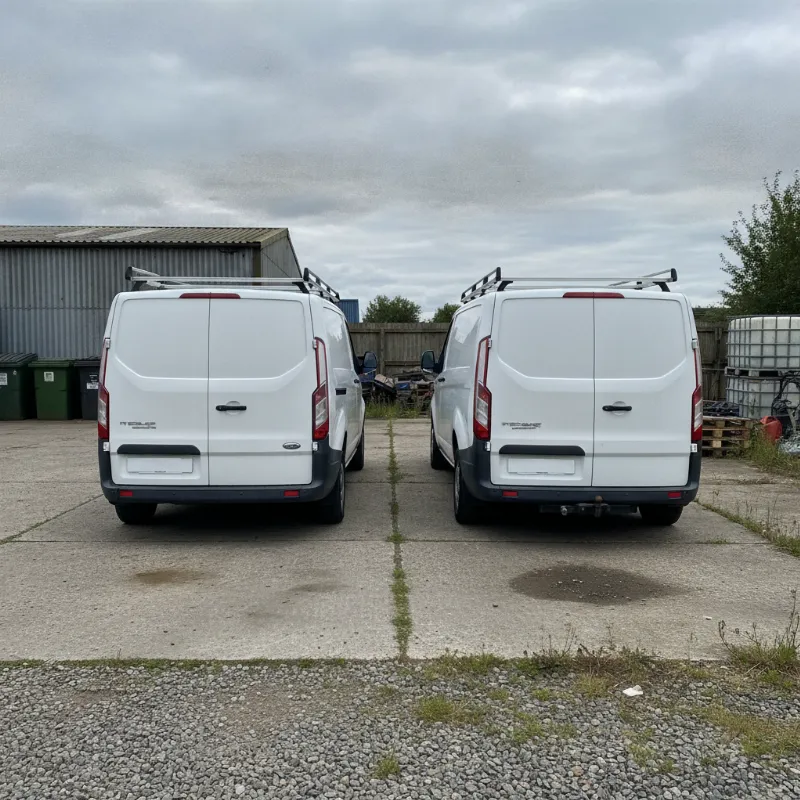
Citroen Jumpy vs Toyota Proace: What's the Connection?
If you've been shopping for a medium panel van in the UK, you've probably noticed something curious: the Citroen Jumpy and Toyota Proace look remarkably similar. That's because they are, mechanically speaking, the same van. Both models are built on the shared EMP2 platform developed by Stellantis (parent company of Citroen, Peugeot, Vauxhall and Fiat), and both roll off the same production line in Hordain, northern France, and Vigo, Spain.
The Toyota Proace is the result of a long-running partnership between Toyota and what is now the Stellantis group. Toyota takes the base van, adds its own grille, badging and warranty package, and sells it through its dedicated commercial vehicle network. Meanwhile, the Citroen Jumpy sits alongside its close cousins — the Peugeot Expert, Vauxhall Vivaro and Fiat Scudo — all sharing the same underpinnings, engines and body shells. So if you're weighing up a Jumpy against a Proace, you're not really comparing two different vans; you're comparing two different ownership experiences wrapped around the same product.
Shared Platform, Different Badges: How the Jumpy and Proace Compare
Because these vans share so much beneath the skin, the differences buyers need to focus on are subtle but meaningful. From styling cues to trim availability, pricing and aftersales support, each brand puts its own stamp on the package. Here's how they stack up across the areas that matter most.
Design and Styling Differences
Externally, the most obvious difference is at the front. The Citroen Jumpy carries Citroen's twin-chevron badge and a softer, more contemporary grille treatment, while the Toyota Proace wears Toyota's larger corporate face with more angular lower bumper detailing. From the A-pillar back, the two vans are effectively identical: the same doors, the same load area, the same wheel choices and the same roof options. Both are available in three body lengths — commonly badged as XS/Compact, M/Medium and XL/Long — giving fleet managers and sole traders plenty of flexibility.
Inside the cab, Citroen and Toyota use slightly different upholstery patterns and steering wheel badges, but the dashboard architecture, switchgear and infotainment layout are shared. If you sat in one and then the other blindfolded, you'd struggle to tell them apart.
Engines, Payload and Load Volume
Both vans use the same 2.0-litre BlueHDi diesel engine in a range of power outputs (typically 100, 145 and 180hp), paired with either a six-speed manual or an eight-speed automatic gearbox. Fully electric versions are also available on both — the Citroen ë-Jumpy and Toyota Proace Electric — offering a 50kWh or 75kWh battery and a WLTP range of up to around 217 miles depending on spec.
Payloads and load volumes are essentially identical across equivalent trims. Expect a gross payload of up to around 1,400kg on diesel models and load volumes ranging from roughly 4.6 cubic metres in the compact bodystyle up to 6.6 cubic metres in the long-wheelbase version with the Moduwork bulkhead flap folded. Both offer a maximum braked towing capacity of up to 2,500kg.
Interior, Tech and Driver Comfort
Standard equipment lists vary slightly. Citroen tends to lead with value-focused trim levels — X, Enterprise Edition and Driver — bundling in features like a touchscreen infotainment system with Apple CarPlay and Android Auto, air conditioning, rear parking sensors and cruise control on mid-spec models. Toyota's Proace range mirrors this with Icon, Design and, on some markets, higher-grade trims that add heated seats, sat-nav and safety kit like blind-spot monitoring.
Driver comfort is a strong point on both. The cab is genuinely car-like, with a comfortable driving position, plenty of storage cubbies and good all-round visibility. The optional Moduwork three-seat bench with a folding centre seat and load-through bulkhead is available on either badge — a genuinely useful feature for tradespeople who need to carry long items like pipes or timber.
Pricing, Warranty and Running Costs
On paper, the Citroen Jumpy usually undercuts the Toyota Proace on list price, sometimes by a meaningful margin on like-for-like specifications. Citroen also runs frequent business offers and contract hire promotions through its dealer network, which can widen that gap further.
Toyota's headline advantage is warranty. The Proace comes with Toyota's Relax cover, which can extend the warranty up to 10 years or 100,000 miles provided the van is serviced annually at a Toyota dealer. Citroen offers a more conventional package — typically three years or 100,000 miles — but backs it up with a well-established commercial vehicle service network and competitive parts pricing.
Running costs are broadly identical since the mechanicals are the same. Fuel economy on the 2.0 BlueHDi hovers around 40-45mpg in real-world driving, service intervals are similar, and insurance groupings tend to be within a band or two of each other. For the electric versions, running costs will depend heavily on how you charge — a home wallbox overnight is dramatically cheaper than public rapid charging.
Which Should You Choose — Citroen Jumpy or Toyota Proace?
The honest answer is: buy on price, dealer proximity and aftersales confidence, because the vans themselves are effectively the same. Choose the Citroen Jumpy if you want the lower up-front cost, a wider dealer network for commercial vehicles, and access to Citroen's often-generous business finance and contract hire deals. Choose the Toyota Proace if long-term warranty peace of mind is your top priority and you're happy to commit to annual dealer servicing to unlock the Relax cover.
For high-mileage fleet operators keeping vans for five years or more, Toyota's extended warranty can genuinely pay for itself. For owner-drivers and small businesses replacing vehicles every three to four years, the Jumpy's lower purchase price and stronger discounting usually win out. Either way, you're getting one of the most well-rounded medium vans on sale in the UK — quiet, comfortable, efficient and available in a huge variety of configurations.
Leasing and Finance Options on the Citroen Jumpy
If you've decided the Jumpy is the right van for your business, there are several ways to fund it. Contract hire is the most popular route for VAT-registered businesses: you pay a fixed monthly rental over a set term (typically two to five years) with an agreed annual mileage, hand the van back at the end, and never have to worry about resale value. Monthly rentals can often be offset against tax, and VAT on the finance element is usually reclaimable.
Hire purchase and finance lease are alternatives if you'd rather own the van outright at the end of the agreement or keep it on your balance sheet as a business asset. Personal contract purchase (PCP) is also available for sole traders and private buyers, offering lower monthly payments with a balloon payment at the end that you can settle, refinance or walk away from. Deposits, terms and mileage allowances are all flexible, so it's worth speaking to a specialist to build a package around your cash flow and how you use the van.
Explore the Wider Citroen Van Range
The Jumpy sits in the middle of Citroen's commercial vehicle line-up. Below it, the compact Citroen Berlingo Van is ideal for urban deliveries and light trades, offering car-like driving manners and low running costs in a smaller footprint. Above it, the Citroen Relay is a full-size large panel van with payloads up to around 2,000kg and load volumes exceeding 17 cubic metres — a workhorse for removals, parcel delivery and heavy trades.
All three models are available with fully electric drivetrains as well as efficient diesel engines, so whichever size fits your workload, there's a Citroen van to match your operating profile. If you're not sure which model suits your business best, a quick chat with the sales team can help match payload, load length and budget to the right van and the right funding option.
FAQs
Are the Citroen Jumpy and Toyota Proace the same van?
Yes, essentially. Both vans are built on the same Stellantis EMP2 platform in the same French and Spanish factories, using identical body shells, engines, gearboxes and load areas. The differences are limited to front-end styling, badging, trim names, warranty packages and dealer networks. Mechanically and dimensionally, a Citroen Jumpy and a Toyota Proace of equivalent spec are the same van.
Which is cheaper to buy, the Citroen Jumpy or the Toyota Proace?
The Citroen Jumpy is usually cheaper on list price, and Citroen tends to offer more aggressive business finance and contract hire deals through its dealer network. The Toyota Proace typically carries a small premium, which is partly offset by Toyota's extended warranty programme if you keep the van long-term and service it at a Toyota dealer.
Does the Toyota Proace have a better warranty than the Citroen Jumpy?
Yes. Toyota's Relax warranty can extend cover up to 10 years or 100,000 miles as long as the van is serviced annually at a Toyota dealer. Citroen offers a more standard three-year, 100,000-mile warranty. If long-term peace of mind matters more to you than up-front price, the Proace has the edge here.
Are there electric versions of both vans?
Yes. The Citroen ë-Jumpy and Toyota Proace Electric are mechanically identical, offering 50kWh or 75kWh battery options and a WLTP range of up to around 217 miles. Payload and load volume are almost unaffected by the electric powertrain, making both a strong option for urban and low-emission zone operators.
Can I lease a Citroen Jumpy through my business?
Yes. The Jumpy is available on business contract hire, finance lease, hire purchase and personal contract purchase. Contract hire is the most popular option for VAT-registered businesses because monthly rentals are fixed, VAT on the finance element is usually reclaimable, and you simply return the van at the end of the agreement. Terms, mileage allowances and deposits are flexible — speak to the sales team to build a package around your business needs.