Doblo, Ducato and Iveco Daily Vans Compared: Which Is Right for You?
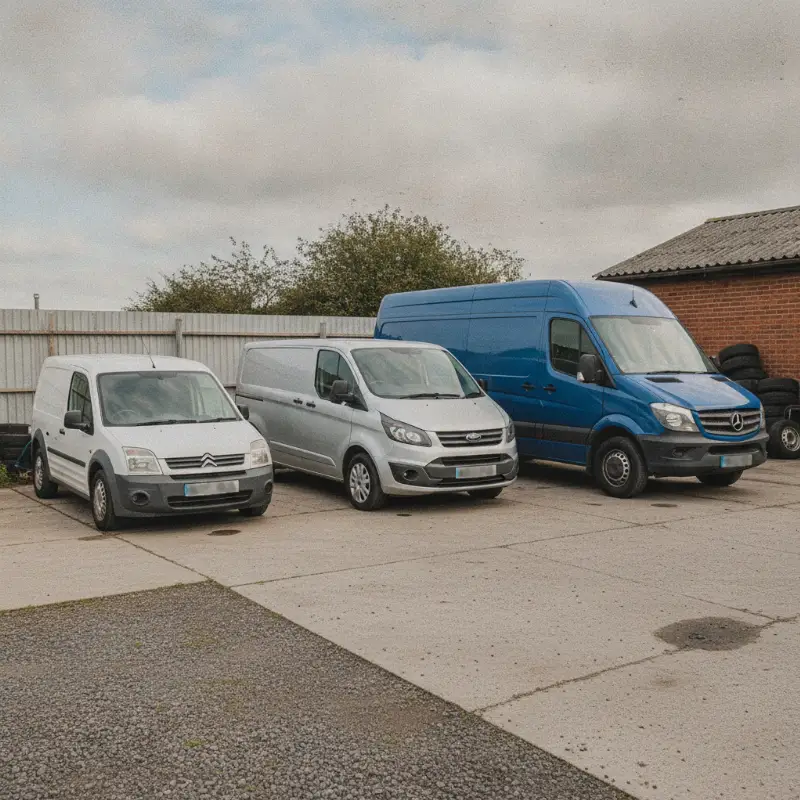
Fiat Doblo, Fiat Ducato and Iveco Daily: How They Compare
Choosing between the Fiat Doblo, Fiat Ducato and Iveco Daily comes down to one central question: how much do you need to carry, and how far do you need to carry it? All three vans share a common Italian engineering heritage and, in the case of the Ducato and Daily, a long track record on UK roads as reliable working tools. But they sit at very different points on the light commercial vehicle spectrum.
At the compact end, the Doblo is a small car-derived van built for tight city work and lighter loads. In the middle, the Ducato is a full-size panel van that has become the default choice for couriers, campervan converters and trades needing serious cubic capacity. At the heavy end, the Iveco Daily steps beyond the usual 3.5-tonne ceiling and moves into genuine light-truck territory, with chassis cab, tipper and 4x4 options that neither of the Fiats can match.
Below we break each van down in turn, look at payloads, dimensions and typical use cases, then bring them together in a comparison table so you can match the right van to the right job.
The Fiat Doblo: Compact City Van
The Fiat Doblo is a small panel van built on a car-based platform, sitting in the same class as the Peugeot Partner, Citroën Berlingo, Ford Transit Connect and Volkswagen Caddy. Later Doblo models share underpinnings with the Stellantis group's small van family, giving them a modern feel behind the wheel and diesel or electric powertrain options depending on year.
Payload, Load Space and Typical Uses
Depending on trim and generation, the Doblo offers a payload of around 750kg to 1,000kg, with load volumes typically between 3.4 and 4.4 cubic metres in standard and Maxi (LWB) forms. Twin sliding side doors are common, and the load area is easily accessible thanks to a low load lip. It's a van you can throw a couple of pallets, a full plumbing kit or a day's parcel round into without breaking a sweat.
Real-world MPG in the 45–55 range from the 1.3 and 1.6 diesel engines makes it cheap to run, and the compact footprint means it slips into loading bays and residential streets that would defeat a bigger van.
Who the Doblo Suits Best
The Doblo is the right choice if your work is urban, your loads are moderate and fuel economy matters. Mobile mechanics, florists, small delivery operators, care providers and sole traders in the trades all get on well with a Doblo. If you're regularly carrying long lengths of timber, heavy pallets of tiles or bulky white goods, though, you'll quickly outgrow it.
The Fiat Ducato: The Large Panel Van Workhorse
The Fiat Ducato is one of the most widely used large panel vans in Europe. It shares its platform with the Peugeot Boxer and Citroën Relay, and is the base vehicle for the vast majority of European motorhome conversions — a good sign of how versatile and well-supported it is.
Payload, Dimensions and Body Options
The Ducato is offered in multiple lengths (L1 to L4), roof heights (H1 to H3) and gross vehicle weights from around 3.0 to 4.25 tonnes. Payloads typically run from around 1,000kg on lighter variants up to 2,100kg on the heavy-duty Maxi models. Load volumes stretch from roughly 8 cubic metres on the shortest low-roof up to a cavernous 17 cubic metres on the L4H3.
Engine options across recent years have centred on the 2.3 MultiJet diesel in various power outputs, with front-wheel drive as standard. Body variants include panel van, crew van, chassis cab, dropside and Luton box — making it a genuinely flexible platform beyond the standard panel van.
Who the Ducato Suits Best
The Ducato is the right van for anyone whose main constraint is volume rather than weight, or who needs a big, tall, walk-in load area. Parcel and multi-drop couriers, removals firms, kitchen fitters, event and exhibition crews, and self-employed campervan builders all lean heavily on the Ducato. It's also the go-to platform for Luton and box body conversions on a 3.5-tonne licence.
The Iveco Daily: Heavy-Duty and 3.5t+ Capable
Where the Ducato is a car-derived van scaled up, the Iveco Daily is closer to a small truck scaled down. It uses a separate ladder chassis with rear-wheel drive, which gives it a completely different character: more capable under heavy loads, more suited to towing, and available at gross weights well beyond the usual 3.5-tonne panel van ceiling.
Payload, GVW Options and Chassis Cab Variants
The Daily is available at GVWs of 3.5, 5.0, 6.0 and 7.2 tonnes, with payloads ranging from around 1,500kg on standard 3.5t panel vans up to well over 4,500kg on the heaviest chassis cabs. Load volumes on panel van versions can reach around 19.6 cubic metres — larger than a top-spec Ducato. Twin rear wheels are available on heavier models for extra stability under load.
Chassis cab, crew cab, dropside, Luton and box body variants are all common, and the Daily's ladder chassis makes it a favourite with specialist bodybuilders. Note that the heavier variants require a C1 licence (drivers who passed after 1997 will need to add this category).
Iveco Daily 4x4 and Tipper Options
The Daily is also offered as a factory 4x4, giving genuine off-road capability with locking differentials and low-range gearing — useful for utilities, forestry, construction site access and rural operators. Single-cab and crew-cab tipper conversions are widely available, both as factory options and via approved bodybuilders, making the Daily a strong choice for groundworkers, landscapers and skip and waste operators.
Side-by-Side Comparison Table
| Feature | Fiat Doblo | Fiat Ducato | Iveco Daily |
|---|---|---|---|
| Class | Small van | Large panel van | Heavy-duty van / light truck |
| Typical payload | 750–1,000kg | 1,000–2,100kg | 1,500–4,500kg+ |
| Load volume | 3.4–4.4 m³ | 8–17 m³ | Up to ~19.6 m³ |
| GVW options | ~2.0–2.5 t | 3.0–4.25 t | 3.5, 5.0, 6.0, 7.2 t |
| Drivetrain | FWD | FWD | RWD, 4x4 available |
| Chassis type | Monocoque | Monocoque | Ladder chassis |
| Body options | Panel, crew | Panel, crew, chassis cab, Luton, dropside | Panel, chassis cab, tipper, Luton, 4x4 |
| Licence | Standard car (B) | B (up to 3.5t) | B up to 3.5t, C1 above |
| Best for | Urban, light loads | Volume-heavy work | Heavy loads, towing, off-road, tipper work |
Which Van Is Right for Your Business?
The honest answer is that these three vans rarely compete directly — they cover different jobs. If you're doing local deliveries, mobile services or light trade work in and around town, the Doblo will save you money on fuel, tax and parking headaches, and it's the easiest of the three to live with day to day.
If your work is defined by cubic metres — parcels, furniture, fit-outs, camper conversions — the Ducato hits the sweet spot: huge load area, 3.5-tonne friendly for standard licence holders, and cheap to run for its size. It's the natural upgrade when the Doblo runs out of room.
If you're regularly hitting the payload ceiling on a 3.5-tonne van, towing heavy trailers, running a tipper or working off-road, the Iveco Daily is in a different league. The rear-wheel-drive ladder chassis, higher GVW options and 4x4 availability make it the sensible choice for construction, utilities, waste and heavier haulage — provided your drivers hold the right licence category.
Buying Used: What to Check on Each Model
On a used Doblo, focus on the timing belt or chain service history (depending on engine), the state of the clutch on higher-mileage examples, and the condition of the sliding door runners, which see a lot of use on delivery vans. Check for rust around the wheel arches and sills on older pre-facelift models, and make sure the load area floor and bulkhead haven't taken a beating.
On a used Ducato, the 2.3 MultiJet engine is generally robust but check for oil leaks, EGR issues and DPF health, particularly on vans used for short urban runs. Inspect the front suspension bushes and lower arms, look for corrosion on the rear crossmember and under the load floor, and — if it's been used for multi-drop work — expect worn driver's seat bolsters, steering wheel and door cards. AL4/Comfort-Matic automated gearboxes should shift cleanly; hesitation or clunks warrant caution.
On a used Iveco Daily, service history matters more than mileage. These vans regularly cover 250,000 miles when looked after, so a full stamped book is worth paying for. Check for chassis corrosion (especially on tippers and vehicles used in construction), differential and rear axle noise, turbo condition and injector health on the 3.0-litre engines. On chassis cabs, inspect the body mounts and any bodybuilder plate for a valid conversion. On 4x4 models, confirm the transfer case and diff locks engage cleanly. Finally, check the plated GVW against what licence your driver actually holds — it's a common and costly oversight.
Whichever way you go, matching the van to the job rather than the badge is the key. A well-specced Doblo doing the right work will earn its keep just as reliably as a heavy Daily doing its.
FAQs
How do the Fiat Doblo, Fiat Ducato and Iveco Daily compare, and which one is right for my business?
They sit in three different classes rather than competing head to head. The Fiat Doblo is a compact car-derived van with a payload of around 750–1,000kg, best for urban delivery, mobile services and light trades. The Fiat Ducato is a large front-wheel-drive panel van offering up to around 17 cubic metres of load space and payloads to about 2,100kg, ideal for couriers, removals, fit-outs and campervan conversions. The Iveco Daily is a heavy-duty rear-wheel-drive van built on a ladder chassis, available up to 7.2 tonnes GVW with payloads over 4,500kg, plus 4x4 and tipper options — the right choice for construction, tippers, heavy towing and off-road work. Match the van to the weight, volume and terrain of your job rather than to a badge.
Can I drive an Iveco Daily on a standard UK car licence?
You can drive an Iveco Daily up to 3.5 tonnes gross vehicle weight on a standard category B car licence. Above that — for the 5.0, 6.0 and 7.2-tonne variants and many chassis cab, tipper and Luton conversions — you'll need C1 entitlement. Drivers who passed their test before 1 January 1997 usually have C1 automatically; anyone who passed after that date will need to take an additional C1 test.
Is a Fiat Ducato the same as a Peugeot Boxer or Citroën Relay?
Yes, they are effectively the same van built on a shared platform under the Sevel joint venture in Italy. The Ducato, Boxer and Relay share body panels, chassis, engines and most mechanical parts, with differences mainly in badging, grille design, dashboard trim and dealer network. Parts are widely interchangeable, which is one reason the platform is so cheap and easy to keep on the road.
Which of these vans is best for a campervan conversion?
The Fiat Ducato is by a wide margin the most popular base vehicle for European motorhome and campervan conversions. Its tall roof options, wide body, front-wheel-drive layout (which gives a flat load floor) and huge aftermarket support make it the natural choice. The Iveco Daily is used for larger, heavier A-class motorhomes and expedition builds where its chassis and payload are needed, while the Doblo is too small for a full conversion but works well as a micro-camper or day van.
Which van holds its value best on the used market?
The Iveco Daily and Fiat Ducato both hold their value well when they've been properly maintained, thanks to strong demand from trades, couriers and converters — the Ducato especially benefits from the campervan market propping up used prices. The Doblo depreciates more like a small car and is cheaper to buy used, which can actually make it excellent value if your workload suits it. Across all three, condition, service history and mileage matter more than the badge when it comes to resale.