How Much Does a New Peugeot Partner Cost to Buy? UK Price Guide
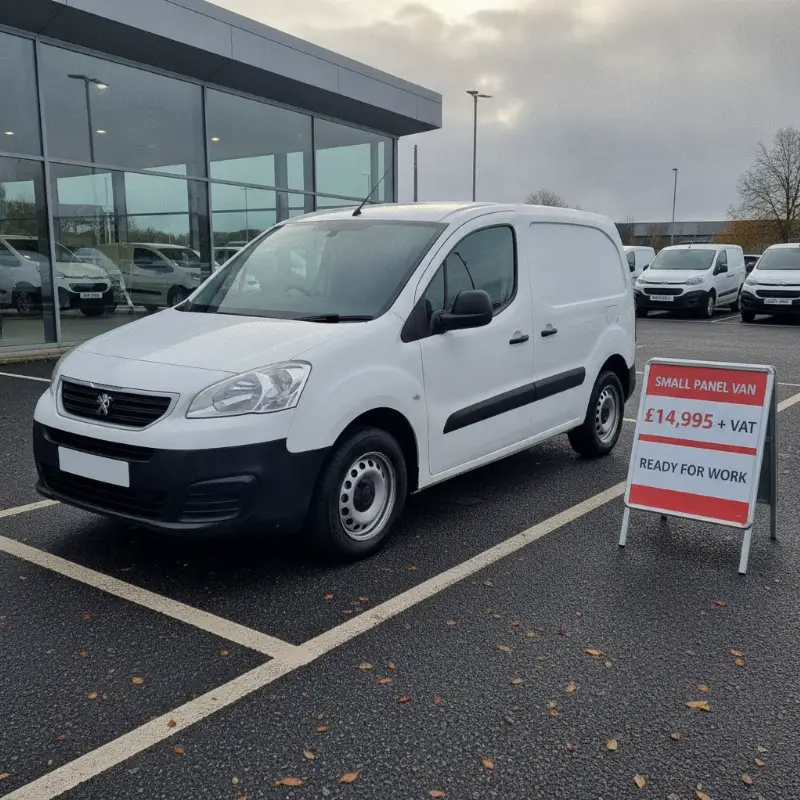
How much does a new Peugeot Partner cost to buy in the UK?
A brand new Peugeot Partner in the UK typically starts from around £22,000 plus VAT for the entry-level Professional trim in short wheelbase form, with prices rising to around £27,000 plus VAT once you move up to higher-specification trims, the long wheelbase body or the crew van variants. Once VAT is added, on-the-road prices for most retail buyers land somewhere between £26,500 and £33,000 depending on how the van is configured.
Those figures are Peugeot's published list prices, and they're really only the starting point. In practice, franchised dealers and van brokers will almost always discount the RRP, and the actual driveaway price you pay will depend on the trim, engine, wheelbase, factory options and any current manufacturer campaigns. Diesel remains the most popular choice, but the fully electric e-Partner sits at a noticeably higher list price — typically £5,000 to £7,000 more than the equivalent diesel model before you factor in any grants or lower running costs.
It's also worth remembering that most buyers of a small van like the Partner are VAT-registered businesses, so the ex-VAT price is the more meaningful number. If that's you, budgeting around £22,000 to £27,000 net for a new Partner is a realistic starting point before negotiation.
What's included in the on-the-road price of a new Peugeot Partner van
Peugeot's on-the-road (OTR) price is designed to cover everything you need to get the van off the forecourt and onto the road. That usually includes the vehicle itself, the standard specification for the chosen trim, first registration fee, number plates, a full tank of fuel (or charge for the e-Partner), delivery to the dealer and the first year's vehicle excise duty. VAT is normally shown separately on light commercial vehicles because most buyers will reclaim it.
Understanding what's already baked into the OTR price makes it much easier to compare quotes between dealers and to spot where a "cheap" headline figure has been achieved by stripping options out.
Standard equipment and factory options that affect price
Even the base Professional trim comes reasonably well equipped for a working van, with features like a DAB radio, Bluetooth, a full steel bulkhead, twin sliding side doors on most configurations, cruise control and Peugeot's suite of driver aids including lane-keep assist and speed limit recognition. That means you're not obliged to spend heavily on options just to get a usable van.
Where the price starts to climb is with optional extras. A larger touchscreen with sat nav, air conditioning (if not standard on your trim), parking sensors, a reversing camera, metallic paint, upgraded seats, ply-lining, tow bars and heavier-duty payload packs can each add anywhere from £150 to over £1,000. Choosing the more powerful BlueHDi diesel engine or an 8-speed automatic gearbox over the manual will also push the list price up by £1,500 to £2,500. It's very easy to add £3,000 to £4,000 of options to a base van without really trying, so it pays to be disciplined about what your business genuinely needs.
VAT, road tax and delivery costs to factor in
VAT is charged at 20% on new vans and is the single biggest addition to the ex-VAT list price. A VAT-registered business can reclaim this in the normal way, but sole traders and non-registered buyers need to budget for it in full. Vehicle excise duty on light commercial vehicles is currently a flat annual rate for diesel Partners, with the fully electric e-Partner benefiting from lower VED, although rules on zero-emission vehicles are changing so it's worth checking the current position at the point of purchase.
Delivery from the factory to your chosen dealer is normally included in the OTR figure, but if you're buying from a broker or having the van delivered directly to your premises, expect a separate delivery charge of £150 to £400 depending on distance. First registration fee and number plates are also standard OTR inclusions.
New Peugeot Partner price by trim level
Peugeot keeps the Partner range relatively straightforward, with two main trim levels available on both the standard and long wheelbase bodies, plus the crew van option for those needing to carry a passenger team as well as cargo. Pricing steps up in fairly predictable increments as you move through the range.
Peugeot Partner Professional pricing
Professional is the workhorse trim and the one most fleets and tradespeople will end up with. It sits at the bottom of the range and covers the essentials well: a full steel bulkhead, load area lighting, six load-lashing points, remote central locking, electric front windows, Bluetooth, DAB radio, cruise control with speed limiter and a decent set of active safety features. Standard wheelbase Professional models start from around £22,000 to £23,000 plus VAT with the 1.5 BlueHDi 100 diesel, making it the entry point into new Partner ownership.
Adding air conditioning, the larger colour touchscreen with smartphone mirroring and a couple of practical extras like parking sensors will typically take a Professional to around £24,000 plus VAT, which is where most working examples end up specced.
Peugeot Partner Asphalt Premium pricing
Asphalt Premium is the higher trim, aimed at owner-drivers and businesses that want a more car-like environment for staff who spend all day behind the wheel. It adds features such as a larger 10-inch touchscreen with wireless smartphone mirroring, upgraded upholstery, body-coloured bumpers, alloy wheels, automatic lights and wipers, keyless entry and a more comprehensive driver assistance package. List prices typically start from around £24,500 to £25,500 plus VAT in standard wheelbase form.
Choose the more powerful 130hp diesel with the 8-speed automatic in Asphalt Premium spec and you're looking at around £27,000 to £28,000 plus VAT before options — competitive against equivalent Ford Transit Connect and Volkswagen Caddy trims.
Peugeot Partner LWB price: how much more for the long wheelbase?
The long wheelbase (LWB) Partner adds around 350mm to the overall length and gives you a load volume of roughly 4.4 cubic metres compared with 3.8 cubic metres on the standard van. Both bodies are still classed as small vans, but that extra load length is significant if you regularly carry longer materials like pipes, timber or ladders internally.
In terms of price, the LWB typically costs around £700 to £1,000 more than the equivalent standard wheelbase model, trim for trim and engine for engine. So a Professional LWB with the 1.5 BlueHDi 100 diesel usually lands around £22,700 to £24,000 plus VAT, while an Asphalt Premium LWB sits in the £25,500 to £29,000 plus VAT bracket depending on engine and gearbox. Given the extra practicality on offer, most buyers find the long wheelbase premium easy to justify — the resale market also tends to favour LWB vans, which can help offset the initial outlay when the time comes to change.
Peugeot Partner dimensions and payload — does size affect cost?
Physically the Partner is compact: the standard wheelbase model measures 4.40m long, and the LWB stretches to 4.75m, both around 1.85m wide (excluding mirrors) and low enough at 1.88m tall to fit under most height-restricted car park barriers. That combination of car-like dimensions with a practical load area is a big part of the Partner's appeal.
Payload varies from around 650kg on lighter-specced electric models up to 1,000kg on the diesel derivatives with the increased payload option. Broadly speaking, wheelbase and body length have more impact on list price than payload rating on its own — you don't pay a huge premium simply for choosing a higher payload variant, but you will pay more for the longer body, the more powerful engine and any options that add weight-carrying capability such as uprated suspension. If your typical loads are heavy but compact, a standard wheelbase 1,000kg payload Partner can be one of the more cost-effective ways into a genuinely useful working van.
Buying outright vs Peugeot Partner lease and finance options
Paying cash for a new Partner has the obvious appeal of no monthly commitment and no interest charges, and for VAT-registered businesses the VAT is reclaimable in the quarter of purchase. The downside is the significant upfront outlay and the fact that you carry all the depreciation risk yourself — small vans typically lose 40% to 50% of their value over three years.
Contract hire (leasing) is by some distance the most popular way businesses acquire a new Partner. You pay a fixed monthly rental, usually over two to four years, hand the van back at the end and never have to worry about resale values. Maintenance can be bundled in for a predictable total cost of ownership. Hire purchase (HP) lets you spread the cost over a fixed term and own the van outright at the end, while Personal Contract Purchase (PCP) and business contract purchase offer a lower monthly payment with an optional final balloon payment if you want to keep the vehicle.
Which route works best comes down to cash flow, tax position and how long you intend to keep the van. It's worth asking your dealer or accountant to run the numbers on outright purchase versus contract hire before committing — for many small businesses, the monthly cost of leasing frees up capital that's better deployed elsewhere.
How to get the best price on a new Peugeot Partner van
The single biggest lever you have on price is competition between suppliers. Get written quotes from at least two or three franchised Peugeot dealers and a couple of reputable van brokers, all specced identically down to the paint colour and options. Small differences in trim or extras can make quotes look artificially close or far apart, so consistency matters.
Timing helps too. Dealers and manufacturers work to quarterly and annual registration targets, so quotes obtained in the last two weeks of March, June, September and December often come in noticeably sharper. Keep an eye out for Peugeot's manufacturer campaigns, which frequently include deposit contributions, cheaper finance offers or bundled service plans that can be worth several hundred to several thousand pounds.
Finally, be realistic about specification. Every option you add is money you have to recoup at resale, and the second-hand market rarely rewards you fully for expensive extras on a working van. Sticking to the trim and options your business genuinely needs — rather than what would be nice to have — is usually the quickest route to a Partner that costs less to buy and holds its value better when it's time to move on.
FAQs
How much does a new Peugeot Partner van cost to buy in the UK?
A new Peugeot Partner typically starts from around £22,000 plus VAT for the entry-level Professional trim in short wheelbase form, rising to around £27,000 to £28,000 plus VAT for a top-spec Asphalt Premium with the more powerful diesel and automatic gearbox. On-the-road prices including VAT generally fall between £26,500 and £33,000 depending on trim, engine, wheelbase and options, with the fully electric e-Partner sitting several thousand pounds above the equivalent diesel.
Is the Peugeot Partner cheaper than the Ford Transit Connect or VW Caddy?
The Partner is broadly competitive with the Transit Connect and Caddy on list price, and often slightly cheaper trim for trim, particularly at the entry Professional level. Actual driveaway prices come down to dealer discount and any manufacturer campaigns running at the time, so it's worth getting like-for-like quotes on all three before deciding — spec, payload and finance offers can shift the value equation significantly.
How much more does the long wheelbase Peugeot Partner cost?
Expect to pay around £700 to £1,000 more for the long wheelbase Partner than the equivalent standard wheelbase model. In return you get roughly 0.6 cubic metres of extra load volume and around 350mm of extra length, which is often well worth the modest premium for tradespeople carrying longer materials.
Can I get discount off the list price of a new Peugeot Partner?
Yes, discounts on new vans are the norm rather than the exception. Franchised Peugeot dealers and van brokers will typically offer savings off list price, and manufacturer campaigns often add deposit contributions or cheaper finance on top. Getting several written quotes on identical specification and timing your purchase around quarter-end usually delivers the sharpest deal.
Is it better to lease or buy a new Peugeot Partner outright?
For most VAT-registered businesses, contract hire (leasing) is the most popular route because it fixes the monthly cost, avoids depreciation risk and preserves cash. Buying outright makes sense if you plan to keep the van for many years beyond a typical lease term and prefer to own the asset. The right answer depends on your cash flow, tax position and how long you'll keep the vehicle, so it's worth comparing the total cost of ownership under each option.