Are LDV Convoy Vans Any Good? An Honest UK Buyer's Guide
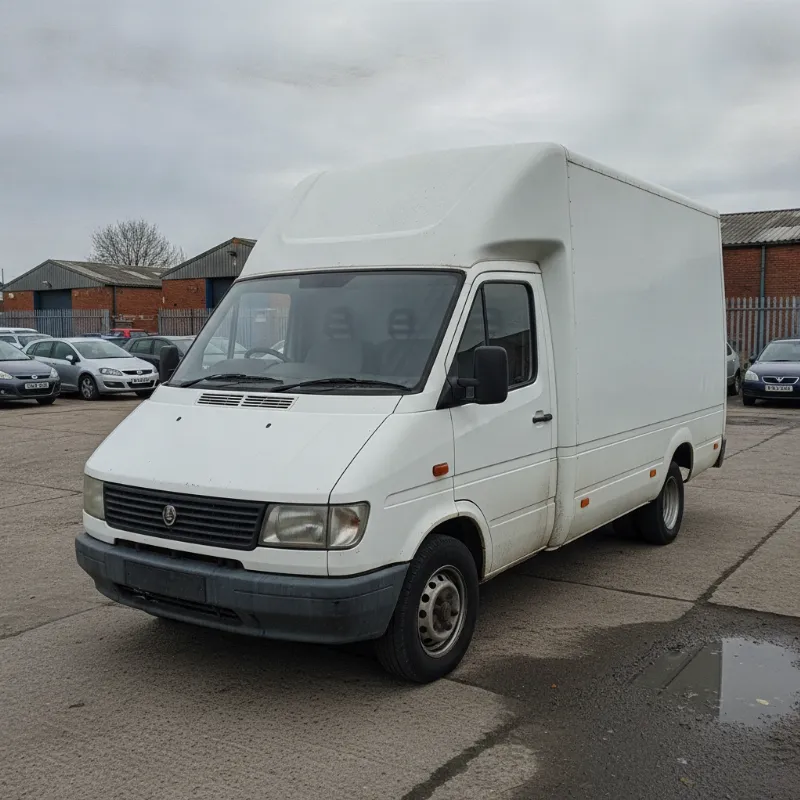
A quick history of the LDV Convoy
The LDV Convoy is one of those unmistakably British workhorses that quietly built a reputation on tradesmen's driveways up and down the country. Built by Leyland DAF Vans (LDV) at the old Washwood Heath plant in Birmingham, the Convoy was launched in 1996 as a facelift and rebadge of the long-running Leyland DAF 400 series, which itself traced its roots back to the Freight Rover Sherpa of the late 1970s. That family tree is important because it explains why the Convoy feels so simple, so mechanical, and — for better or worse — so old-school.
Production ran through until 2006, with the van offered in a huge range of body styles: short and long wheelbase panel vans, high-roof variants, tippers, dropsides, chassis cabs, minibuses and welfare buses. It was particularly popular with the NHS, local councils, driving schools and community transport groups, which is why so many surviving examples today started life as 17-seater minibuses. LDV itself went through a rocky financial period, entered administration in 2005, was briefly owned by Russian company GAZ, and eventually re-emerged under Chinese ownership as SAIC's LDV brand — but by then the Convoy name had been retired.
Are LDV Convoy vans any good? The honest verdict
The honest answer is: it depends entirely on what you want it for. If you're after a modern, refined, fuel-efficient van that will happily rack up motorway miles and impress clients, the Convoy is not it. But if you want a cheap, cavernous, easily-fixed old-school panel van for occasional use, light haulage, a camper conversion project or a farm runabout, the Convoy still makes a surprising amount of sense in 2025.
Build quality and reliability
Mechanically, the Convoy is properly agricultural — and that's meant as a compliment. The Ford-sourced 2.4-litre and 2.5-litre diesel engines are simple, non-common-rail units that any competent mechanic can fix with basic tools and off-the-shelf parts. There's no complex electronics, no DPF to clog, no AdBlue system, and no delicate turbo actuators to fail. Gearboxes and rear axles are similarly robust.
Where the Convoy falls down is bodywork. Rust is the single biggest killer of these vans. The sills, wheel arches, floor pans, rear crossmember, door bottoms and the area around the windscreen are all known rot spots. Interior trim is flimsy, seat foams collapse, and the switchgear feels decades behind anything modern — because it is. If you find a Convoy with a solid, rust-free shell, the running gear will almost certainly outlast the metal around it.
Load space and practicality
This is where the Convoy still genuinely shines. Load volumes range from around 6.7 cubic metres in the short-wheelbase low-roof up to a huge 12.5 cubic metres in the long-wheelbase high-roof. The load area is boxy, square and easy to load, with a low load lip that your back will thank you for. Payloads on the heavier 3.5-tonne variants can push past 1,500kg, which is competitive even by modern standards.
Rear barn doors open wide, side loading doors are standard on most variants, and internal load lengths are generous. For anyone converting to a campervan, the flat sides and tall roof options make the Convoy a genuinely practical base — which is why so many have ended up as weekend adventure wagons.
Running costs and fuel economy
Let's be blunt: fuel economy is where the Convoy shows its age. Expect somewhere between 25 and 32mpg on a good run, and significantly less if you're loaded up or working it hard around town. That's not disastrous, but it's a long way behind a modern Transit or Sprinter.
The saving grace is that everything else is cheap. Purchase prices are rock-bottom, insurance groupings are low, parts are inexpensive and widely available, and there's no adblue, no DPF regeneration cycles and no dealer-only diagnostic software to worry about. Servicing at an independent garage costs a fraction of what a modern van demands. Just be aware of Clean Air Zone and ULEZ charges — a pre-2006 Convoy will not meet Euro 6 and will attract daily fees in London, Birmingham, Bristol and a growing list of other cities.
Common LDV Convoy problems to watch for
Beyond the ever-present rust, there are a handful of specific issues worth checking on any Convoy you're considering. Clutches don't have the longest life, particularly on ex-minibus examples that have spent years being driven by dozens of different people. Check for a high biting point and any judder pulling away. Fuel injector pumps can weep, and glow plugs often need replacing — cold starting should be prompt with no excessive smoke.
Wiring can be temperamental, especially around the rear lights and any minibus-specific circuits like wheelchair lifts or step motors. Wheel bearings, kingpins on the heavier variants, and prop shaft UJs are all wear items to inspect. Check the chassis rails from underneath with a torch — surface rust is normal, but flaking layers or holes are a walk-away issue.
Why does an LDV van lose power?
Power loss on a Convoy is almost always down to one of a handful of straightforward causes. The most common culprit is a blocked or dirty fuel filter starving the engine under load — cheap and easy to change. Next up is turbocharger issues on the turbocharged variants: check for oil in the intercooler pipework and listen for a whistle that changes pitch under acceleration.
Air leaks in the intake system, a sticking EGR valve, tired injectors, or a worn fuel lift pump can all cause the classic "won't pull up hills" complaint. On higher-mileage examples, compression loss due to worn rings or valves is possible but relatively rare — these engines are genuinely long-lived if maintained. The good news is that diagnosis is refreshingly analogue: a basic pressure gauge, a mechanic's stethoscope and some patience will usually pinpoint the fault without a laptop in sight.
Who makes LDV vans today?
LDV as a brand is now owned by SAIC Motor, the huge Chinese state-owned manufacturer that also owns MG. After LDV's UK operations collapsed in 2009, SAIC bought the intellectual property and relaunched the brand, initially selling the Maxus V80 (which was essentially a developed version of the old LDV Maxus). Today, LDV in the UK sells modern vans including the Deliver 9, the eDeliver 3, the eDeliver 7 and the eDeliver 9 — all built in China and imported through a UK dealer network.
The modern LDV range has moved a long way from the Convoy era, with a strong focus on electric vans aimed at fleet buyers and last-mile delivery operators. Build quality, warranty support and dealer coverage have all improved significantly, though the brand still sits below the likes of Ford, Mercedes and Volkswagen in most buyers' minds.
LDV Convoy vs modern LDV vans (and Amazon's electric LDV fleet)
Comparing a 20-year-old Convoy to a current eDeliver 9 is almost unfair — they're different vehicles from different centuries. The modern LDVs offer proper crash protection, airbags, ABS, air conditioning, touchscreen infotainment, and in the case of the eDeliver range, zero tailpipe emissions and ULEZ compliance as standard. Amazon has famously invested heavily in electric LDVs for its UK delivery fleet, and you'll now see eDeliver 3s and eDeliver 9s in Amazon livery across most British cities — a huge vote of confidence in the modern brand from one of the world's most demanding logistics operators.
That said, the Convoy still has one advantage its modern descendants can't match: absolute simplicity. There's no battery pack to degrade, no software to update, no charging infrastructure to worry about. For a low-mileage, occasional-use owner, the Convoy's mechanical honesty is genuinely refreshing.
Should you buy an LDV Convoy in 2025?
Buy a Convoy if you want a cheap, characterful, easily-repaired van for light or occasional use — a campervan conversion, a farm or smallholding runabout, a classic vehicle project, an occasional house-move hauler, or a second van for a small business that doesn't need to venture into a Clean Air Zone. At current prices, a solid Convoy is one of the cheapest ways into van ownership in the UK.
Don't buy one if you need to do high daily mileages, if your work takes you regularly into ULEZ or CAZ areas, if you need modern safety kit for family use, or if you can't tell rust from underseal. For serious daily commercial work in 2025, a newer Euro 6 van — whether that's a modern LDV, a Transit, a Sprinter or a Vivaro — will save you money in the long run despite the higher purchase price.
Where to find an LDV Convoy for sale in the UK
Surviving Convoys tend to change hands through classified sites like Auto Trader, eBay Motors, Gumtree and Facebook Marketplace, as well as through specialist classic commercial vehicle dealers and the occasional small independent van yard. Ex-minibus examples often appear at council and NHS auctions, and campervan conversion specialists sometimes have donor vehicles for sale.
Wherever you buy, take your time, view in daylight, take a magnet for the bodywork, get underneath with a torch, and try to get a test drive that includes a proper motorway pull and a cold start. A good Convoy is a bargain; a bad one is a very expensive lesson in welding. Buy the best example you can afford, budget for some inevitable tinkering, and you'll end up with a proper piece of British commercial vehicle history that still earns its keep.
FAQs
Are LDV Convoy vans any good to buy and own in the UK?
For the right buyer, yes. LDV Convoys are cheap to buy, mechanically simple, easy and inexpensive to repair, and offer huge load volumes for the money. They're a good choice for occasional use, camper conversions, farm work or light business duties. They're not a good choice if you need modern refinement, good fuel economy, or ULEZ/CAZ compliance for daily city work. Rust is the biggest thing to watch for — the mechanicals will usually outlast the bodywork.
How many miles will an LDV Convoy do?
The Ford-derived 2.4 and 2.5 diesel engines in the Convoy are genuinely long-lived and it's not unusual to see well-maintained examples with 200,000 miles or more still running strongly. In most cases the van will rust out long before the engine gives up. Regular oil changes, a clean fuel filter and gentle warm-ups are the keys to reaching high mileages.
Is an LDV Convoy ULEZ compliant?
No. All LDV Convoys were built before 2007 and use pre-Euro 6 diesel engines, which means they'll attract the daily charge in London's ULEZ, Birmingham's CAZ, and other UK Clean Air Zones. If you regularly drive into these areas, the daily fees will quickly outweigh the low purchase price of the van.
What's the difference between an LDV Convoy and an LDV Maxus?
The Convoy (1996–2006) was the older, Sherpa-derived model with Ford diesel engines and a very traditional design. The Maxus, launched in 2005, was an all-new van intended to replace the Convoy, with a more modern cab, better crash protection and VM Motori diesel engines. The Maxus name has since carried on under SAIC's ownership and forms the basis of today's LDV range.
Are parts still available for the LDV Convoy?
Yes, and that's one of the Convoy's strong points. Because it shares so much with the Sherpa and uses Ford Transit-era engines, mechanical parts, filters, brakes and service items are cheap and widely available from independent motor factors and online specialists. Body panels and interior trim are harder to source and often need to come from breakers or specialist forums.