1.6 Tonne Ford Transit Van Dimensions: Full Size, Payload & Load Area Guide
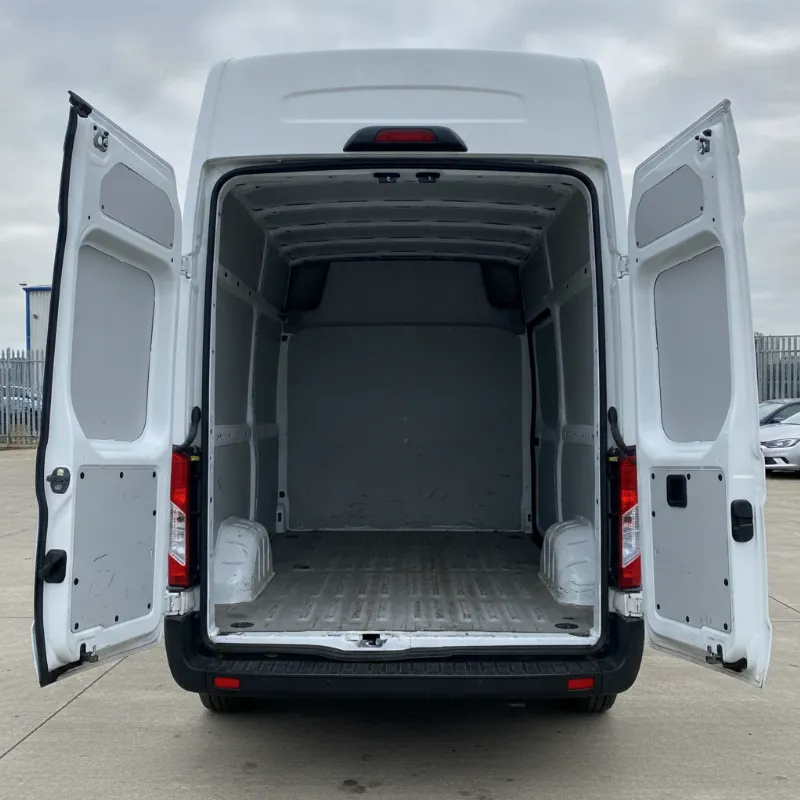
What Does 1.6 Tonne Refer To on a Ford Transit Van?
When people talk about a "1.6 tonne" Ford Transit, they are usually referring to the van's payload capacity — the maximum weight of cargo, passengers and equipment it can legally carry over and above its own kerb weight. In other words, a 1.6 tonne Transit can haul roughly 1,600kg of goods, which puts it firmly in the higher payload bracket of Ford's most popular large panel van.
It's worth noting that "1.6 tonne" doesn't describe the whole van's weight, nor its gross vehicle weight (GVW). Those figures are separate. The payload rating is what most tradespeople, couriers and fleet buyers care about, because it dictates whether the van can legally carry the loads their business demands day in, day out.
1.6 Tonne Ford Transit Van Dimensions at a Glance
A 1.6 tonne payload Transit is typically found in the longer-wheelbase, higher-roof configurations of the current generation Transit range. These vans are built to shift bulky, heavy loads over long distances, so their dimensions reflect that priority — plenty of cubic capacity paired with a robust chassis and suspension.
Exterior Length, Width and Height
A long-wheelbase Ford Transit with high roof measures approximately 5,981mm in overall length, 2,474mm in width including door mirrors (around 2,059mm without), and stands roughly 2,779mm tall. The extra-long "jumbo" versions stretch beyond 6.7m in total length. These figures matter for garage clearance, multi-storey car parks, low bridges and depot access — always double-check the dimensions of the specific trim you're viewing before committing.
Load Area Length, Width and Loading Height
Inside, the load bay of a 1.6 tonne LWB Transit gives you around 3,494mm of load length at floor level, a maximum width of about 1,784mm (with roughly 1,392mm between the wheel arches — wide enough to take a Euro pallet flat), and a load height of approximately 1,886mm in the high-roof configuration. The rear loading height sits around 700mm off the ground, keeping repeated loading sessions manageable for the back.
Payload, Gross Vehicle Weight and Towing Capacity
The 1.6 tonne payload rating typically pairs with a gross vehicle weight of 3,500kg, which keeps the van drivable on a standard UK Category B licence. Braked towing capacity on these variants runs up to 2,800kg on many derivatives, giving you real flexibility for trailers, plant and machinery. Regular servicing keeps that capability in check — if you're unsure about lubricants, our guide on what oil for a Ford Transit is a useful reference.
1 Ton Ford Transit Van SWB with Side Loading Door
Step down to the short-wheelbase 1 tonne Transit and you get a more urban-friendly footprint — roughly 4,972mm long overall with a load length of around 2,555mm. The nearside sliding side loading door on SWB models measures about 1,300mm wide and 1,494mm tall, making kerbside deliveries and site drops far more efficient than working solely from the rear barn doors. It's a popular choice for couriers, mobile trades and multi-drop operators.
9 Seater Ford Transit Minibus Dimensions and Layout
The 9-seater Transit Minibus (sometimes badged as the Tourneo depending on trim) uses the medium-wheelbase Transit platform. Overall length sits around 5,340mm with a height of roughly 2,050mm on the low-roof variant — meaning it fits under most car park barriers. Interior layout usually runs as 2+3+3+1 seating or 2+2+2+3, with a generous rear luggage area behind the last row that comfortably holds 9 sets of luggage.
Ford Transit Minibus for Sale: Sizing Considerations
If you're shopping for a Transit Minibus, think beyond seat count. Consider door apertures for elderly or less mobile passengers, headroom (particularly for taller passengers on the back row), and whether the roof height suits your regular routes. Also check whether the vehicle is Section 19 or PSV compliant if you're operating it commercially — it affects both the specification you'll want and the driver licence category required.
Buy Ford Transit Courier Kombi: A Smaller Alternative
Not everyone needs a full-size Transit. The Ford Transit Courier Kombi is the smallest van in the Transit family, built on a car-derived platform. It's roughly 4,157mm long, 1,765mm wide and 1,735mm tall, with a second row of removable seats for occasional passenger duties. Payload is far lower — around 550kg — but for sole traders, mobile groomers, florists and light-goods couriers, it makes a lot of sense on running costs and manoeuvrability.
Crew Cab Ford Transit Dimensions
The Crew Cab (or "Double Cab-in-Van") Transit adds a second row of seats behind the driver, taking total seating to five or six. That extra row shortens the load bay by around 700–800mm compared with the standard panel van of the same wheelbase — expect a load length of roughly 2,732mm on an L3 crew cab, still with the full width and height of the parent van. It's the go-to spec for site teams travelling together with tools.
Ford Transit Double Cab Load Space and Seating
Similar to the Crew Cab, the Double Cab variant balances passenger and payload duties. You lose some cargo length but gain the ability to move a full crew legally and comfortably in one vehicle — a big win for insurance, mileage claims and site logistics. Payload remains competitive at around 1,000–1,300kg depending on trim, though it's worth confirming the exact figure on the V5C of any van you're viewing.
Ford Transit Dropside Bed Dimensions
A Ford Transit Dropside conversion replaces the panel van body with a flat bed and hinged aluminium sides. Typical bed dimensions on a single-cab L3 dropside are around 3,400mm long by 2,050mm wide, giving you a generous flat load area for building materials, landscaping supplies or palletised goods. The drop sides fold down to allow forklift loading from any angle — a huge time-saver on busy sites.
Ford Transit Tipper Dimensions and Payload
The Ford Transit Tipper takes the dropside idea and adds a hydraulic ram to tip the bed. Standard single-cab tipper bed dimensions come in around 2,995mm long by 2,022mm wide by 400mm high on the sides, with payloads typically between 1,000kg and 1,250kg depending on chassis and body weight. Double-cab tippers are also available, sacrificing a little bed length for a rear row of seats.
Ford Transit Tipper Vans for Sale: What to Measure Before You Buy
Before you sign for a used Transit Tipper, measure — don't assume. Check the bed length and width against the materials you regularly haul, verify the tipping angle clears any tailgate obstructions, and inspect the ram, chassis extensions and body-to-chassis mounts for wear. Payload on a tipper is always lower than the equivalent panel van because the body itself weighs more, so read the plate carefully.
Ford Transit Luton Body Dimensions
A Ford Transit Luton is instantly recognisable by its box body with the overcab "peak" that gives it extra storage. Typical Luton box dimensions on a Transit chassis cab are around 4,000mm long by 2,100mm wide by 2,200mm tall internally, with the Luton peak adding an additional storage pocket over the cab roof — ideal for blankets, straps and lightweight bulky items.
Ford Transit Luton Van Load Volume Explained
Load volume on a Luton conversion typically works out at around 18–20 cubic metres, which is significantly more than any factory panel van Transit can offer. Combined with a tail-lift (usually rated to 500kg), it's the removal industry's workhorse. Pay close attention to the internal height at the door aperture — it's often slightly lower than the peak of the box roof, and that determines what tall items will actually fit through.
Ford Transit Luton Van Lease Options
Because Luton conversions are body-on-chassis builds, lease terms often differ from standard panel van agreements. Contract hire, finance lease and hire purchase are all commonly available. Mileage allowances tend to be structured around removals and haulage use, and end-of-contract condition guidelines take account of the working nature of the body. Speak to your account manager about what best fits your operating pattern rather than defaulting to a standard van package.
Ford Transit MSRT: Sport-Trim Sizing
The MS-RT Transit is a Ford-approved sport-styled Transit developed with M-Sport. Externally it gains a wider body kit, deeper front splitter, side skirts and rear diffuser, adding a small amount to overall width and length — usually a few centimetres each side. Load area dimensions remain the same as the standard panel van of equivalent wheelbase, so you get the visual drama without sacrificing practicality.
Ford Transit Electric Range and E-Transit Dimensions
The all-electric E-Transit uses the same body dimensions as the diesel Transit, so a long-wheelbase high-roof E-Transit gives you the same 15.1m³ load volume as its diesel sibling. The 68kWh usable battery is mounted under the floor without eating into cargo space, and Ford quotes a real-world range of around 196 miles on the L3H2 variant. Payload can actually exceed the diesel on some configurations, thanks to the E-Transit's higher 4.25 tonne GVW option (drivable on a Category B licence under current UK rules).
How the 1.6 Tonne Transit Compares to Other Payload Variants
Transit payload ratings on the panel van range span roughly 900kg at the lightest end up to over 2,300kg on the heavy-duty 5.0 tonne GVW variants. A 1.6 tonne payload sits comfortably in the middle-to-upper portion of that range — plenty for a full load of tools, stock or aggregate without pushing you into HGV licence territory. Compared with a 1.0 tonne SWB Transit you get much more capacity; compared with a 2.0 tonne+ heavy Transit you get better fuel economy and easier driving.
Choosing the Right Ford Transit Size for Your Business
The right Transit for your business isn't always the biggest one. Map your typical loads — length, width, weight and volume — and then match them to a wheelbase and roof height that fits with a margin to spare. Consider access constraints on your customers' sites, overnight parking at home or depot, and fuel or electricity costs across your average mileage. When those factors align, a 1.6 tonne payload Transit is one of the most versatile working vehicles on the UK market — powerful enough to earn its keep, compact enough to live with every day.
FAQs
What are the exterior, interior and payload dimensions of a 1.6 tonne Ford Transit van?
A 1.6 tonne Ford Transit is typically a long-wheelbase high-roof panel van measuring around 5,981mm long, 2,059mm wide (excluding mirrors) and 2,779mm tall on the outside For the full dimensions guide across every Transit variant, see our Ford Transit dimensions guide.. Inside, the load bay offers approximately 3,494mm of load length, 1,784mm maximum width (1,392mm between wheel arches) and 1,886mm of load height. Payload is around 1,600kg on a 3,500kg gross vehicle weight, with braked towing up to 2,800kg on many derivatives.
Can I drive a 1.6 tonne Ford Transit on a standard UK car licence?
Yes. A 1.6 tonne payload Transit almost always has a gross vehicle weight of 3,500kg, which is within the limit of a standard Category B UK driving licence. If you're towing a heavy trailer as well, you may need a B+E entitlement depending on when you passed your test.
Will a Euro pallet fit sideways in a 1.6 tonne Transit?
Yes. The load bay width between the wheel arches on a long-wheelbase Transit is around 1,392mm, which accommodates a standard 1,200mm x 800mm Euro pallet loaded flat. A full-size UK pallet (1,200mm x 1,000mm) also fits between the arches with room to spare.
How does the E-Transit compare on dimensions and payload?
The E-Transit shares the same external and internal dimensions as the diesel Transit, so load volume is identical at each wheelbase and roof height. Payload on the E-Transit can actually be higher on some variants thanks to the optional 4.25 tonne GVW rating, which remains drivable on a standard Category B licence under current UK rules for electric vans.
What's the difference between a 1 tonne and 1.6 tonne Transit?
The 1 tonne Transit is usually a short-wheelbase, low or medium roof panel van around 4,972mm long — ideal for urban work. The 1.6 tonne Transit is a longer, taller van, typically LWB high roof, offering significantly more load length, height and cubic volume as well as the extra 600kg of legal payload capacity.