1 Ton Ford Transit Van Dimensions: Complete UK Size Guide
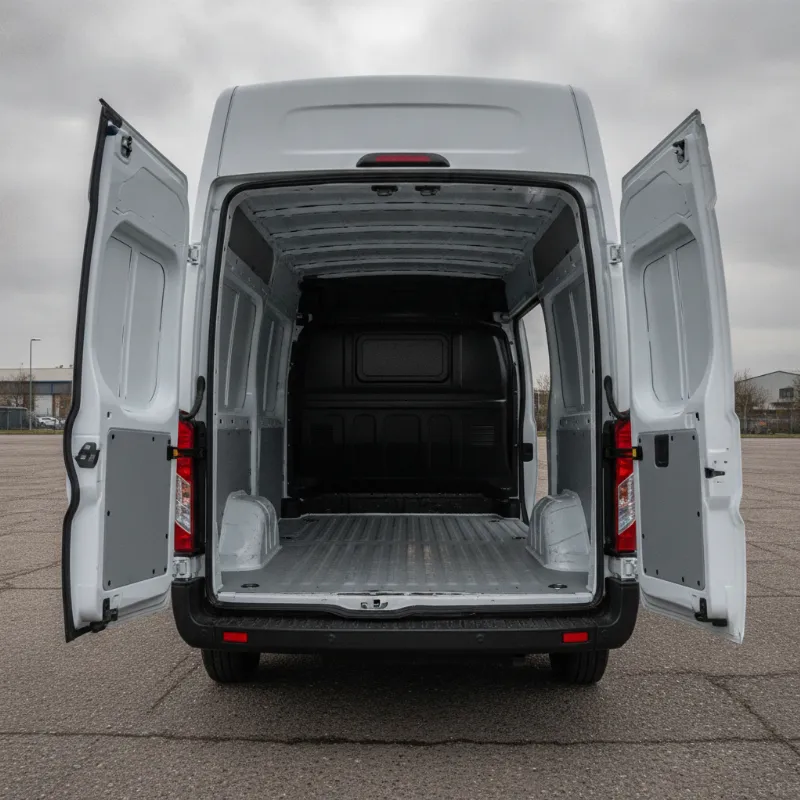
1 Ton Ford Transit Van Dimensions at a Glance
The 1 ton Ford Transit is one of the most flexible working vans on UK roads, and knowing its exact dimensions is essential whether you're planning to load pallets, fit shelving, or squeeze it through a residential archway See our full Ford Transit dimensions guide for every variant.. The "1 ton" label refers to the payload capacity rather than a single body shape, so the same badge covers a wide range of external footprints, load volumes and roof heights. Below we break down the numbers you actually need before you commit to a purchase or lease.
External Length, Width and Height
Externally, a 1 ton Ford Transit typically ranges from around 5,531mm long in short wheelbase form up to roughly 6,704mm on the long wheelbase chassis. Width across the body sits at approximately 2,059mm without mirrors, extending to about 2,474mm with the mirrors unfolded — a figure worth checking against narrow lane widths and multi-storey car park entrances. Overall height varies most dramatically with roof choice, from about 2,315mm on a low roof up to 2,779mm on a high roof.
Internal Load Area Dimensions
Inside the load bay, cargo length runs from roughly 2,850mm on a short wheelbase up to around 4,217mm on the long wheelbase, with maximum width between the wheel arches of 1,392mm — wide enough to take a Euro pallet loaded sideways. Load height ranges from 1,786mm on the low roof to 2,025mm on the high roof, giving load volumes of between 9.5m³ and 15.1m³ depending on configuration.
Payload, Gross Vehicle Weight and Towing
The 1 ton designation reflects a payload capacity of approximately 1,000kg to 1,459kg depending on trim and engine, sitting within a gross vehicle weight (GVW) of 3,500kg on the standard chassis. Braked towing capacity reaches up to 2,800kg on higher-output diesel variants, making the Transit a genuine workhorse for tradespeople towing plant trailers or small caravans.
Wheelbase and Roof Height Options Explained
Ford offers the Transit in a matrix of wheelbase lengths and roof heights, and the combination you choose dictates almost everything about how the van drives, parks and loads.
SWB, MWB and LWB Explained
The short wheelbase (SWB) measures 3,300mm between the axles, the medium wheelbase (MWB) 3,750mm, and the long wheelbase (LWB) 3,954mm. There is also an extended-frame "Jumbo" variant that stretches further still. SWB models are easiest to manoeuvre in tight urban environments, while LWB versions give you the longest usable load floor for lengths of timber, ladders or long tools.
Low, Medium and High Roof Options
The low roof (L1) keeps overall height under 2.4m — useful for car parks with height barriers. The medium roof (L2) offers additional headroom for standing loads and is popular with courier operators. The high roof (L3) provides genuine standing room inside for fit-out work such as mobile workshops, plumbing vans and camper conversions.
1 Ton Ford Transit Van SWB with Side Loading Door
The short wheelbase Transit with nearside sliding side loading door is a firm favourite among couriers, multi-drop operators and urban tradespeople. The side door aperture measures approximately 1,300mm wide by 1,608mm tall on low roof models, allowing pallet trolleys and stacked parcels to be loaded from the kerb without opening the rear doors into traffic. The compact 5,531mm overall length means it slots neatly into a standard UK parking bay, and the 12.06m turning circle keeps tight urban routes manageable.
How the 1 Ton Compares to Other Transit Variants
Ford's Transit range is a family, not a single model, and understanding where the 1 ton panel van sits helps you decide whether to size up or down.
Ford Transit Courier Dimensions
The Transit Courier is the smallest member of the family, measuring around 4,337mm long, 1,825mm wide and 1,796mm high. Payload sits at approximately 626kg with a load volume of 2.9m³ — ideal for sole traders, florists and mobile groomers who don't need a full ton of capacity but want the reliability of the Transit badge.
Buy Ford Transit Courier Kombi
For buyers who need to carry passengers alongside cargo, the Transit Courier Kombi adds a second row of seats behind the driver while retaining a usable load area. It's a strong choice for small crews or dual-use business/family duties, and stock availability is typically good across UK dealer networks.
Ford Transit Jumbo and Larger Panel Vans
At the opposite end of the range, the Transit Jumbo stretches the LWB chassis to a total length of about 6,704mm with a high roof, delivering up to 15.1m³ of load volume. It remains within the 3.5t GVW category, so it can still be driven on a standard category B licence — a significant advantage for operators moving up in capacity without needing to retrain drivers.
Specialist and Conversion Body Types
Beyond the panel van, the 1 ton Transit chassis underpins a wide family of specialist bodies. If you're planning to maintain one of these variants long-term, it's worth reading our guide on What oil for a Ford Transit to keep servicing intervals on track.
Ford Transit Luton
The Transit Luton features a box body with an over-cab storage pod, typically offering internal load lengths of around 4,100mm and volumes of 20m³ or more. It's a go-to for house removals and furniture delivery.
Ford Transit Luton Van
Luton vans on the Transit chassis are usually fitted with a tail lift as standard, making single-person operation practical for heavy or awkward loads. External heights typically reach around 3.2m, so height-restricted routes need planning.
Ford Transit Luton Van Lease
Leasing a Transit Luton spreads the higher upfront cost of a converted body over manageable monthly payments, and typically includes options for maintenance packages. It's a popular choice for growing removals firms and last-mile delivery operators who want predictable outgoings.
Ford Transit Dropside
The dropside variant replaces the panel body with a flat bed and hinged sides, ideal for landscapers, builders' merchants and scaffolders. Bed lengths of around 3.4m are typical on the LWB chassis, with payloads often exceeding 1,000kg depending on body weight.
Ford Transit Tipper
The Transit Tipper adds a hydraulic tipping mechanism to the dropside body, making it a staple for groundworks contractors, roofers and skip hire firms. Standard tipper bed dimensions sit at around 3,050mm long by 2,020mm wide.
Ford Transit Tipper Vans for Sale
The used market for Transit Tippers is strong across the UK, with both single-cab and double-cab configurations widely available. Check bed condition, hydraulic ram operation and chassis for signs of overloading before you commit.
Crew Cab Ford Transit
Crew cab Transits add a second row of forward-facing seats, typically taking capacity from three to six or seven. They're particularly useful for contractors moving teams and tools to site in a single vehicle rather than running two vans.
Ford Transit Double Cab
The Double Cab combines crew seating with the load-carrying versatility of a panel van, dropside or tipper. It's the most flexible body on the Transit chassis for mixed passenger and cargo duties, and remains within the 3.5t GVW bracket in most specifications.
People Carrier and Minibus Variants
For businesses that primarily move people, the Transit platform stretches into dedicated minibus territory.
9 Seater Ford Transit Minibus
The 9-seater Transit Minibus can be driven on a standard UK car licence and is popular with schools, care homes, community groups and airport transfer operators. External dimensions closely match the standard MWB panel van, keeping it easy to park.
Ford Transit Minibus for Sale
Larger 15 and 17-seater Transit Minibuses are also available, though these require a category D1 licence entitlement for most drivers. Stock is regularly turned over by fleet operators, offering plenty of well-maintained used options.
Performance Variants
Not every Transit is bought purely for work — some are bought for the sheer fun of driving them.
Ford Transit MSRT
The Transit MSRT, developed with M-Sport, is a road-going tribute to Ford's rallying heritage. It combines a tuned diesel engine, uprated suspension, unique bodywork and Recaro-style seats. Dimensions match the standard SWB panel van, so it remains fully usable as a working vehicle while looking the part on the drive.
Ford E-Transit Electric Range and Dimensions
The E-Transit brings zero-emission driving to the 3.5t and 4.25t Transit chassis, and importantly retains almost identical external and internal dimensions to its diesel counterpart. That means fleets can transition to electric without redesigning racking, garaging or loading procedures.
Ford Transit Electric Range
The E-Transit offers a WLTP driving range of up to approximately 196 miles from its 68kWh usable battery, with rapid charging supported at up to 115kW DC. For most urban and regional delivery duties, that easily covers a full working day with capacity to spare — and payloads remain competitive at around 1,616kg on higher GVW variants.
Will a 1 Ton Ford Transit Fit in My Car Park or Garage?
Before you buy, measure your access carefully. A standard UK residential garage door is around 2,134mm (7ft) high, which will comfortably accommodate a low-roof Transit but not a medium or high roof. Multi-storey car parks typically post height limits of 1.9m or 2.1m, ruling out most Transit variants — always check before committing to a regular route. Length is rarely the deciding factor for garages, but overall width including mirrors of nearly 2.5m means garage doors and driveway pillars need careful measurement. For height-restricted urban work, the SWB low roof remains the most versatile choice.
View Our In-Stock Ford Transit Vans
Our UK stock covers the full 1 ton Ford Transit range, from SWB low-roof panel vans and Couriers through to Luton, tipper, dropside and E-Transit variants. Every van is fully inspected and prepared for handover, with finance and lease options available to suit sole traders, small businesses and larger fleets. Get in touch with our sales team to arrange a viewing or to discuss which body style, wheelbase and roof height best suits your working day.
FAQs
What are the exact external and internal dimensions of a 1 ton Ford Transit van, and how do they compare across wheelbases, roof heights and body variants?
A 1 ton Ford Transit panel van ranges from approximately 5,531mm long (SWB) up to 6,704mm (LWB Jumbo), with widths of around 2,059mm excluding mirrors and heights from 2,315mm (low roof) to 2,779mm (high roof). Internal load lengths run from about 2,850mm on the SWB to 4,217mm on the LWB, with load volumes between 9.5m³ and 15.1m³. Payload is typically 1,000–1,459kg within a 3,500kg GVW. Specialist bodies such as Luton, dropside and tipper variants change these figures significantly, so always check the exact spec sheet for the variant you're considering.
Can I drive a 1 ton Ford Transit on a standard UK car licence?
Yes. A standard category B car licence covers vehicles up to 3,500kg GVW, which includes every 1 ton Ford Transit panel van, Luton, dropside and tipper on the standard chassis. Only the heavier 4.25t E-Transit and larger minibuses (15+ seats) require additional licence entitlements.
Will a high-roof Ford Transit fit in a standard UK multi-storey car park?
Almost certainly not. Most UK multi-storey car parks impose height limits of 1.9m or 2.1m, whereas a high-roof Transit stands around 2.78m tall. Even a medium roof at roughly 2.55m will be too tall for most public car parks. If you regularly need multi-storey access, choose a low-roof SWB or MWB variant.
How much can a 1 ton Ford Transit tow?
Braked towing capacity on a 1 ton Ford Transit reaches up to 2,800kg on higher-output diesel engines, though the exact figure depends on the specific engine, transmission and chassis combination. Always check the V5C and manufacturer plate before hitching a trailer, and remember that combined vehicle and trailer weight must stay within your licence category.
What's the difference between a Transit Custom and a 1 ton Transit?
The Transit Custom is the smaller one-tonne class van (around 5.05m to 5.45m long), while the full-size Transit covered here is a larger 3.5t GVW vehicle with significantly more load volume and payload headroom. The Custom is better suited to urban work and daily commuting, whereas the full-size Transit is the choice when you need genuine 1 ton payloads or larger body conversions such as Lutons and tippers.