Which Van Uses Less Diesel: Mercedes Vito or VW Transporter?
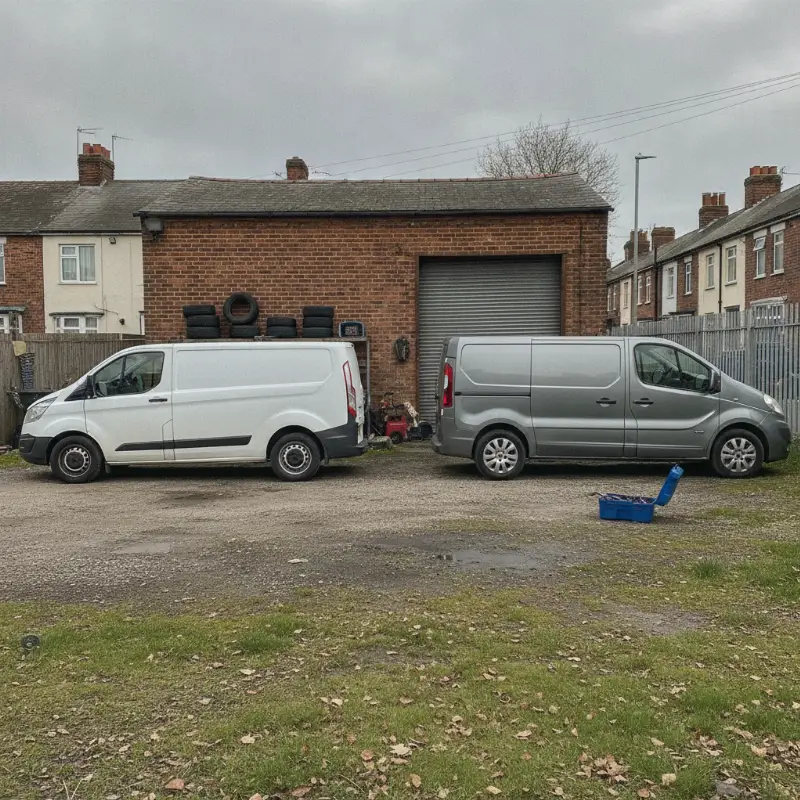
Mercedes Vito vs VW Transporter: which van uses less diesel?
Ask any tradesperson or fleet manager which medium panel van sips least diesel and you'll usually get the same two names in the conversation: the Mercedes-Benz Vito and the Volkswagen Transporter. Both have been mainstays of UK yards, driveways and depots for decades, and both have earned reputations for being tough, refined and reasonably efficient. But when it comes down to pence per mile, there is a difference — and it isn't always the one you'd expect.
The short answer is that the two vans are remarkably close on paper, but the VW Transporter generally edges the Vito on official combined MPG in like-for-like diesel specifications, particularly in the more common 2.0 TDI variants. That said, real-world fuel use depends heavily on which engine, gearbox, body style and driving conditions you're comparing, so the "winner" can flip depending on how you use the van.
Official MPG figures compared
Manufacturer WLTP figures are the fairest starting point because both vans are measured to the same test cycle. They won't match what you see on your trip computer, but they let you compare engine-for-engine on a level playing field.
Mercedes Vito diesel MPG range
The Vito is sold with a range of 2.0-litre four-cylinder diesel engines, badged 110, 114, 116 and 119 CDI depending on power output. Official combined economy across the current line-up typically sits somewhere between around 34 and 41 mpg, with the front-wheel-drive Vito Long variants tending to return the best figures and the higher-powered rear-wheel-drive versions with the nine-speed automatic sitting nearer the lower end. Older 1.7 CDI variants briefly nudged into the low 40s on paper.
VW Transporter diesel MPG range
The Transporter T6.1's 2.0 TDI engine is offered in 90, 110, 150 and 199 PS outputs. Official combined figures generally run from roughly 36 to 44 mpg, depending on wheelbase, roof height, transmission and whether it's a panel van, Kombi or dropside. The lower-powered 110 PS manual panel van is usually the frugal front-runner, while the 4MOTION and DSG combinations sit a few mpg lower.
On paper, then, a mid-spec Transporter typically claims two to four mpg more than an equivalent Vito. It's not a landslide, but over 20,000 miles a year it does add up.
Real-world fuel economy: what drivers actually see
Talk to owners rather than brochures and the picture narrows. Most Transporter T6.1 drivers we speak to report anywhere from 32 to 40 mpg in mixed use, with careful motorway drivers sometimes seeing the mid-40s on a long steady run. Vito owners tend to quote between 30 and 38 mpg in similar conditions, with the RWD 119 CDI auto more often in the low 30s when worked hard.
The gap in the real world is often smaller than the official figures suggest, largely because the Vito's engine is well-suited to loaded, motorway-heavy work, while the Transporter's advantage is clearest in stop-start and urban delivery cycles. If your week is mainly A-roads and motorways with a decent payload on board, the two vans are within a couple of mpg of each other.
Factors that change diesel consumption
Before you commit to one badge over the other on fuel economy alone, it's worth remembering that spec and use case can swing MPG by 20% or more.
Payload, body style and load
A long-wheelbase high-roof panel van carrying a tonne of tools will always drink more than a short-wheelbase Kombi carrying a couple of passengers. Dropsides and tippers, with their less aerodynamic profiles, generally cost you two to four mpg compared to a closed panel van of the same engine. If you're constantly running near your payload limit, expect the fuel figures to drop noticeably regardless of badge.
Engine size and gearbox choice
The lower-powered 90 and 110 PS engines in the Transporter, and the 110 CDI in the Vito, are the frugal choices — but only if you're not asking them to haul heavy loads up hills. Manual gearboxes usually beat autos by one to three mpg in mixed driving, though modern DSG and 9G-Tronic transmissions have closed that gap considerably.
Urban vs motorway driving
Both vans are happiest at a steady 60-70 mph. Sit them in London traffic all day and MPG can tumble into the mid-20s. Cruise them on a motorway run with a light load and you'll see the best of both, occasionally into the mid-40s. If your work is predominantly urban multi-drop, a mild hybrid or electric alternative will usually beat both diesels on running costs.
Running costs beyond fuel: servicing, tax and residuals
Fuel is only one line on the total cost of ownership spreadsheet. Volkswagen Transporters have historically held their money extremely well on the used market, which offsets a slightly higher purchase price when you come to sell. Mercedes servicing can be a touch pricier than VW on paper, though independent specialists have narrowed the gap considerably. Both vans sit in the same commercial VED band, and both qualify for VAT reclaim on a panel van purchase where applicable. Factor in insurance, tyres and AdBlue and the two are broadly comparable — but the Transporter's residual strength often tips the whole-life sum in its favour.
VW Transporter 4MOTION: does 4x4 hurt economy?
Yes, but perhaps less than you'd fear. Adding the 4MOTION all-wheel-drive system to a Transporter typically costs two to four mpg on the official combined figure compared to the equivalent front-wheel-drive model. In the real world, if the 4x4 system is only engaging occasionally on slippery surfaces, the penalty on a dry motorway is closer to one or two mpg.
4x4 VW Transporter
For farmers, groundworkers, ski-industry buyers and anyone regularly heading off tarmac, the 4x4 Transporter's fuel penalty is a small price to pay for the traction it delivers. The Vito is also available with 4x4 in some markets and generations, but 4MOTION Transporters are far more common on the UK used market, and they hold their value particularly well as a result.
Electric VW Transporter: the zero-diesel alternative
If you've read this far and you're mostly doing urban work under 100 miles a day, the electric Transporter — badged e-Transporter on the outgoing platform and available as a full battery-electric version of the new T7 — sidesteps the diesel debate entirely. Running costs on a home or depot tariff can be a fraction of diesel, and there's no AdBlue, no DPF regens and no fuel duty. It won't suit long-distance or heavy-tow work yet, but for a lot of light-commercial use cases it makes the Vito-vs-Transporter MPG argument redundant.
New VW Transporter T7 and T7 Transporter: what's changed for fuel economy
The new-generation Transporter, developed with Ford, brings a fresh chapter to the range and a broader powertrain choice.
VW T7
The VW T7 Transporter uses updated 2.0 TDI engines with mild-hybrid tech on some variants, plug-in hybrid on others, and a full electric option. Official combined figures for the diesels have improved slightly over the T6.1, with the most efficient front-wheel-drive models nudging into the mid-40s mpg on the WLTP cycle.
VW Transporter T7 for sale
Early T7 stock is starting to appear on UK forecourts, and demand has been strong. If you're buying now with fuel economy front of mind, it's worth comparing a new T7 against a late-plate T6.1 — the T7's efficiency gains are real but modest, and the T6.1 remains a proven, well-understood workhorse.
VW Transporter T6 and VW T6 Kombi economy
The T6 and T6.1 generations remain the sweet spot for many buyers, combining modern refinement with strong used-market availability.
VW T6 Camper fuel use on tour
Converted T6 campers, loaded up with kit, awnings, roof beds and often a couple of bikes on the back, typically return between 28 and 36 mpg on a touring holiday. Motorway cruising at a steady 60 mph is the frugal sweet spot; head over 70 with a pop-top up (never do that, obviously) and the aerodynamics fight back.
VW Transporter Kombi and VW T6 Kombi day-to-day MPG
Kombi models, with their extra glazing, second row of seats and often heavier trim, weigh a little more than a bare panel van and can drop one or two mpg as a result. Day-to-day, most Kombi owners we speak to report figures in the mid-30s mpg, occasionally into the 40s on a good motorway run.
VW Transporter Sportline: performance vs economy
The Sportline is the enthusiast's Transporter — but that performance edge comes with a fuel bill.
VW Transporter Sportline for sale
Sportline models typically pair the 199 PS 2.0 BiTDI (on earlier T6s) or the 204 PS 2.0 TDI (T6.1) with a DSG gearbox and, often, 4MOTION. Official figures sit in the low-to-mid 30s mpg, and real-world use is usually 28 to 34 mpg depending on how heavy your right foot is.
VW Transporter Sportline Kombi for sale
The Sportline Kombi combines that performance package with rear seats and glazing, making it a popular choice as a family-and-work dual-purpose van. Expect fuel economy similar to the panel van Sportline, with a slight penalty for the extra weight.
VW Transporter Kombi Sportline and Kombi Lease options
If you want Sportline looks without the outright ownership commitment, business and personal lease deals on Kombi Sportline models can spread the cost predictably, and let you factor a realistic monthly fuel figure into your budgeting from day one.
VW Transporter Dropside diesel consumption
Dropsides trade aerodynamics for load flexibility. That open flatbed with the alloy sides is brilliant for builders, landscapers and plant hire, but it costs roughly two to four mpg compared to a panel van of the same spec. Real-world figures typically sit in the high 20s to mid 30s mpg depending on load, wheelbase and driving style.
Camper conversions and how they affect MPG
A well-executed camper conversion adds weight — but not always as much as owners fear. A typical pop-top conversion adds around 150 to 250 kg once cabinetry, water, gas, leisure battery and roof are installed. That's usually worth one to two mpg in daily driving.
How to convert a VW Transporter into a camper
The usual route is to start with a Kombi or a windowed panel van, add insulation and ply-lining, then fit a rock-and-roll bed, side kitchen unit with sink and hob, leisure battery system, and either a pop-top or high-top roof for standing headroom. Reputable converters will weigh the finished van and re-plate it if necessary to keep you legal on payload.
How to convert a VW T5 van to camper
T5 conversions follow the same principles but are often more DIY-friendly thanks to a huge aftermarket of pattern parts, second-hand furniture kits and detailed online guides. The T5's 1.9 and 2.0 TDI engines are simpler than later units and generally straightforward to maintain, which keeps long-term running costs down.
Maintenance tips that keep diesel use down
Regardless of which van you choose, a few habits will keep MPG at the top of its range. Keep tyres at the correct pressure for your load — under-inflation is one of the biggest silent fuel-wasters. Change air filters on schedule, allow DPF regens to complete rather than short-tripping the van into a warning light, and use good-quality fuel from busy forecourts. Gentle throttle inputs and looking well ahead on the road are worth more mpg than any bolt-on gadget.
What oil for VW Transporter T5 2.5 TDI
The 2.5 TDI five-cylinder engine found in earlier T5s typically calls for a fully synthetic 5W-30 meeting VW spec 507.00 (for engines with a DPF) or 506.01 for pumpe-düse variants without. Always check the handbook and the oil filler cap for the exact specification for your engine code — using the wrong oil on a pumpe-düse engine in particular can cause expensive cam wear.
Verdict: Vito or VW Transporter for lower diesel bills?
On paper and in most real-world scenarios, the VW Transporter uses slightly less diesel than a like-for-like Mercedes Vito — typically two to four mpg on the official combined cycle, and often a couple of mpg in daily driving. The gap is narrower than you might expect, and a well-driven Vito with the right engine and gearbox can match or beat a heavy-footed Transporter driver.
If fuel economy is the single most important factor, a lower-powered manual front-wheel-drive Transporter panel van is the pick. If you value the Vito's rear-drive dynamics, refinement or three-pointed star, the fuel penalty is small enough not to be a dealbreaker. And if your work is urban and short-range, an electric Transporter beats both on running costs by a wide margin.
Find your next VW Transporter with us
We stock a wide selection of Volkswagen Transporters across T5, T6, T6.1 and the latest T7 — panel vans, Kombis, Sportlines, dropsides, 4MOTION models and camper-ready base vehicles. Whether you're chasing the lowest possible diesel bill, the biggest load area or a weekend-ready Kombi, our team can help you match spec to use case. Get in touch to arrange a viewing, a test drive or a tailored finance quote on your next Transporter.
FAQs
Does the Mercedes Vito or the VW Transporter use less diesel?
In like-for-like specifications, the VW Transporter generally uses slightly less diesel than the Mercedes Vito. Official combined WLTP figures usually give the Transporter a two to four mpg advantage, and most real-world owners report a similar though slightly smaller gap in day-to-day driving. That said, the Vito is very close, and choice of engine, gearbox, wheelbase and driving style can easily swing which van is more economical on any given week.
What's the most fuel-efficient VW Transporter to buy?
For pure MPG, the lower-powered 2.0 TDI (110 PS on the T6.1, or the equivalent mild-hybrid diesel on the new T7) in a short-wheelbase front-wheel-drive panel van with a manual gearbox is typically the frugal pick, capable of over 40 mpg on a steady motorway run.
How much does 4MOTION affect Transporter fuel economy?
Adding 4MOTION all-wheel drive typically costs around two to four mpg on the official combined figure compared to an equivalent front-wheel-drive Transporter. In everyday driving where the 4x4 system is only engaging occasionally, the real-world penalty is often closer to one or two mpg.
Is the Vito cheaper to service than the Transporter?
Historically Mercedes servicing has been slightly more expensive than VW at franchised dealers, but the gap has narrowed and independent specialists for both brands offer competitive pricing. Over a typical ownership period, servicing costs are broadly comparable, and residual values often matter more to overall running costs than service bills.
Will an electric Transporter save me money compared to diesel?
For urban and short-range work under around 100 miles a day, an electric Transporter charged at home or a depot tariff will usually cost significantly less per mile than either a diesel Vito or a diesel Transporter, with no AdBlue, no DPF concerns and lower servicing costs. For high-mileage motorway or towing work, diesel still tends to make more sense today.