Volkswagen Crafter: How Many Seats Does It Have?
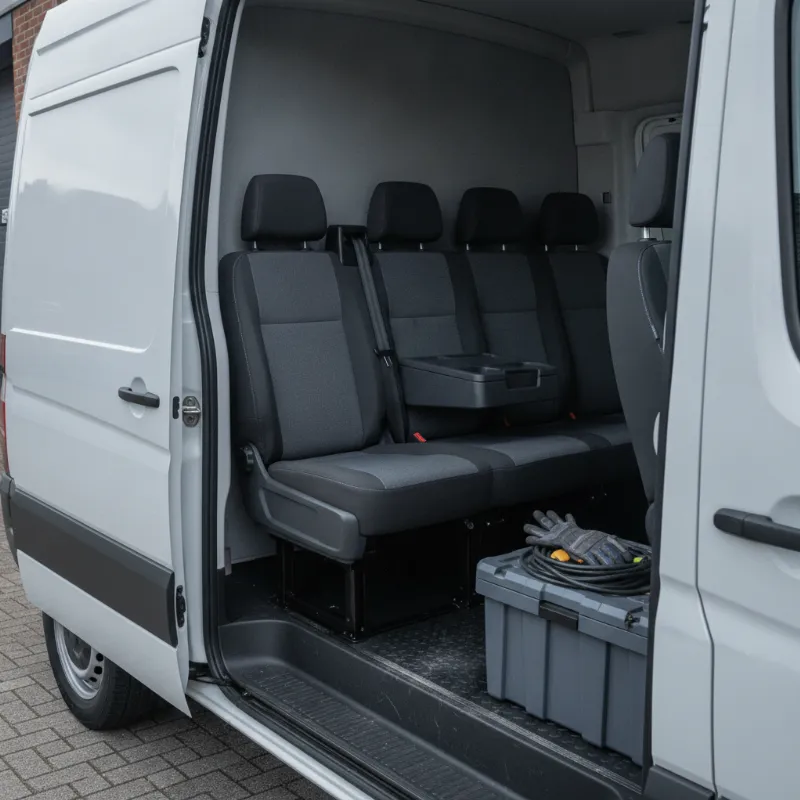
How many seats does a Volkswagen Crafter have?
The number of seats in a Volkswagen Crafter depends entirely on the variant you choose. As a rule of thumb, a standard panel van Crafter comes with 2 or 3 seats in the cab, a crew cab (Kombi) Crafter offers 6 or 7 seats split between two rows, and a factory-built or converted Crafter minibus can seat anywhere up to 17 people including the driver. Volkswagen designed the Crafter as a highly flexible platform, so the same badge covers everything from a two-seat delivery workhorse to a passenger-carrying minibus suitable for schools, hotels and community transport.
Below we break down each configuration in more detail so you can work out which layout suits how you actually intend to use the vehicle.
Standard panel van seating (2-3 seats)
The most common Crafter on UK roads is the standard panel van, and this comes with either 2 or 3 seats in the cab. The base specification includes a driver's seat and a single passenger seat, giving two seats in total. Most fleet and trade Crafters, however, are specified with a double passenger bench alongside the driver, taking capacity to three. That double bench often folds forward to reveal a work surface or additional storage cubbies, which is handy if you use the cab as a mobile office.
Behind the front row there are no additional seats in a panel van — everything from the bulkhead back is load space, which is why the panel van remains the go-to choice for couriers, tradespeople and last-mile delivery operators who prioritise cubic capacity over passenger numbers.
Crew cab / Kombi Crafter seating (6-7 seats)
The Crew Cab Crafter, also known as the Kombi, is designed for teams that need to carry both people and tools or materials to site. It adds a second row of seating behind the driver, usually a three-person bench, giving a total of 6 seats when fitted with a single front passenger seat, or 7 seats when specified with the double front passenger bench.
The second row sits behind a fixed or half-height bulkhead, and the load area behind that row is still substantial — typically around two-thirds of the cargo volume of the equivalent panel van. This makes the crew cab ideal for scaffolders, groundworkers, electricians running large jobs, event crews and any business that needs to move a team of five or six workers plus their kit in a single vehicle.
Minibus Crafter seating (up to 17 seats)
At the top end of the passenger scale, the Crafter minibus can carry up to 17 people including the driver. Volkswagen offers factory-built Shuttle and Kombi variants, and specialist converters produce M1-approved minibus versions in 9, 12, 15, 16 and 17 seat layouts. Common configurations you'll see advertised are 9-seaters (which can be driven on a standard UK Category B licence, subject to weight), 12-seaters, and 15 to 17-seat versions typically used by schools, care providers, airport shuttles and community transport groups.
Anything over 9 seats normally requires a D1 category on your driving licence, and minibuses used commercially may also need a Section 19 or 22 permit or a full PSV operator's licence, so it's worth confirming your legal position before committing to a larger seat count.
VW Crafter seating by body style and wheelbase
Seat count is only half the story — the wheelbase and roof height you pick will determine how comfortable those seats actually are in daily use, and how much load or luggage space remains behind them.
SWB, MWB and LWB Crafter dimensions and layouts
The current Crafter is offered in short wheelbase (SWB), medium wheelbase (MWB) and long wheelbase (LWB) forms, with an extra-long (MAXI) option on top. The SWB Crafter measures around 5.98m in overall length and is typically sold as a 2 or 3-seat panel van; the second row of a crew cab doesn't really work on the SWB platform because it eats too heavily into load space.
The MWB Crafter, at roughly 6.84m long, is the sweet spot for the Kombi and crew van conversions. There's enough length to accommodate a 6 or 7-seat cabin and still leave a usable load bay behind the second row. The LWB (7.39m) and MAXI (7.70m) Crafters are the platforms of choice for minibus conversions, campervans and any application where you need to combine a full passenger cabin with meaningful cargo, luggage or living space. Roof heights (H2 medium and H3 high roof) don't change seat count, but they dramatically improve headroom for rear passengers and for anyone standing to load luggage or equipment.
10 seater and 13 seater Volkswagen Crafter explained
Two of the most searched-for Crafter configurations in the UK are the 10-seater and the 13-seater, largely because they sit in useful gaps between the standard factory offerings. A 10-seat Crafter is usually a converted LWB Kombi or Shuttle with three rows behind the front cab: a triple bench, followed by two more rows, giving driver plus 9 passengers. This layout is popular with taxi firms, private hire operators and small hotels running airport transfers.
A 13-seat Crafter is almost always a specialist minibus conversion on the LWB or MAXI chassis, with the driver plus 12 passengers arranged over four rows. It's a common school minibus and community transport specification because it stays comfortably within the 16-seat threshold that triggers PSV rules, while still moving a decent-sized group in one trip. Both configurations should come with M1 category type approval, three-point seatbelts on every seat, and — if used commercially — the appropriate operator permits.
Converting a VW Crafter: camper, campervan and crew van options
Because the Crafter platform is so accommodating, a huge secondary market exists for conversions. Campervan converters typically start with a MWB or LWB panel van and fit a rock-and-roll bed that doubles as a rear bench, giving 4 belted travel seats (2 in the cab, 2 in the bed) plus sleeping room for two adults and often two children in a pop-top roof. High-end motorhome conversions on the LWB or MAXI can carry 4 to 6 belted passengers with full kitchen, washroom and fixed-bed layouts.
Crew van conversions retrofit a second row of seats and a bulkhead into a standard panel van, taking a 3-seat van up to 6 or 7 seats without buying a new factory Kombi. This is a popular route for businesses that already own a Crafter and want to repurpose it rather than replace it. Whichever conversion route you go down, make sure the seats and belts are properly homologated, the floor mountings are structurally rated, and the vehicle's V5C is updated to reflect the new seating capacity — insurers and the DVLA will both want to see it.
Choosing the right Crafter seat configuration for your business
The right Crafter for you comes down to a simple question: how often will those extra seats actually be occupied? If you're a sole trader or run a small delivery operation, a 2 or 3-seat panel van gives you maximum load volume and the lowest running costs. If you regularly move a team of four to six workers to site along with tools and materials, a 6 or 7-seat crew cab on the MWB platform is almost always the best compromise.
For passenger-focused operations — schools, care homes, hotels, private hire, community groups — a purpose-built minibus in 9, 13, 15 or 17-seat form on the LWB or MAXI chassis will serve you far better than trying to stretch a Kombi. Think about licence categories, insurance grouping, MOT class (Class 5 applies to minibuses with 9-16 passenger seats, Class 7 doesn't apply to Crafters as they're over 3.0t), and whether you need tachograph compliance. Get those decisions right up front and the Crafter will happily flex around whatever your business throws at it for years to come.
FAQs
How many seats does a Volkswagen Crafter have across its variants?
A standard Crafter panel van has 2 or 3 seats in the cab, a crew cab (Kombi) Crafter has 6 or 7 seats across two rows, and a Crafter minibus can carry up to 17 people including the driver depending on the conversion. The exact figure depends on whether you specify a single or double passenger seat in the front and which wheelbase and body style you choose.
Can you get a 9 seater Volkswagen Crafter that's drivable on a standard UK licence?
Yes. A 9-seat Crafter Shuttle or Kombi (driver plus 8 passengers) can be driven on a standard Category B UK licence, provided the vehicle is under 3.5 tonnes and you're not being paid to drive passengers commercially. Anything with 10 or more seats generally requires a D1 licence category, and commercial passenger use may need a Section 19 permit or a PSV operator's licence.
Is the Crafter Kombi the same as a crew van?
They're very similar and the terms are often used interchangeably in the UK. Volkswagen's factory Kombi is essentially their crew van — a panel van with a second row of seats and a partial bulkhead, seating 6 or 7 in total. Aftermarket crew van conversions do the same thing to a standard panel van. The main differences are the quality of the seat mounting, the trim finish, and whether the conversion is type-approved from the factory.
Can I add extra seats to my existing Crafter panel van?
Yes, a specialist converter can retrofit a second-row bench to turn a 2 or 3-seat panel van into a 6 or 7-seat crew van, and campervan converters routinely add rock-and-roll beds that double as belted travel seats. Any added seats must have crash-tested mountings, three-point seatbelts and appropriate type approval, and you'll need to notify the DVLA so your V5C, MOT class and insurance reflect the new passenger capacity.