How Many Seats Are in a Mercedes Sprinter? Full Guide by Model
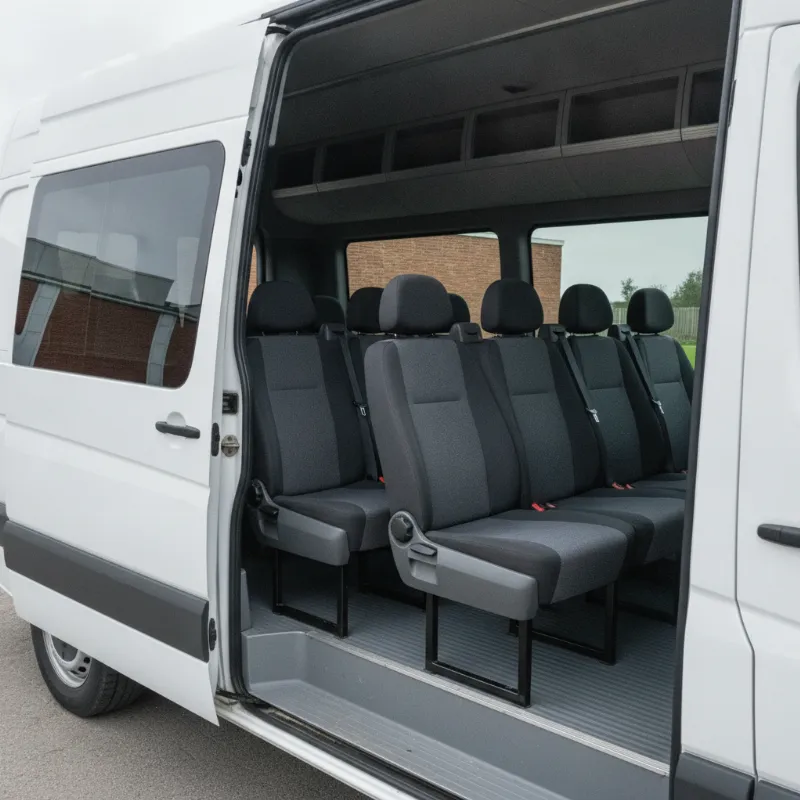
How Many Seats Does a Mercedes Sprinter Have? Quick Answer
The Mercedes Sprinter is one of the most versatile commercial vehicles on the road, and its seating capacity varies significantly depending on which body style you choose. In short, a standard Sprinter panel van seats 2 to 3 people up front, a crew van (sometimes called a Dualiner) seats between 5 and 7, a combi van can carry up to 9 passengers including the driver, and the Sprinter Traveliner minibus can be configured to seat as many as 19 people.
Because the Sprinter is offered in so many different lengths, roof heights and trim levels, seat numbers aren't fixed to a single figure. Below we break down exactly how many seats each Sprinter variant offers, what those layouts typically look like, and which configuration is likely to suit your business or private use.
Mercedes Sprinter Seating Capacity by Body Style
Mercedes-Benz sells the Sprinter in four main civilian body styles: panel van, crew van, combi and minibus. Each one is built around the same chassis but uses a different bulkhead position, side glazing and seat mounting layout, which is what dictates how many passengers you can legally carry.
Panel Van (2–3 Seats)
The standard Mercedes Sprinter panel van is the workhorse of the range and is designed primarily for carrying cargo rather than people. It comes with a single driver's seat and either a single or double passenger seat alongside it, giving a total seating capacity of 2 or 3. The double passenger bench is a popular factory option because it lets a small crew travel together while keeping the entire load area free for tools, stock or parcels.
Behind the front row is a full-height solid or partially glazed bulkhead separating the cab from the cargo area. There are no rear seats, no rear seatbelts and no side windows in the load compartment, so you cannot legally carry additional passengers in the back.
Crew Van / Dualiner (5–7 Seats)
The crew van, marketed by Mercedes as the Dualiner or Crew Cab, adds a second row of seating directly behind the driver. This gives you a total of between 5 and 7 seats depending on whether the front is a 2- or 3-seat configuration and whether the rear bench is a 3- or 4-seat unit. A movable bulkhead sits behind the rear bench, preserving a large load area at the back for materials and equipment.
This layout is extremely popular with construction firms, groundworkers, utility companies and any business that needs to move a team plus their kit to a job site in a single vehicle. Rear passengers get proper three-point seatbelts, side windows and a separate side door for easy access.
Combi Van (Up to 9 Seats)
The Sprinter Combi is essentially a hybrid between the crew van and the minibus. It offers up to 9 seats — driver plus 8 passengers — while still leaving a useful cargo area at the rear behind the last row of seats. Combi models are typically fitted with removable or folding rear benches, so you can quickly reconfigure the interior between a people-mover and a cargo carrier as needed.
This flexibility makes the Combi a favourite with hotels, sports clubs, holiday parks and small tour operators who need to shift luggage as well as passengers. Because it seats 9 or fewer, it can still be driven on a standard UK Category B car licence.
Minibus / Traveliner (Up to 19 Seats)
At the top of the seating hierarchy is the Sprinter Traveliner minibus, which is factory-built as a dedicated passenger vehicle. Depending on wheelbase and specification, the Traveliner is offered with 12, 14, 15, 16, 17, 18 or 19 seats including the driver. Beyond 9 seats a D1 category licence is required in the UK, and beyond 16 passenger seats it is classed as a full PSV subject to additional regulations.
These minibuses feature bonded side glazing, forced-air ventilation, individual reading lights, overhead luggage racks on higher-spec versions and either bench or individual passenger seats with three-point belts throughout.
10 Seat Mercedes Sprinter Minibus Explained
The 10-seat Sprinter sits in an interesting middle ground — it's larger than the 9-seat Combi but smaller than the 12+ seat Traveliner minibuses. Because it exceeds the 9-passenger threshold, driving a 10-seat Sprinter in the UK requires a D1 licence entitlement, which many older drivers hold automatically on their car licence but which newer drivers need to add through a separate test.
Typical Layout and Uses for a 10 Seat Sprinter
A 10-seat Sprinter typically features the driver plus a single passenger seat in the cab, followed by three rows of three-seat benches or a mix of individual seats and benches in the rear. There's usually a modest luggage area behind the last row, along with underfloor or overhead storage on higher-spec conversions.
Common users include care homes and community transport groups, schools using the vehicle for club and sports team transport, church and charity minibuses, and private hire operators offering airport transfers for larger family groups. The 10-seat spec is popular because it offers minibus-style capacity without stepping up into full PSV territory.
10 Seat Luxury Mercedes Sprinter Minibus
Not every 10-seat Sprinter is built for utility. A significant slice of the market is aimed at the executive and chauffeur sector, where the Sprinter is converted into a premium passenger vehicle for corporate clients, wedding parties, sports teams and VIP airport transfers.
Executive Trim, Leather Seating and VIP Conversions
Luxury 10-seat Sprinter conversions typically feature captain-style individual leather seats with armrests, reclining backrests and generous legroom rather than fixed benches. Additional features often include tinted privacy glass, ambient LED interior lighting, climate control zones for the rear cabin, USB charging points at every seat, folding tables, an overhead entertainment screen and premium acoustic insulation.
Some VIP conversions go further still, with conference-style seating arrangements where rear seats face each other around a central table, or partitioned rear lounges finished in Alcantara and hardwood veneers. These vehicles are widely used by executive travel firms, football clubs, film production companies and high-end tour operators where the journey itself is part of the experience.
How Sprinter Seating Changes by Wheelbase and Roof Height
Seat count is directly linked to how much interior length you have to work with. Mercedes offers the Sprinter in compact, standard, long and extra-long wheelbases, and in standard, high and super-high roof heights. The compact and standard wheelbases typically top out at 6 seats in crew van form because there simply isn't the length for a second passenger row plus load space. The long wheelbase is where the 9-seat Combi and lower-count minibuses live, while the extra-long wheelbase is required for 15-, 17- and 19-seat Traveliner variants.
Roof height mainly affects passenger comfort rather than seat count. A high or super-high roof gives standing headroom for boarding and moving around, which is particularly valuable in accessible minibus conversions with tail lifts or wheelchair positions where seats can be removed to accommodate passengers in wheelchairs.
Choosing the Right Sprinter Seat Configuration for Your Business
Picking the correct Sprinter variant comes down to three questions: how many people you need to carry regularly, how much cargo or luggage travels with them, and what licences your drivers hold. If you only ever move a driver and one or two colleagues plus tools, the panel van is the most cost-effective and easiest to park. If you're regularly moving a small team to a job site with materials, the crew van's 6 or 7 seats hit the sweet spot.
Operators who need to move larger groups occasionally, but who also carry luggage or equipment, tend to favour the 9-seat Combi because it stays within a standard car licence. Once you're consistently carrying 10 or more passengers — for a school, care provider, hotel shuttle or private hire business — the Traveliner minibus range in 12- to 19-seat form becomes the sensible choice, with the trade-off being D1 licensing and additional operator compliance.
Browse Mercedes Sprinter Vans for Sale or Lease
Whether you're after a 3-seat panel van for parcel deliveries, a 7-seat crew cab for your trades team, a 9-seat Combi for a hotel shuttle or a fully specced luxury 10-seat executive shuttle, we regularly stock the full range of body styles, wheelbases and trim levels. You can view our current selection of Mercedes Sprinter vans for sale to compare seat counts, mileages and specifications side by side.
If you're not sure which configuration is right for your use case, our team is happy to talk through the differences between crew, combi and minibus variants, and to explain the licensing implications of stepping up beyond 9 seats. Get in touch and we'll help match you to the correct Sprinter for the way your business actually operates.
FAQs
How many seats does a Mercedes Sprinter have?
It depends on the body style. A standard Sprinter panel van seats 2 or 3 people in the cab, a crew van (Dualiner) seats 5 to 7, a Combi seats up to 9, and the Traveliner minibus can be configured with 12, 14, 15, 16, 17, 18 or 19 seats including the driver.
Can I drive a 9-seat Mercedes Sprinter on a normal UK car licence?
Yes. A vehicle with 9 seats or fewer including the driver can be driven on a standard Category B car licence, provided it isn't being used for hire or reward outside of specific permit schemes. This is why the 9-seat Combi is such a popular choice for private and small-business use.
What licence do I need for a 10-seat or larger Sprinter minibus?
In the UK you need Category D1 entitlement to drive a minibus with 10 or more passenger seats. Drivers who passed their car test before 1 January 1997 usually have D1 automatically; newer drivers need to take an additional D1 test. Vehicles with more than 16 passenger seats are classed as PSVs and carry further operator requirements.
Can rear seats be removed from a Sprinter Combi or minibus?
Yes. Most Combi models are designed with quick-release rear benches so you can switch between passenger and cargo modes. Traveliner minibuses have more fixed seating, but individual seats can often be removed to create wheelchair spaces or extra luggage room, depending on the conversion.
Is there a difference in seat count between short and long wheelbase Sprinters?
Yes. Shorter wheelbases typically cap out at around 6 seats in crew van form, while longer wheelbases are needed to accommodate 9-seat Combis and 12- to 19-seat Traveliner minibuses. Roof height doesn't usually change the seat count but does affect headroom and boarding comfort.