How to Refrigerate Your Van: A Complete UK Guide
Why Refrigerate Your Van?
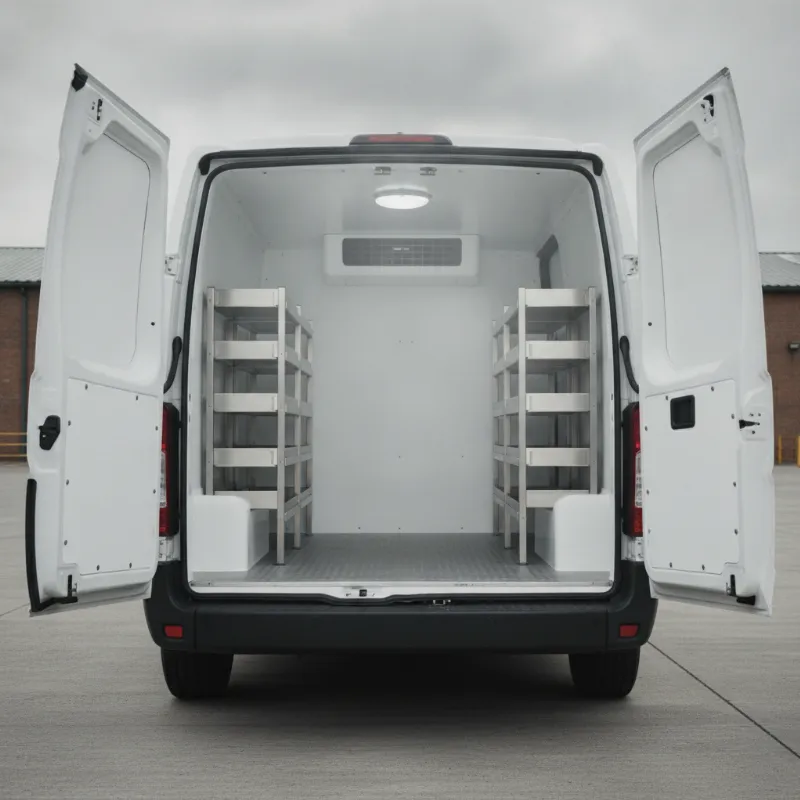
Refrigerating a van opens up a huge range of commercial opportunities across the UK, from food delivery and catering to florists, pharmaceutical couriers, and mobile butchers. A temperature-controlled load area allows you to move perishable goods safely, comply with food safety legislation, and protect the value of what you're carrying. For many small businesses, converting or buying a fridge van is the difference between operating legally and being restricted to a very small delivery radius.
Beyond compliance, a refrigerated van also broadens the type of contracts you can take on. Supermarkets, wholesalers, and hospitality clients typically require chilled or frozen transport as standard, and having a properly converted van on your fleet means you can respond to those tenders with confidence. It's also worth noting that a well-insulated van tends to be quieter and more comfortable to drive, thanks to the additional soundproofing that comes with proper thermal lining.
Types of Van Refrigeration Systems
Before you start any conversion, it's important to understand the two main variables that define a refrigerated van: the operating temperature range and the power source for the refrigeration unit itself. Choosing the wrong combination can leave you with a van that doesn't hold temperature on long motorway runs, or one that racks up huge running costs at the depot overnight.
Chiller vs Freezer Conversions
Chiller conversions typically hold the load area between 0°C and 8°C, which is ideal for dairy, fresh produce, sandwiches, flowers, and most pharmaceutical products. Freezer conversions, by contrast, are designed to maintain temperatures down to -25°C or lower, and are essential for ice cream, frozen meat, seafood, and long-distance frozen distribution. Freezer builds require significantly thicker insulation (often 75mm or more in the walls and up to 100mm in the roof and floor), a more powerful refrigeration unit, and heavier-duty door seals.
Some operators opt for dual-compartment or "multi-temp" conversions, where a moveable bulkhead splits the load area so you can carry chilled and frozen goods on the same run. This is more expensive but hugely flexible for mixed catering or convenience-store deliveries.
Standby Electric vs Engine-Driven Units
Most modern refrigeration units run directly from the van's engine while you're driving, using a belt-driven compressor. This keeps the fridge cold on the road without draining the vehicle battery. However, when the van is parked overnight or being loaded at a depot, you'll want a standby electric option — a 240V plug-in that lets you keep the load area at temperature without idling the engine.
Standby is now considered essential for most food and pharma work, both for cost reasons and because anti-idling regulations in many UK city centres make engine-running impractical. If you're planning early-morning starts with a pre-loaded van, factor a standby unit into your budget from the outset.
Step-by-Step: How to Refrigerate Your Van
Converting a panel van into a refrigerated vehicle is a structured process, and skipping steps almost always results in poor temperature performance or a failed inspection. Here's how a professional conversion typically progresses.
1. Choose the Right Base Van
Start with a van that has enough payload capacity to absorb the weight of insulation, lining, and the refrigeration unit itself — typically 300kg to 500kg depending on the build. Popular choices in the UK include the Ford Transit Custom and Transit, Mercedes-Benz Sprinter and Vito, Volkswagen Transporter and Crafter, Peugeot Boxer, and Vauxhall Movano. Consider the internal load height and length carefully, because insulation will reduce the usable space by around 50–100mm on each surface.
Age and condition matter too. Older vans may be cheaper upfront but will cost more to insure and may not have the pre-wired refrigeration provision that newer models offer. A van in good mechanical health with a strong service history is a better foundation for a conversion that needs to last five to ten years.
2. Insulate the Load Area
Insulation is the single most important factor in a refrigerated conversion. Closed-cell polyurethane or polystyrene foam panels are bonded to the walls, floor, roof, and bulkhead, with all joints sealed to prevent thermal bridging. Chiller conversions typically use 50mm insulation, while freezer builds need 75–100mm. Door frames and seals get particular attention because they're the most common point of heat ingress.
3. Fit the Refrigeration Unit
The refrigeration unit is mounted either on the roof or on the front bulkhead above the cab. Roof-mounted units offer better airflow and keep the load area free of obstruction, while nose-mounted units are more aerodynamic and often cheaper. The compressor is fitted under the bonnet and connected to the van's engine via a dedicated drive belt, with all refrigerant lines routed carefully to avoid heat sources and moving parts. If you're specifying standby, a 240V socket and internal wiring loom are added at this stage.
4. Install a Compliant Floor and Lining
The load area is then lined with food-grade GRP (glass-reinforced plastic) panels, which are hygienic, easy to clean, and resistant to knocks. The floor is finished with a non-slip, waterproof surface — usually a heavy-duty GRP or aluminium tread plate — with coved edges that meet the walls to eliminate crevices where bacteria could collect. Drainage points are included so the load area can be washed down at the end of each shift.
5. Test, Certify and Calibrate
Once the build is complete, the unit is pull-down tested to confirm it can reach and hold the target temperature within a specified time. The thermostat and any temperature logging equipment are calibrated, and the vehicle is issued with the appropriate certification. If you're carrying goods internationally or under contract to a major retailer, you'll likely need ATP certification (see below). Keep all paperwork on file — you'll be asked to produce it during audits.
Legal and Compliance Considerations (ATP, HACCP, F-Gas)
Several regulations apply to refrigerated vans in the UK. ATP (Agreement on the International Carriage of Perishable Foodstuffs) certification is mandatory for cross-border transport of quick-frozen foods and strongly recommended for domestic frozen work, particularly if you're supplying supermarkets. ATP certificates are valid for six years initially and must be renewed after inspection.
HACCP (Hazard Analysis and Critical Control Points) is a food safety management framework rather than a certification, but any operator carrying food must have a HACCP plan in place covering temperature monitoring, cleaning schedules, and traceability. Most fleet operators fit datalogging equipment that records load-area temperatures continuously, providing an audit trail.
F-Gas regulations govern the refrigerants used in the cooling unit. Only qualified F-Gas certified engineers can install, service, or decommission refrigeration equipment, and leak checks are required at set intervals depending on the refrigerant charge size. Using an unqualified installer isn't just risky — it's illegal and will invalidate your insurance.
Costs, Payload and Running Considerations
A professional chiller conversion on a medium panel van typically costs between £6,000 and £10,000, while a full freezer build with standby can push £12,000 to £18,000 or more. Multi-temperature and larger Luton-body conversions run higher still. These figures don't include the base van itself, and it's worth budgeting for annual servicing (usually £300–£600) plus F-Gas leak checks.
Payload is a critical consideration. Insulation, lining, and the fridge unit together add 300–500kg to the vehicle's kerb weight, which eats directly into what you can legally carry. Always check the revised payload figure on the conversion paperwork and factor it into your route planning, especially if you're operating close to the 3.5-tonne threshold that separates car-licence vans from those requiring an operator's licence and tachograph.
Fuel economy will also drop compared to an empty panel van, both because of the added weight and because the engine is driving the compressor. Expect 10–20% higher fuel consumption on a working refrigerated van.
Buying a Pre-Converted Fridge Van vs Converting Your Own
For most buyers, purchasing a pre-converted fridge van from a specialist dealer is the faster and often cheaper route. Pre-converted vans come with tested equipment, certification paperwork in place, and warranty cover on both the vehicle and the refrigeration unit. They're also available immediately, whereas a bespoke conversion can take four to eight weeks from order.
Converting your own van makes sense if you have very specific requirements — an unusual size, a multi-compartment layout, or specialist equipment like blood-transport monitoring. It also allows you to spread the cost if you already own a suitable base van. Whichever route you choose, work only with F-Gas certified installers, insist on full documentation, and think carefully about the total cost of ownership over the life of the vehicle rather than just the headline price.
FAQs
How do you convert a standard panel van into a refrigerated (fridge) van?
You start by selecting a base van with sufficient payload, then insulate the load area (walls, floor, roof and bulkhead) with 50–100mm of closed-cell foam. A refrigeration unit is mounted to the roof or front bulkhead and coupled to the engine, with an optional 240V standby socket for overnight cooling. The interior is lined with food-grade GRP panels and a non-slip floor, then the completed vehicle is pull-down tested, calibrated and certified. All work involving refrigerant must be carried out by an F-Gas certified engineer.
How much does it cost to refrigerate a van in the UK?
A professional chiller conversion typically costs £6,000–£10,000, while a freezer build with standby electric can range from £12,000 to £18,000 or more. Multi-temperature conversions and larger Luton-body builds cost more again. You should also budget for annual servicing (£300–£600) and periodic F-Gas leak checks, plus a modest drop in fuel economy of around 10–20%.
Do I need ATP certification for a refrigerated van in the UK?
ATP certification is legally required for international transport of quick-frozen foodstuffs and is often demanded by supermarket contracts for domestic frozen work. For general chilled deliveries within the UK it isn't always mandatory, but many operators still get it because it provides independent proof that the vehicle can hold the required temperatures. Certificates are valid for six years initially and must be renewed after inspection.
Can I install a fridge unit in my van myself?
You can carry out the insulation and lining work yourself, but the refrigeration unit itself — anything involving refrigerant gases — must be installed by an F-Gas certified engineer. Doing this work without certification is illegal, will invalidate your insurance, and will prevent you from obtaining ATP certification or passing food-safety audits. For most operators it's more sensible to use a professional converter for the whole build.
Is it better to buy a pre-converted fridge van or convert one yourself?
Buying pre-converted is usually faster, comes with certification and warranty in place, and often works out cheaper because specialist dealers build to volume. Converting your own van makes sense if you need a bespoke layout, specialist equipment, or already own a suitable base vehicle. Either way, insist on F-Gas certified installation and full documentation before the vehicle goes into service.