How to Open the Bonnet on a Citroen Dispatch: Step-by-Step Guide
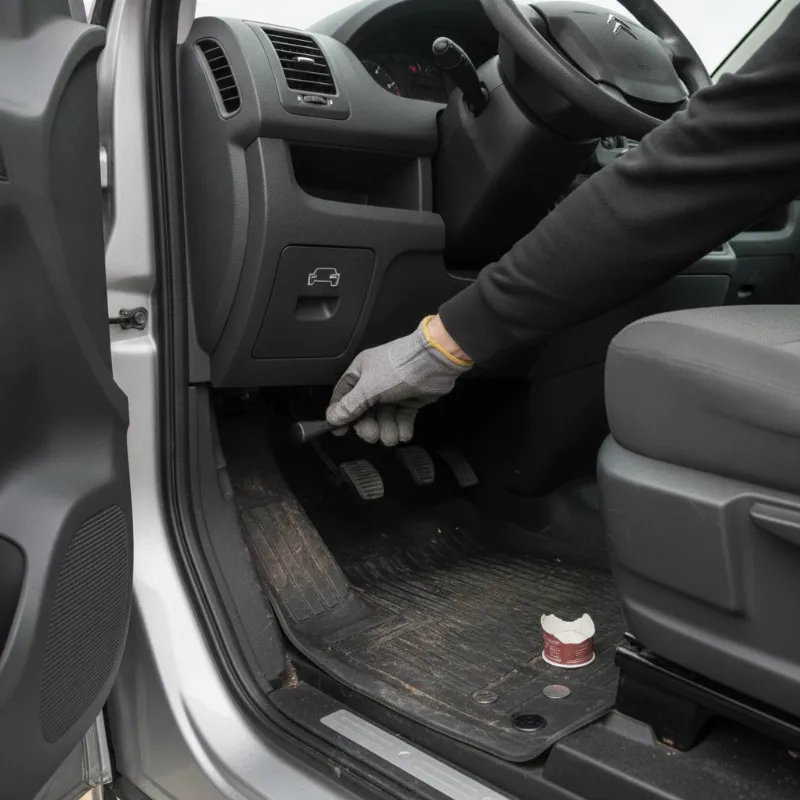
Where the bonnet release is located on a Citroen Dispatch
On every generation of the Citroen Dispatch, the primary bonnet release is located inside the cab rather than under an external badge or grille. You'll find the release lever tucked into the driver's side footwell, low down on the trim panel just to the right of the steering column (in right-hand drive UK models). It's typically marked with a small icon of a raised bonnet, making it easy to spot once you know where to look.
If you've just bought a used Dispatch or you're borrowing one for work, it's worth familiarising yourself with the lever's exact position before you actually need it — fumbling around in the dark at the roadside is never fun. The lever itself is usually a plastic pull handle, sometimes black, sometimes finished in a lighter grey to match the interior trim. There is no separate key or dashboard button required; it's a simple mechanical cable system.
Step-by-step: how to open the bonnet on a Citroen Dispatch
Opening the bonnet on a Citroen Dispatch is a straightforward two-stage process, but like most modern vans it has a safety catch designed to prevent the bonnet flying up while you're driving. Follow the three steps below and you'll have full access to the engine bay in under a minute.
Step 1: Pull the interior bonnet release lever
Sit in the driver's seat and reach down into the footwell on your right-hand side. Find the release handle and give it a firm pull towards you. You should hear a distinct "clunk" from the front of the van as the primary latch disengages. The bonnet will pop up slightly at the leading edge — usually by around 10 to 20mm — but it won't open fully at this stage. If nothing happens when you pull the lever, don't yank it repeatedly; the cable can stretch or snap. Instead, check whether the bonnet is already partly released, or investigate the cable itself.
Step 2: Locate the secondary safety catch under the bonnet
Walk around to the front of the van and slide your fingers into the gap that's opened up between the bonnet and the grille, roughly in the centre. You're looking for a small lever or tab — the secondary safety catch. On most Dispatch models this catch is pushed sideways (usually to the left as you face the van) or lifted upwards to release. Once you've moved the catch in the correct direction, the bonnet will lift freely. Take your time here; forcing the catch the wrong way can bend the mechanism.
Step 3: Lift and secure the bonnet with the prop rod
With the safety catch released, lift the bonnet up to its full open position. Most Dispatch vans use a manual prop rod rather than gas struts, so you'll need to locate the metal rod clipped to the inner edge of the engine bay, swing it upwards, and slot the tip into the small hole or bracket on the underside of the bonnet. Make sure it's seated securely before you let go — a bonnet dropping onto your head or hands can cause a nasty injury. When you're finished, lower the bonnet carefully, return the prop rod to its clip, and let the bonnet drop the last few inches under its own weight so the primary latch engages properly.
Bonnet release differences across Citroen Dispatch generations
The Citroen Dispatch has been on UK roads since 1994, and while the basic bonnet mechanism has remained mechanical and cable-operated throughout, there are a few subtle differences worth knowing depending on which generation you're dealing with.
Older Citroen Dispatch models (pre-2007)
The original Dispatch (known internally as the Jumpy in some markets) has a simpler layout, with the interior lever sometimes positioned slightly further back under the dashboard. The secondary catch on older models tends to be a lift-up tab rather than a sideways slider, and the prop rod is almost always manual. Cables on higher-mileage first-generation vans can stretch or seize with age, so if the lever feels loose or the bonnet won't pop, the cable is often the culprit.
Second-generation vans and the new Citroen e-Dispatch
From 2007 onwards, and particularly on the third-generation model launched in 2016 alongside the Peugeot Expert and Vauxhall Vivaro, the release mechanism was refined but works on the same two-stage principle. The electric Citroen e-Dispatch uses an identical bonnet setup to its diesel siblings — there's no special procedure for the EV version, and no need to power anything down before opening the bonnet for routine checks like screen wash top-ups. Just remember that under the bonnet of an e-Dispatch you'll find high-voltage orange cabling, which should never be touched or disconnected by anyone who isn't a qualified EV technician.
Common bonnet problems on a used Citroen Dispatch
The most frequent issue reported by Dispatch owners is a stretched or snapped release cable, which typically shows up as a lever that pulls all the way to the stop without any resistance and without the bonnet popping. In most cases the cable can be re-tensioned or replaced relatively cheaply, though on a fully seized cable you may need to access the latch from underneath the front bumper to open the bonnet the first time.
A sticking secondary safety catch is another common gripe, particularly on vans that have spent their lives on building sites or farms where dust and grit build up around the mechanism. A spray of penetrating oil followed by a light grease usually cures it. Finally, watch out for corrosion around the latch itself on older, high-mileage examples — a rusted latch can either refuse to open or, worse, refuse to close properly, which is a serious safety concern.
When to seek professional help
If you've pulled the interior lever and heard nothing, and you can't see any movement at the front of the bonnet, don't start prying at the edges with a screwdriver — you'll damage the paint and potentially the latch. A broken cable, a jammed latch or a corroded catch are all jobs for a Citroen specialist or a competent independent van garage. They have the tools to release a stuck bonnet from below without causing cosmetic damage, and they can replace the cable and latch assembly properly so you don't end up with the same problem six months later.
Likewise, if you're working on an e-Dispatch and anything looks damaged, discoloured or wet around the high-voltage components, close the bonnet and get it looked at by a trained EV technician before doing anything else.
Looking for a new or used Citroen Dispatch?
Whether you're after a nearly-new Dispatch for a growing business, a well-priced used van for weekend trades, or you're curious about switching to the all-electric e-Dispatch, it pays to buy from a dealer who knows the model inside out. A good van specialist will walk you through everything from the bonnet release to the load-area tie-downs before you drive away, and will back the sale with a proper warranty and pre-delivery inspection. Get in touch to see our current stock of Citroen Dispatch vans and to book a test drive at a time that suits you.
FAQs
How do you open the bonnet on a Citroen Dispatch van?
Pull the release lever in the driver's side footwell to unlatch the primary catch, then walk to the front of the van and move the secondary safety catch (usually sideways or upwards) in the gap between the bonnet and the grille. Lift the bonnet fully and secure it in place using the manual prop rod clipped inside the engine bay.
Why won't my Citroen Dispatch bonnet release when I pull the lever?
The most common cause is a stretched or snapped release cable, which makes the lever feel loose with no resistance. Other possibilities include a seized latch or a jammed secondary catch due to corrosion or dirt. If the lever isn't working, avoid pulling it repeatedly — it's better to have a specialist release the bonnet from underneath and replace the faulty cable or latch.
Where is the bonnet safety catch on a Citroen Dispatch?
The secondary safety catch sits in the centre of the bonnet's leading edge, hidden in the gap between the bonnet and the grille once the primary latch has been released. Slide your fingers into the gap and you'll feel a small lever or tab that needs to be pushed sideways or lifted upwards depending on the model year.
Is the bonnet release the same on the electric Citroen e-Dispatch?
Yes, the e-Dispatch uses exactly the same mechanical two-stage bonnet release as the diesel Dispatch — an interior lever plus a secondary safety catch. However, once the bonnet is open you'll see high-voltage orange cabling around the electric drivetrain, which should never be touched or worked on by anyone other than a qualified EV technician.
Do I need to open the bonnet regularly on a Citroen Dispatch?
Yes — even between services it's sensible to open the bonnet every couple of weeks to check the engine oil, coolant and screen wash levels. On the e-Dispatch you'll mainly be topping up screen wash and doing a visual inspection, as there's no engine oil to check, but the routine of opening the bonnet regularly is still worthwhile.