Dimensions of the Nissan Primastar Van: Full Size Guide
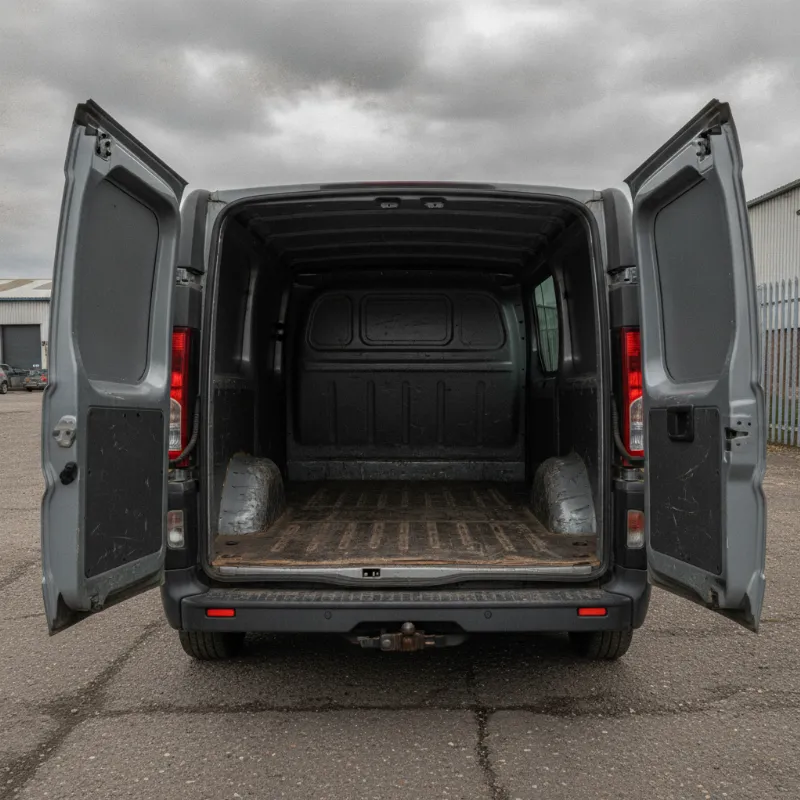
Nissan Primastar Van Dimensions at a Glance
If you're weighing up the Nissan Primastar as your next work van, the numbers matter just as much as the badge on the bonnet. This mid-size panel van has long been a popular choice for tradespeople, couriers and small fleet operators thanks to its car-like driving manners paired with a genuinely practical load bay. Below you'll find a full breakdown of exterior sizes, load area capacity, payload, seating and door apertures so you can decide whether the Primastar will fit your working life — and your driveway.
The Primastar is offered in two wheelbases and two roof heights, giving you four core body configurations. Overall length ranges from roughly 4.78m in short-wheelbase form to 5.18m in long-wheelbase guise, with widths of about 1.90m excluding mirrors and heights spanning from around 1.96m for the standard roof up to 2.50m for the high roof. That flexibility means the Primastar can slot into a domestic garage or swallow bulky pallets, depending on the spec you choose.
Exterior Dimensions: Length, Width and Height
The Primastar's exterior footprint is a big part of its appeal. It's compact enough to feel manageable in town, yet its boxy silhouette makes the most of every millimetre inside. Width sits at approximately 1,904mm without mirrors, growing to around 2,286mm with the door mirrors extended — a figure worth remembering when you're squeezing through narrow yard gates or width restrictors.
How High Is a Nissan Primastar?
Overall height depends on which roof you choose. The standard-roof Primastar stands at approximately 1,960mm (1.96m), which comfortably clears most multi-storey car park barriers set at the typical 2.0m or 2.1m limit. Opt for the high-roof variant and the figure rises to around 2,500mm (2.50m), which unlocks proper standing room inside but rules out low-clearance car parks. If you regularly need to park in supermarket or hospital car parks, the standard-roof model is almost always the safer bet.
Overall Length and Wheelbase Options (SWB vs LWB)
The short-wheelbase (SWB) Primastar measures approximately 4,782mm from bumper to bumper on a 3,098mm wheelbase. Step up to the long-wheelbase (LWB) and overall length grows to roughly 5,182mm, with the wheelbase stretched to 3,498mm. That extra 400mm all goes into the load area rather than the cab, so if you routinely carry long loads such as plasterboard, ladders or 8ft timber, the LWB is well worth the small hit to manoeuvrability. Turning circle on the SWB is around 11.8m kerb-to-kerb, rising to about 13.2m on the LWB.
Load Area Dimensions and Cargo Volume
Cargo volume is where the Primastar earns its keep. Depending on wheelbase and roof height, load volume ranges from around 5.0 cubic metres in the SWB standard-roof body to roughly 8.7 cubic metres in the LWB high-roof configuration. That puts it squarely in the middle of the mid-size van class and makes it a strong all-rounder for parcels, tools, trade materials and even light removals work.
Load Length, Width Between Wheel Arches and Interior Height
Maximum load length at floor level is approximately 2,400mm in the SWB and 2,800mm in the LWB. With the optional load-through bulkhead flap, you can extend that by a further 1,200mm or so, which is handy for pipes and timber. Load width is around 1,662mm at its widest, narrowing to 1,268mm between the rear wheel arches — just wide enough to lay a Euro pallet flat. Interior load height comes in at about 1,387mm for the standard roof, growing to a generous 1,898mm in the high-roof version, which is enough for most adults to stand upright and work comfortably.
Side Door and Rear Door Aperture Sizes
Loading access is well thought out. The nearside sliding door aperture measures approximately 1,000mm wide by 1,285mm high on the standard roof, comfortably accepting a Euro pallet from the side. The twin rear doors open to around 1,390mm wide by 1,320mm high on the standard roof, or 1,830mm high on the high-roof body. Rear doors typically open to 180 degrees as standard, with a 270-degree option available on many trims — useful when you're backed up against a loading bay and need the doors clear of the aperture.
Nissan Primastar 1.9 dCi 100ps SE 2700 SWB Panel Van Dimensions
The 1.9 dCi 100ps SE 2700 SWB panel van is one of the most common Primastar configurations on the used market, so it's worth calling out its specifics. The "2700" refers to the gross vehicle weight of 2,700kg, and the SWB designation gives you the shorter 3,098mm wheelbase and 4,782mm overall length. Overall width is 1,904mm (excluding mirrors) and the standard roof puts height at 1,960mm.
Inside, you get a load volume of approximately 5.0 cubic metres, a maximum load length of 2,400mm and load width of 1,662mm (1,268mm between the arches). Payload on this variant is typically around 875kg, depending on options and trim weight. It's a genuinely versatile spec — compact enough for daily urban driving, capable enough for most trade work, and the 1.9-litre dCi engine is a known quantity for mechanics if you're buying used.
Payload, Gross Vehicle Weight and Towing Capacity
Payload across the Primastar range varies between roughly 875kg and 1,200kg, depending on wheelbase, roof height and gross vehicle weight rating. The range is offered at 2.7-tonne (2,700kg) and 2.9-tonne (2,900kg) GVW ratings, with the higher rating giving you more headroom for heavy loads. Kerb weights sit between approximately 1,700kg and 1,850kg unladen.
Braked towing capacity is up to 2,000kg on most variants, with unbraked towing pegged at the standard 750kg. That makes the Primastar a credible tow vehicle for a plant trailer, small caravan or box trailer, though as always you should check that your combined gross train weight stays within the manufacturer's limits when the van itself is fully loaded.
Seating and Cab Dimensions
The Primastar cab is designed to feel more like a car than a commercial vehicle, with a raised driving position, plenty of storage cubbies and a dashboard laid out logically. Cab width gives decent shoulder room, and the standard driver's seat offers height adjustment on most trims for a comfortable posture on long shifts.
How Many Seats in a Nissan Primastar?
In standard panel van form, the Primastar comes with three seats up front: a single driver's seat and a twin passenger bench. The middle seat backrest often folds down to create a mobile desk with a clipboard holder — a genuinely useful feature for delivery drivers and site managers. Crew van and combi variants add a second row of seating in the load area, taking total capacity up to six or nine seats depending on configuration.
How Many People Can You Fit Into a Nissan Primastar?
A standard panel van seats three, including the driver. A crew cab (double-cab-in-van) version seats six, with a second bench behind the front row and a partitioned load area behind that. The full combi/minibus configurations can seat up to nine people with all rear rows fitted, making the Primastar a flexible base for taxi, shuttle and workforce transport use as well as goods work.
Is the Nissan Primastar the Right Size Van for You?
The Primastar hits a sweet spot in the van market. It's small enough on the outside to be genuinely usable in town, yet the load area is big enough for most trade, courier and light removal jobs. If your work involves standing up inside the van, tall stock or bulky boxes, go for the high-roof body. If you regularly park in height-restricted car parks, stick with the standard roof. Choose SWB for tighter urban work and LWB if you routinely carry long loads.
Before you commit, measure the biggest and most awkward items you regularly transport, then compare them against the load length, width between the arches and door aperture figures above. A van that looks big enough on paper can still frustrate you if a single regular item doesn't quite fit — so it pays to check the numbers against your reality before signing on the dotted line.
FAQs
What are the exterior and load area dimensions of the Nissan Primastar van?
Externally, the Nissan Primastar measures approximately 4,782mm long in short-wheelbase form and 5,182mm in long-wheelbase form, with a width of 1,904mm (excluding mirrors) and a height of either 1,960mm (standard roof) or 2,500mm (high roof). Inside the load area, maximum load length is around 2,400mm on the SWB and 2,800mm on the LWB, with load width of 1,662mm (1,268mm between the wheel arches) and interior height of 1,387mm on the standard roof or 1,898mm on the high roof. Total load volume ranges from about 5.0 to 8.7 cubic metres depending on configuration.
Will a Nissan Primastar fit in a standard multi-storey car park?
The standard-roof Nissan Primastar is 1,960mm (1.96m) tall, so it will fit under the typical 2.0m or 2.1m height barrier found in most multi-storey car parks. The high-roof version stands at approximately 2,500mm (2.50m), which is too tall for most public car parks and multi-storeys.
Can a Euro pallet fit in the back of a Nissan Primastar?
Yes. The width between the rear wheel arches is approximately 1,268mm, which is just wide enough to accept a standard 1,200mm x 800mm Euro pallet laid flat. The side sliding door aperture is around 1,000mm wide, which also allows a Euro pallet to be loaded from the side by forklift.
What is the payload of a Nissan Primastar?
Payload varies by variant, but typically ranges between around 875kg and 1,200kg depending on wheelbase, roof height and whether you choose the 2.7-tonne or 2.9-tonne gross vehicle weight rating. The popular 1.9 dCi 100ps SE 2700 SWB panel van offers roughly 875kg of payload.
How much can a Nissan Primastar tow?
Most Nissan Primastar variants have a braked towing capacity of up to 2,000kg and an unbraked towing limit of 750kg, making them capable of pulling small plant trailers, box trailers or light caravans. Always check that the combined weight of the loaded van and trailer stays within the manufacturer's gross train weight limit.