Common Problems on the Fiat Doblo Van: What to Watch For
Is the Fiat Doblo a reliable van?
The Fiat Doblo has built up a solid reputation as one of the more dependable small panel vans on UK roads, particularly among tradespeople, couriers and multi-drop operators who value its car-like drive and cavernous load bay. Overall reliability is generally rated as average to good — it isn't quite bulletproof, but the mechanical package is well understood, parts are cheap and most independent garages know their way around the engine bay. That said, like any van that's been in production for over two decades and racked up serious mileage in fleet service, the Doblo has a handful of recurring niggles that any sensible buyer should know about before signing on the dotted line.
Most of the problems reported by owners fall into predictable categories: hot-start issues on older diesels, electrical gremlins around the dash and doors, and the usual wear-and-tear items that come with a working van. None of them are deal-breakers on their own, but stacking two or three unaddressed faults on a high-mileage example can quickly turn a bargain into a money pit. If you know what to look for, you can often use these known weak spots as negotiating leverage — or walk away from a bad one entirely.
Common engine problems on the Fiat Doblo van
The Doblo has been offered with a range of petrol and diesel engines over the years, but the vast majority of vans on the UK second-hand market are powered by the 1.3 and 1.6 MultiJet diesels, with a smaller number of 1.9 JTDs from the earlier generation. These engines are, on the whole, tough and long-lived, but a few specific faults come up again and again in owner forums and MOT history reports.
Fiat Doblo not starting when hot
One of the most frequently reported complaints — especially on the 1.3 MultiJet — is a van that starts perfectly from cold but refuses to fire up once it's warmed through, typically after a delivery drop or a lunch break. The usual culprit is a failing crankshaft position sensor, which becomes unreliable as it heats up and stops sending a clean signal to the ECU. Fuel pressure sensors and worn injectors can produce similar symptoms. The fix is usually straightforward and relatively cheap if diagnosed correctly, but chasing the wrong component can cost hundreds. When you test drive a Doblo, take it for a proper run, park it up for ten minutes and then try to restart — a hot-start hesitation is a red flag worth investigating.
Diesel injector and EGR valve issues
Like most modern diesels living a stop-start urban life, the Doblo's EGR valve is prone to carbonising up, which brings on rough idling, poor throttle response and an illuminated engine management light. In more severe cases a sticking EGR can trigger limp mode. Injectors on higher-mileage MultiJets can also start weeping or losing their spray pattern, showing up as a lumpy tickover, black smoke under load or excessive fuel consumption. Both issues are often the result of a van that's spent its life on short town runs rather than motorway miles, so a service history showing regular oil changes and the occasional longer trip is reassuring.
Timing belt and cambelt wear
The MultiJet engines are timing belt driven, and Fiat's recommended replacement interval must be respected — miss it and you're looking at catastrophic engine damage. A worrying number of used Doblos come to market without any documented cambelt change, and sellers will often shrug when asked. Always ask for a stamped receipt or invoice showing the belt, tensioner and water pump have been done within the last five years or 60,000 miles, whichever came first. If there's no evidence, budget for the job immediately or knock the cost off the asking price.
Electrical faults reported on Fiat Doblo cars and vans
Electrical quirks are probably the single biggest source of frustration for Doblo owners, and they affect both the passenger car and panel van variants. The good news is that most are minor and cheap to sort; the bad news is that intermittent faults can be maddening to diagnose.
Dashboard warning lights and sensor glitches
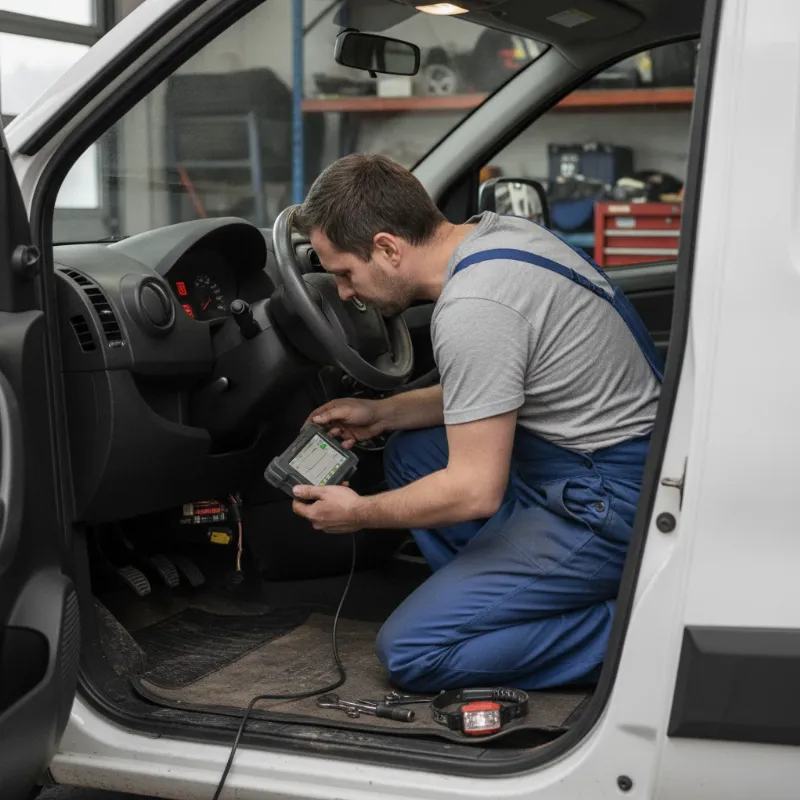
Doblos have a reputation for lighting up the dashboard like a Christmas tree over relatively trivial sensor failures. ABS lights, airbag warnings and engine management lamps can all appear for genuine faults but also for corroded connectors, dodgy earth points or dying sensors that haven't quite failed outright. Always plug a diagnostic reader in before buying — any half-decent trader will let you. A clean scan is a good sign; a fistful of stored codes needs investigation before money changes hands.
Central locking and rear door mechanism (2003 Fiat Doblo van)
Older Doblos, particularly the pre-facelift 2003-era vans, are notorious for central locking gremlins and stubborn rear barn door mechanisms. Actuators fail, key fobs stop synchronising, and the tailgate or side loading door can start to jam or refuse to lock properly — a serious concern if you're leaving tools in the back overnight. Test every single door lock, unlock, open and close from both the fob and the driver's switch before you commit. Replacement actuators are inexpensive but the labour to swap them out inside the door skins can add up.
Gearbox and clutch problems on the Fiat Doblo Maxi
The five and six-speed manual gearboxes fitted to the Doblo — including the longer-wheelbase Maxi — are generally durable, but clutches take a hammering in vans that spend their lives in traffic or hauling heavy loads. A juddering clutch on pull-away, a high biting point or difficulty selecting first and reverse can all point to a worn clutch pack or a tired dual-mass flywheel. Replacing both together is a big-ticket job, so a slipping clutch should be a serious bargaining point. Gear linkage bushes also wear out and produce a vague, notchy shift; these are cheap to replace and can transform how the van drives. On the automated Dualogic gearbox found on some variants, jerky changes and slow response are common complaints and repairs tend to be pricier, so many buyers deliberately stick with the manual.
Bodywork, rust and suspension issues to check
Doblos generally hold up reasonably well against corrosion, but tin-worm does appear on older examples, particularly around the rear wheel arches, sills, tailgate lower edge and the seams around the sliding door tracks. Stone chips on the front bumper and bonnet that have been left untreated often start to bubble. Get underneath the van with a torch and inspect the chassis rails, subframe mounts and brake pipes — surface rust is common, but flaky, scaly corrosion is a serious concern and a likely MOT failure.
Suspension-wise, the front lower wishbone bushes and anti-roll bar drop links wear out fairly quickly, producing knocks over speed bumps and vague steering. Rear leaf springs and shock absorbers on heavily-loaded vans can sag, giving a saggy, tail-down stance. None of these are expensive to fix individually, but they add up. Listen carefully on the test drive for clonks, rattles and knocks — a well-sorted Doblo should feel tight and composed.
How to avoid these problems when buying a used Fiat Doblo
The best defence against buying a troublesome Doblo is a bit of homework and a thorough inspection. Insist on a full service history, or at the very least a run of MOT certificates and receipts that tell a coherent story of the van's life. Check the MOT history online for repeated advisories on the same items — a recurring suspension or emissions note is a warning sign. Run an HPI check to make sure there's no outstanding finance or hidden write-off history, and always view the van in daylight and in dry weather so you can see the paintwork honestly.
Buying from a reputable dealer rather than a private seller gives you the protection of the Consumer Rights Act and, in most cases, a warranty to fall back on if something goes wrong in the first few months. If you're browsing our stock of Fiat Doblo van for sale, every vehicle has been through a workshop inspection before going on the forecourt, and we're happy to talk through service history, previous ownership and any known quirks before you commit. Take a proper extended test drive that includes cold start, hot restart, motorway speeds and low-speed manoeuvring — that combination will flush out the majority of the faults described above before they become your problem.
Fiat Doblo van problems: FAQs
FAQs
What are the most common problems reported on the Fiat Doblo van, and how do I check for them before buying?
The most commonly reported Doblo issues are hot-start failures on the 1.3 MultiJet diesel (usually a crankshaft sensor), carbonised EGR valves, worn injectors, cambelt neglect, dashboard warning light glitches, central locking and rear door faults on older vans, clutch and dual-mass flywheel wear, and rust around the wheel arches and sills. To check for them, always insist on a full service history with a documented cambelt change, plug in a diagnostic scanner to read stored fault codes, test every door lock and the sliding door from both fob and switch, take an extended test drive that includes a hot restart after a short break, and inspect the underside for corrosion. Buying from a dealer with a workshop inspection and a warranty gives you a safety net if anything slips through.
How many miles will a Fiat Doblo van last?
A well-maintained Doblo with the 1.3 or 1.6 MultiJet diesel will comfortably cover 150,000 to 200,000 miles, and many examples in fleet service exceed that. The key is regular oil changes with the correct low-SAPS diesel oil, timely cambelt replacement and not letting the van live exclusively on short urban runs, which shortens EGR and injector life.
Is the Fiat Doblo 1.3 MultiJet or the 1.6 MultiJet more reliable?
Both engines share the same basic reliability profile, but the 1.3 MultiJet is the one most often associated with hot-start problems and works harder in the larger Doblo Maxi. The 1.6 MultiJet has more torque, feels less stressed and tends to be the pick if you're regularly carrying heavier loads. Neither is a bad choice provided the servicing is up to date.
How much does it cost to fix common Fiat Doblo problems?
A crankshaft sensor replacement is usually a modest bill of well under £200 including labour. EGR valve cleaning or replacement typically ranges from £150 to £400 depending on the engine. A cambelt, tensioner and water pump kit fitted is generally in the £300 to £500 bracket. A clutch and dual-mass flywheel job is the big one — expect £700 to £1,200 at an independent specialist. Central locking actuators are cheap parts but labour varies by door.
Should I buy a 2003 Fiat Doblo van?
Early 2003 Doblos can still make sensible cheap workhorses if the price reflects the age and mileage, but they're the most likely to suffer from central locking failures, rear door mechanism problems and bodywork corrosion. If you're looking at one, budget for immediate remedial work and be realistic about the fact that parts availability for some trim and interior items is starting to thin out. A later facelift model is usually a smarter buy if your budget stretches to it.