Fiat Doblo Not Starting When Hot: Causes, Fixes & Costs
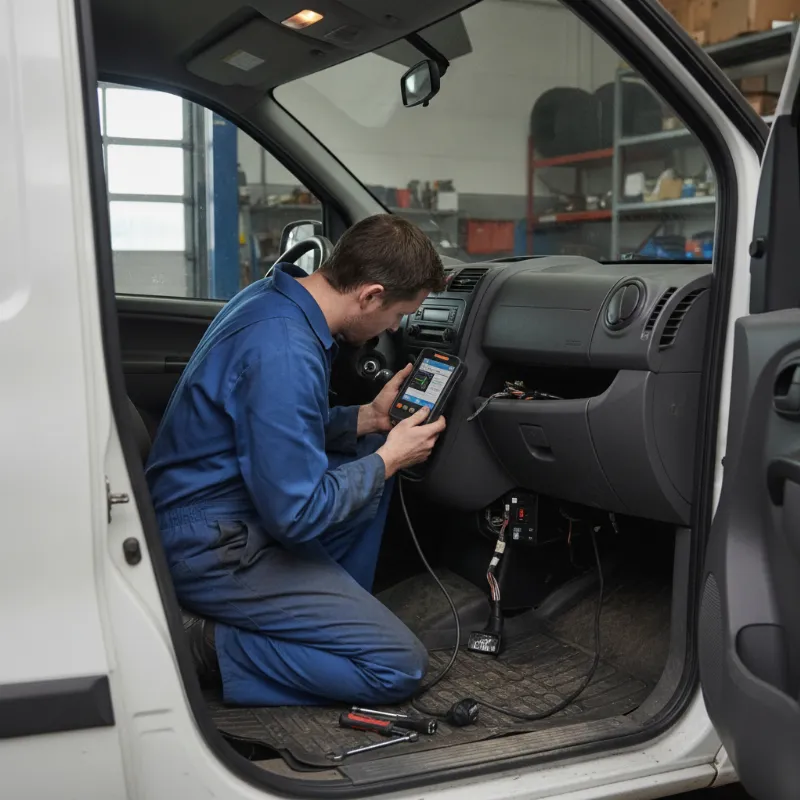
What 'won't start when hot' actually means on a Fiat Doblo
A hot-start fault is one of the more frustrating problems a Fiat Doblo owner can face because, on the face of it, the van seems perfectly healthy. You drive to a delivery, switch off, come back twenty minutes later and the engine simply refuses to fire. Leave it an hour and it starts first turn of the key. That intermittent behaviour is the tell-tale signature of a heat-related fault, and it affects both the petrol 1.4 and the more common 1.3 and 1.6 MultiJet diesels.
Before you throw parts at it, it helps to understand exactly what your Doblo is doing (or not doing) when it's warm. The distinction between a hot-start problem and a general starting issue matters, because they usually point at completely different components.
Hot-start vs cold-start: how to tell them apart
A cold-start fault shows up first thing in the morning after the van has been standing overnight. The engine cranks slowly, struggles to catch, or takes several attempts before it settles into a smooth idle. That's typically a battery, glow plug, injector or fuel-priming issue.
A hot-start fault is the opposite. The van fires up perfectly from cold, drives fine, and only refuses to start once everything under the bonnet is up to operating temperature — usually after a short drive followed by a stop of anywhere between five minutes and an hour. If your Doblo cranks over but won't fire when hot, or if it cranks unusually slowly only when warm, you're dealing with a heat-related fault, not a general condition issue.
Common symptoms Doblo owners report
Owners typically describe one of a handful of scenarios. The engine cranks over normally but simply won't catch, no matter how long you hold the key. The starter clicks or spins lazily as if the battery is flat, even though the battery tests fine. The van fires briefly then dies. Or the dashboard warning lights behave oddly — the engine management light flickers, or the immobiliser light stays on longer than usual. Recognising which pattern applies to your van is the first step to pinpointing the cause.
Most likely causes of a Fiat Doblo not starting when hot
There is no single universal fault behind a hot-start problem on a Doblo, but there is a fairly short list of usual suspects. In rough order of how often they come up in independent Fiat garages, here's what's most likely going wrong.
Failing crankshaft position sensor (a known Doblo weak point)
The crankshaft position sensor (CKP) is the number-one culprit on the Doblo, particularly on the MultiJet diesels. The sensor sits close to the block and gets cooked repeatedly by engine heat. As it ages, the internal windings become heat-sensitive: cold, they read the flywheel teeth correctly; hot, they drop out and the ECU loses its reference signal. Without that signal, the ECU can't time the injectors and the engine won't fire.
The classic signature is a van that cranks and cranks with no sign of firing when hot, then starts perfectly once the sensor cools down. Sometimes a fault code (P0335 or P0336) is stored, but often nothing is logged because the sensor is intermittently working. It's a relatively cheap part and a straightforward job for most garages.
Fuel vaporisation and weak fuel pump pressure
On petrol Doblos, hot fuel in the rail can vaporise, especially in older vans where the in-tank pump is losing pressure. Vapour lock means the injectors can't deliver liquid fuel at the right pressure, so the engine won't catch. On diesels, a tired lift pump or a leaking one-way valve in the fuel system can allow fuel to drain back to the tank when the engine is off, meaning there's no prime when you try to restart hot.
Starter motor heat soak
The starter motor is bolted right against the engine and gearbox, and after a run it soaks up a huge amount of heat. On higher-mileage Doblos, the starter's internal windings and solenoid contacts expand as they warm, increasing resistance. The result is the classic "click but no crank" or a lazy, sluggish crank when hot, even with a fully charged battery. Tap the starter with a spanner and it'll often burst into life — a rough test, but a strong hint that the starter is on its way out.
Injector or diesel high-pressure fuel issues (1.3 and 1.6 MultiJet)
On the MultiJet diesels, worn injectors can leak back excessive fuel when hot, dropping rail pressure below the level needed for the ECU to allow a start. A back-leak test at a diesel specialist will identify a leaky injector quickly. The high-pressure pump itself can also weaken with age, and a tired pump often struggles most when hot and thermally expanded. These jobs are more expensive than a sensor swap and usually justify a specialist rather than a general garage.
Battery, earth straps and voltage drop under heat
Don't overlook the basics. A battery that tests "OK" cold can drop significant voltage when hot, and corroded or loose earth straps between the engine, chassis and battery create resistance that gets worse with heat. If cranking speed drops noticeably when the van is warm, check every earth point — particularly the braided strap from the engine block to the chassis — before assuming anything more expensive has failed.
How to diagnose the hot-start fault at home
You don't need a fully equipped workshop to narrow down a Doblo hot-start problem. A methodical approach and a few basic tools will get you a long way before you spend money on labour.
Simple checks before you call a mechanic
Start with the battery and connections. Clean the terminals, check they're tight, and inspect the earth strap for corrosion or fraying. Next time the van refuses to start when hot, note exactly what it's doing — cranking without firing, or not cranking properly at all — because that alone rules half the causes in or out. If it cranks normally but won't fire, suspect the crankshaft sensor or fuel delivery. If it cranks slowly or clicks, suspect the starter or the earths.
Try a squirt of easy-start into the intake (petrol only, and sparingly) when it won't start hot. If it fires briefly and dies, you've almost certainly got a fuel delivery problem. If it doesn't fire at all, you're looking at ignition or sensor territory.
When to plug in a diagnostic scanner
A cheap OBD2 scanner is worth its weight in gold on these vans. Pull codes as soon as the fault happens, before you switch the ignition off, because pending codes can clear. Look specifically for P0335, P0336 (crank sensor), P0087 (fuel rail pressure too low) and any injector-specific codes. A live-data scan while cranking hot is the gold standard — you can watch RPM signal, fuel rail pressure and battery voltage in real time and see exactly which one drops out of spec.
Typical repair costs and what a garage will do
A crankshaft position sensor replacement is usually the cheapest fix, typically £80 to £180 all-in at an independent garage, depending on how awkward the sensor is to reach on your particular engine. A starter motor swap runs from around £200 to £400 including a reconditioned unit and labour. Injector back-leak testing and replacement is where costs climb quickly — expect £150 to £250 just to diagnose, and anywhere from £300 to £900 or more if injectors need replacing or reconditioning. A high-pressure pump is the worst case, comfortably into four figures once labour and parts are added up.
A good garage will start with a diagnostic scan and a hot-fault recreation, then work through the cheap and likely items before touching anything expensive. Be wary of anyone who wants to replace injectors or a pump without first proving the crank sensor and starter are healthy.
When it's cheaper to replace the van than repair it
There comes a point on any older Doblo where the sums stop adding up. If your van is over ten years old, has north of 130,000 miles, and the diagnosis points at high-pressure fuel components or multiple failing injectors, you could easily spend £1,500 to £2,500 fixing a van that's worth less than the bill. Add in the fact that hot-start faults often come alongside other age-related issues — DPF, EGR, turbo — and the case for replacement gets stronger.
If you're weighing repair against replacement, it's worth having a look at the current market. There's usually a good spread of Fiat Doblo vans for sale in later, lower-mileage specs that will give you years of reliable service without the diagnostic headaches of a tired example. A newer van with a clean history often works out cheaper over two or three years than pouring money into an ageing one.
Frequently asked questions
Below are the questions Doblo owners most often ask when they're facing a hot-start fault.
FAQs
Why won't my Fiat Doblo start when the engine is hot, and how do I fix it?
The most common cause on a Doblo is a failing crankshaft position sensor that drops out of spec when it gets hot, followed by a heat-soaked starter motor, fuel delivery problems (weak lift pump, injector back-leak or vapour lock on petrol), and corroded earth straps causing voltage drop. The fix depends on the cause — a crank sensor replacement is usually £80–£180, a starter around £200–£400, and injector or high-pressure pump work can run to four figures. Diagnose it by pulling fault codes with an OBD2 scanner as soon as the fault occurs and watching whether the engine cranks but won't fire (sensor/fuel) or cranks poorly (starter/earths).
Can I still drive my Doblo if it only fails to start when hot?
You can drive it, but you're gambling on where it'll leave you stranded. Hot-start faults tend to get progressively worse as the failing component degrades further, so what starts as an occasional inconvenience often becomes a daily no-start within weeks. If the van is critical to your work, get it diagnosed before it fails somewhere awkward.
How do I know if it's the crankshaft sensor or the starter motor?
Listen to what the engine does when you turn the key hot. If it cranks over at normal speed but simply won't fire, the crank sensor is the prime suspect. If it clicks, cranks slowly, or refuses to turn over at all despite a good battery, the starter motor is far more likely. A diagnostic scan will confirm a crank sensor fault with codes P0335 or P0336.
Is a hot-start problem a known fault on the Fiat Doblo?
Yes — the crankshaft position sensor is a well-documented weak point on the Doblo, particularly on the 1.3 and 1.6 MultiJet diesels. Its position close to hot engine components means it gets heat-cycled repeatedly and eventually becomes temperature-sensitive. Most Fiat specialists will suggest checking it first when a Doblo presents with a hot-start complaint.
Will a new battery fix a hot-start problem?
Only if the battery is genuinely the cause, which is relatively rare on a hot-start fault. Batteries usually cause cold-start problems, not hot ones. That said, a weak battery combined with a tired starter or corroded earth straps can tip a marginal system over the edge when hot, so it's worth having the battery load-tested before assuming it's fine.