The Best Dropside Vans in the UK: Buyer's Guide
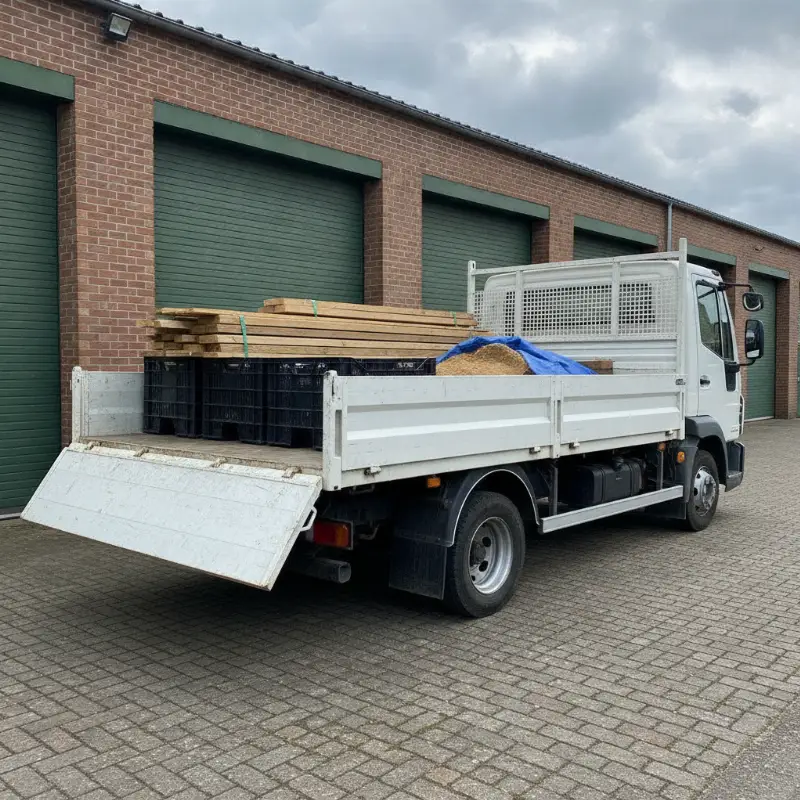
What is a dropside van and who is it for?
A dropside van is a light commercial vehicle fitted with a flatbed body whose side and rear panels can be folded down, giving unrestricted access to the load area from three sides. Unlike a standard panel van, there's no fixed roof or side walls over the cargo bed, which makes loading long, awkward or bulky items — bricks, timber, roofing sheets, landscaping materials, plant equipment — vastly quicker and safer. A forklift can drop a pallet straight onto the bed without any need to shuffle it through a narrow rear door.
Dropsides are the workhorses of the UK trades. Builders, landscapers, roofers, plant hire firms, fencing contractors, groundworkers and local councils all rely on them because they combine van-like driveability with truck-like practicality. If your working day involves carrying heavy, dirty or oversized loads that wouldn't sit comfortably inside a panel van, a dropside is almost always the right answer. They're also popular with crews of two, three or six people thanks to the availability of extended cab options.
How we picked the best dropside vans
There's no single "best" dropside — the right choice depends on what you carry, how far you drive it and how many people need to travel in the cab. To keep our comparisons fair we focused on the three factors that matter most to working buyers in the UK: how much they can legally carry, how many crew they can seat, and how much they cost to run over a typical three- to five-year working life.
Payload and load length
Payload is the single most important number on any dropside spec sheet. It's the difference between the vehicle's kerb weight and its Gross Vehicle Weight (GVW), and it dictates how much cargo you can legally load. Most 3.5-tonne dropsides in the UK offer between 900kg and 1,400kg of payload, but a crew cab or heavier chassis can significantly eat into that. Load length is the second key figure — a standard bed is usually around 3.0–3.4 metres, while long-wheelbase variants stretch to 4.3 metres or more, enough for full-length scaffold poles or 12ft timber.
Cab options: single, crew and double cab
Single cabs seat two or three and give you the longest possible load bed. Crew cabs (sometimes called double cabs) add a second row of seats for a total of six or seven passengers, which is invaluable for firms sending a full team to site, but they shorten the bed by around 400–600mm and add weight that reduces payload. Consider carefully whether you actually need those extra seats every day, or whether a second single-cab van would suit your business better.
Running costs and reliability
Fuel economy on modern diesel dropsides typically sits between 28 and 38mpg depending on chassis, load and driving style. Service intervals, parts availability and the size of the dealer network all matter just as much as headline mpg — a van that spends a day off the road waiting for a part costs you far more than a couple of miles per gallon. We've weighted our recommendations towards models with strong UK dealer coverage and well-proven mechanicals.
The best dropside vans in the UK
Below are the six dropsides that consistently top the sales charts and dominate UK worksites. Each has genuine strengths, and the "best" one for you will depend on your trade, your typical load and your budget.
Ford Transit Dropside
The Transit is the default choice for a reason. Ford's dedicated Chassis Cab conversion is offered in single and double-cab layouts with payloads pushing 1,400kg on the 350 model. The 2.0 EcoBlue diesel is refined and reasonably economical, and Ford's dealer network is unmatched — you're never far from parts or a service bay. If you value predictability, resale value and easy servicing above all else, start here.
Mercedes-Benz Sprinter Dropside
The Sprinter is the premium option and it feels it from the moment you climb in. Build quality is a step above most rivals, the cab is comfortable enough for genuinely long days, and the 3.5-tonne and 5.0-tonne chassis variants give you real flexibility. Payload figures are strong and the drivetrain has a well-deserved reputation for high-mileage durability. It costs more up-front, but heavy-duty operators often recover that in longevity.
Volkswagen Crafter Dropside
VW's Crafter shares much of its engineering ambition with the Sprinter but tends to undercut it slightly on price. The cab is one of the best in the class for driver ergonomics, and the 2.0 TDI is smooth and efficient. Available in single and crew cab and with front-, rear- or all-wheel drive, the Crafter is particularly popular with landscapers and utility firms who need traction on soft ground.
Vauxhall Movano Dropside
The Movano offers arguably the best value-for-money on the list. Payloads of up to 1,500kg on some derivatives are class-leading, and prices — both new and used — are typically several thousand pounds below the German rivals. The cabin is functional rather than plush, but for buyers focused on getting the most kilos-per-pound the Movano is very hard to beat.
Iveco Daily Dropside
The Daily is the heavyweight of the group. Built on a proper truck-style ladder chassis, it's available up to 7.2 tonnes GVW and can carry payloads that leave 3.5-tonne rivals for dust. It drives more like a small truck than a van, but for scaffolders, plant operators and anyone regularly running close to legal weight limits, that ruggedness pays dividends.
Renault Master Dropside
Mechanically related to the Movano but with distinct styling and equipment, the Master is another strong value pick. Payloads are competitive, the 2.3 dCi diesel is a well-proven unit, and Renault's Business+ dealer network offers dedicated LCV servicing. A comfortable cabin and light steering make it easy to live with day-to-day.
Best dropside van for specific trades
Once you've narrowed the field, the final choice often comes down to matching a specific model to the specific job. Here's how the leading dropsides line up for three of the most common UK trades.
Best for builders and construction
Builders typically need a balance of payload, load length and crew capacity — enough space for materials plus room for the team. The Ford Transit crew cab hits that sweet spot for most small building firms, with strong payload, six seats and unbeatable dealer support. For larger firms moving heavier materials, the Sprinter or Crafter step up comfortably.
Best for landscapers and groundworks
Landscapers often work off-tarmac, and traction matters as much as payload. The VW Crafter with 4Motion all-wheel drive is our pick here, though many landscapers actually cross-shop dropsides against tipper vans — a tipping bed makes disposing of soil, aggregate and green waste dramatically quicker, and can transform site productivity.
Best for scaffolders and heavy payloads
Scaffolding is brutally weight-intensive, and a 3.5-tonne dropside will hit its legal limit surprisingly quickly. The Iveco Daily 5.0- or 7.2-tonne variants are the sensible choice, offering payloads that let a scaffolder carry a proper day's worth of tube and fittings without straying into overload territory. Remember that above 3.5 tonnes GVW your drivers will need a C1 licence.
New vs used dropside vans: which makes sense?
A new dropside gives you the latest safety kit, the full manufacturer warranty, predictable maintenance costs and the freedom to specify exactly the chassis, cab and body you want. The downside is depreciation — like all commercial vehicles, dropsides lose value fastest in their first two or three years.
A well-chosen used dropside sidesteps the worst of that depreciation. A two- to three-year-old example from a fleet or leasing return will typically have been serviced on schedule and still has plenty of working life left, often at 30–40% less than list price. The key is inspecting the load bed carefully — dropside beds live a hard life, and worn timber, bent stanchions or a tired tailgate can be expensive to put right. If your annual mileage is modest and you're not fussed about the newest emissions standards, used is usually the smarter financial call.
Buying, leasing or financing your dropside van
How you pay for the van matters almost as much as which one you choose. Outright purchase is the simplest route and leaves you with an asset on the balance sheet, but it ties up a significant amount of working capital in a depreciating vehicle.
Hire Purchase spreads the cost over an agreed term with a deposit and fixed monthly payments, and you own the van outright at the end. It's popular with sole traders and small firms who want predictable outgoings without a large upfront hit. Contract hire and finance lease effectively rent the vehicle to your business over two to five years, keeping monthly costs low and often bundling in maintenance — attractive if you'd rather not deal with servicing, MOTs and eventual resale. VAT-registered businesses can typically reclaim VAT on lease payments, which can tip the maths further in leasing's favour. Talk to your accountant about which structure best suits your cashflow and tax position before you sign anything.
Final verdict: which dropside van should you choose?
If we had to pick one dropside van for the widest range of UK buyers, it would be the Ford Transit — the combination of strong payload, sensible pricing, huge dealer network and solid residual values is genuinely hard to argue with. For heavy-duty operators the Iveco Daily is unmatched, the Mercedes Sprinter is the premium long-distance choice, and the Vauxhall Movano is the value champion for buyers watching every pound.
Whichever badge you choose, the golden rules are the same: buy enough payload for your heaviest realistic load rather than your average one, think carefully about whether you truly need a crew cab, and inspect any used example's bed and chassis as thoroughly as its engine. Get those three right and a dropside van will be one of the hardest-working assets your business ever owns.
FAQs
Which is the best dropside van to buy in the UK?
For most UK buyers the Ford Transit Dropside offers the best all-round package — competitive payload of up to around 1,400kg, single and double-cab options, strong residual values and the largest dealer network in the country. Heavy-payload operators such as scaffolders are better served by the Iveco Daily, buyers wanting premium build quality should look at the Mercedes-Benz Sprinter, and those prioritising value should consider the Vauxhall Movano or Renault Master.
What's the difference between a dropside and a tipper van?
Both share a flatbed body with fold-down sides, but a tipper's bed is hydraulically operated and can tilt to unload material quickly — ideal for soil, aggregate and rubble. A dropside's bed is fixed, which typically gives it a slightly higher payload and a lower purchase price, and suits carrying palletised or non-loose materials like bricks, timber and scaffolding.
How much can a dropside van legally carry?
Most 3.5-tonne dropsides in the UK offer between 900kg and 1,400kg of payload, depending on the chassis, cab configuration and body specification. Crew cabs reduce payload by around 100–200kg compared with single cabs. If you need to carry more, look at 5.0- or 7.2-tonne chassis such as the Iveco Daily — but note that drivers of vehicles above 3.5 tonnes GVW need a C1 licence.
Do I need a special licence to drive a dropside van?
A standard UK category B car licence covers you to drive any dropside up to 3.5 tonnes Gross Vehicle Weight, which includes the vast majority of Ford Transit, Sprinter, Crafter, Movano, Master and lighter Daily models. For heavier variants above 3.5 tonnes you'll need a C1 licence, and above 7.5 tonnes a full C (HGV) licence.
Is it better to buy a new or used dropside van?
It depends on your mileage, cashflow and appetite for depreciation. A new dropside gives you the latest safety kit, full warranty and exact specification, but loses value quickly in the first three years. A well-maintained two- to three-year-old ex-fleet dropside can be 30–40% cheaper and still has years of working life left — just inspect the load bed, tailgate and chassis carefully for signs of hard use.