Why Is My Vauxhall Combo Diesel Van Smoking Really Bad? Causes & Fixes
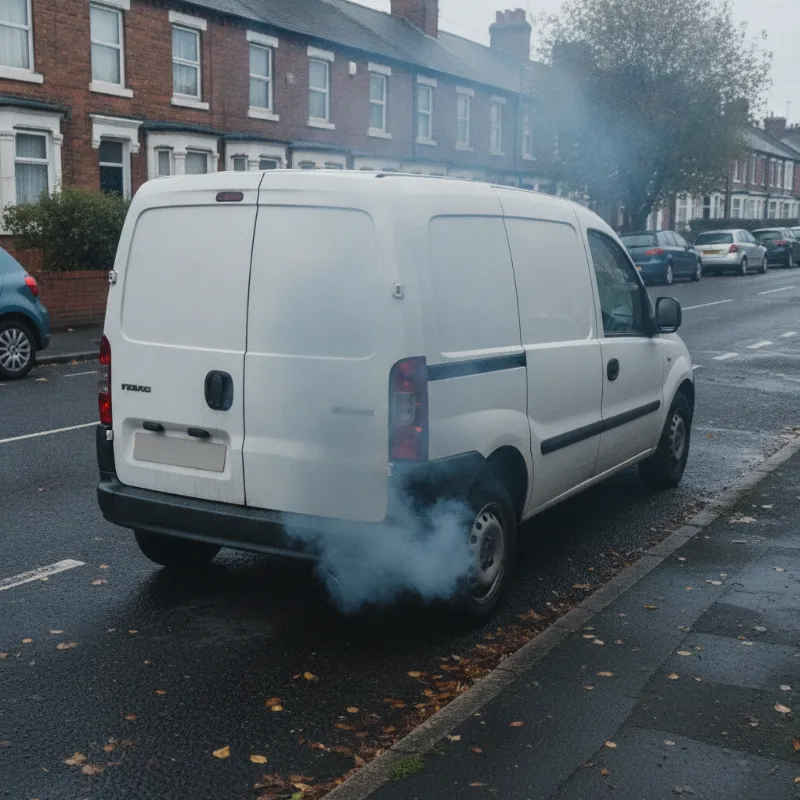
Quick answer: what smoke colour means on a Vauxhall Combo diesel
If your Vauxhall Combo diesel is smoking heavily, the colour of the smoke is the single biggest clue to what's actually wrong. Black smoke almost always points to a fuelling or air intake issue — the engine is burning too much diesel for the air it's getting. Blue smoke means engine oil is finding its way into the combustion chamber, usually via the turbo, piston rings or valve stem seals. White smoke that hangs in the air and smells sweet is typically coolant being burned, which often signals a head gasket or cracked head, whereas thin white vapour on a cold morning is usually just condensation and nothing to worry about.
The Combo has been offered with several diesel engines over the years — the older 1.7 DI and 1.7 CDTi in the Combo B and C, the 1.3 CDTi in the Combo C and D, and the 1.6 and 2.0 CDTi in the newer vans. Each engine has its own weak spots, but the smoke colour rules apply to all of them. Below we'll walk through each colour, what causes it on a Combo specifically, and what it usually takes to fix.
Black smoke from a Vauxhall Combo van: causes and fixes
Black smoke is the most common complaint on a smoking Combo, especially under acceleration or when pulling a load. It's unburnt diesel — either too much fuel being injected, or not enough air getting in to burn it cleanly. On a van that spends its life doing short urban trips, the underlying cause is very often soot-related, because the DPF and EGR system never get hot enough to clean themselves properly.
Clogged air filter or blocked DPF
Start with the cheapest fix: the air filter. A Combo that's been used on dusty sites or hasn't had a service in a while can easily choke itself with a filthy filter, and you'll see black smoke the moment you put your foot down. A new filter is a ten-minute job and costs very little, so it's always the first thing to rule out.
If the filter is clean, attention turns to the Diesel Particulate Filter. Combo vans used mainly for stop-start town driving are notorious for partially blocked DPFs because they rarely reach the temperature needed for a passive regen. You'll often see black smoke combined with a DPF warning light, reduced power (limp mode), and poor fuel economy. A forced regen at a garage can clear a partial blockage, but a heavily loaded DPF may need chemical cleaning or replacement. Regular motorway runs of 20 minutes or more help keep it clear once it's back to health.
Faulty injectors or EGR valve
If the filter and DPF are fine, the next suspects are the injectors and the EGR valve. A leaking or worn injector will dump too much fuel into the cylinder, producing thick black smoke, rough idle and sometimes a distinct diesel knock. Injectors can often be tested and, on some Combo engines, refurbished rather than replaced outright — worth asking your specialist about.
The EGR valve is another very common culprit on the Combo, particularly the 1.3 CDTi. It gets caked in soot and either sticks open (causing hesitation and black smoke) or fails to seal properly. Cleaning the EGR can bring a van back to life for very little money, though a badly gummed unit sometimes has to be replaced. While you're in there, it's worth checking the intake manifold, which suffers the same soot build-up.
Blue smoke: oil burning issues
Blue smoke is more serious than black because it means oil is being burned inside the engine. It's often most obvious on start-up, when accelerating hard after coasting, or on the overrun coming down a hill. A Combo that leaves a blue haze behind it is telling you that oil is getting past a seal it shouldn't be, and the repair bill scales quickly depending on which seal has gone.
Worn turbo seals on the 1.3 CDTi and 1.7 DI
The turbochargers on the 1.3 CDTi and 1.7 DI Combo engines have a reputation for tired seals as the mileage climbs. When the shaft seals wear, oil is drawn from the turbo's oil feed into the intake and burned along with the fuel. Classic signs are blue smoke on acceleration, oil pooling in the intercooler pipes, and a whining or fluttering noise from the turbo.
Fixes range from a reconditioned turbo (often the sensible middle ground) to a brand new unit. Whatever route you take, always renew the oil feed and return pipes at the same time, and change the oil and filter — debris from a failing turbo is one of the fastest ways to kill its replacement.
Piston rings and valve stem seals
If the turbo checks out, the next possibilities are worn piston rings or perished valve stem seals. Worn rings tend to produce blue smoke under load and are usually accompanied by low compression, high oil consumption and blow-by from the breather. Valve stem seals, by contrast, typically show themselves as a puff of blue smoke on start-up or after the van has been idling at a junction, then clear once you're moving.
Valve stem seals can sometimes be done with the head still on the engine, which keeps costs manageable. Piston rings are an engine-out, engine-apart job, and on a high-mileage Combo the labour alone can outweigh the value of the van.
White smoke: coolant, fuel or head gasket
White smoke needs a bit of interpretation. Thin white vapour that disappears within a minute or two of cold starting is just water condensing in the exhaust — completely normal. Thick, persistent white smoke with a sweet smell is a different story, and usually points to coolant entering the combustion chamber via a failed head gasket, cracked cylinder head or warped head surface. Look for other signs: mayonnaise-like sludge under the oil filler cap, coolant level dropping with no visible leak, or bubbles in the expansion tank.
White smoke can also come from unburnt diesel when an injector is spraying poorly or glow plugs have failed, which is common on colder starts with older 1.7 DI Combos. If your van struggles to fire in the morning and coughs out white smoke before settling, glow plugs and injector spray patterns are the first things to check. Head gasket work on a Combo is a significant repair, so it's worth getting a proper diagnosis — a compression test and a sniff test of the coolant will tell you quickly whether combustion gases are getting into the cooling system.
Common Vauxhall Combo diesel smoking problems by engine
Different Combo engines have different weak points, and knowing what's typical for your engine helps narrow the diagnosis before you start throwing parts at it.
1.3 CDTi (Combo C and D) known issues
The 1.3 CDTi is a Fiat-derived Multijet engine and is generally a willing little unit, but it has some well-known smoking issues. The EGR valve and intake manifold clog badly with soot on urban vans, causing black smoke, hesitation and limp mode. Timing chain wear is another concern past around 100,000 miles — a stretched chain throws injection timing out and can produce black smoke along with a rattly cold start. DPF blockages are almost universal on vans that only do short trips. Injector wear also becomes an issue with age, particularly if the fuel filter hasn't been changed at the correct intervals.
1.7 DI and 1.7 CDTi known issues
The 1.7 DI (Isuzu-derived, non-common-rail) is a tough old engine but is well known for tired injectors and glow plug failure, both of which cause white smoke on cold starts and black smoke under load. Turbo seal failure is common past 120,000 miles. The later 1.7 CDTi shares many of the same traits but adds a more sensitive EGR system and, on higher-mileage examples, oil consumption from worn valve stem seals — often the reason for a puff of blue smoke every time you pull away from the lights.
When it's time to replace your Combo van
There comes a point where the sums stop adding up. A new turbo, a set of injectors and a DPF clean can quickly run into four figures, and if you're then facing head gasket or piston ring work on top, you're often better off putting that money towards a newer van. As a rough guide, if the cost of the repairs is more than half the market value of the Combo, and the van has other age-related issues creeping in (rust on the sills, tired suspension, worn clutch), replacement is usually the smarter call.
A newer Combo — or a switch to a rival like the Berlingo, Partner or Transit Connect — gives you a fresh warranty, a cleaner emissions system, and far fewer roadside worries. If your van is your livelihood, the downtime from a smoking engine is often more expensive than the repair itself, and that's the point where most owners decide to move on.
FAQs about Vauxhall Combo diesel smoke
FAQs
Why is my Vauxhall Combo diesel van smoking really bad?
Heavy smoke from a Combo diesel comes down to three colours with three different causes. Black smoke means too much fuel or not enough air — usually a blocked air filter, clogged DPF, sooted-up EGR valve or worn injectors. Blue smoke means the engine is burning oil, typically from failed turbo seals, worn piston rings or perished valve stem seals. White smoke, if it's thick and persistent, points to coolant entering the combustion chamber via a failed head gasket, though thin white vapour on cold mornings is just harmless condensation. Diagnose by colour first, then work through the cheapest checks (filter, EGR, glow plugs) before committing to major repairs.
Is it safe to drive my Vauxhall Combo if it's smoking heavily?
Short answer: no, not really. Black smoke on its own won't strand you but signals emissions and fuelling problems that will get worse and can trigger limp mode. Blue smoke means you're losing oil, and if the turbo is failing you risk it letting go completely and taking the engine with it. Thick white smoke with coolant loss can overheat the engine and warp the head within minutes. Drive it to a garage, not on a long trip, and keep a close eye on oil and coolant levels.
How much does it cost to fix a smoking Vauxhall Combo?
It varies enormously. An air filter or EGR clean can be under £100. A forced DPF regen at a garage is typically a couple of hundred pounds, and a replacement DPF several times that. Injectors are usually a few hundred pounds each fitted. A reconditioned turbo with fitting is normally the biggest single job short of engine work, and head gasket repairs on a Combo can easily run into four figures once the head has been skimmed and pressure tested. Always get a proper diagnosis before authorising work.
Can a blocked DPF cause black smoke on a Combo?
Yes, and it's one of the most common causes on urban-use Combos. When the DPF is partially blocked, exhaust gases can't flow freely, the engine runs richer, and unburnt soot comes out of the tailpipe as visible black smoke. You'll usually see a DPF warning light and reduced power too. A successful regen — either by driving at motorway speeds for 20 minutes or a forced regen at a garage — often clears it, but a heavily loaded filter may need chemical cleaning or replacement.
Why does my Combo only smoke on start-up?
Smoke that only appears on start-up and clears within a minute or two is usually one of two things. A puff of blue smoke on start-up points to valve stem seals letting a small amount of oil past overnight — annoying but not urgent. White smoke on cold starts, especially in winter, often means failing glow plugs or a tired injector not atomising fuel properly until the engine warms up. Both are relatively affordable fixes compared to turbo or head gasket work.