How to Change the Oil Filter on a Vauxhall Combo Van: Step-by-Step Guide
Why regular oil filter changes matter on a Vauxhall Combo van
The Vauxhall Combo is a hard-working small panel van, and whether you're clocking up motorway miles as a courier or doing short urban drops all day, the engine oil takes a beating. The oil filter's job is to trap the microscopic bits of metal, carbon and dirt that would otherwise circulate around your engine, scoring bearings and wearing out the turbo prematurely. Once that filter is full, a bypass valve opens and unfiltered oil starts flowing straight through — which is exactly what you don't want.
Changing the oil filter at the same time as the oil is one of the cheapest bits of preventative maintenance you can do on a Combo. Skipping it can lead to sludge build-up, poor cold starting, reduced fuel economy and, in the worst cases, expensive engine or turbocharger failure. On diesel Combos in particular — the 1.3 CDTI and 1.7 DI/DTI — a clean filter also helps protect the injectors and keeps oil pressure warning lights at bay.
Tools and parts you'll need
Before you get your hands dirty, gather everything in one place. You'll need a socket set (a 13mm socket usually fits the sump plug on most Combos, but check yours), an oil filter wrench that suits your filter type, a drain pan large enough for around 5 litres of used oil, a funnel, some rags, disposable gloves, and a pair of axle stands or ramps. Never work under a van supported only by a trolley jack.
You'll also want a new sump plug washer (they're a few pence and should be replaced every time), the correct oil filter, and the right amount of fresh engine oil. It's worth having a container ready to take the old oil to your local recycling centre — pouring it down a drain is illegal and carries hefty fines.
Choosing the right oil filter for your Combo (petrol vs diesel, 1.3 CDTI, 1.7 DI)
The Combo has been offered with a variety of engines over the years, so the filter isn't one-size-fits-all. Older Combo B and Combo C vans with the 1.7 DI or 1.7 DTI diesel use a spin-on canister-style filter mounted on the block. The 1.3 CDTI (a Fiat-sourced multijet unit) typically uses a cartridge-style filter housed in a plastic canister on top of the engine, which makes it one of the easier filters to access. Petrol 1.4 and 1.6 variants also use a spin-on filter in most cases.
The safest way to identify the right part is to quote your VIN or registration to a Vauxhall parts specialist or a reputable factor. Genuine GM filters are ideal, but quality brands like Mann, Bosch, Mahle and Purflux all make OE-equivalent filters that meet the required specification.
Recommended engine oil grade and quantity
Most modern Combo diesels take a low-SAPS fully synthetic oil in a 5W-30 grade meeting dexos2 or ACEA C3 specification. Older 1.7 diesels can run on 10W-40 semi-synthetic, but always check your handbook or the oil cap for the exact grade specified. Using the wrong oil can affect the DPF (where fitted) and shorten engine life.
Capacity varies by engine, but as a rough guide the 1.3 CDTI takes around 3.2 litres including filter, the 1.7 diesels take around 4.5 to 5.0 litres, and petrol variants sit around 4 litres. Buy a 5-litre container and you'll have some spare for top-ups.
Step-by-step: how to change the oil filter on a Vauxhall Combo van
With the parts and tools ready, set aside about an hour for the job. Work on a level surface, wear gloves, and keep a rag handy — oil changes are messy even when you do everything right.
Step 1: Warm the engine and safely raise the van
Start the engine and let it idle for five to ten minutes. Warm oil flows out far more quickly and completely than cold, thick oil, and it carries more of the suspended contaminants with it. Don't let it get fully hot though — you don't want to burn yourself on the sump or exhaust.
Switch off, apply the handbrake firmly, chock the rear wheels, then jack the front of the van up and lower it securely onto axle stands. If you have a set of drive-on ramps, those are even easier and safer. Never rely on the jack alone.
Step 2: Drain the old engine oil
Slide underneath and locate the sump plug on the bottom of the engine. Position your drain pan directly below it, then loosen the plug with a socket, turning anti-clockwise. Once it's finger-loose, pull it away quickly to avoid the initial gush running down your arm. Let the oil drain fully — this can take ten minutes or more. Loosening the oil filler cap on top of the engine speeds the flow.
While it drains, inspect the old sump plug. Replace the crush washer with a fresh one, then refit the plug once the flow has slowed to an occasional drip. Nip it up snugly but don't overtighten — around 20 Nm is typical, but check your workshop manual.
Step 3: Locate and remove the oil filter
On the 1.3 CDTI, the cartridge filter housing sits on top of the engine and unscrews with a large socket or filter cap wrench — pull the housing up and you'll find the paper cartridge inside. Remove the old element and the rubber O-rings on the housing, then wipe everything clean.
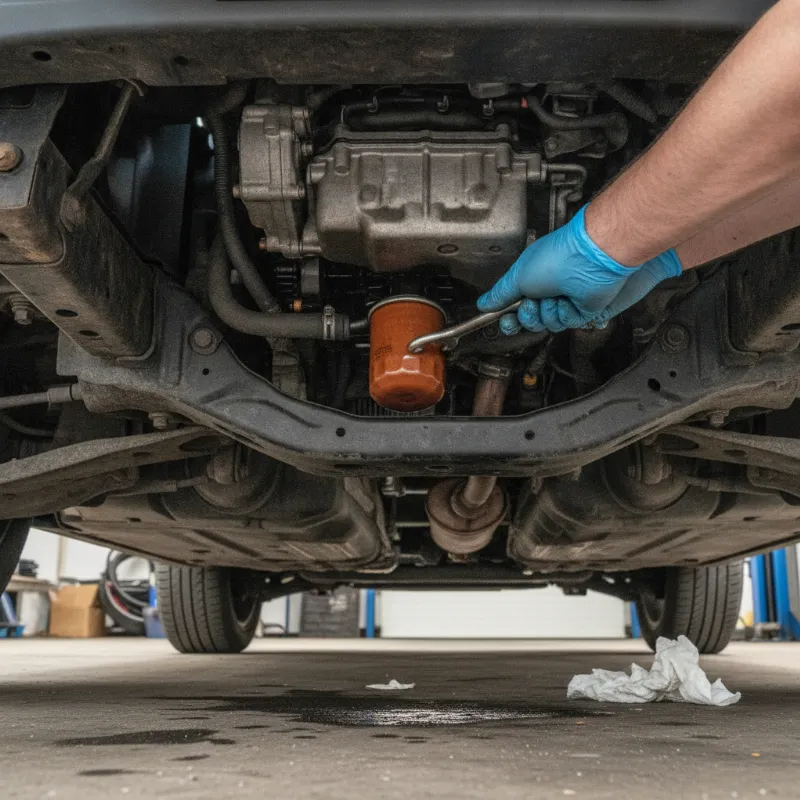
On spin-on filter engines (1.7 diesel, petrol variants), the filter is a metal canister screwed onto the block, usually accessed from underneath. Position your drain pan beneath it, then use a filter wrench to break it loose. Once it's finger-loose, unscrew it slowly and keep it upright to minimise spills. Check that the old rubber sealing ring has come away with the filter and hasn't stuck to the engine — a stuck ring will cause a serious leak.
Step 4: Fit the new oil filter and refill with oil
Smear a thin film of fresh oil onto the rubber seal of the new filter (or the new O-rings on a cartridge housing). This helps the seal bed in properly and stops it tearing. For spin-on filters, thread the new filter on by hand until the seal touches the block, then tighten a further three-quarters of a turn by hand. Do not use a wrench to tighten — you'll never get it off next time. For cartridge filters, fit the new element and O-rings into the housing and screw it back down to the manufacturer's torque figure.
Now head back up top, remove the oil filler cap, and pour in slightly less than the full capacity through a funnel. Wait a minute for it to settle, then check the dipstick. Top up in small increments until the level sits between the MIN and MAX marks — always err on the side of caution, as overfilling can damage seals and the catalytic converter or DPF.
Step 5: Check for leaks and reset service light
Refit the oil filler cap and start the engine. The oil pressure warning light should extinguish within a couple of seconds — if it doesn't, switch off immediately and investigate. Let it idle for a minute, then check underneath for any drips around the sump plug or filter. Switch off, wait five minutes for the oil to settle back into the sump, and recheck the dipstick, topping up if needed.
To reset the service light on most Combos, turn the ignition to position II without starting, press and hold the trip reset button, then turn the ignition off and on again. The exact procedure varies by model year, so check your handbook. Lower the van from the stands, and take the used oil and old filter to your local recycling centre.
How often should you change the oil filter on a Combo?
Vauxhall's official service intervals for the Combo have varied between 12,500 and 20,000 miles or every 12 months, whichever comes first. However, if your van does a lot of stop-start urban driving, short journeys where the engine rarely gets fully warm, or heavy loads, you're far better off shortening that interval — every 6,000 to 10,000 miles is a sensible target for a working van.
Always change the filter at the same time as the oil. Reusing an old filter with fresh oil is a false economy, as the trapped contaminants will start circulating in the clean oil straight away.
Common mistakes and troubleshooting
The most common mistake is overtightening the filter — this crushes the seal and makes removal a nightmare next time. Hand-tight plus three-quarters of a turn is plenty. The second most common is forgetting to check that the old filter seal came off with the filter; two seals stacked on the engine will leak badly the moment you start up.
If you see oil pooling under the van after the job, the usual culprits are a missing or reused sump plug washer, a cross-threaded plug, or a filter seal problem. If the oil pressure light stays on after starting, switch off immediately — you may not have enough oil in the system, or the filter may not be seated correctly. And if you can't get the sump plug back out on a later service, it's almost always because someone overtightened it previously; a proper torque wrench prevents that.
Thinking of upgrading? Explore newer Vauxhall Combo Cargo vans
Older Combos are honest workhorses, but if you're finding yourself under the van more often than in it, it might be time to consider a newer model. The latest Vauxhall Combo Cargo offers extended service intervals, better fuel economy, more payload and a much more car-like cabin — plus the option of an all-electric Combo Electric for lower running costs in urban work.
Newer vans also come with clearer service reminders, easier-access filter housings and generally require less spannering to keep them healthy. If you'd rather spend your weekends earning than servicing, have a chat with our sales team about the current Combo Cargo range and finance options tailored to sole traders and fleets.
FAQs
How do you change the oil filter on a Vauxhall Combo van?
Warm the engine, safely raise the van onto axle stands or ramps, then drain the old oil from the sump plug into a suitable pan. Remove the old filter — a spin-on canister on 1.7 diesel and petrol variants, or a cartridge in a top-mounted housing on the 1.3 CDTI. Lightly oil the seal on the new filter, fit it by hand (three-quarters of a turn past contact for spin-on types), replace the sump plug with a new washer, then refill with the correct grade and quantity of oil. Start the engine, check for leaks, recheck the dipstick and reset the service light.
What oil filter fits a Vauxhall Combo 1.3 CDTI?
The 1.3 CDTI uses a cartridge-style paper filter housed in a plastic canister on top of the engine. Genuine GM parts are ideal, but OE-equivalent filters from Mann, Bosch, Mahle or Purflux are widely available. Always confirm the exact part by quoting your VIN or registration to a Vauxhall parts specialist, as spec can vary by year.
How much oil does a Vauxhall Combo take?
As a rough guide, the 1.3 CDTI takes around 3.2 litres including a filter change, the 1.7 DI/DTI diesels take roughly 4.5 to 5.0 litres, and petrol 1.4/1.6 engines sit around 4 litres. Buy a 5-litre container of the correct grade — usually 5W-30 dexos2/ACEA C3 for modern diesels — and top up gradually while checking the dipstick.
How often should I change the oil and filter on my Combo van?
Vauxhall's official interval is typically 12,500 to 20,000 miles or every 12 months, whichever comes first. For a working van doing lots of short urban journeys or heavy loads, shortening that to every 6,000 to 10,000 miles will significantly extend engine life. Always replace the filter at the same time as the oil.
Do I need to reset the service light after changing the oil?
Yes — the service indicator is based on time and mileage, not oil condition, so it won't clear on its own. On most Combos, turn the ignition to position II without starting, press and hold the trip reset button on the dash until the service message clears, then turn the ignition off. The exact sequence varies by model year, so check your handbook.