Who Makes Iveco Vans? The Story Behind the Brand
Who Makes Iveco Vans?
Iveco vans are made by Iveco S.p.A., an Italian commercial vehicle manufacturer headquartered in Turin. The name itself is an acronym standing for Industrial Vehicles Corporation, and the company has been building light, medium and heavy commercial vehicles since the mid-1970s. Today, Iveco sits under the umbrella of the Iveco Group N.V., a standalone business listed on the Milan stock exchange that spun off from CNH Industrial in 2022.
If you've spotted an Iveco Daily on the motorway or seen a older Iveco Ford lorry on a used forecourt, you're looking at a brand with deep Italian engineering roots and a manufacturing footprint that stretches right across Europe. The company builds everything from car-derived vans up to 44-tonne trucks, but it's the Daily van that most UK buyers know best.
A Brief History of Iveco: From Fiat to Global Van Manufacturer
To understand who makes Iveco vans today, it helps to look back at how the brand came into being. Iveco isn't a single-heritage manufacturer — it's the result of a large-scale European merger that brought together several long-established truck and van makers under one roof.
The 1975 Merger That Created Iveco
Iveco was formed on 1 January 1975 through the merger of five commercial vehicle brands: Fiat Veicoli Industriali, OM and Lancia Veicoli Speciali from Italy, Unic from France, and Magirus-Deutz from Germany. Fiat was the driving force behind the merger, consolidating its commercial vehicle interests with those of its European neighbours to create a single, competitive rival to the likes of Mercedes-Benz and MAN.
The idea was simple: pool the engineering expertise, share the manufacturing capacity, and give the new business the scale needed to compete on a continental level. From day one, Iveco was one of the largest commercial vehicle manufacturers in Europe.
Iveco Group Today: Ownership and Headquarters
For decades, Iveco sat within the wider Fiat empire, later becoming part of Fiat Industrial and then CNH Industrial when the group restructured. In January 2022, Iveco was demerged from CNH Industrial and became Iveco Group N.V., an independent company traded on the Borsa Italiana in Milan. Its head office remains in Turin, keeping the brand's Italian identity firmly intact.
The Iveco Group now includes not just the Iveco van and truck brand, but also bus manufacturer Iveco Bus, defence vehicle maker Iveco Defence Vehicles, and powertrain business FPT Industrial. Exor, the holding company of Italy's Agnelli family, remains a significant shareholder — so there's still a thread linking Iveco back to its Fiat origins.
Where Are Iveco Vans Built?
Iveco is a genuinely pan-European manufacturer, with plants spread across several countries. The Daily van — the model most UK buyers will be familiar with — is built primarily in Italy, but the wider Iveco range draws on facilities in France, Spain, and beyond.
Iveco's Main Manufacturing Plants in Europe
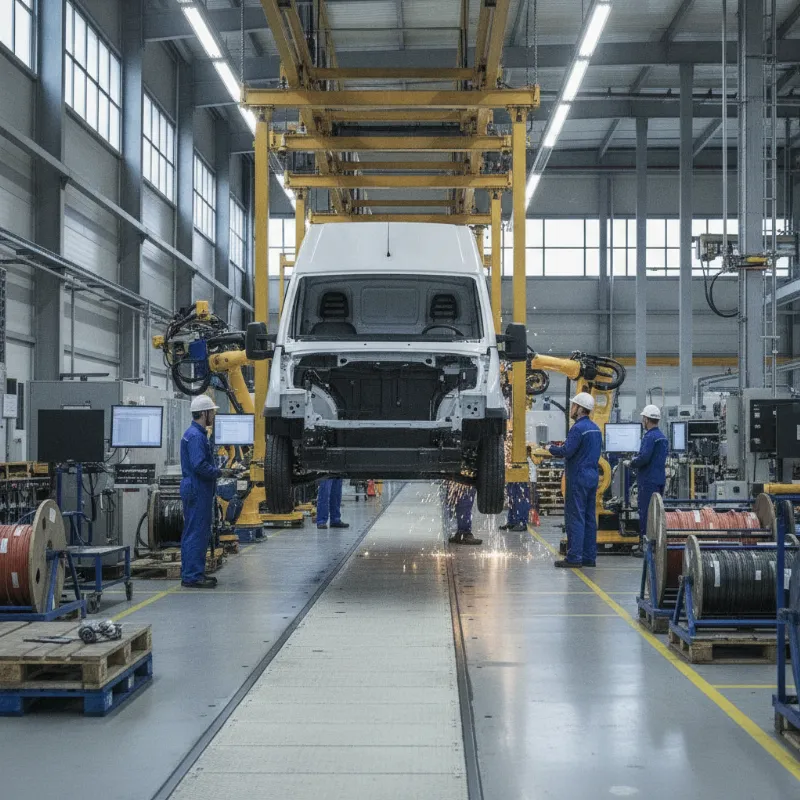
The Iveco Daily is built at the company's plant in Suzzara, near Mantua in northern Italy — a factory that has been producing light commercials since the 1960s. Heavier trucks in the Iveco range roll off the lines at Madrid in Spain and Ulm in Germany, while the powertrain business FPT Industrial builds engines at Foggia and Turin.
Iveco also operates a plant in Valladolid, Spain, and has manufacturing partnerships around the world. For UK buyers, though, virtually every new Iveco Daily on the road here has been built in Italy, which is why the brand still carries a strong made-in-Italy identity.
The Iveco Van Range Explained
Compared to some rivals, Iveco keeps its van range fairly focused. Rather than offering half a dozen different models, it concentrates on doing one thing very well — building a rugged, chassis-based large van in the shape of the Daily.
Iveco Daily: The Flagship 3.5 Tonne Van
The Iveco Daily is the model that defines the brand in the UK. Unlike most rivals in the large panel van class, the Daily is built on a proper truck-style ladder chassis rather than a monocoque body. That gives it the strength to carry heavier payloads, tow bigger trailers, and stand up to years of hard commercial use.
The Daily is available in a huge range of configurations, from standard 3.5 tonne panel vans up to 7.2 tonne chassis cabs, along with tippers, dropsides, Luton bodies and minibus variants. That flexibility is a big part of why the Daily has such a loyal following among tradespeople, couriers and fleet operators — particularly those with heavier payload needs than a Ford Transit or Mercedes Sprinter can comfortably handle.
Older Models: From the 1997 Iveco Van to the 05 Iveco Daily
The Daily nameplate has been in continuous production since 1978, making it one of the longest-running van model names in Europe. A 1997 Iveco van, for example, would be from the second generation of the Daily, launched in 1990 and updated through the decade. An '05 Iveco Daily would be the third-generation model, which arrived in 1999 and ran through to the mid-2000s.
These older Dailys still turn up regularly on the used market, often as tippers, recovery trucks, horseboxes or motorhome conversions — testament to just how durable the underlying chassis is.
Iveco's Partnerships: The Ford and Fiat Connection
Iveco's history is closely tied to both Fiat and Ford, and that's why you'll sometimes see the two names badged together on older commercial vehicles. Between 1986 and 1991, Iveco and Ford operated a joint venture called Iveco Ford Truck Ltd, which handled truck and heavy van sales in the UK. Ford brought its Cargo truck range into the deal, while Iveco contributed its own heavy vehicles.
The joint venture eventually wound down, but the vehicles it produced remained on the road for years afterwards. That's why the Iveco Ford badge is still a familiar sight on older trucks and horseboxes in the UK.
Why You Still See a 28ft Iveco Ford Van For Sale
Large chassis-cab Iveco Fords — often 7.5 tonne trucks with 24ft, 26ft or 28ft box bodies — were popular with hauliers, removals firms and event companies through the late 1980s and 1990s. Many of these have gone on to have second lives as horseboxes, race transporters, mobile workshops and motorhome conversions.
Their tough Iveco engineering, combined with the sheer size of the load bed, means a 28ft Iveco Ford box van can still be a genuinely useful vehicle three decades on. That's why they continue to change hands on the used market, often at surprisingly modest prices.
Are Iveco Vans Any Good? Reputation and Reliability
Iveco vans have a reputation for being tough, workmanlike vehicles that thrive under heavy use. The truck-derived chassis of the Daily makes it a genuine contender when payload and towing capacity matter more than car-like refinement. Operators running plant hire, recovery, tipper or heavy delivery work tend to speak highly of the Daily's durability.
On the flip side, Iveco doesn't have the same dealer network density in the UK as Ford or Mercedes-Benz, so parts and servicing can take a bit more planning if you're outside a major town. Interior refinement has traditionally lagged the German rivals too, although the latest Daily has closed that gap considerably with a modernised cab, better infotainment and a full suite of driver assistance systems.
For buyers who need a large van that behaves more like a light truck, the Iveco Daily remains one of the best options on the market — and that's why the brand has survived nearly 50 years of shifting ownership, mergers and market changes.
Browse Iveco Vans For Sale in the UK
Whether you're after a late-model Daily for heavy delivery work, an older tipper for the yard, or a classic Iveco Ford box van to convert, there's a healthy supply of used Ivecos on the UK market. Take your time comparing specifications, mileage and service history — a well-maintained Daily with a documented history is worth paying a little more for, given how hard these vans typically work.
FAQs
Who makes Iveco vans?
Iveco vans are made by Iveco S.p.A., an Italian commercial vehicle manufacturer headquartered in Turin. Iveco is part of the independent Iveco Group N.V., which was demerged from CNH Industrial in 2022 and is listed on the Milan stock exchange. The brand was originally formed in 1975 by Fiat as a merger of several European truck and van makers.
Is Iveco owned by Fiat?
Not directly, but there's a historical link. Iveco was created by Fiat in 1975 and spent decades within the wider Fiat industrial empire. Today Iveco operates under the standalone Iveco Group N.V., though Exor — the Agnelli family holding company that also controls Stellantis and Ferrari — remains a major shareholder, so the Fiat connection lives on in the background.
Where is the Iveco Daily built?
The Iveco Daily is built at Iveco's Suzzara plant in northern Italy, near Mantua. The factory has been producing light commercial vehicles since the 1960s, and virtually every new Daily sold in the UK comes from this site.
What is the difference between Iveco and Iveco Ford?
Iveco Ford Truck Ltd was a UK joint venture between Iveco and Ford that ran from 1986 to 1991, combining Ford's Cargo truck range with Iveco's heavy vehicle line-up. The badge appeared on trucks and large vans built during that period, which is why you'll still see Iveco Ford vehicles — particularly 7.5 tonne box vans and horseboxes — on the used market today.
Are Iveco Daily vans reliable?
The Iveco Daily is generally regarded as a tough, durable van, thanks to its truck-style ladder chassis and heavy-duty running gear. It's particularly well suited to high-payload and towing work. The main things to watch on older examples are rust on the chassis and body, and the condition of the diesel injection system — a full service history goes a long way to reassuring you on both counts.