What Oil for a Peugeot Partner Diesel? Full Guide by Engine
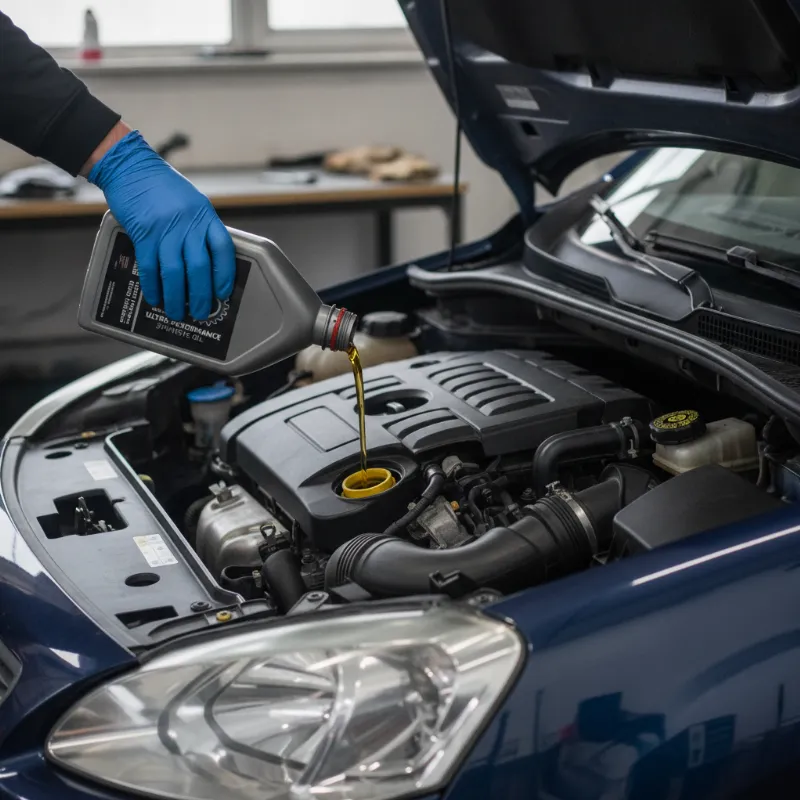
What Oil Does a Peugeot Partner Diesel Need?
The Peugeot Partner diesel needs a low-SAPS (low sulphated ash, phosphorus and sulphur) fully synthetic engine oil that meets Peugeot's own PSA/Stellantis approval codes. For the vast majority of Partner diesels on UK roads today, that means an oil carrying the PSA B71 2290 approval, which is specifically designed to protect the diesel particulate filter (DPF) fitted to every modern HDi and BlueHDi engine.
Using the correct specification is more important than simply picking the right viscosity. A generic 5W-30 from a supermarket shelf might have the right numbers on the bottle, but if it doesn't carry the PSA B71 2290 approval it can clog the DPF, cause premature emissions faults and, over time, damage the turbocharger. Always check the small print on the back of the bottle for the manufacturer approval codes, not just the SAE grade on the front.
Recommended Oil Grades by Engine Size
Peugeot has fitted several different diesel engines to the Partner over the years, and the correct oil differs depending on which one is under your bonnet. Below is a breakdown by engine family covering the most common vans on UK roads.
1.6 HDi and BlueHDi Engines
The 1.6 HDi (fitted from around 2005 onwards) and its successor, the 1.6 BlueHDi (from 2015), both take a 5W-30 fully synthetic low-SAPS oil to PSA B71 2290. This is the most common Partner diesel on the road, so if you're not sure exactly which engine you have but you know it's a 1.6 diesel with a DPF, a 5W-30 B71 2290 oil will be correct.
Popular options that meet this spec include Total Quartz Ineo ECS 5W-30, Shell Helix Ultra ECT C3 5W-30 and Mobil 1 ESP 5W-30. Total is the factory-fill supplier for Peugeot, so it's the closest to what left the production line.
1.5 BlueHDi Engines
The newer 1.5 BlueHDi engine, introduced in the third-generation Partner from 2018, uses a 0W-30 fully synthetic oil that meets the updated PSA B71 2312 specification. This is a thinner, more fuel-efficient oil that suits the tighter tolerances and stop-start systems on the latest engines.
Do not substitute a 5W-30 B71 2290 oil in a 1.5 BlueHDi unless you're topping up in an emergency — the two specifications are not interchangeable for long-term use, and using the wrong oil can affect fuel economy and emissions performance.
Older 1.9D and 2.0 HDi Engines
Pre-DPF Partners from the late 1990s and early 2000s, including the 1.9D non-turbo and the early 2.0 HDi (DW10) engines, are more forgiving. A good quality 10W-40 semi-synthetic to ACEA A3/B4 is perfectly acceptable, and many owners of higher-mileage vans actually prefer this slightly thicker grade for better oil pressure and reduced consumption.
If you want to run a fully synthetic in an older engine, a 5W-40 A3/B4 is the safer choice than a modern low-SAPS 5W-30, as it delivers more robust wear protection in engines that weren't designed around DPF-friendly formulations.
Oil Capacity and Change Intervals
Oil capacity varies by engine but sits in a fairly narrow band. The 1.6 HDi and BlueHDi hold approximately 3.75 litres including the filter, while the 1.5 BlueHDi takes around 3.5 litres. Older 1.9D and 2.0 HDi engines typically need 4.5 to 5.0 litres. Always fill to just below the maximum mark on the dipstick and recheck after the engine has been run and allowed to settle for a few minutes.
Peugeot's official service interval for modern Partner diesels is every 25,000 miles or two years, whichever comes first. In practice, most independent specialists — and plenty of fleet operators — recommend halving that to 12,000 miles or annually, especially if your van does a lot of urban work, short journeys or heavy loads. Diesel oil degrades faster under stop-start conditions, and a cheap oil change is by far the cheapest way to protect an expensive turbo and DPF.
Oil Requirements for the Peugeot Partner LWB
The long-wheelbase Partner (badged Partner L2 or, on earlier models, Partner Long) uses exactly the same engines as the standard-wheelbase van, so the oil specification and capacity are identical. What does change is the workload — LWB Partners are usually bought for heavier loads, longer runs and often courier or multi-drop duty.
Because of that harder life, LWB owners in particular should stick to the shorter 12,000-mile service interval and use a premium oil that meets the correct PSA approval. Skimping on oil quality on a hard-working long-wheelbase van is a false economy that shows up in turbo and EGR failures further down the line.
How to Check and Top Up the Oil
Checking the oil on a Partner diesel is straightforward. Park on level ground, leave the engine off for at least 10 minutes so oil can drain back to the sump, then pull the yellow dipstick, wipe it clean, reinsert it fully and pull it out again to read the level. The oil should sit between the minimum and maximum marks — if it's on or below the minimum, top up.
Add oil in small increments (250ml at a time) through the filler cap on top of the engine, waiting a minute or two between top-ups for the oil to reach the sump before rechecking. The gap between min and max is roughly one litre, so don't dump a full litre in on a level that's only halfway down. Overfilling can be just as damaging as running low, causing foaming, seal damage and, on DPF-equipped engines, oil dilution warnings.
If the dashboard shows a low oil pressure warning (the red oil can symbol), stop the van immediately and do not restart until you've confirmed the level. This is different from the amber service reminder, which simply means a scheduled service is due.
Approved Oil Brands and Where to Buy
The safest bet is to stick to oils that explicitly list PSA B71 2290 (or B71 2312 for the 1.5 BlueHDi) on the label. Trusted brands that make correctly approved oils include Total Quartz (the OEM supplier), Shell Helix, Mobil 1, Castrol Edge Professional, Millers and Fuchs Titan.
In the UK you'll find these at Halfords, Euro Car Parts, GSF Car Parts and Opie Oils online, as well as most independent motor factors. Expect to pay somewhere between £30 and £55 for a 5-litre container of a properly approved 5W-30, which is enough for a full service with a litre or so left over for top-ups. Avoid unbranded oils and anything sold purely on the basis of viscosity — the approval code is what protects your engine.
FAQs: Peugeot Partner Diesel Oil
Below are the questions we get asked most often about oil for the Peugeot Partner diesel, covering everything from grade choice to mixing brands.
FAQs
Which engine oil grade and specification should you use in a Peugeot Partner diesel van?
For the vast majority of Peugeot Partner diesels — the 1.6 HDi and 1.6 BlueHDi — you should use a 5W-30 fully synthetic low-SAPS oil meeting PSA B71 2290. The newer 1.5 BlueHDi (2018 onwards) requires a 0W-30 oil to the updated PSA B71 2312 specification. Older pre-DPF engines like the 1.9D and early 2.0 HDi can run a 10W-40 semi-synthetic to ACEA A3/B4. The manufacturer approval code matters more than the viscosity — a generic 5W-30 without B71 2290 approval can damage the DPF.
Can I use 5W-40 instead of 5W-30 in my Peugeot Partner HDi?
Not if your Partner has a DPF (broadly any HDi or BlueHDi from around 2005 onwards). The DPF needs a low-SAPS oil, and most 5W-40s are full-SAPS formulations that will shorten the DPF's life. In an emergency top-up situation a small amount won't destroy anything, but you shouldn't run a full service on 5W-40 in a modern Partner diesel. In older pre-DPF 1.9D or early 2.0 HDi engines, however, a 5W-40 A3/B4 is a good choice.
How often should I change the oil on a Peugeot Partner diesel?
Peugeot's official interval is 25,000 miles or every two years, but most independent specialists recommend halving that to 12,000 miles or annually. If your van does a lot of short journeys, urban stop-start driving or heavy multi-drop work, stick to the shorter interval — diesel oil degrades much faster under these conditions and a cheap oil change is the best insurance against turbo and DPF failures.
How much oil does a Peugeot Partner 1.6 HDi hold?
The 1.6 HDi and 1.6 BlueHDi hold approximately 3.75 litres including the oil filter. A 5-litre container is therefore plenty for a full service with around a litre left over for top-ups between changes. Always fill in stages and check the dipstick rather than pouring the full amount in at once, and let the van sit for a few minutes before taking a final reading.
Can I mix different brands of engine oil in my Partner?
Yes, as long as both oils meet the same specification (PSA B71 2290 for most Partner diesels, or B71 2312 for the 1.5 BlueHDi) and the same viscosity, mixing brands for a top-up is perfectly safe. All approved oils are formulated to be compatible. That said, it's good practice to do a full oil and filter change with a single brand rather than run a permanent mix, simply so you know exactly what's in the engine.