What Oil Does a VW Crafter Take? Engine Oil Guide by Model Year
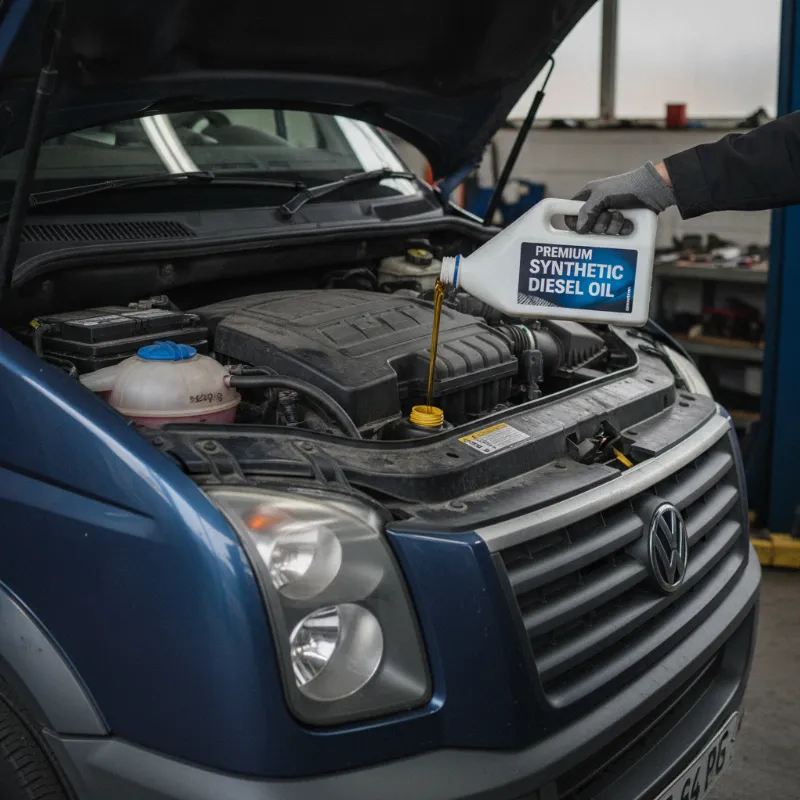
What Oil Does a VW Crafter Take? Quick Answer
Most VW Crafter vans on UK roads take a fully synthetic 5W-30 long-life engine oil that meets a specific Volkswagen oil standard — typically VW 507 00 for the later common-rail diesel engines fitted from 2006 onwards. Older 2.5 TDI Crafters may also accept VW 505 01 or 506 01 grade oils, while the newer 2.0 TDI models built from 2017 stick firmly to VW 507 00. Capacity sits between roughly 6.5 and 8.5 litres depending on the engine, and choosing the correct specification is critical because the Crafter runs a diesel particulate filter (DPF) that only tolerates low-SAPS (low sulphated ash, phosphorus and sulphur) oils.
Get the grade right and your Crafter will happily cover big mileages between services. Get it wrong — for example, pouring in a supermarket 10W-40 that doesn't meet VW spec — and you risk clogging the DPF, damaging injectors and voiding warranty cover. Below we break the recommendations down by engine and model year so you can be confident in what's going in the sump.
Recommended Oil Specifications by VW Crafter Engine
Volkswagen has run two distinct generations of the Crafter, each with different engine families and slightly different lubrication requirements. Always double-check against the handbook in your specific van, because engine variants and factory-fill specs did change during production runs. If you're browsing VW Crafter vans for sale and want to know what a used example should be running on, the model year is the quickest guide.
2006–2016 VW Crafter (2.5 TDI and 2.0 TDI)
The first-generation Crafter, built on the shared Volkswagen/Mercedes platform, was launched with a 2.5-litre TDI five-cylinder diesel in outputs from 88bhp up to 161bhp. This engine typically calls for a fully synthetic 5W-30 oil meeting VW 507 00 for long-life servicing schedules, which is the correct specification for vans fitted with a DPF. Where a Crafter has been switched to a fixed (time and distance) service regime, VW 505 01 or 506 01 grade 5W-40 or 5W-30 oils are also acceptable, but 507 00 remains the safest all-round choice.
From around 2011, the 2.5 TDI was replaced by the 2.0-litre TDI four-cylinder unit — available as single-turbo and bi-turbo variants up to 161bhp. Again, VW 507 00 5W-30 fully synthetic is the go-to specification. Never drop below the VW standard in favour of a generic ACEA rating alone; the manufacturer approval is what protects the emissions hardware.
2017 Onwards VW Crafter (2.0 TDI)
The second-generation Crafter (SY/SZ platform), designed entirely in-house by Volkswagen and built in Poland, uses the EA288 2.0 TDI in outputs from 102bhp to 177bhp. Volkswagen specifies fully synthetic 5W-30 oil to VW 507 00 across the range — this is a low-SAPS long-life oil suitable for the DPF and SCR (AdBlue) exhaust after-treatment system fitted to Euro 6 vans. Some fleet operators on very high-mileage or heavy-load duty cycles opt for VW 504 00 / 507 00 combined-spec oils, which are equally suitable.
Whichever grade you pick, make sure it's genuinely branded to VW 507 00 — the specification will be printed clearly on the back of the bottle. Cheaper "meets or exceeds" wording without the actual approval number is a red flag.
VW Crafter Oil Capacity and Change Intervals
Oil capacity varies by engine. The 2.5 TDI five-cylinder holds around 8.5 litres including filter, while the 2.0 TDI four-cylinder in both generations holds closer to 6.5 litres including a new filter element. Always fill to the dipstick mark rather than blindly pouring in the full quoted volume — residual oil in the block will affect how much fresh oil the engine actually needs.
Volkswagen's long-life (LongLife / variable) service regime can stretch intervals up to 24 months or 25,000 miles, but for UK panel vans working hard on short urban runs, stop-start deliveries or heavy loads, most independent specialists recommend switching to a fixed schedule of every 12 months or 12,000 miles. Diesel engines that idle a lot and rarely reach full operating temperature suffer from fuel dilution in the sump, which is why more frequent changes pay dividends in engine longevity.
How to Check and Top Up the Oil on a VW Crafter
Park the van on level ground and leave the engine off for at least five minutes so the oil drains back into the sump. Open the bonnet, locate the yellow-handled dipstick, pull it out and wipe it clean with a lint-free cloth. Reinsert it fully, then withdraw again and check the level — it should sit between the MIN and MAX marks, which represent roughly one litre of oil between them.
Later Crafters may not have a physical dipstick and instead rely on the electronic oil level sensor accessed through the instrument cluster menu. Follow the on-screen prompts with the ignition on and the engine cold. To top up, unscrew the oil filler cap on the cam cover, add oil in small increments (around 250ml at a time), wait a couple of minutes and recheck. Never overfill — excess oil can be forced past seals and, on DPF-equipped vans, contribute to filter contamination.
Common Oil-Related Issues on the VW Crafter Van
The most frequent oil-related complaint on Crafters is fuel dilution, particularly on vans doing lots of short runs where DPF regeneration cycles fail to complete. Unburnt diesel washes past the piston rings into the sump, thinning the oil and raising the level above the MAX mark. If your dipstick keeps creeping up, take the van for a sustained motorway run to allow a full regen, and consider bringing services forward.
Oil leaks from the rocker cover gasket, oil cooler seals and the timing chain cover are also worth watching on higher-mileage 2.0 TDI engines. A pinhole leak from the oil cooler onto the alternator below is a known issue and should be addressed promptly. Finally, using the wrong grade — most commonly a non-low-SAPS oil — will cause premature DPF blockage that can cost four figures to resolve, so it really does pay to stick with a proper VW 507 00 product.
Keeping Your VW Crafter Work-Ready
Sticking to the correct oil specification, checking levels monthly and servicing on time is the single cheapest way to keep a Crafter earning its keep. Whether you run a single van or a small fleet, a consistent maintenance record also protects resale value when the time comes to trade in or upgrade. If you're in the market for a well-cared-for example, take a look at our current stock of VW Crafter vans for sale — every van we sell comes with a fresh service and a clear history so you know exactly what's been in the sump.
FAQs
What engine oil does a VW Crafter take?
Almost all VW Crafters take a fully synthetic 5W-30 oil meeting Volkswagen specification VW 507 00 — this is a low-SAPS long-life oil suitable for the diesel particulate filter fitted to the van. Older 2.5 TDI models on a fixed service regime can also use VW 505 01 or 506 01 5W-30 or 5W-40 grades, but 507 00 is the safest universal choice across both generations.
How much oil does a VW Crafter hold?
The 2.5 TDI five-cylinder engine (2006–2011) holds approximately 8.5 litres including a new filter. The 2.0 TDI four-cylinder used from 2011 onwards, including all second-generation Crafters from 2017, holds around 6.5 litres including filter. Always top up to the dipstick mark rather than the quoted figure to avoid overfilling.
Can I use 5W-40 oil in a VW Crafter?
5W-40 is only suitable in older Crafters running on a fixed service schedule and only if the oil meets VW 505 01 or 506 01. It should not be used in DPF-equipped vans on the long-life regime, and it is not the correct choice for post-2017 Crafters, which require VW 507 00 5W-30.
How often should I change the oil on a VW Crafter?
Volkswagen's long-life service regime allows up to 24 months or 25,000 miles between changes, but for UK vans doing urban work, short runs or heavy loads, most specialists recommend a fixed interval of every 12 months or 12,000 miles to combat fuel dilution and keep the engine in good health.
What happens if I put the wrong oil in a VW Crafter?
Using an oil that doesn't meet VW 507 00 (or the correct earlier spec) can quickly clog the diesel particulate filter, as non low-SAPS oils leave ash deposits that the filter can't burn off. This can lead to expensive DPF replacement, injector problems and, in warranty cases, a rejected claim. Always check the VW approval number is printed on the bottle.