What Engine Oil Does a VW Crafter Need? Grades, Specs & Capacities
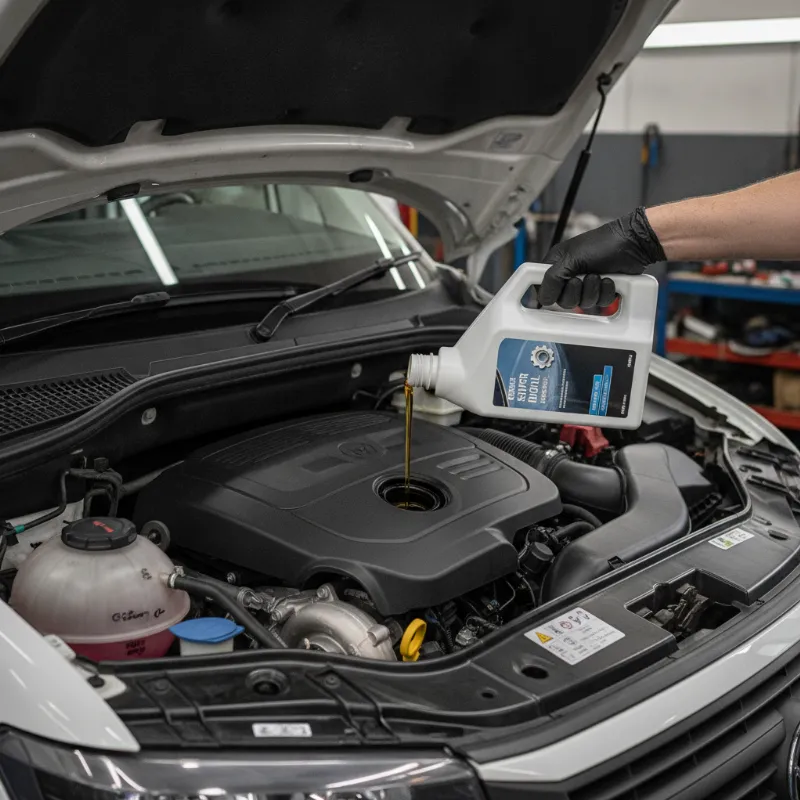
What Engine Oil Does a VW Crafter Take?
The Volkswagen Crafter is a hard-working large panel van, and like any commercial vehicle it relies on the correct engine oil to protect its diesel powertrain over high mileages and long working days. In broad terms, most VW Crafter models take a fully synthetic low-SAPS (low Sulphated Ash, Phosphorus and Sulphur) 5W-30 engine oil that meets a specific Volkswagen approval code — most commonly VW 507 00 for models with a diesel particulate filter (DPF), or VW 506 01 on some earlier variants without one.
Using the correct oil is not just about viscosity. The Crafter's turbocharged TDI engines demand oils that carry the right VW spec, because these formulations are engineered to work with the DPF, the EGR system and the extended service regime. Fitting a generic 5W-30 that lacks the VW approval can shorten DPF life, cause premature wear and, in some cases, invalidate warranty cover. Always cross-check the oil bottle for the exact VW number printed on the back label before topping up or servicing.
VW Crafter Engine Oil Specifications by Model Year
The Crafter has been sold in two clearly distinct generations in the UK, and each uses different engines with slightly different oil requirements. Below is a breakdown of what to look for depending on when your van was built.
2006–2016 VW Crafter (Mk1) Oil Spec
The first-generation Crafter shared much of its mechanical package with the Mercedes-Benz Sprinter and used the 2.5 TDI five-cylinder engine early on, followed by the 2.0 TDI four-cylinder from around 2011. For these engines, VW specifies a fully synthetic 5W-30 oil meeting the VW 507 00 standard, which is the long-life low-SAPS specification designed for DPF-equipped diesels. Vans without a DPF, or older 2.5 TDI units on fixed service intervals, can use oil to VW 506 01 or VW 505 01, though 507 00 remains a safe, backwards-compatible choice for the vast majority of Mk1 Crafters on the road today.
2017 Onwards VW Crafter (Mk2) Oil Spec
The second-generation Crafter, launched in 2017 and built at VW's Wrzesnia plant in Poland, uses the 2.0 TDI EA288 engine family in a range of power outputs. These modern common-rail diesels require a fully synthetic 5W-30 oil meeting VW 507 00, and many workshops also accept oils dual-approved to VW 508 00 / 509 00 where specified in the service booklet. As with the Mk1, the low-SAPS chemistry is critical for protecting the DPF and SCR aftertreatment system on Euro 6 vans running AdBlue. Always confirm against the handbook or the sticker under the bonnet before purchasing.
Recommended Oil Capacity and Change Intervals
Oil capacity varies slightly by engine, but as a general guide the 2.0 TDI Crafter holds around 6.0 to 6.5 litres including a new oil filter, while the older 2.5 TDI five-cylinder took closer to 7.5 litres. It is always sensible to buy a 7-litre pack for a service and keep the surplus for top-ups between changes.
Service intervals on the Crafter depend on which regime the van was set up for. Fixed-interval servicing typically calls for an oil and filter change every 12 months or 12,500 miles, whichever comes first. Long-life servicing, common on fleet vehicles, can stretch this to around 24 months or up to 25,000 miles, but only when the correct VW 507 00 long-life oil is used. If your Crafter does a lot of urban stop-start work, short journeys or heavy towing, we recommend sticking to the shorter fixed interval to keep the engine and DPF healthy.
How to Check and Top Up Oil on a VW Crafter Van
Checking the oil on a Crafter is straightforward. Park on level ground, wait at least ten minutes after switching off a warm engine so the oil can drain back into the sump, then pull out the yellow dipstick, wipe it clean and reinsert it fully. Withdraw it again and check that the film of oil sits between the MIN and MAX marks — the difference between the two is roughly one litre.
To top up, unscrew the oil filler cap on top of the engine and add oil in small quantities, around 250ml at a time, allowing a minute or two between pours for the level to settle before rechecking. Never overfill: too much oil can damage seals, foul the DPF and cause the engine to run on its own crankcase vapours in extreme cases. Later Mk2 Crafters also display oil level electronically through the dashboard menu, though we still recommend a physical dipstick check every couple of weeks on a working van.
Common Oil-Related Issues on the Volkswagen Crafter
The Crafter is a robust workhorse, but there are a few oil-related niggles worth knowing about. High oil consumption on higher-mileage 2.0 TDI engines is not unusual, particularly if the van has been run on the wrong specification oil or serviced infrequently — checking the level weekly is wise once past 100,000 miles. Oil dilution from short journeys is another concern on DPF-equipped vans, where unburnt fuel from regeneration cycles can thin the oil and raise the level on the dipstick; if the oil smells strongly of diesel, it needs changing regardless of mileage.
Turbocharger oil feed pipes can also coke up over time, restricting flow and eventually starving the turbo of lubrication. Sticking to genuine VW 507 00 oil and changing it on time is the single best way to avoid this. Finally, watch for oil leaks around the rocker cover gasket and the oil cooler seals on higher-mileage vans — both are common wear items and relatively inexpensive to put right if caught early.
Keeping Your VW Crafter in Top Condition
Using the right engine oil is one of the simplest and cheapest ways to keep a VW Crafter earning its keep for years to come. Stick to a fully synthetic 5W-30 with the correct VW approval, keep to sensible service intervals, and check the level regularly between changes — especially if the van is working hard with heavy loads or long motorway stints. A well-maintained Crafter can comfortably clear 200,000 miles, and clean, correctly specified oil is the foundation of that longevity. If you are ever unsure which oil your specific van needs, quote the VIN to your servicing dealer or parts specialist and they will confirm the exact grade and approval printed against your chassis number.
FAQs
What engine oil does a VW Crafter need?
Most VW Crafters require a fully synthetic 5W-30 engine oil meeting the VW 507 00 specification. This low-SAPS oil is designed for diesel engines fitted with a DPF and covers both the 2006–2016 Mk1 and 2017-onwards Mk2 Crafter. Some earlier Mk1 vans without a DPF can also use oil to VW 506 01 or 505 01, but 507 00 remains the safest all-round choice.
How much engine oil does a VW Crafter take?
The 2.0 TDI Crafter holds approximately 6.0 to 6.5 litres of oil including a new filter, while the older 2.5 TDI five-cylinder engine took around 7.5 litres. Buying a 7-litre pack for a service typically leaves enough spare for future top-ups.
Can I use 5W-40 oil in my VW Crafter instead of 5W-30?
No, we don't recommend it. VW specifies 5W-30 to the correct 507 00 (or older 506 01/505 01) approval for a reason — the viscosity and low-SAPS additive package are tailored to the engine's tolerances, DPF and long-life service regime. Using a 5W-40 that doesn't carry the correct VW spec can accelerate DPF blockage and may affect warranty cover.
How often should I change the oil in my VW Crafter?
Under a fixed service regime, the oil and filter should be changed every 12 months or 12,500 miles, whichever comes first. Vans on long-life servicing using the correct VW 507 00 oil can go up to 24 months or around 25,000 miles, but shorter intervals are better for vans doing lots of short journeys, urban work or heavy towing.