 Call us on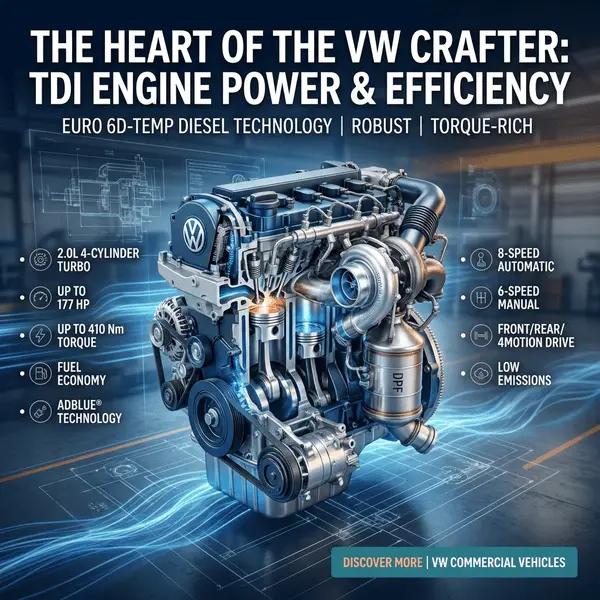
VW Crafter Engine
VW Crafter Engine: Power
The VW Crafter engine stands as a cornerstone of reliability and performance in the commercial vehicle sector. This powerhouse has gained a reputation for its durability and efficiency, making it a top choice for businesses and fleet operators alike. With various configurations available, the VW Crafter engine offers solutions to meet diverse transportation needs while maintaining optimal fuel economy. Source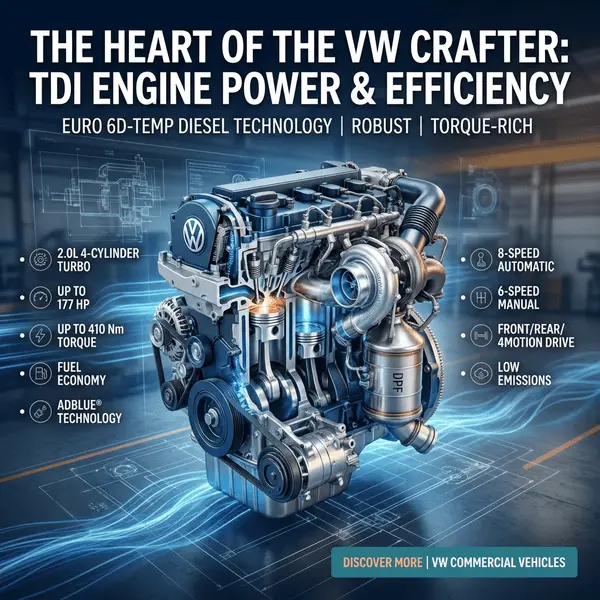
Understanding the intricacies of the VW Crafter engine is crucial for owners and operators to maximize its potential. This article delves into the engine’s specifications, performance features, and longevity. It also explores maintenance requirements, including oil types, timing belt replacement intervals, and service schedules. See all our VW Vans . Additionally, it addresses common concerns such as DPF and EGR valve issues, providing insights to keep the engine running smoothly for years to come. See VW Crafter Racking
VW Crafter Engine Specifications
Engine Types and Configurations
The VW Crafter engine lineup has evolved over the years, offering a range of powerful and efficient options to suit various commercial needs. The current generation of Crafter engines features a 2.0-liter TDI (Turbocharged Direct Injection) diesel engine available in multiple configurations. These engines utilize common rail direct injection technology, which enhances fuel efficiency and performance. See Best VW Crafter Lease Deals
The 2.0-liter TDI engine comes in both single-turbo and twin-turbo variants, providing different power outputs to meet diverse operational requirements. The single-turbo versions are designed for balanced performance, while the twin-turbo configuration offers enhanced power and torque for more demanding applications. See VW Crafter Deals
Displacement and Power Output
The VW Crafter’s 2.0-liter TDI engine has a displacement of 1,968 cc (120 cu in). This four-cylinder powerplant is available in several power outputs, catering to various load capacities and driving conditions. The power options include: See VW Crafter leasing deals
- 102 hp / 300 Nm single-turbo
- 122 hp / 300 Nm single-turbo
- 140 hp / 340 Nm single-turbo
- 177 hp / 410 Nm twin-turbo
It’s worth noting that not all engine variants are available for every body size and drivetrain layout. For instance, the 122 hp version is exclusively offered on rear-wheel drive CR50 models with a 5.0-ton gross vehicle weight and twin rear wheels. The 102 hp engine, on the other hand, is limited to front-wheel drive variants. See new VW Crafter
The most powerful twin-turbo variant generates an impressive 177 hp at 3,600 rpm and delivers a maximum torque of 410 Nm between 1,500 and 2,000 rpm. This configuration provides ample power for heavy-duty applications and challenging driving conditions. See VW Crafter for sale
Fuel Efficiency
While the VW Crafter engine boasts impressive power outputs, its fuel efficiency has been a topic of discussion. According to pre-WLTP (Worldwide Harmonized Light Vehicle Test Procedure) figures, the maximum claimed fuel economy for the Crafter is 38.2 mpg. This figure applies to both the 102 hp and 140 hp variants. See VW Crafter 4×4
However, it’s important to note that real-world fuel consumption may vary. In practical driving scenarios, the more powerful engines might actually deliver better fuel economy, as they operate under less strain at normal speeds. For example, a long-term test of a 140 hp Crafter over 7,000 miles yielded an average fuel consumption of 33 mpg, which is considered quite good for a van of this size.
The VW Crafter engine incorporates several technologies to enhance fuel efficiency and reduce emissions:
- Start-Stop System: This feature automatically shuts off the engine when the vehicle is stationary, reducing fuel consumption in urban driving conditions.
- AdBlue Technology: The Crafter uses AdBlue, a diesel exhaust fluid, to reduce nitrogen oxide emissions and comply with Euro VI emission standards.
- Common Rail Direct Injection: This fuel injection system optimizes fuel delivery, improving combustion efficiency and reducing fuel consumption.
Table: VW Crafter Engine Specifications (2017 onwards)
| Engine Type | Power (hp) | Torque (Nm) | RPM Range | Emission Standard |
|---|---|---|---|---|
| 2.0 TDI CR | 109 | 300 | 1500-2250 | Euro 6 |
| 2.0 TDI CR | 140 | 340 | 1575-2250 | Euro 6 |
| 2.0 BiTDI CR | 177 | 400 | 1800 | Euro 6 |
The VW Crafter engine’s specifications demonstrate a balance between power, torque, and efficiency, making it a versatile choice for various commercial applications. Its advanced technologies and range of power outputs allow businesses to select the most suitable engine configuration for their specific needs, whether it’s urban deliveries or long-haul transportation.
Performance Features
The VW Crafter engine delivers impressive performance across various aspects, making it a reliable choice for commercial vehicle operators. Its robust design and advanced engineering contribute to its exceptional capabilities in torque, acceleration, towing capacity, and overall driving dynamics.
Torque and Acceleration VW Crafter Engine
The VW Crafter’s 2.0-liter turbodiesel engine offers remarkable torque and acceleration, ensuring smooth and efficient operation even under heavy loads. The 138bhp variant, for instance, provides almost instant power and torque, pulling effortlessly from just above idle. This characteristic makes the Crafter particularly adept at handling diverse driving conditions, from city traffic to highway cruising.
The engine’s power delivery is noteworthy, with the 144PS (142hp) version offering ample “oomph” even when the vehicle is fully loaded. This power output ensures that the Crafter never feels underpowered, regardless of the cargo weight or driving situation. The immediate torque availability contributes to the van’s responsive nature, allowing for confident overtaking maneuvers and smooth acceleration from low speeds.
Towing Capacity VW Crafter Engine
One of the standout features of the VW Crafter is its impressive towing capacity, which varies depending on the specific model and configuration. The towing capabilities of the Crafter have evolved over the years, with recent models offering enhanced performance in this area.
| Year | Minimum Braked Capacity | Maximum Braked Capacity |
|---|---|---|
| 2024 | 2500kg | 3500kg |
| 2023 | 2500kg | 3500kg |
| 2022 | 2500kg | 3500kg |
| 2021 | 2500kg | 3500kg |
| 2020 | 2000kg | 3500kg |
| 2019 | 2000kg | 2500kg |
| 2018 | 2500kg | 2500kg |
The towing capacity varies based on the drivetrain configuration. Front-wheel drive versions of the VW Crafter can tow between 2,500kg (102ps models) and 3,000kg (140ps and 177ps models). The rear-wheel drive variants, however, boast an impressive towing capacity of up to 3,500kg, placing the Crafter among the top performers in its class.
It’s crucial to note that these figures represent braked towing capacity. For unbraked trailers, the maximum load for any vehicle is typically limited to 750kg, subject to the vehicle’s rating. When considering towing, operators must also take into account the Gross Train Weight (GTW) or Gross Combination Weight (GCW), which represents the total legally permissible combined weight of the vehicle, trailer, and cargo.
Driving Dynamics VW Crafter Engine
The VW Crafter’s performance extends beyond raw power and towing capacity, encompassing superior driving dynamics that set it apart in the commercial vehicle segment. The van’s steering is notably fast and responsive, providing drivers with precise control and maneuverability, which is particularly beneficial in urban environments or tight spaces.
Ride comfort is another area where the Crafter excels. The suspension system has been tuned to deliver a smooth and comfortable ride, which feels even better when the vehicle is loaded. This characteristic not only enhances driver comfort during long journeys but also helps to protect cargo from excessive vibration and movement.
The braking performance of the Crafter is equally impressive, which is crucial given its substantial towing capacity and various weight configurations. The robust braking system ensures reliable stopping power, even when the vehicle is fully loaded or towing a heavy trailer.
VW’s design engineers have applied their expertise to create a driving experience that closely resembles that of an upmarket passenger car, despite the Crafter’s larger size and commercial nature. This attention to detail in the vehicle’s dynamics contributes to reduced driver fatigue and increased overall efficiency in daily operations.
Reliability and Durability
The VW Crafter engine has established a reputation for its reliability and durability in the commercial vehicle sector. This powerhouse has consistently demonstrated its ability to withstand the rigors of heavy-duty use, making it a preferred choice for businesses and fleet operators.
Build Quality VW Crafter Engine
The VW Crafter’s build quality is a testament to Volkswagen’s commitment to producing robust commercial vehicles. The engine’s construction reflects meticulous engineering, designed to handle the demands of frequent and long-distance travel. This attention to detail has contributed to the Crafter’s consistent performance in reliability surveys, often placing it in the top 10 alongside its Caddy and Transporter counterparts in the FN50 van reliability survey.
The Crafter’s durability is evident in its ability to maintain performance even under challenging conditions. Its weather-sealed components provide protection against dust, moisture, and other environmental factors, ensuring reliable operation in various climates and terrains.
Longevity VW Crafter Engine
The longevity of the VW Crafter engine is one of its most impressive features. While the estimated average lifespan of a Volkswagen Crafter is around 168,000 miles, many units have far exceeded this figure. A remarkable example is a 2011 VW Crafter 2.0 CR TDi that has clocked an astonishing 973,000 miles (1,565,890 km) and continues to operate.
This exceptional mileage demonstrates the engine’s potential for longevity when properly maintained. The owner of this high-mileage Crafter attributes its longevity to keeping the engine hot and minimizing cold starts, which can be detrimental to internal components. This case study highlights the importance of proper usage patterns in maximizing engine life.
Table: Components Replaced in High-Mileage Crafter
| Component | Frequency of Replacement |
|---|---|
| Propshafts | Multiple |
| Gearbox | Once |
| Suspension & Brakes | Frequent |
| ABS Pump | Once |
| Power Steering Pump | Multiple |
| Engine Internals | None (as of report) |
Common Issues and Solutions
While the VW Crafter engine is known for its reliability, like any mechanical system, it can experience issues over time. Some common problems reported by users include:
- DPF (Diesel Particulate Filter) Issues: The DPF may require cleaning or replacement, especially in vehicles used for short trips or frequent stop-start driving.
- EGR (Exhaust Gas Recirculation) Cooler Problems: This can lead to white smoke when the engine is hot.
- Turbocharger Failures: Particularly in high-mileage vehicles, turbocharger replacement may be necessary.
- Engine Management System Faults: These can trigger warning lights and affect performance.
- Oil Seal Leaks: Regular maintenance can help identify and address these issues early.
To mitigate these issues, regular servicing and prompt attention to warning signs are crucial. Volkswagen has addressed some concerns through firmware updates, particularly for electrical gremlins reported by some users.
It’s worth noting that while some owners have reported significant issues, many of these problems occurred in vehicles with exceptionally high mileage or under extreme usage conditions. The majority of Crafters perform reliably when maintained according to the manufacturer’s recommendations.
In conclusion, the VW Crafter engine’s reliability and durability are standout features, with many units demonstrating exceptional longevity. While some issues may arise, particularly in high-mileage vehicles, proper maintenance and timely repairs can ensure the engine’s continued performance and longevity.
Maintenance and Servicing VW Crafter Engine
Routine Maintenance Schedule
The VW Crafter engine benefits from Volkswagen’s advanced LongLife Service regime, which offers flexibility in maintenance intervals based on driving conditions and usage patterns. This system uses built-in sensors to monitor oil quality continuously, allowing for extended service intervals in certain circumstances.
Under the LongLife Service regime, maintenance intervals can range from 9,000 miles or 12 months (whichever occurs first) up to a maximum of 20,000 miles or 24 months. This flexibility enables drivers to enjoy reliable motoring while potentially reducing the frequency of workshop visits and overall service costs.
For those who prefer a more traditional approach, Volkswagen also offers a Time and Distance regime with service intervals of approximately 10,000 miles or 12 months, whichever comes first. The choice between these two regimes depends on various factors related to vehicle usage:
LongLife Service Regime is suitable for:
- Vehicles driven over 25 miles per day
- Mainly longer distance journeys
- Limited number of cold starts
- Engines kept at operating temperature for extended periods
- Constant speed driving
- Vehicles used regularly
Time and Distance Regime may be more appropriate for:
- Extremely uneconomical driving styles
- Fully loaded vehicles
- Mainly short journeys
- Frequent cold starts
- Frequent hill climbs
- Regular towing
- City center driving
DIY Maintenance Tips VW Crafter Engine
While professional servicing is crucial, there are several maintenance tasks that VW Crafter owners can perform to keep their engines in optimal condition:
- Regular Oil Checks: Monitor the engine oil level between services. Volkswagen recommends using Castrol SLX Professional Powerflow LongLife III oil, which has been co-engineered with Volkswagen to reduce emissions and prolong the life of the Diesel Particulate Filter (DPF).
- Top-Up Kit: Consider keeping a Castrol Check It Kit in the vehicle, which contains:
- 1 liter of Castrol SLX Professional Powerflow LongLife III oil
- Dipstick wipe
- Disposable gloves
- Disposable funnel
- Black vinyl case attachable to the luggage compartment lining
- Tire Maintenance: Regularly check tire pressure and condition, as tires are among the most vulnerable components.
- Battery Care: Although modern batteries are maintenance-free, ensure connections are secure and clean.
- Brake Pad Monitoring: Pay attention to the electronic monitoring system for front brake pads.
Professional Servicing Requirements
Professional servicing is essential to maintain the VW Crafter engine’s performance, reliability, and warranty coverage. Key aspects of professional servicing include:
- Oil Selection: Use of the correct oil is crucial, especially for vehicles equipped with a DPF. For most modern Crafters, this means using oil meeting Volkswagen standard 507 00 (SAE 5W-30 viscosity).
- DPF Considerations: To maximize DPF life, all DPF-equipped Volkswagen vehicles (except pre-2006 R5 and V10 engines) must use engine oil meeting the 507 00 specification, even when on the Time and Distance servicing regime.
- Component Checks: During professional servicing, technicians will inspect and replace various components as needed, including:
- Propshafts
- Gearbox
- Suspension and brakes
- ABS pump
- Power steering pump
- Warranty Compliance: Regular servicing according to Volkswagen recommendations is essential to maintain warranty coverage.
- Specialized Tools and Expertise: Volkswagen-trained technicians use specialized tools and technology to service the vehicle, ensuring all components are properly maintained and replaced as necessary.
- Service Recording: Each service is recorded in the vehicle’s service book, which is important for maintaining resale value and documenting the vehicle’s maintenance history.
By adhering to these maintenance and servicing guidelines, VW Crafter owners can ensure their engines remain reliable, efficient, and capable of meeting the demands of commercial use over an extended lifespan.
Upgrades and Modifications
The VW Crafter engine offers a range of upgrade and modification options for owners looking to enhance performance, efficiency, and compliance with emissions standards. These modifications can significantly improve the vehicle’s capabilities while maintaining its reliability.
Performance Tuning Options VW Crafter Engine
One popular upgrade for the VW Crafter is the installation of digital tuning systems. These systems are designed to work in harmony with the engine’s built-in safety parameters, offering improved performance without compromising reliability. For instance, the CHIP Express™ digital tuning system provides a bespoke solution specifically programmed for the VW Crafter engine.
Users have reported significant improvements after installing such tuning systems:
- Enhanced responsiveness from a standing start
- Increased fuel efficiency (up to 15% improvement in some cases)
- Smoother acceleration, especially in mid-range
- Improved performance on inclines
Another option is the DTUK® CRD3+ TRI-CHANNEL ULTIMATE CONTROL TUNING SYSTEM, compatible with the Volkswagen Crafter 2.0 TDI. This system offers:
- Up to 30% increase in power
- Up to 20% improved MPG (depending on driving style)
- 7 bespoke maps developed specifically for the vehicle
- 3 different driving modes: “Sport”, “Dynamic”, and “Efficiency”
- Bluetooth app control for adjusting settings and viewing live engine data
These tuning systems often come with additional features such as engine warm-up timers, over-the-air updates, and the ability to switch between different driving modes to suit various conditions.
Aftermarket Parts VW Crafter Engine
For those looking to further enhance their VW Crafter’s performance, a wide range of aftermarket parts is available. These include:
- Engine components:
- Big end and main bearings
- Piston rings
- Cylinder heads
- Camshafts
- Crankshaft pulleys
- Filtration upgrades:
- High-performance air filters
- Oil filters
- Fuel filters
- Cooling system enhancements:
- Upgraded coolant pipes and hoses
- Enhanced radiators
- Timing belt kits:
- Upgraded timing belts
- Water pump replacements
- Exhaust system modifications:
- Cat-to-downpipe gaskets
- Performance exhaust systems
These aftermarket parts can help improve engine efficiency, power output, and overall performance. However, it’s crucial to ensure that any modifications are compatible with the specific model and year of the VW Crafter LWB.
Emissions Compliance VW Crafter Engine
As emissions regulations become increasingly stringent, many VW Crafter owners are looking for ways to upgrade their vehicles to meet these standards. One notable example is the retrofit SCR (Selective Catalytic Reduction) exhaust system developed by HJS Emission Technology. This system has successfully upgraded a Glasgow City Council Volkswagen Crafter to Euro 6 emissions standards.
For those concerned about Ultra Low Emission Zone (ULEZ) compliance, HJS offers tradespeople the option to upgrade their Euro 5 vans. This allows owners to continue using their vehicles in areas with strict emissions regulations without the need for a full vehicle replacement.
When considering emissions-related upgrades, it’s important to note that:
- Vehicles under 10 years old imported from EU countries require a European Certificate of Conformity (CoC) for DVLA registration.
- Vehicles over 10 years old can be registered through the DVLA with a dating letter and a current UK MOT.
- Left-hand drive vehicles may require specific modifications for UK registration, as determined by the Vehicle Certification Agency (VCA).
Table: Emission Standard Upgrades for VW Crafter
| Original Standard | Upgrade To | Method |
|---|---|---|
| Euro 5 | Euro 6 | Retrofit SCR system |
| Non-ULEZ Compliant | ULEZ Compliant | HJS upgrade option |
By carefully selecting and implementing these upgrades and modifications, VW Crafter racking owners can significantly enhance their vehicle’s performance, efficiency, and emissions compliance while maintaining its core reliability and functionality.
Conclusion
The VW Crafter engine has proven to be a powerhouse in the commercial vehicle sector, offering a blend of performance, reliability, and efficiency. Its range of configurations caters to diverse needs, while its robust build quality and advanced features contribute to its longevity and durability. The engine’s impressive torque, acceleration, and towing capacity make it a top choice for businesses and fleet operators alike.
To keep the VW Crafter engine running smoothly, regular maintenance and servicing are key. Whether following the LongLife Service regime or the Time and Distance approach, proper care ensures the engine’s continued performance and longevity. For those looking to enhance their vehicle’s capabilities, various upgrades and modifications are available, from performance tuning options to emissions compliance solutions. These enhancements allow owners to tailor their VW Crafter to meet specific needs while maintaining its core reliability.
FAQs VW Crafter Engine
- How dependable is the Volkswagen Crafter?
- The Volkswagen Crafter boasts a commendable reliability rating of 687 out of 999, indicating a strong track record of dependability.
- What is the typical lifespan of a VW Crafter engine?
- A Volkswagen Crafter engine typically lasts up to 168,000 miles before reaching its upper life expectancy limit, with fuel type being a significant factor in its longevity.
- What are the engine specifications of the VW Crafter?
- The VW Crafter is equipped with a 2.0-liter turbo-diesel engine available in four different power outputs: 100bhp, 120bhp, 134bhp, and 174bhp. These engines are paired with a six-speed manual gearbox, with an eight-speed automatic transmission available in some models.