Nissan NV300 Brochure: Full UK Spec, Trims & Buyer's Guide
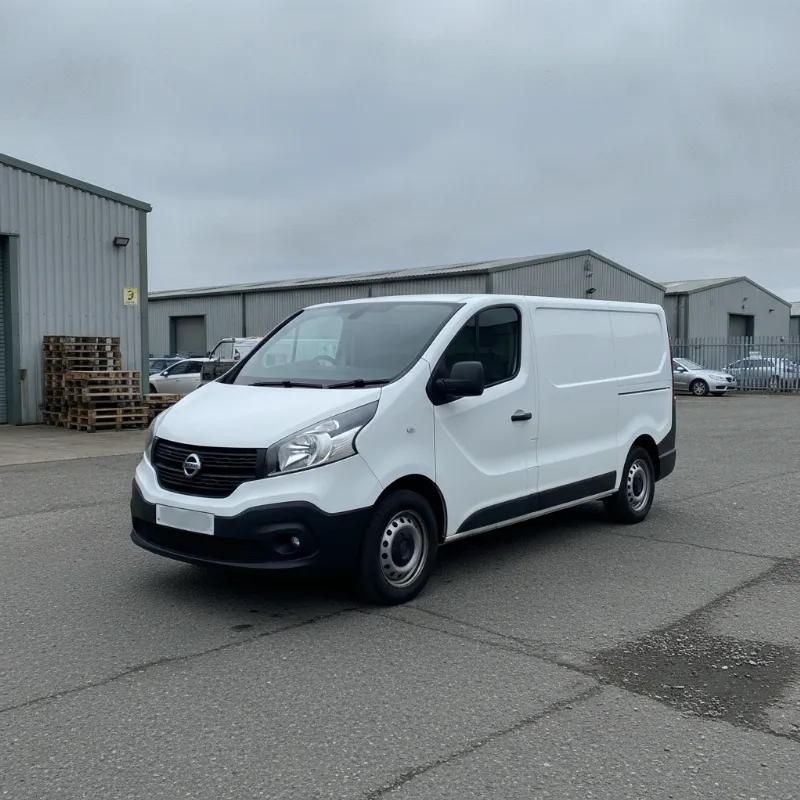
Nissan NV300 Brochure: What's Inside the Official Spec Guide
The Nissan NV300 brochure is the definitive reference for anyone shopping this mid-size panel van, pulling together every trim, engine, dimension and load figure into one document. If you're weighing up an NV300 against a Vauxhall Vivaro, Renault Trafic or Ford Transit Custom, the brochure is where you'll find the hard numbers — kerb weights, load volumes, service intervals and standard equipment lists — rather than the marketing headlines.
Nissan produced the NV300 brochure in several UK editions between 2016 and 2021, with updates each model year covering revised engines, added safety kit and interior refreshes. Inside, you'll typically find a range overview, a body-style breakdown, engine and gearbox tables, dimension diagrams (with loadspace measured to the mm), trim-by-trim equipment lists, colour and wheel options, and a factory options section covering things like parking sensors, sat nav, ply-lining and towbars.
For used buyers, the brochure is arguably even more useful than for new buyers, because it lets you cross-check the exact spec of a van you're viewing against what Nissan originally offered — handy for spotting missing kit, aftermarket additions or a lower trim being sold as a higher one.
Nissan NV300 Range at a Glance
The NV300 sits in Nissan's mid-size van slot, replacing the older Primastar and sharing its underpinnings with the Renault Trafic and Vauxhall Vivaro. That platform-sharing is important context: mechanically, the three vans are near-identical, but the NV300 brochure focuses on Nissan-specific trim levels (Visia, Acenta, Tekna) and Nissan's five-year/100,000-mile warranty positioning.
Body Styles, Lengths and Roof Heights
The UK NV300 brochure covers panel van, crew van, combi (passenger) and platform cab body styles. Panel vans come in two lengths — L1 (short wheelbase, roughly 4.99m long) and L2 (long wheelbase, roughly 5.39m long) — and two roof heights, H1 (standard, around 1.97m) and H2 (high roof, around 2.46m). That gives you four core panel van silhouettes: L1H1, L1H2, L2H1 and L2H2.
Load volumes range from around 5.2 cubic metres in the L1H1 up to 8.6 cubic metres in the L2H2, with an extra 0.5 cubic metres available on models fitted with the load-through bulkhead (which lets you carry items up to 4.15m long by sliding them under the passenger seat). Payloads typically sit between 1,000kg and 1,280kg depending on body style and engine.
Engine Options and Payload Figures
The brochure lists the 1.6-litre dCi twin-turbo diesel across the early years, offered in 95PS, 120PS, 125PS and 145PS outputs. From 2019, Nissan switched to the 2.0-litre dCi diesel in 120PS, 145PS and 170PS forms, meeting Euro 6d-Temp emissions standards. A six-speed manual is standard across the range, with a six-speed DCT automatic offered on the higher-output 2.0 dCi.
Gross vehicle weights are quoted at 2.7 tonnes, 2.9 tonnes and 3.0 tonnes depending on variant, and the brochure sets out braked towing capacities up to 2,000kg. Fuel economy figures — WLTP from 2019 onwards, NEDC before that — are listed for each engine and body combination.
Nissan NV300 Automatic: Brochure Highlights
The automatic NV300 is worth its own section in the brochure because it's a genuinely different driving proposition. Nissan pairs the 2.0 dCi 170PS engine with a six-speed dual-clutch (DCT) gearbox, delivering quicker gearchanges than a traditional torque-converter auto and better fuel economy than you'd expect from a load-lugger of this size.
Brochure highlights for the automatic typically include hill-start assist, cruise control with speed limiter, and a manual-override paddle or gate for when you want to hold a gear on a hill or when towing. It's usually only offered on Tekna trim, meaning you also get climate control, the NissanConnect touchscreen with sat nav, rear parking sensors and often the load-through bulkhead as standard.
Nissan NV300 Crew Cab: Brochure Highlights
The NV300 Crew Van gets a dedicated section in the brochure and is aimed at trades that need to move a team and their tools in a single vehicle. It seats six — three up front, three in the second row — with a folding rear bench that can be tumbled forward to expand the load area when passengers aren't on board.
The brochure sets out the trade-off clearly: fitting the second row of seats reduces load length, but the L2 crew van still offers around 4.0 cubic metres of load space behind the rear bulkhead, plus a payload north of 1,000kg. Standard kit includes a second row of three-point seatbelts, ISOFIX on the outer rear seats and a fixed bulkhead behind row two. It's offered in Acenta and Tekna trims and with the same engine choices as the panel van.
Nissan NV300 Campervan: Conversion Options in the Brochure
Nissan never sold a factory-built NV300 campervan in the UK the way Volkswagen sells the California, but the brochure and Nissan's converter programme do reference approved conversion partners. The NV300 Combi — a windowed, nine-seat version of the van — is the usual starting point for camper conversions because it already has side windows, second and third-row seating, and full trim.
Popular conversions built on the NV300 platform include pop-top roof camper layouts with a rock-and-roll bed, side kitchen pod (sink, hob, fridge) and swivelling cab seats. If you're shopping for a used NV300 camper, the original brochure is useful for confirming the base vehicle's spec — engine, gearbox, trim, options — before the converter got to work.
Nissan e-NV300: The All-Electric Variant Explained
The e-NV300 is the fully electric version of the van, launched in 2021 and covered in its own dedicated brochure. It uses a 50kWh lithium-ion battery paired with a 100kW electric motor, giving an official WLTP range of around 78 miles combined for the panel van — though Nissan quotes closer to 90 miles in mixed use and up to 118 miles in city driving.
The e-NV300 brochure covers charging options (7kW AC as standard, 50kW DC rapid charging optional), payload (up to 1,226kg — impressively close to the diesel), and load volume (identical to the diesel L1H1 at around 5.2 cubic metres, since the battery sits under the floor). It's available in panel van and Combi body styles and comes with an eight-year/100,000-mile battery warranty.
Model Year Differences: 2015, 2016 and 2017 NV300 Brochures
The NV300 name was launched in 2016, so a "2015 NV300 brochure" strictly doesn't exist — you'd be looking at the outgoing Primastar or an early pre-launch document. The 2016 brochure covers the initial UK launch with the 1.6 dCi twin-turbo diesel in four power outputs, Visia and Acenta trims, and the choice of L1/L2 lengths and H1/H2 roofs.
The 2017 brochure added Tekna trim at the top of the range, bringing NissanConnect infotainment, sat nav and climate control as standard. From 2019 onwards, the brochures reflect the switch to the 2.0-litre dCi engine, the addition of the DCT automatic gearbox, WLTP fuel figures and updated driver-assist kit including forward collision warning and lane departure warning. If you're viewing a used NV300, matching it to the correct model-year brochure is the fastest way to confirm what should — and shouldn't — be fitted.
Nissan NV300 vs Nissan Navara NV300: Clearing Up the Confusion
Search engines often muddle the NV300 with the Navara, but they're completely different vehicles. The NV300 is a mid-size front-wheel-drive panel van built on the Renault Trafic platform. The Navara is a body-on-frame, four-wheel-drive pickup truck built on Nissan's own light commercial vehicle chassis and sold with the 2.3 dCi diesel engine.
There is no such thing as a "Navara NV300" — if you've seen the name used together, it's almost certainly a mislabelled listing. If you need a load bay for cargo, look at the NV300 brochure. If you need an open pickup bed, towing capacity of 3.5 tonnes and off-road ability, you want the Navara brochure instead.
How to Download the Nissan NV300 Brochure (PDF)
Because the NV300 was discontinued in the UK in 2021 (replaced by the Renault-Nissan-Mitsubishi Alliance's newer Primastar), the brochure is no longer on the main Nissan configurator. You can still access PDF copies via Nissan's UK press site archive, and via specialist commercial vehicle sites and dealer archives that host historical brochures for reference.
When downloading, check the cover date to make sure you're getting the right model year — a 2018 brochure won't reference the 2.0 dCi engine or the DCT automatic, and a 2020 brochure won't reflect the earliest launch specs. For used buyers, the safest approach is to download the brochure that matches the registration year of the van you're looking at.
Find a Nissan NV300 For Sale in the UK
With production ended, the used market is where the action is for NV300 buyers. Panel vans, crew vans and Combis are all reasonably plentiful on the used market, with the L2H1 panel van in Acenta trim being the most common configuration. Automatic examples and Tekna-trim vans command a premium, and the e-NV300 remains relatively rare.
Before you buy, use the brochure to check the vehicle's original spec against what the seller is advertising, confirm the service history matches the recommended intervals, and make sure any conversions (crew, camper, tipper) were done to a professional standard. That way, whether you're buying from a franchised dealer, an independent van specialist or privately, you'll know exactly what you're getting.
FAQs
Where can I find the Nissan NV300 brochure and what does it cover?
The Nissan NV300 brochure is available as a PDF from Nissan's UK press archive and from specialist commercial vehicle sites that host historical brochures. It covers the full range — panel van, crew van, Combi and platform cab — in L1 and L2 lengths and H1 and H2 roof heights, along with engine options (1.6 dCi twin-turbo diesel up to 2018, 2.0 dCi diesel from 2019, and the all-electric e-NV300), trim levels (Visia, Acenta, Tekna), dimensions, payloads, load volumes and factory options.
What's the difference between the Nissan NV300 and the Renault Trafic?
Mechanically, very little — the NV300 shares its platform, engines, gearboxes and body shells with the Renault Trafic and Vauxhall Vivaro, all built at the same Renault factory. The differences are the badge, some minor trim details, Nissan-specific trim naming (Visia/Acenta/Tekna) and Nissan's five-year/100,000-mile warranty, which was longer than Renault's standard cover at the time.
Is the Nissan NV300 still in production?
No. Nissan withdrew the NV300 from the UK market in 2021 and replaced it with the new Primastar, which is again based on the Renault Trafic platform. That means new NV300s are no longer available, but there's a healthy used market covering panel vans, crew vans, Combis and the e-NV300 electric variant.
What engine and payload does the Nissan NV300 offer?
Early NV300s (2016–2018) used the 1.6-litre dCi twin-turbo diesel in 95PS, 120PS, 125PS or 145PS. From 2019 Nissan switched to the 2.0-litre dCi in 120PS, 145PS and 170PS, with a six-speed DCT automatic offered on the top output. Payloads range from around 1,000kg up to 1,280kg depending on body style, and gross vehicle weights are quoted at 2.7, 2.9 or 3.0 tonnes.
Does the NV300 brochure include the electric e-NV300?
The e-NV300 has its own dedicated brochure rather than sitting inside the main diesel NV300 brochure. It covers the 50kWh battery, 100kW motor, WLTP range of around 78 miles combined, 7kW AC and optional 50kW DC rapid charging, payloads up to 1,226kg and the eight-year/100,000-mile battery warranty.