Nissan Navara NV300: A Complete Guide to Nissan's Mid-Size Van
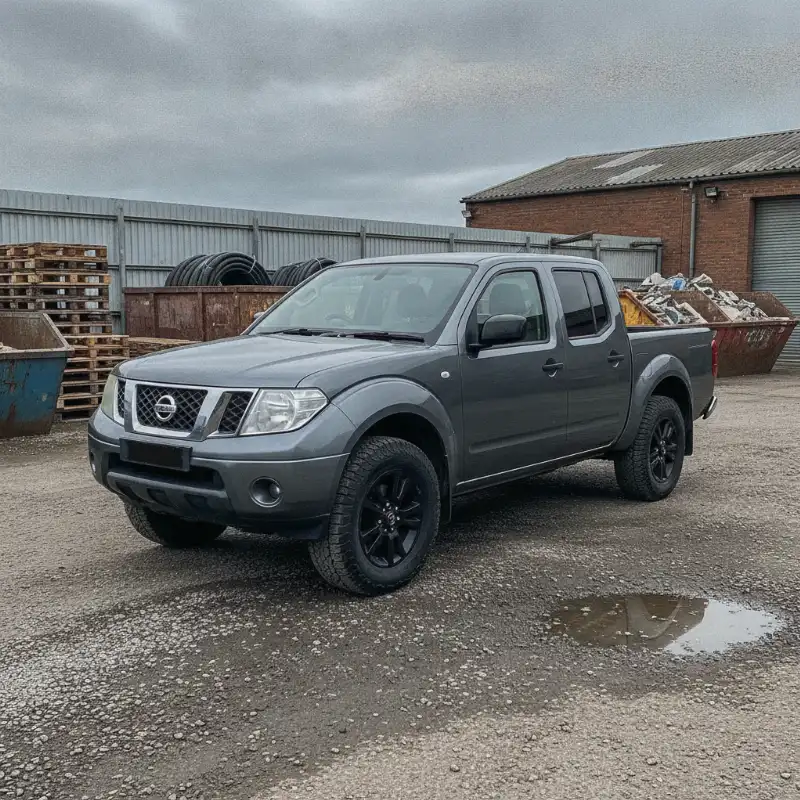
Nissan Navara NV300: Clearing Up the Name Confusion
If you've been searching for a "Nissan Navara NV300", you're not alone — but the name itself is actually a mash-up of two very different Nissan commercial vehicles. Understanding the difference is the first step to finding the right van (or pickup) for your business, because the two models sit in completely different segments and serve very different working lives.
Why People Search 'Nissan Navara NV300'
The confusion is understandable. Nissan sells the Navara as its long-running pickup truck, and it sells the NV300 as a mid-size panel van. Both names appear on Nissan's UK commercial vehicle line-up, and both are workhorses aimed at tradespeople, so it's easy to see how the two get bundled together in a single search. Some buyers assume the NV300 is a van version of the Navara, while others think it might be a special trim or edition. Neither is the case — the Navara and the NV300 are entirely separate vehicles built on different platforms for different jobs.
Navara vs NV300: Pickup vs Panel Van
The Nissan Navara is a body-on-frame pickup truck with an open load bed, four-wheel drive availability and towing credentials aimed at farmers, builders and fleet users who need to haul heavy trailers or venture off tarmac. The NV300, by contrast, is a car-derived mid-size panel van with a fully enclosed cargo area, sliding side doors and rear barn doors — designed for couriers, tradespeople and mobile businesses who need weather-proof, lockable load space. If you need a load bed, you want the Navara. If you need a secure cargo box on wheels, the NV300 is the vehicle you're really looking for.
Nissan NV300 Overview: History and Model Years
The NV300 is Nissan's mid-size van offering, sitting between the smaller NV200 and the larger NV400 in the range. It shares its underpinnings with the Renault Trafic, Vauxhall Vivaro and, later, the Fiat Talento — all products of a long-standing alliance between the manufacturers that pooled development costs on a single, well-proven van platform.
From NV200 to the 2016 Nissan NV300 Van Launch
Nissan launched the NV300 in the UK in 2016, replacing the ageing Primastar in the mid-size segment. The 2016 arrival brought a modern cab, a more efficient dCi diesel engine range, and a choice of two lengths and two roof heights to suit different trades. It slotted neatly above the compact NV200 city van and gave Nissan customers a proper Transit Custom rival for the first time in years. The NV300 continued in the range until Nissan rationalised its light commercial vehicle line-up and eventually replaced it with the current Primastar nameplate.
Is There a 2015 Nissan NV300 or Nissan NV300 2011?
No — despite the searches you'll see online, there was no 2015 or 2011 Nissan NV300. The model didn't exist before 2016. If you're looking at a van from those earlier years, you're almost certainly looking at a Nissan Primastar (the NV300's predecessor) or possibly the smaller NV200, which had been on sale since 2009. It's worth checking the V5C and the VIN carefully when browsing the used market, as some sellers list older Primastars under the NV300 badge by mistake.
Nissan NV300 Engine, Payload and Dimensions
The NV300 was sold in the UK with a 1.6-litre dCi turbodiesel engine, offered in a range of power outputs from around 95PS up to 145PS in the twin-turbo versions. It's a proven Renault-Nissan unit that returned strong real-world fuel economy for a van of this size and remained Euro 6 compliant throughout its production run.
Buyers could choose between two body lengths — L1 at around 4.99 metres and L2 at about 5.4 metres — and two roof heights (H1 standard and H2 high roof), giving load volumes from roughly 5.2 cubic metres up to 8.6 cubic metres depending on configuration. Payloads typically ranged from around 1,000kg to 1,280kg, and the load bay was wide enough to swallow a Euro pallet loaded sideways. Gross vehicle weights sat between 2.7 and 3.0 tonnes, keeping the NV300 firmly within standard car-licence territory for drivers who passed their test after 1997.
Nissan NV300 Automatic: EDC Gearbox Explained
A six-speed manual gearbox was standard across the NV300 range, but Nissan also offered an EDC (Efficient Dual Clutch) six-speed automatic on the higher-powered dCi 145 twin-turbo variants. The EDC is a proper twin-clutch transmission rather than a torque-converter automatic, which means it shifts quickly and cleanly and delivers fuel economy close to the manual version.
For drivers who spend all day in stop-start urban traffic — parcel couriers, multi-drop delivery drivers, mobile mechanics working in city centres — the NV300 automatic makes a real difference to fatigue and left-leg comfort. Just be aware that automatic examples are less common on the used market and tend to command a small price premium as a result.
Nissan NV300 Crew Cab: The 6-Seat Work Van Option
Alongside the standard panel van, Nissan offered the NV300 in Crew Cab form, adding a second row of seats behind the driver to carry up to six people plus tools and materials in the rear cargo area. It's the classic "site van" configuration — ideal for construction teams, landscapers, scaffolders and installation crews who need to move a whole workforce and their kit to and from the job in a single vehicle.
The trade-off is load space: the extra bench eats into the rear cargo area, so the Crew Cab is best suited to teams who prioritise passenger capacity over maximum payload volume. You still get a bulkhead behind the second row and, on longer L2 bodies, plenty of room left over for hand tools, ladders on the roof rack and daily consumables.
Nissan NV300 Campervan: Conversion Potential and Popular Layouts
The NV300 has become a genuinely popular base for camper conversions in the UK, largely because it shares its platform with the Renault Trafic and Vauxhall Vivaro — both established favourites in the leisure market. That means there's a huge aftermarket of pop-top roofs, rock-and-roll beds, kitchen pods and elevating roof systems already engineered to fit the shell.
Most NV300 camper conversions follow the traditional VW-Transporter-style layout: two front cab seats, a side kitchen unit with sink, hob and fridge, a rock-and-roll bench that folds into a double bed, and an optional pop-top roof to sleep two more upstairs. The L2 long-wheelbase version gives you more room for a fixed rear bed or a proper washroom cubicle. Because the NV300 tends to be cheaper to buy used than a comparable VW T6, it's an increasingly popular starting point for self-builders and small conversion firms alike.
Nissan e-NV300: The Electric Alternative
Nissan launched the e-NV300 as a fully electric version of the mid-size van, sharing its running gear with the Renault Trafic E-Tech and the electric versions of the Vivaro. It uses a battery pack of around 52kWh usable capacity, giving a WLTP range in the region of 90 to 100 miles depending on load, weather and driving style — realistic for urban delivery routes but tight for regional multi-drop work.
DC rapid charging up to 50kW allows a top-up to 80% in under an hour, and the electric drivetrain makes the e-NV300 exempt from the London ULEZ and the growing number of clean air zones across UK cities. For businesses running fixed daily routes from a depot with overnight charging, the e-NV300 can make a strong operational case, and it qualifies for the government's plug-in van grant where eligible at the time of purchase.
Buying a Nissan NV300: New, Used and Finance Options
The NV300 nameplate has now been retired in favour of the reborn Nissan Primastar, so brand-new NV300s are no longer available from Nissan dealers — but the used market is well stocked with examples from the 2016 to 2021 production run. Prices vary widely depending on mileage, specification, body length and whether the van has been fitted out with racking, ply-lining or a tow bar. Ex-fleet examples from parcel operators tend to be well maintained but heavily used, while owner-driver vans often show lower mileage and better cosmetic condition.
When it comes to paying for one, most business buyers spread the cost using hire purchase, finance lease or contract hire rather than paying outright. Hire purchase lets you own the van at the end of the term and is straightforward for sole traders and limited companies alike. Finance lease and contract hire keep monthly payments lower by treating the vehicle as a rental, which can help cash flow and simplify VAT reclaim for VAT-registered businesses. Whichever route you take, it's worth getting a proper HPI check, a service history review and — ideally — an independent inspection before committing, particularly on higher-mileage ex-fleet vans where clutches, DPFs and turbochargers all deserve a close look.
FAQs
Is the Nissan Navara the same as the Nissan NV300?
No. The Nissan Navara is a pickup truck with an open load bed, while the NV300 is a mid-size panel van with an enclosed cargo area. They're entirely separate vehicles built on different platforms — the search term 'Nissan Navara NV300' combines two different Nissan commercial models.
What years was the Nissan NV300 sold in the UK?
The NV300 launched in the UK in 2016 and remained on sale until Nissan replaced it with the current Primastar. There is no 2015 or 2011 NV300 — vans from those years wearing a mid-size Nissan badge will be Primastars or NV200s.
Is the Nissan NV300 the same as the Renault Trafic and Vauxhall Vivaro?
Mechanically, yes. The NV300 shares its platform, engines, gearboxes and body shell with the Renault Trafic and the previous-generation Vauxhall Vivaro, thanks to a joint development programme between the manufacturers. Trim, badging and dealer network are the main differences.
How much can a Nissan NV300 carry?
Depending on the variant, the NV300 offers a load volume from around 5.2 to 8.6 cubic metres and a payload between roughly 1,000kg and 1,280kg. The long-wheelbase L2 with the high H2 roof gives the most cargo space, and the load bay is wide enough for a Euro pallet loaded sideways.
Does the Nissan NV300 come as an automatic?
Yes. Nissan offered a six-speed EDC (Efficient Dual Clutch) automatic gearbox on the higher-powered dCi 145 twin-turbo versions. Automatic examples are less common on the used market but are worth seeking out for drivers who spend most of their day in stop-start urban traffic.