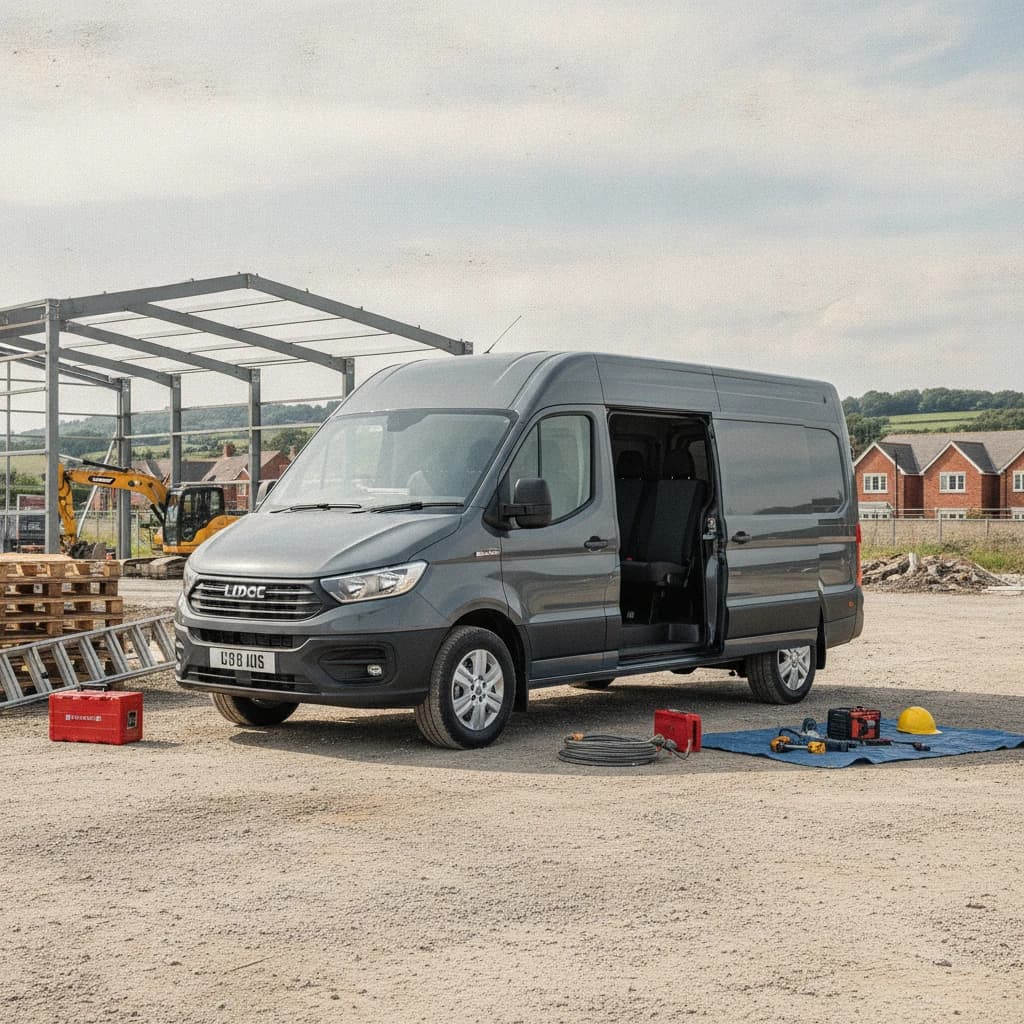
LDV Maxus Crew Van Review: Practicality, Payload and Value
LDV Maxus Crew Van Review: At a Glance
The LDV Maxus crew van, sold in the UK under the Maxus brand (formerly LDV), sits in an interesting corner of the light commercial market. It offers a full six-seat cab, a decent load area behind the second row and a price tag that undercuts most European rivals by a noticeable margin. For trades and site teams who need to move people and kit together in one vehicle, that mix of space and value is exactly the point.
On paper it competes with the crew-cab versions of the Ford Transit Custom, Vauxhall Vivaro and Volkswagen Transporter, but it plays the value card hard. You get a modern-looking cab, a workmanlike diesel drivetrain (with the fully electric eDeliver variants offered alongside), and a five-year manufacturer warranty as standard. Whether that's enough to tempt you away from the established names depends on what you actually do with your van day to day.
Who Is the LDV Maxus Crew Van For?
The Maxus crew van is aimed squarely at operators who need to carry a team plus their tools without stepping up to a full minibus or running two vehicles. It's a practical choice for small firms watching cash flow, fleets adding a spare crew vehicle, and self-employed tradespeople who occasionally need to bring apprentices, labourers or a second pair of hands along to site.
Because pricing is competitive, it's also popular with buyers who would otherwise be looking at a used Transit or Vivaro. The logic is simple: for similar money to a three or four-year-old established crew van, you can put a brand-new Maxus on the drive with a full warranty behind it.
Typical Trades and Use Cases
You'll typically see the Maxus crew van in the hands of:
- Groundworkers, landscapers and fencing teams shuttling three or four staff to remote sites with tools in the back.
- Scaffolders and roofers who need seating for a full crew plus space for hand tools, harnesses and small components.
- Electrical, plumbing and HVAC contractors running a foreman plus apprentices between multiple jobs a day.
- Facilities and grounds maintenance teams at schools, councils and housing associations.
- Event, production and installation crews who move people and cases together.
If your daily work is solo driver plus a full load of stock, a standard panel van will suit you better. The crew van's second row eats into load length, so it's really only worth choosing if you regularly carry more than two people.
Cab, Seating and Interior Practicality
Step inside and the Maxus cab feels more modern than its price would suggest. There's a large touchscreen infotainment system on higher trims, digital or part-digital dials, and a dashboard layout that borrows more than a few cues from passenger cars. Materials are hard-wearing plastics rather than soft-touch finishes, which is exactly what you want in a working vehicle.
Driving position is high and commanding, visibility forwards and to the sides is good, and the steering wheel adjusts for both reach and rake on most specifications. Air conditioning, cruise control, rear parking sensors and a reversing camera are typically included as standard, which is a genuinely strong equipment list at this price point.
Six-Seat Layout and Storage
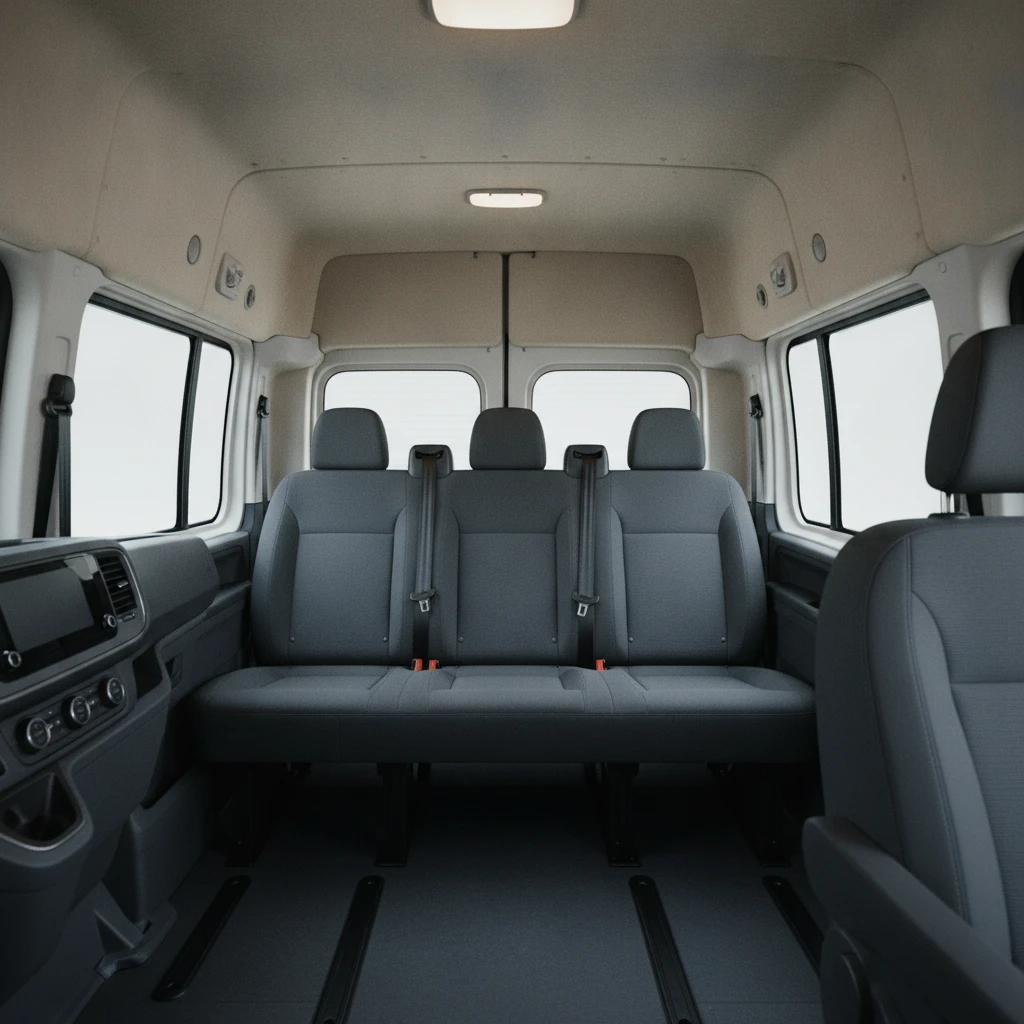
The six-seat layout splits three across the front (driver plus a two-person bench, or two individual seats depending on spec) and a three-person bench in the second row. Legroom in the back is adequate rather than generous — tall passengers on long journeys will feel it, but for site-to-site trips it's perfectly workable. Three-point belts and headrests are provided for all rear occupants.
Cabin storage is a strong point. You get a deep glovebox, overhead shelf, door bins big enough for a flask and A4 folders, cupholders front and rear, and usually a fold-down centre section on the front bench that doubles as a worktop or laptop stand. USB charging points front and rear keep phones and tablets topped up through the day.
Load Area, Payload and Dimensions
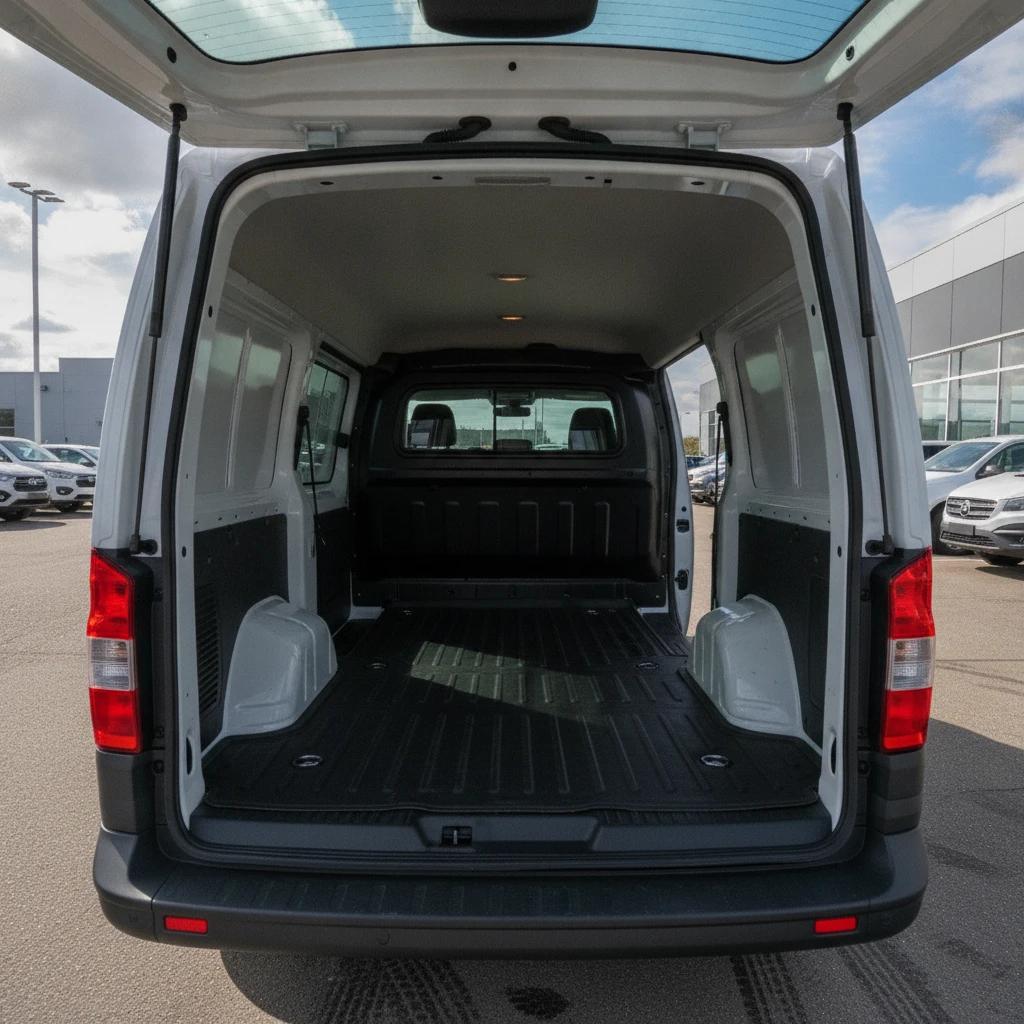
Behind the second-row bulkhead you get a sealed, ply-lined load bay accessed by twin rear doors and a nearside sliding side door. On the standard wheelbase you're looking at roughly 3.5 cubic metres of load volume with a load length of around 1.4 metres at floor level — enough for a stack of tool boxes, materials, cable drums or a couple of Euro pallets loaded through the back. The long-wheelbase version stretches things usefully further for teams carrying longer lengths of timber, pipe or trunking.
Payload is competitive for the class, typically in the region of 800–1,000kg depending on wheelbase, roof height and drivetrain — enough for most trades but worth checking carefully against your actual daily loads if you carry heavy materials like tiles, plasterboard or aggregates. Gross vehicle weight sits under 3.5 tonnes so any category B licence holder can drive it. Load area lighting, multiple tie-down points and a full steel bulkhead behind the second row come as standard.
Engine, Performance and Running Costs
UK Maxus crew vans are offered with a 2.0-litre turbodiesel producing around 148bhp, paired with either a six-speed manual or an eight-speed automatic gearbox. It's not the smoothest or quietest diesel in the class — the Transit Custom and Transporter both feel more refined — but it pulls willingly from low revs and handles motorway cruising without fuss.
Real-world fuel economy typically lands in the high 30s to low 40s mpg for a loaded crew van driven sensibly, which is competitive but not class-leading. Service intervals are sensible, and because Maxus uses widely available consumables, routine maintenance costs at an independent garage are reasonable. The fully electric eDeliver crew variants are also worth a look if your work is predominantly urban and you can charge overnight — running costs per mile drop dramatically, and you sidestep clean air zone charges entirely.
Reliability, Warranty and Ownership
Reliability is the question most buyers ask first, and the honest answer is that Maxus has come a long way. The current generation is a very different vehicle from the older LDV models some readers might remember, built by SAIC in China with much tighter quality control and modern componentry. Owner feedback is generally positive on the drivetrain and body, with most reported issues centring on minor electrical niggles and infotainment glitches — irritating but rarely off-road.
The five-year, 100,000-mile manufacturer warranty is a genuine reassurance and matches or beats most of the European competition. Dealer coverage in the UK has expanded significantly in recent years, though it's still worth checking how close your nearest Maxus service point is before you buy, especially if you rely on the van every working day. Residual values remain the weakest area — Maxus vans depreciate faster than a Transit or Transporter, which is worth factoring into your whole-life cost calculation.
LDV Maxus Crew Van vs Rivals
Against the Ford Transit Custom Double Cab-in-Van, the Maxus loses on refinement, driving dynamics and residuals but wins clearly on purchase price and standard equipment. The Transit feels more polished, but you're paying a significant premium for that polish.
Compared to the Vauxhall Vivaro Crew and Peugeot Expert Crew, the Maxus offers a bit more cabin space and a longer standard warranty, but the Stellantis vans feel car-like to drive and have a stronger dealer network. The Volkswagen Transporter Kombi remains the benchmark for build quality and image but costs considerably more new. If badge, resale and refinement matter to your business, the European options make sense. If new-price value, warranty and equipment level matter more, the Maxus makes a strong case.
Verdict: Is the Maxus Crew Van Worth Buying?

The LDV Maxus crew van is a genuinely credible option for UK trades who want a six-seat working vehicle without paying premium money. It's practical, well-equipped, backed by a strong warranty, and does the fundamentals of a crew van — carrying people and tools between jobs — perfectly well. It's not as refined or as desirable second-hand as a Transit Custom or Transporter, but it costs meaningfully less to buy in the first place.
For an owner-driver who plans to keep the van for its full warranty period and run it into the ground, it's an easy recommendation. For a fleet buyer focused on three-year residuals and total cost of ownership, the maths is tighter and worth running carefully. Either way, it deserves to be on your shortlist rather than dismissed on badge alone.
Buying an LDV Maxus Crew Van in the UK
New Maxus crew vans are sold through the growing UK dealer network, with stock generally available in popular specifications without long factory lead times. Used examples are increasingly common on the forecourt, and because depreciation is steeper than the European rivals, a two or three-year-old crew van can represent particularly strong value if you're happy to take on the remainder of the manufacturer warranty.
Whichever route you take, inspect the load area for signs of hard use, check that all six seatbelts retract cleanly, confirm the infotainment and reversing camera work correctly, and ask to see a full service history. If you're financing the van, get quotes on both hire purchase and contract hire so you can compare monthly costs against your projected usage — a crew van that spends most of its life fully loaded with staff and kit tends to work harder than a solo-driver panel van, and the right funding structure can make a real difference to your bottom line.
FAQs
Is the LDV Maxus crew van any good for UK trades?
Yes — for most small firms and trades teams it's a credible six-seat work van. It offers a modern cab, good standard equipment, a competitive payload and a five-year manufacturer warranty, all at a price that undercuts European rivals like the Ford Transit Custom and VW Transporter. It's not as refined to drive and depreciates faster, but as a working tool it does the job well.
How many seats does the LDV Maxus crew van have?
The Maxus crew van comes with six seats — typically three across the front (driver plus a two-person passenger bench or twin seats depending on spec) and a three-person bench in the second row, all with three-point seatbelts and headrests.
What is the payload of an LDV Maxus crew van?
Payload is typically in the region of 800–1,000kg depending on wheelbase, roof height and whether you choose the diesel or electric drivetrain. It's competitive for the class, but if you regularly carry heavy materials like tiles or plasterboard it's worth checking the exact plated payload on the specific van you're looking at.
How reliable is the Maxus crew van compared to a Ford Transit?
The current Maxus is a much-improved vehicle over older LDV models, built by SAIC with modern components, and owner feedback is generally positive. Most reported issues are minor electrical or infotainment niggles rather than major mechanical problems. The Ford Transit still has the edge on long-term reliability data and residual values, but the Maxus's five-year warranty gives strong peace of mind for the ownership period.
Can I drive an LDV Maxus crew van on a normal car licence?
Yes. The Maxus crew van has a gross vehicle weight under 3.5 tonnes, so anyone with a standard category B car licence can drive it — no additional entitlement needed.