How to Remove the Speed Limiter on a Citroen Dispatch: UK Guide
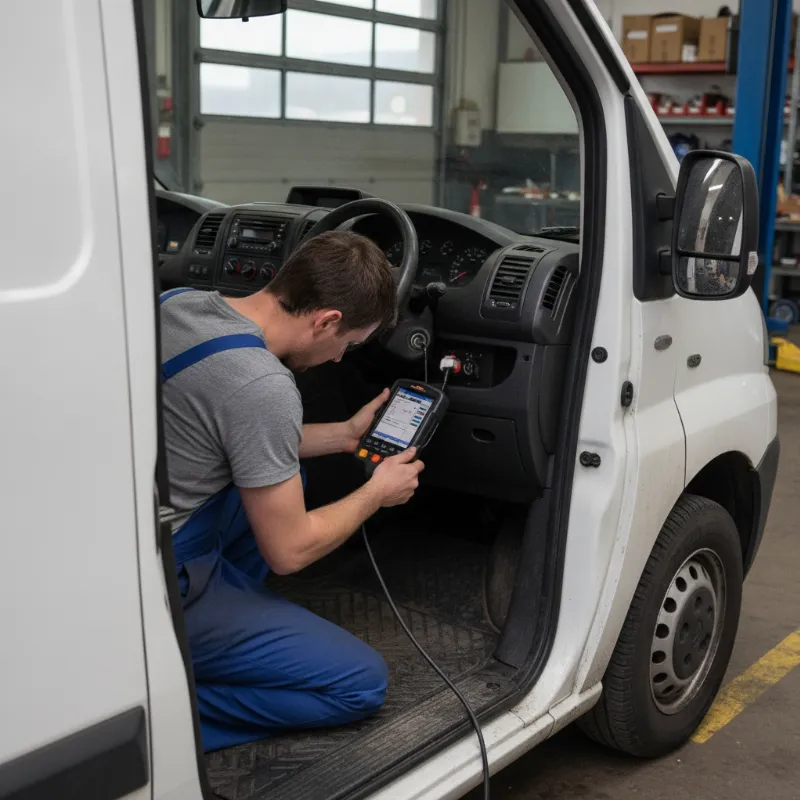
Why does the Citroen Dispatch have a speed limiter?
The Citroen Dispatch, like most modern light commercial vehicles sold in the UK, leaves the factory with an electronic speed limiter built into the engine management system. Citroen sets these limits for a mixture of safety, efficiency and regulatory reasons — vans are heavier than cars, often carry loads that shift their centre of gravity, and are driven long distances by drivers who may be fatigued or under time pressure. Capping the top speed helps reduce accident severity, improves fuel economy and keeps emissions within the levels the vehicle was type-approved against.
On top of the manufacturer's own settings, many Dispatches sold into fleets, courier operators or hire companies have an additional, tighter limiter fitted after purchase. If you have bought a used Dispatch that seems to run out of puff at 62mph, 68mph or 70mph, there's a good chance a previous owner asked for that restriction to be installed rather than it being a Citroen factory setting.
Is it legal to remove the speed limiter on a Citroen Dispatch in the UK?
In principle, a standard Citroen Dispatch panel van under 3.5 tonnes is not legally required to have a speed limiter fitted in the UK. Mandatory speed limiter regulations apply to certain larger goods vehicles, buses and coaches — not to typical medium-sized vans like the Dispatch. That means, on the face of it, removing or raising a voluntary limiter is not itself against the law.
However, "not illegal" is not the same as "no consequences". You still have to obey the national speed limits for vans, which in England and Wales are lower than for cars on single and dual carriageways (usually 50mph and 60mph respectively). Removing a limiter does not give you permission to exceed those limits, and speeding penalties, points and disqualification apply exactly as they would in any other vehicle.
Insurance, MOT and warranty implications
Insurance is where drivers most often trip themselves up. Any modification to the engine management system, including remapping or removing a speed limiter, is a notifiable change. If you don't declare it, your insurer can void the policy or refuse a claim — even if the modification had nothing to do with the incident. Declaring it may push the premium up or, in some cases, mean the insurer won't cover the van at all.
The MOT test itself doesn't measure top speed, so removing a voluntary limiter won't cause an MOT failure in its own right. That said, if the work has affected the emissions performance of the engine, you may struggle to pass the emissions element of the test. And if your Dispatch is still under Citroen's manufacturer warranty, any unauthorised change to the ECU will almost certainly invalidate cover on the engine, gearbox and related drivetrain components.
How the speed limiter works on the Citroen Dispatch
The Dispatch uses an electronic engine control unit (ECU) that constantly monitors road speed via the vehicle's wheel speed sensors and gearbox output. Once the van reaches its programmed maximum, the ECU cuts fuel delivery or reduces turbo boost to prevent the vehicle accelerating further. There is no mechanical throttle stop or physical restrictor to remove — everything happens in software.
This is why any genuine change to the top speed has to be done by reprogramming the ECU or by installing a piggyback device that overrides the signals the ECU is acting on. Simply disconnecting a cable or unplugging a sensor is not a solution, and will usually trigger warning lights, limp-home mode or an MOT failure.
Factory-set limits vs fleet-installed limiters
It is worth working out which type of limiter you are dealing with before you spend any money. A factory Citroen limiter is typically set high — around 90 to 100mph depending on model and engine — and most owners will never encounter it in normal driving. A fleet-installed limiter, on the other hand, is often set at 56, 62, 68 or 70mph and is very obvious in day-to-day use, especially on motorways or when overtaking.
If your Dispatch struggles to keep up with 70mph motorway traffic, you almost certainly have a fleet limiter rather than a factory one. Fleet limiters are often easier and cheaper to remove because they can sometimes be reversed by the specialist or dealer who originally fitted them, restoring the van to its standard Citroen configuration.
Options for adjusting or removing the speed limiter
There are broadly two routes: go through a Citroen main dealer, or use an independent ECU specialist. Which is right for you depends on the age of the van, whether it is still under warranty, and what exactly has been done to the ECU in the past.
Speaking to a Citroen main dealer
A Citroen main dealer is the most conservative option. If the van has an aftermarket fleet limiter and paperwork exists showing who fitted it, the dealer may be able to remove that configuration and return the ECU to standard factory settings. Dealers will generally not raise the limiter above Citroen's own factory maximum, and they will not touch the ECU in ways that affect emissions compliance.
The upside is that any work is carried out by trained technicians, uses Citroen diagnostic equipment, and won't jeopardise your relationship with the manufacturer for future servicing. It's often the sensible first phone call, even if you eventually decide to use somebody else.
Independent ECU remapping specialists
Independent remapping specialists can do more than a franchised dealer will — including removing aftermarket limiters, raising top-speed thresholds and, if requested, adjusting power and torque delivery at the same time. A reputable specialist will read your existing ECU map first, keep a backup, and be able to reverse the changes if you sell the van or need to hand it back on a lease.
Choose carefully. Look for a specialist with specific experience of the Citroen Dispatch (and the closely related Peugeot Expert, Vauxhall Vivaro and Toyota Proace, which share the same platform), ask about their insurance and guarantees, and get written confirmation of exactly what has been changed. You'll need that paperwork for your own insurer.
Should you remove the limiter on a used Citroen Dispatch?
For most private and small business owners, the honest answer is: probably not, unless the limiter is set unusually low. If your van already reaches 70mph comfortably, removing the limiter offers almost no real-world benefit — you can't legally go faster on a UK road anyway, and you'll add cost, insurance complications and potential warranty issues in exchange for very little.
Where it does make sense is when a previous owner has left a restrictive fleet limiter in place — say, capping the van at 56 or 62mph — and that speed genuinely makes the vehicle unsafe or impractical for your use, such as regular motorway journeys with fast-moving traffic. In that scenario, restoring the Dispatch to its Citroen factory setting is a reasonable step, provided you declare it to your insurer.
Alternatives: buying a Dispatch without a restrictive limiter
If you're still shopping around, the simplest option of all is to buy a Citroen Dispatch that hasn't had a fleet limiter fitted in the first place. Ex-fleet vans from national couriers and utility companies are often the ones with the tightest restrictions, while vans from smaller businesses, sole traders or private owners tend to be left on the standard factory settings.
When viewing a used Dispatch, ask the seller directly whether a speed limiter has been fitted or altered, and take the van on a test drive that includes a dual carriageway or motorway slip road so you can feel how it accelerates through 60 to 70mph. A reputable dealer should be upfront about any restrictions and, in many cases, will be happy to arrange removal or adjustment as part of the sale — saving you the hassle of sorting it out yourself afterwards.
FAQs
Can you remove or adjust the speed limiter on a Citroen Dispatch, and is it legal to do so in the UK?
Yes, the speed limiter on a Citroen Dispatch can be removed or adjusted, either by a Citroen main dealer (usually only back to the factory setting) or by an independent ECU remapping specialist (who can go further). For a standard Dispatch under 3.5 tonnes, there is no UK law requiring a speed limiter to be fitted, so removing a voluntary or fleet-installed limiter is not illegal in itself. However, you must still obey UK van speed limits, declare the modification to your insurer, and be aware that any ECU changes may invalidate your manufacturer warranty.
How much does it cost to remove the speed limiter on a Citroen Dispatch?
Costs vary depending on who does the work and what type of limiter is fitted. Reversing a known fleet-installed limiter through the original supplier or a Citroen dealer is often the cheapest option. Independent ECU remaps that remove or raise the limit typically cost more, especially if combined with other tuning changes. Always get a written quote that specifies exactly what will be altered and whether the original map is backed up.
Will removing the speed limiter affect my Citroen Dispatch's fuel economy?
Simply removing a limiter doesn't automatically change fuel economy — the van will use the same amount of fuel at any given speed as it did before. However, if you then routinely drive faster than you used to, or if the ECU remap also alters fuel and boost settings, you will generally see higher fuel consumption. Driving at 70mph rather than 60mph can noticeably increase diesel use over long motorway journeys.
Do I have to tell my insurance company if I remove the speed limiter?
Yes. Any change to the engine management system or ECU is a notifiable modification. Failing to declare it can invalidate your policy and lead to refused claims, even if the modification isn't related to an accident. Contact your insurer before the work is carried out to check whether they will still cover the van and what the impact on your premium will be.
Does removing the speed limiter increase the Citroen Dispatch's top speed a lot?
It depends on what limiter is in place. Removing a low fleet limiter set at 56 or 62mph can make a big practical difference, allowing the van to reach its natural Citroen factory maximum of around 90 to 100mph depending on engine. Removing the factory limit itself gives only a modest gain, because the Dispatch's aerodynamics, gearing and engine output become the real limiting factors long before any dangerous speed.