Buying Refrigerated Vans on Auto Trader: What to Check Before You Commit
Why buyers search Auto Trader for refrigerated vans
Auto Trader is one of the first places most UK buyers head when they start looking for a refrigerated van. It aggregates listings from thousands of dealers and private sellers, so at any given time you can compare hundreds of fridge vans side by side — from compact car-derived chillers up to 3.5t Luton freezers. For a business owner who needs a working vehicle quickly, that breadth is genuinely useful: you get a fast read on the market, average asking prices, and which models are turning up most often.
That said, a refrigerated van is not a normal used van purchase. You are buying two things at once — a base vehicle and a refrigeration conversion — and the listings on Auto Trader vary wildly in how much detail they give about the fridge side of the equation. Some sellers are refrigerated van specialists who understand exactly what they are selling. Others are general used van traders who took the vehicle in part-exchange and are simply passing it on. Knowing the difference before you commit deposit money is essential.
What to check before buying a refrigerated van online
Before you travel to view a van, or certainly before you pay anything, you want clear answers to a handful of specific questions. A good seller will provide most of this information up front; a hesitant seller is a warning sign in itself.
Fridge unit make, age and service history
The refrigeration unit is often worth several thousand pounds on its own, and its condition matters more than the age of the van it is fitted to. Ask which manufacturer built it — GAH, Hubbard, Carrier and Thermo King are the names you will see most often in the UK — and when it was last serviced. A fridge unit that has been serviced annually by an approved engineer is a very different proposition to one with no paperwork. Compressor hours, if the unit records them, tell you far more about wear than the van's mileage does.
Chill vs freezer temperature ratings
Not every refrigerated van can do every job. Chill-spec conversions are typically designed to hold around 0°C to 4°C for products like dairy, sandwiches and fresh meat. Freezer-spec vans hold down to –18°C or below and need thicker insulation, stronger doors and a more powerful fridge unit. Buying a chill van when your business needs frozen distribution is an expensive mistake to unwind, so confirm the operating temperature range in writing before you buy.
Insulation condition and GRP lining
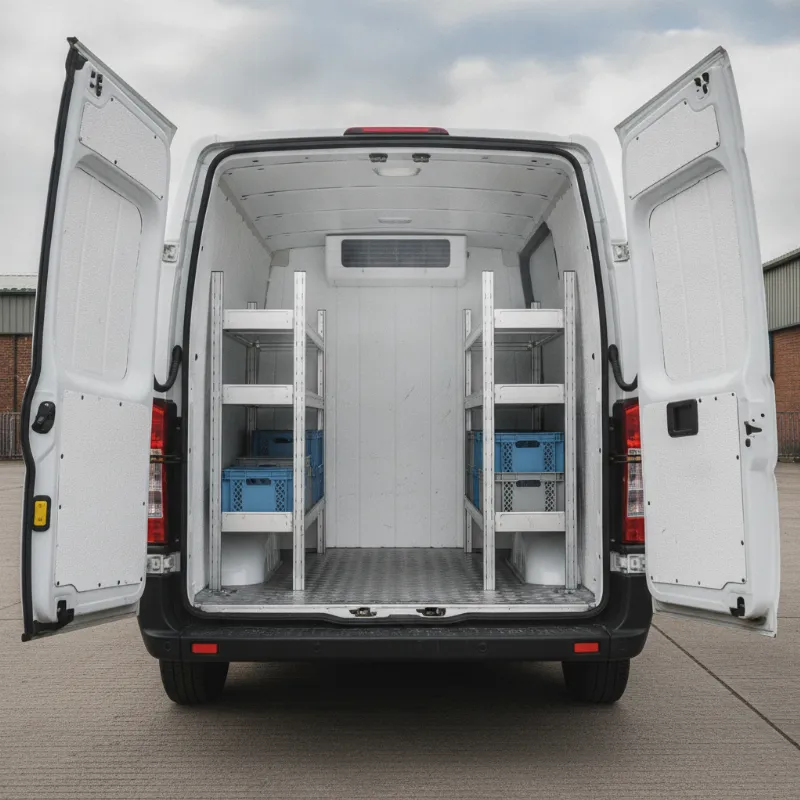
The insulated body is the part that quietly deteriorates on older refrigerated vans. Check the GRP (glass-reinforced plastic) lining inside the load area for cracks, delamination, dark staining or soft spots — these all point to water ingress into the foam insulation, which kills thermal performance. Look at the door seals, the floor-to-wall joints and around any bulkheads. A tatty-looking load area is not just cosmetic; it usually means the fridge unit is working harder than it should to hold temperature, which shortens its life.
MOT, mileage and previous use
Treat the base vehicle checks the same as you would for any used van: full MOT history, service book, cambelt records where relevant, and a clear V5. Previous use matters too. Ex-supermarket and ex-national-fleet vans often have very high mileage but excellent maintenance records, while ex-owner-operator vans may have lower miles but patchier paperwork. Neither is automatically better — you just need to know what you are buying.
Auto Trader vs buying direct from a specialist dealer
Auto Trader is a shop window, not a seller. The vans you see listed there are being sold by third parties, and the depth of expertise varies enormously. A specialist refrigerated van dealer will typically prepare each vehicle properly — fridge unit serviced, temperatures tested, seals replaced where needed, warranty attached — and will be able to answer technical questions on the spot. A general used van dealer often can't, because refrigeration isn't their core business.
Buying direct from a specialist also tends to open up options you don't get on a marketplace listing: swapping the fridge unit for a newer one, adding standby electric so the van can hold temperature overnight without running the engine, or fitting a moveable bulkhead for dual-temperature work. Those conversions are difficult to arrange through a middleman. The Auto Trader price may look sharp on paper, but factor in preparation, warranty and after-sales support before deciding where the real value lies.
Common refrigerated van models to look out for
Certain base vehicles dominate the UK refrigerated van market and for good reason — parts availability, payload and conversion suitability are all proven. The Ford Transit Custom and full-size Transit are the most common mid and large fridge vans you'll see, with the Custom favoured for urban chilled delivery and the larger Transit used for heavier freezer work. The Mercedes-Benz Sprinter and Vito are strong alternatives, particularly for operators who want longer service intervals and higher residuals. Volkswagen Transporter chillers are popular with catering and florist businesses that want a smart-looking van, while the Peugeot Partner, Citroën Berlingo and Vauxhall Combo cover the small end for pharmacy runs and last-mile chilled delivery. Larger 3.5t Luton fridge boxes on Transit, Sprinter or Iveco Daily chassis are the go-to for wholesale and multi-drop distribution.
Finance and delivery options when buying nationwide
One advantage of shopping nationally rather than locally is that you're no longer restricted to whatever happens to be sitting on your nearest forecourt. Most established refrigerated van dealers offer nationwide delivery, either on a transporter or driven, and the cost is usually modest compared with the price of the vehicle itself. It's worth agreeing delivery terms and inspection arrangements in writing before you pay a deposit, particularly if you're buying without viewing in person.
On the finance side, refrigerated vans qualify for the same commercial funding routes as any other light commercial vehicle. Hire purchase spreads the cost over a fixed term with ownership at the end, finance lease keeps the vehicle off your balance sheet with lower monthly outgoings, and contract hire works well for businesses that prefer to hand the van back at the end of the agreement. A specialist dealer will typically have relationships with multiple funders who understand refrigerated conversions — which matters, because some high-street lenders undervalue the fridge equipment and offer weaker terms as a result. Always compare the total cost of credit, the deposit required, and any end-of-term obligations rather than focusing purely on the monthly figure.
Getting a better deal than the Auto Trader listing price
Listed prices on marketplace sites are rarely the final price, and refrigerated vans are no exception. Sellers price for negotiation, and knowing what to push on gives you leverage. If the fridge unit is out of service, factor in the £200–£400 it will cost you to bring it back into schedule and use that in the conversation. If the GRP lining needs attention, get a repair quote before you view. Age of the fridge unit relative to age of the van is another lever — a 10-year-old fridge on a 5-year-old van is worth less than the headline number suggests.
It's also worth going direct. If you find a van you like on Auto Trader, check whether the same dealer sells from their own website or forecourt — you'll often find the same stock priced slightly keener without the listing fees baked in, and you'll have a direct relationship from day one. Ultimately, the cheapest van isn't the one with the lowest sticker price; it's the one that keeps running, holds temperature, and doesn't cost you a delivery route six months down the line.
FAQs
What should I check before buying a refrigerated van listed on Auto Trader?
Check the fridge unit's make, age and service history, confirm whether it's rated for chill or freezer temperatures, inspect the GRP lining and door seals for signs of water damage, and review the base vehicle's MOT history, mileage and previous use. Ask for the fridge unit's last service paperwork in writing before committing a deposit.
Is it better to buy a refrigerated van from Auto Trader or directly from a specialist dealer?
Auto Trader is useful for comparing the market, but the sellers listed there vary from refrigerated van specialists to general used van traders with limited fridge knowledge. A specialist dealer will typically prepare the vehicle properly, service the fridge unit, offer warranty on the refrigeration equipment and help with tailored options like standby electric or moveable bulkheads — all of which are harder to arrange through a generalist.
How can I tell if a refrigerated van's fridge unit is in good condition?
Look for recent service records from an approved refrigeration engineer, check compressor hours if the unit displays them, and ideally see the van run down to its rated temperature during viewing. Listen for unusual noises from the compressor, inspect the condenser and evaporator for damage, and check that the digital controller reads and holds the correct temperature.
What's the difference between a chill and a freezer refrigerated van?
A chill van typically holds between 0°C and 4°C and is used for products like dairy, sandwiches, fresh meat and flowers. A freezer van holds –18°C or lower for frozen goods and needs thicker insulation, upgraded door seals and a more powerful fridge unit. Freezer-spec vans cost more to buy and run, so match the specification to the goods you actually carry.
Can I get finance on a used refrigerated van bought online?
Yes — refrigerated vans qualify for hire purchase, finance lease and contract hire the same as any other commercial vehicle. Specialist refrigerated van dealers usually work with funders who understand the value of the refrigeration conversion, which can produce better terms than a general high-street lender. Compare total cost of credit and end-of-term obligations rather than just the monthly payment.