What Licence Do You Need to Drive a 3.5 Tonne Van in the UK?
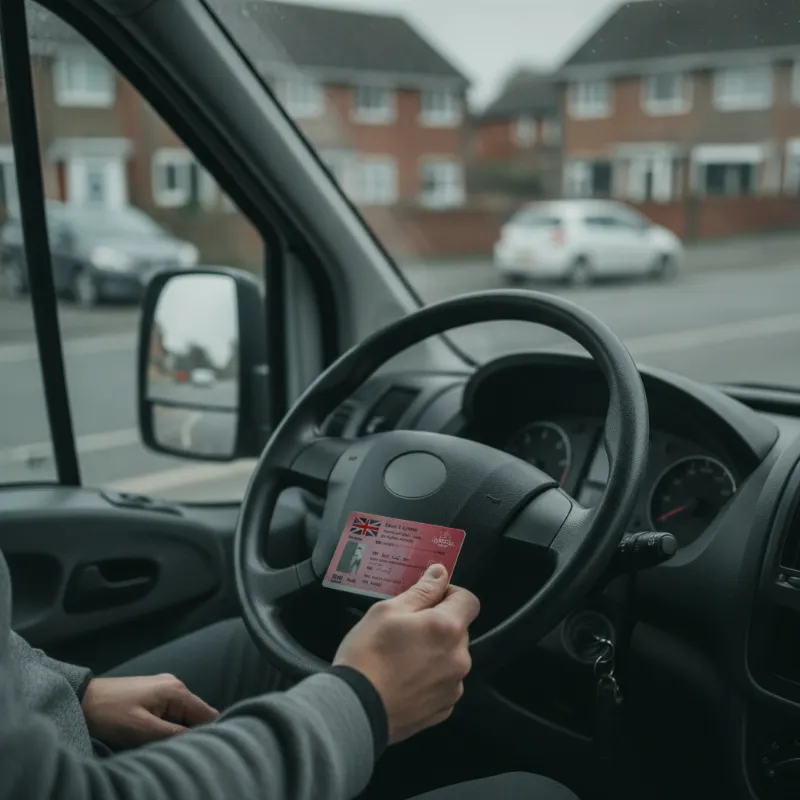
The short answer: what licence do you need for a 3.5 tonne van?
If your van has a Gross Vehicle Weight (GVW) of 3.5 tonnes (3,500kg) or less, a standard UK Category B car driving licence is all you need to drive it legally on public roads. This is the same licence the vast majority of car drivers already hold, which is why 3.5t vans — think Ford Transit, Mercedes Sprinter, Volkswagen Crafter, Iveco Daily and Renault Master — are by far the most popular size in the UK light commercial market.
There are a few caveats worth knowing about before you jump behind the wheel: when you passed your test matters, the vehicle's actual weight (not its badge) is what counts, and towing a trailer changes the rules. We'll cover each of those below.
Understanding the 3.5 tonne limit (GVW explained)
The "3.5 tonne" figure that appears in DVLA rules, insurance policies and manufacturer brochures refers to the vehicle's maximum authorised mass — the total the van is legally permitted to weigh when it's fully loaded, including the vehicle itself, driver, passengers, fuel and cargo. It is not the weight of the empty van.
What does 3.5 tonne actually mean?
3.5 tonnes is 3,500 kilograms, or roughly 7,716lb. In technical documents you'll see it written as GVW (Gross Vehicle Weight), MAM (Maximum Authorised Mass) or GVM (Gross Vehicle Mass) — they all mean the same thing. You'll find this figure stamped on the manufacturer's plate, usually inside the driver's door shut or under the bonnet, and it's also listed on the V5C logbook. Every 3.5t van is designed and certified so that this ceiling covers the vehicle plus everything and everyone inside it.
Payload vs gross vehicle weight
Payload is the weight the van can legally carry — cargo, tools, passengers, and often the driver too depending on how the manufacturer measures it. It's calculated as GVW minus kerbweight (the weight of the empty vehicle). A typical 3.5t panel van has a kerbweight of around 2,000–2,300kg, leaving a payload of roughly 1,200–1,500kg. Overloading a van so its actual weight exceeds 3,500kg is a separate offence from a licence issue — even with the correct licence, going over 3.5t on a Category B entitlement is illegal and can invalidate your insurance.
Standard Category B car licence: what it covers
A Category B licence is the standard UK car licence and it entitles you to drive vehicles up to 3,500kg MAM with up to eight passenger seats, plus a trailer up to 750kg. That covers virtually every mainstream van sold as a 3.5t model straight off a dealer's forecourt. However, the licence rules have changed over the years and what you can drive depends on when you originally passed your test.
Drivers who passed their test before 1 January 1997
If you passed your car driving test before 1 January 1997, you were granted "grandfather rights" that give you additional entitlements automatically added to your licence. This typically includes Category C1 (vehicles between 3,500kg and 7,500kg) and C1+E (allowing you to tow larger trailers), meaning you can drive vans well beyond the 3.5t threshold on your existing licence. These rights normally continue until age 70, after which you may need to renew them with a medical assessment. It's always worth checking the categories printed on the back of your photocard to confirm exactly what you're entitled to drive.
Drivers who passed their test after 1 January 1997
If you passed on or after 1 January 1997, your Category B entitlement is limited to vehicles up to 3,500kg MAM. That's still enough to cover the entire "large van" segment — Transits, Sprinters, Crafters and so on — provided they are the 3.5t variants. If you want to step up to a 5.0t or 7.5t chassis-cab, Luton, or heavier tipper, you'll need to take an additional C1 or C test.
When you'll need a different licence (C1, C, or towing)
The 3.5t ceiling on a standard car licence isn't just a manufacturer marketing choice — it's a hard legal line. Once you cross it, the licence category changes, and so do the training, medical and tachograph rules.
Driving a van heavier than 3.5 tonnes
For vehicles between 3,500kg and 7,500kg MAM you'll need a Category C1 licence. Above 7,500kg it becomes Category C (often called Class 2 HGV). Both require a provisional entitlement, a medical examination, theory tests and a practical driving assessment. This matters if you're considering a 5.0t Sprinter, a 4.25t electric van variant (there are some concessions for electric vehicles under alternative fuel rules — worth checking the latest DVLA guidance), or a Luton box van on a heavier chassis.
Towing a trailer with a 3.5 tonne van
With a Category B licence you can tow a trailer up to 750kg behind a 3.5t van without any extra entitlement. Since December 2021, drivers who passed their test after 1 January 1997 no longer need to take a separate B+E test to tow heavier trailers — the entitlement is now added automatically, allowing a combined vehicle-and-trailer weight of up to 7,000kg (though check DVLA's current guidance as combinations are updated periodically). Even so, towing a heavy trailer with a fully-loaded 3.5t van is demanding, and specialist training is strongly recommended even where it isn't legally required.
Age, medical and other requirements for driving a 3.5t van
You must be at least 17 years old to hold a Category B licence and drive a 3.5t van in the UK. Unlike heavier categories, there is no routine medical requirement for a standard car licence until age 70, when you renew every three years by self-declaring your fitness to drive. You do, however, have a legal duty to inform the DVLA of any medical condition that could affect your driving — this applies regardless of what you're driving.
If you're using the van for work, additional rules can apply. Drivers' hours rules and tachograph regulations generally kick in above 3.5t, but if you're driving professionally you should also be aware of Driver CPC requirements for anything above the light-vehicle threshold. Insurance is separate again — many insurers require drivers to be at least 21 or 25 for commercial vehicle cover, even though the DVLA allows 17-year-olds to hold the licence.
Common 3.5 tonne vans you can drive on a car licence
The 3.5t segment is the workhorse of the UK van market, and there's a huge choice of vehicles you can legally drive on a standard Category B licence. Popular models include the Ford Transit (in L2, L3 and L4 wheelbases), Mercedes-Benz Sprinter, Volkswagen Crafter, MAN TGE, Iveco Daily 35-series, Renault Master, Vauxhall Movano, Peugeot Boxer, Citroën Relay and Fiat Ducato. Most of these are also offered in electric form — the e-Transit, eSprinter, e-Crafter and E-Ducato — all of which are typically kept within the 3.5t GVW for the standard variant so a car licence remains sufficient.
Body styles you can drive on a Category B licence at 3.5t include panel vans, crew vans, tipper conversions, dropside pickups, refrigerated vans and even some smaller Luton box vans — as long as the plated GVW doesn't exceed 3,500kg. Always check the V5C or manufacturer plate rather than relying on the model name, because the same badge can be sold in 3.5t, 4.25t and 5.0t versions.
Penalties for driving a 3.5t van without the right licence
Driving a van you're not licensed for is a serious offence. Penalties include a fine of up to £1,000, between three and six penalty points on your licence, and possible disqualification. Perhaps more damaging, driving without the correct licence almost always invalidates your motor insurance, which means in the event of an accident you could be personally liable for any damage caused — and you'll also be committing the separate offence of driving without insurance, which carries six to eight points and a possible unlimited fine.
Overloading a 3.5t van so its actual weight exceeds its plated GVW is treated as a separate matter and can attract fines of £100–£300 at the roadside, with heavier overloads referred to court. If you're a business owner, both the driver and the operator can be prosecuted. The simple rule: know your licence category, know your plated weight, and weigh the vehicle if you're not sure.
FAQs about driving a 3.5 tonne van
Below are answers to the questions we hear most often from buyers who are moving up from a car to a large van for the first time.
FAQs
What driving licence do I need in the UK to drive a 3.5 tonne van?
A standard UK Category B car driving licence is all you need to drive a van up to 3,500kg Gross Vehicle Weight (GVW). This covers virtually all mainstream large vans sold in the UK, including the Ford Transit, Mercedes Sprinter, Volkswagen Crafter, Renault Master and Iveco Daily in their 3.5t variants. You must be at least 17 years old and the van must not exceed 3,500kg when fully loaded.
Can I drive a 3.5 tonne van on a normal car licence?
Yes. A standard Category B car licence entitles you to drive any vehicle up to 3,500kg MAM with up to eight passenger seats, plus a small trailer up to 750kg. As long as the van's plated Gross Vehicle Weight is 3,500kg or less, no additional test or entitlement is required.
Do I need a C1 licence to drive a 3.5 tonne van?
No. C1 is only required for vehicles between 3,500kg and 7,500kg. A 3.5t van sits right at the top of the Category B limit, so a standard car licence is sufficient. You would only need C1 if you were stepping up to a heavier chassis such as a 5.0t Sprinter or a 7.5t Luton.
Does it matter when I passed my driving test?
For driving a 3.5t van on its own, no — anyone with a Category B licence can drive one. But if you passed before 1 January 1997 you probably also hold C1 grandfather rights, letting you drive vehicles up to 7,500kg without a separate test. If you passed after that date, you're limited to 3,500kg unless you take the C1 test.
Can I tow a trailer behind a 3.5 tonne van on a car licence?
You can tow a trailer up to 750kg on a Category B licence without restriction. Since December 2021, drivers who passed after 1 January 1997 can also tow heavier trailers up to a combined weight of 7,000kg without taking a separate B+E test, as the entitlement is now added automatically. Specialist towing training is still strongly recommended.
What happens if I drive a van that's overloaded past 3.5 tonnes?
Even with the correct licence, exceeding the plated 3,500kg GVW is illegal. Roadside fines typically range from £100 to £300, more serious overloads go to court, and your insurance is likely to be invalidated. Both the driver and, in a business context, the operator can be prosecuted, so always check the payload before loading up.