What Is the Fuel Capacity of a Peugeot Expert Van?
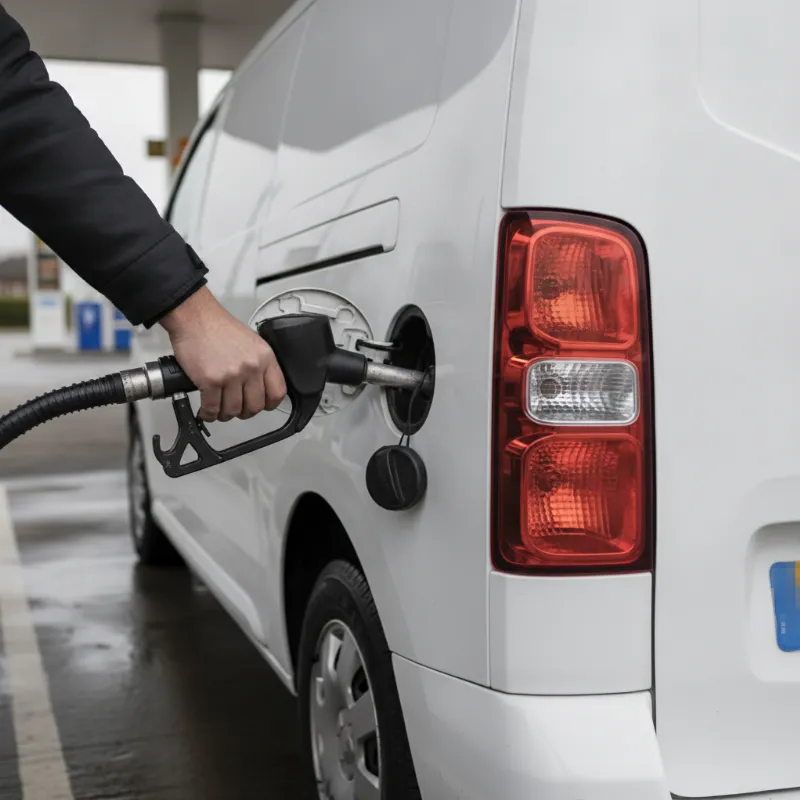
Peugeot Expert fuel tank capacity at a glance
The Peugeot Expert has been a firm favourite among UK tradespeople and fleet operators since it first arrived in 1995, and its fuel tank capacity has evolved along with the van itself. Depending on the generation and specific model variant you choose, the Expert's fuel tank holds between roughly 70 and 80 litres of diesel. The current third-generation model, which is the version most likely to be found on modern forecourts, comes with a 69-litre diesel tank as standard, with some variants offering a slightly larger option.
For most buyers researching a used or new Expert, the short answer is that you can expect a fuel capacity in the region of 70 litres, which is competitive for a medium panel van in its class. That figure translates into a genuinely usable driving range for both urban delivery work and longer motorway trips, which is exactly what the Expert is designed for.
Fuel capacity by Peugeot Expert generation
Because the Expert has been through three distinct generations over nearly three decades, the exact fuel tank figure varies depending on the age of the van you are looking at. Here is how the capacities break down across each generation of the model.
First generation (1995–2006)
The original Peugeot Expert launched in 1995 as part of the Sevel Nord partnership between Peugeot, Citroën and Fiat, sharing its underpinnings with the Citroën Dispatch and Fiat Scudo. Early first-generation Expert vans were fitted with an 80-litre fuel tank, giving them one of the largest diesel capacities in the medium van segment at the time. Combined with the reasonably efficient 1.9 and 2.0-litre HDi diesel engines available across the range, this meant genuinely long stints between fill-ups were possible, which made the van popular with couriers and self-employed tradespeople covering high annual mileages.
Second generation (2007–2016)
When the second-generation Expert arrived in 2007, Peugeot kept the fuel tank sized at 80 litres for most variants. This generation moved the van onto a larger, more car-like platform with better refinement, improved payload figures and a wider choice of body lengths and roof heights. The 80-litre capacity worked well alongside the 1.6 and 2.0 HDi diesel engines, and later Euro 5 versions saw modest improvements in efficiency that stretched real-world range even further. For operators running longer routes, this generation is often remembered as offering one of the best range-per-tank figures in its class.
Third generation (2016–present)
The current third-generation Expert, launched in 2016 and based on the EMP2 platform shared with the Citroën Dispatch, Vauxhall Vivaro and Toyota Proace, comes with a smaller 69-litre diesel fuel tank as standard. The reduction reflects the significantly improved fuel economy of the modern 1.5 and 2.0 BlueHDi diesel engines, which mean the van can still cover comparable distances between refuelling stops despite carrying less fuel. AdBlue tanks of around 22.5 litres are also fitted to models with SCR emissions systems. Alongside the diesel, Peugeot also offers the fully electric e-Expert, which swaps the fuel tank for a 50 kWh or 75 kWh battery pack depending on specification.
How fuel tank size affects real-world range
Fuel tank capacity only tells half the story — what really matters to most van drivers is how far a full tank will take you. With the older 80-litre tank paired to a HDi diesel returning around 35 to 40 mpg in mixed use, first and second-generation Expert drivers could realistically expect between 600 and 700 miles from a brimmed tank. That level of range is genuinely useful for long-distance couriers or anyone whose work takes them across regions in a single day.
The current model's 69-litre tank might sound like a step backwards on paper, but the modern BlueHDi engines regularly return 40 to 50 mpg in real-world driving. That works out to a similar theoretical range of around 600 to 750 miles per fill-up, with some careful drivers reporting even more on steady motorway runs. In practical terms, most Expert owners find they only need to visit a fuel station once a week, even with a busy delivery schedule.
Peugeot Expert MPG and running costs
The Peugeot Expert has long been considered one of the more economical medium vans on the market, and running costs are a big part of its appeal. Current third-generation models with the 2.0 BlueHDi engine typically achieve official combined figures of between 40 and 50 mpg, with the smaller 1.5 BlueHDi pushing towards the upper end of that range. Real-world figures depend heavily on load, driving style and route, but most operators find the Expert comfortably matches or beats its official numbers on longer runs.
Beyond fuel, servicing intervals are generous, with major services typically required every 25,000 miles or two years, and parts availability through Peugeot's extensive UK dealer network keeps maintenance costs predictable. Insurance groupings are competitive for the segment, and residual values on well-maintained examples remain reasonable, all of which combine to make the total cost of ownership attractive compared with rival medium panel vans.
Is the Peugeot Expert a practical choice for high-mileage drivers?
For drivers regularly covering long distances, the Peugeot Expert makes a strong case for itself. The combination of a sensible fuel tank size, efficient modern diesel engines and comfortable cabin ergonomics means that even long motorway stints are less tiring than in many rivals. Cruise control, adaptive cruise on higher trims, and a supportive driver's seat all help reduce fatigue on those 400-mile days.
Load-carrying flexibility is another key strength, with compact and long body lengths available and payloads typically between 1,000 kg and 1,400 kg depending on specification. Whether you are running a mobile workshop, a parcel delivery route or shuttling between sites, the Expert's blend of fuel capacity, economy and practicality means it remains a sensible, well-rounded choice for anyone whose livelihood depends on their van being ready to cover serious miles day in, day out.
FAQs
What is the fuel tank capacity of a Peugeot Expert van?
The Peugeot Expert's fuel tank capacity varies by generation. First and second-generation models (1995–2016) were fitted with an 80-litre diesel tank, while the current third-generation model (2016–present) has a 69-litre diesel tank as standard, alongside a separate AdBlue tank of around 22.5 litres on models with SCR emissions systems.
How far can a Peugeot Expert travel on a full tank?
Based on real-world fuel economy of 40 to 50 mpg for the current 2.0 BlueHDi diesel and its 69-litre tank, a Peugeot Expert can typically cover between 600 and 750 miles on a single fill-up. Older 80-litre models manage a broadly similar range despite being slightly less efficient.
Does the Peugeot Expert use diesel or petrol?
The Peugeot Expert has always been sold in the UK as a diesel van, with 1.5 and 2.0 BlueHDi engines in the current line-up. Peugeot also offers a fully electric version called the e-Expert, which is available with 50 kWh or 75 kWh battery packs instead of a fuel tank.
How much AdBlue does a Peugeot Expert hold?
Current-generation Peugeot Expert models fitted with SCR emissions control systems have an AdBlue tank of approximately 22.5 litres. Depending on driving style and load, this typically needs topping up every 6,000 to 10,000 miles, and a warning light will illuminate on the dashboard well before the tank runs dry.