What Is a VW Caravelle? A Complete UK Buyer's Guide
What Is a VW Caravelle? The Short Answer
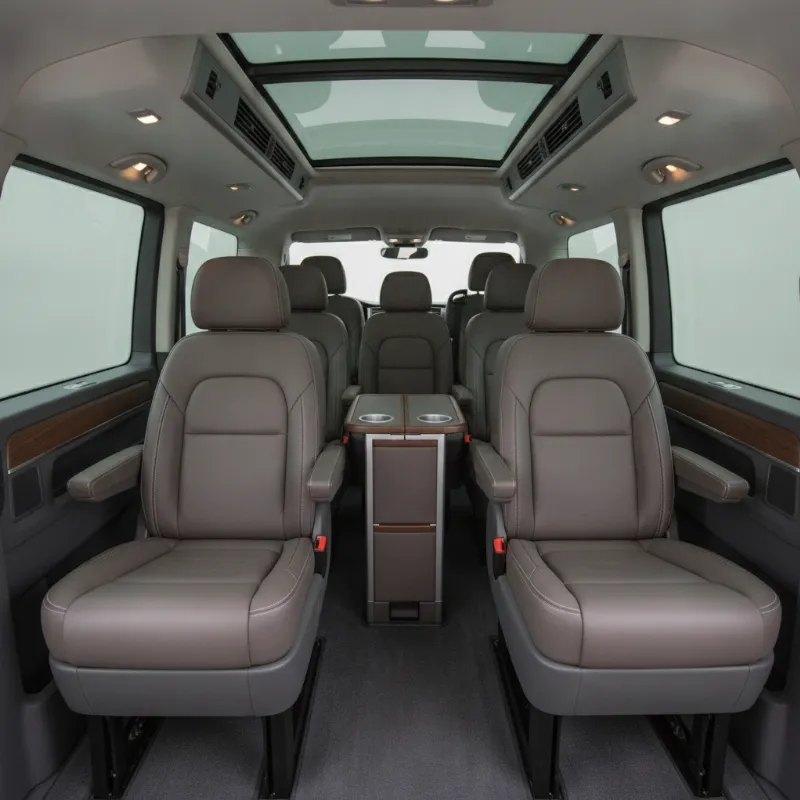
The VW Caravelle is Volkswagen's premium passenger version of the long-running Transporter van platform. Where the Transporter panel van is aimed at trades and businesses moving goods, the Caravelle is built to move people in comfort — think executive shuttle, large family transport, airport taxi or VIP minibus. It shares its underpinnings, engines and gearboxes with the Transporter, but adds proper car-like seating, carpeted interiors, climate control, tinted rear glass and a much higher standard of trim throughout the cabin.
In simple terms: if a Transporter is a working van with windows, a Caravelle is a passenger vehicle that happens to be van-shaped. It sits above the Transporter Shuttle in VW's people-carrier line-up and just below the flagship Multivan/California in most markets, making it the go-to choice for UK buyers who need seven, eight or nine seats with genuine long-distance comfort.
A Brief History of the Volkswagen Caravelle
The Caravelle nameplate has been part of the Volkswagen commercial vehicle family since the mid-1980s, launched as the passenger-focused version of the third-generation Transporter (T3). Over four decades it has evolved through the T4, T5, T6 and T6.1 generations, gradually shifting from a boxy air-cooled workhorse into the refined, turbo-diesel, DSG-equipped MPV alternative it is today. Each generation has kept the same basic recipe — a big, upright, sliding-door body with removable or reconfigurable rear seating — while adding modern safety, infotainment and driver-assistance kit.
What Is a VW T5 Caravelle?
The T5 Caravelle, produced between 2003 and 2015 (with a significant facelift in 2010), is the model most UK buyers picture when they hear the name. It introduced a much more car-like driving experience, common-rail TDI diesel engines, optional 4MOTION all-wheel drive and, later in its life, the seven-speed DSG automatic gearbox. Short-wheelbase and long-wheelbase versions were offered, and trim levels typically ran from SE up to Executive, the latter adding leather, individual rear captain's chairs and a conference-style rotating middle row. Used T5 Caravelles remain hugely popular on the second-hand market thanks to their durability and the sheer versatility of that rear cabin.
Classic and Older Models: 1989, 1998 and 2002 Volkswagen Caravelle
Rewind further and you meet the classics. A 1989 Volkswagen Caravelle would be a T3 (also known as the T25 in the UK) — the last of the rear-engined, boxy Transporters and now a genuine cult classic among VW enthusiasts. A 1998 Caravelle is a T4, the first front-engined, water-cooled generation, which brought the range firmly into the modern era with proper passenger-car refinement. A 2002 Volkswagen Caravelle is a late T4, often specified with the 2.5 TDI five-cylinder engine that developed a loyal following. All three are still around on UK roads, but buyers should factor in age-related maintenance, parts availability and, for the T3, potential import history.
Volkswagen Caravelle 8+1 Passenger Van Automatic Explained
You'll often see Caravelles advertised as "8+1 passenger van automatic" — it's a slightly technical way of describing the seating layout. The "8+1" means eight passenger seats plus the driver, giving nine seats in total, which is the maximum you can carry in the UK on a standard Category B car licence. "Automatic" refers to Volkswagen's DSG dual-clutch gearbox, which has been the transmission of choice on Caravelles for well over a decade because it suits the vehicle's relaxed, cruising character far better than a manual. Combined with a 2.0 TDI diesel engine, the 8+1 automatic layout is the sweet spot for shuttle operators, large families and anyone who needs maximum legal passenger capacity without stepping up to a D1 minibus licence.
How Many Seats Does a VW Caravelle Have?
Most UK Caravelles come configured with seven seats as standard: two in the front, a two-seat bench or twin captain's chairs in the middle, and a three-seat bench at the rear. However, VW offers optional layouts that bring the total up to eight or nine, and the rear seats are typically mounted on rails so you can slide them fore and aft, remove them entirely, or spin the middle row to face the rear for a conference-style setup. Executive trims often swap the bench for individual armchair-style seats with folding tables between them. It's this flexibility — rather than a single fixed layout — that really defines the Caravelle experience.
VW Caravelle vs Transporter Shuttle and Multivan
Volkswagen offers three closely related people-carriers on the Transporter platform, and it's worth understanding where the Caravelle fits. The Transporter Shuttle is the entry-level passenger version — essentially a windowed van with hard-wearing seats, aimed at taxi firms and hotel transfers where durability and low running costs matter more than plush trim. The Caravelle sits in the middle, adding carpets, better sound insulation, climate control, more comfortable seating and generally a higher standard of finish throughout. The Multivan (and the campervan-focused California) sits at the top, with the most sophisticated interior, sliding table systems and the widest range of premium options. If the Shuttle is business class and the Multivan is first class, the Caravelle is a comfortable premium economy that most private buyers find perfectly luxurious.
Buying, Leasing or Financing a VW Caravelle in the UK
Because the Caravelle is classified as a light commercial vehicle in the UK, it opens up a slightly different set of buying routes than a conventional MPV. Businesses can often reclaim VAT and put the vehicle through the books as a commercial asset, while private buyers can choose from hire purchase, personal contract purchase (PCP) or contract hire/leasing arrangements. Monthly costs will depend on the deposit you put down, the length of the agreement, the annual mileage you sign up to and, for PCP, the guaranteed future value at the end of the term. It's worth getting quotes on both business and personal finance if you're a sole trader or company director, as the most cost-effective route isn't always obvious.
New vs Used (Including 03 and '19' Plate Caravelles)
New Caravelles give you the latest T6.1 refinements — digital cockpit, updated safety systems, the newest Euro 6 diesels — plus a full manufacturer warranty, but they command a significant price premium. The used market is where most UK buyers find real value — browse our current VW Caravelle for sale stock to see what's available. An 03-plate Caravelle takes you back to the very earliest T5s, which are now genuinely cheap but demand careful inspection of the mileage, service history and rust on the sills and tailgate. A '19' plate Caravelle, by contrast, gets you a late T6 with modern infotainment, DSG automatic gearbox and often the balance of a manufacturer warranty at a fraction of the new price. Whichever route you take, prioritise a full VW main-dealer or specialist service history, verified mileage and evidence that the DSG gearbox oil has been changed on schedule — those three things do more to protect your investment than any factory option.
FAQs
What is a VW Caravelle?
A VW Caravelle is the passenger-focused, premium-trim version of the Volkswagen Transporter van. It uses the same platform, engines and gearboxes as the Transporter but adds carpeted interiors, comfortable car-like seating for up to nine people, climate control and higher-quality trim, making it ideal as a family MPV, executive shuttle or airport transfer vehicle.
Is a VW Caravelle a van or a car?
Legally in the UK the Caravelle is classified as a light commercial vehicle (van), which affects road tax, speed limits and VAT treatment for businesses. In terms of how it drives and how it's equipped inside, however, it feels much more like a large MPV or people-carrier than a working van.
How many seats does a VW Caravelle have?
Most Caravelles are configured with seven seats, but eight- and nine-seat layouts are available. The nine-seat '8+1' version is the maximum you can drive on a standard UK Category B car licence, which is why it's a popular choice for taxi and shuttle operators.
What's the difference between a VW Caravelle and a Transporter Shuttle?
The Transporter Shuttle is the entry-level passenger version of the Transporter, aimed at hard-working taxi and hotel-transfer duties with durable, wipe-clean interiors. The Caravelle uses the same platform but adds carpets, better sound insulation, more comfortable seats and higher-grade trim throughout, positioning it as a more comfortable, premium alternative.
Is a used VW Caravelle a good buy in the UK?
Used Caravelles are generally regarded as sound long-term buys because they hold their value well and share proven Transporter mechanicals. The key is to insist on full service history — particularly evidence of scheduled DSG gearbox oil changes on automatic models — verified mileage and a thorough inspection of the bodywork, sliding door mechanisms and underside for corrosion.